




Aircraft Power Supply: How Does It Support Safe Maintenance?
When maintenance crews connect ground power to an aircraft, they're activating a critical safety system that goes far beyond simply keeping the lights on. An aircraft power supply system delivers stable, regulated electrical energy to onboard avionics, communication arrays, and diagnostic equipment during maintenance operations, eliminating the need to activate onboard generators or drain battery reserves. This controlled power delivery prevents voltage fluctuations that could corrupt sensitive flight management computers or trigger false fault codes, and it also creates a safer work environment by ensuring consistent power for diagnostic tools and inspection lighting. By supplying clean, continuous electrical power, these systems allow technicians to perform comprehensive checks, software updates, and component testing without compromising aircraft systems or personnel safety.

Understanding Aircraft Power Supply Systems
Aviation electrical systems form a sophisticated network, and regulations mandate reliability. Modern aircraft depend on uninterrupted electrical power for everything from primary flight displays to hydraulic pump controllers, making the ground power infrastructure an indispensable component of safe maintenance protocols.
The Fundamental Architecture of Aviation Power
Aircraft utilize both DC and AC power configurations depending on system requirements. While 28V DC remains the standard for avionics buses and essential equipment in many platforms, larger commercial aircraft increasingly rely on 115V AC at 400Hz for primary distribution. This higher frequency allows for lighter transformers and more efficient power conversion compared to standard 60Hz industrial power. The 400Hz standard emerged from aviation's need to reduce weight while maintaining power quality—a frequency quadruple that of ground installations means magnetic components can be proportionally smaller without sacrificing performance.
Primary Power Sources During Maintenance Operations
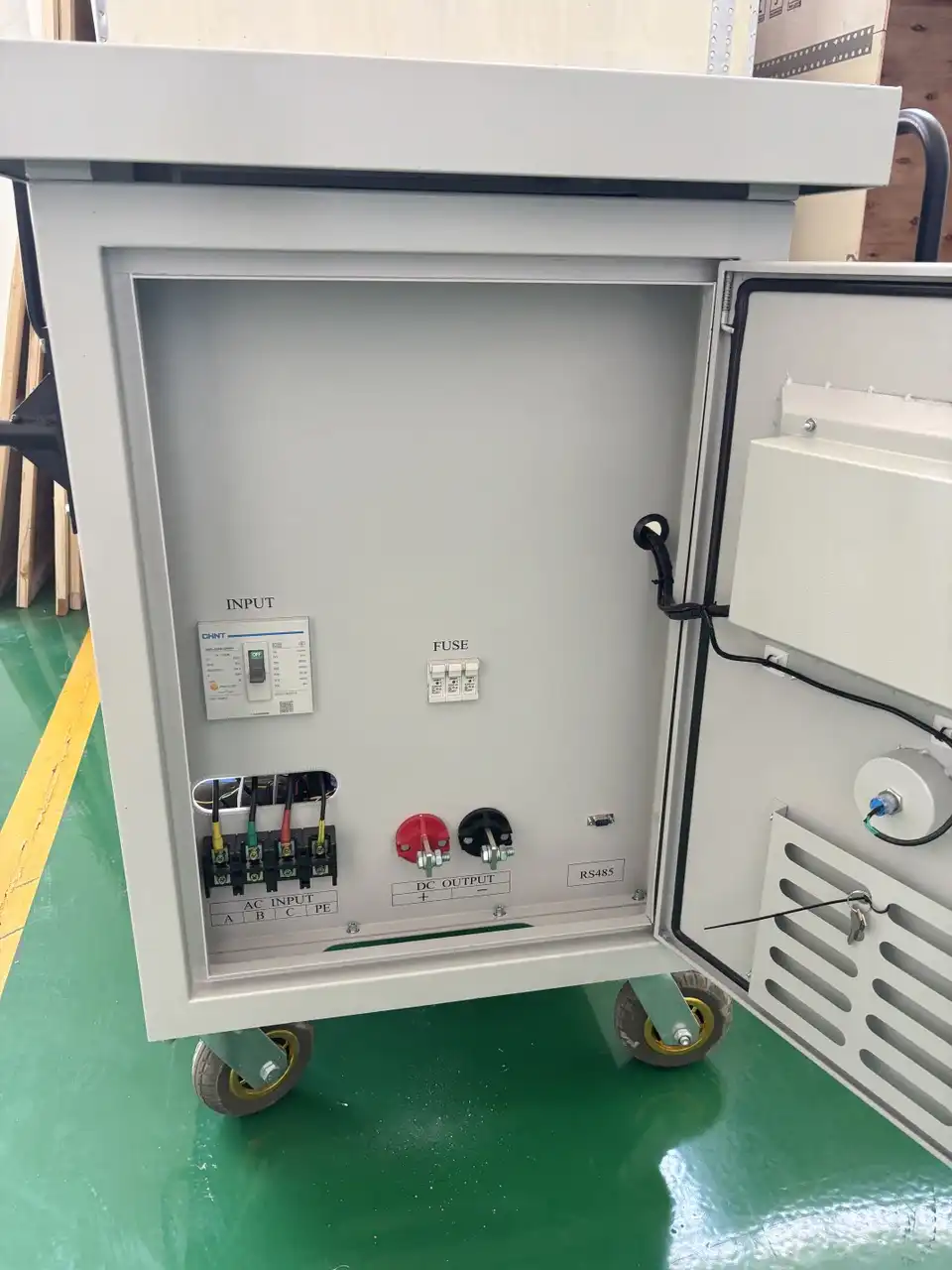
Ground power units serve as the external electrical lifeline during maintenance activities. These units convert standard three-phase industrial power into the specialized voltages and frequencies aircraft systems require. Our ACSOON GPU400L-330090, rated at 90kVA, exemplifies this conversion capability by transforming 380V 50/60Hz input into stable 3×200VAC at 400Hz output. This unit is located under passenger boarding bridges and has a 26-meter integrated cable system. It provides IP54-rated protection against environmental exposure and keeps the phase angle symmetry at 120°±1° under balanced loads, which is essential for sensitive avionics equipment. Auxiliary power units represent onboard power generation capabilities, typically gas turbine engines that provide both electrical power and pneumatic pressure. During maintenance, however, relying on APUs increases operational expenses and introduces unnecessary engine cycle wear. External ground power eliminates these concerns while providing more stable voltage regulation than APU-driven generators can achieve during startup sequences.
Comparing Airborne and Ground-Based Power Systems
Airborne generators must operate across extreme temperature ranges, altitude-induced pressure variations, and constant vibration environments. These constraints demand ruggedized construction and sophisticated voltage regulation that adds weight and complexity. Ground-based power conversion equipment faces different challenges: it must accommodate multiple aircraft types with varying power requirements while delivering laboratory-grade power stability. The GPU400L-330090 addresses these challenges through static frequency conversion technology that produces cleaner waveforms than rotating machinery, with harmonic distortion levels well below thresholds that might interfere with modern digital avionics. Static frequency converters use solid-state power electronics rather than motor-generator sets, eliminating mechanical wear points and reducing maintenance intervals. This technology delivers instantaneous voltage regulation responding to load changes within microseconds—a response time critical when diagnostic equipment cycles power demand during automated test sequences.
Common Challenges and Troubleshooting in Aircraft Power Supplies
Maintenance personnel encounter power-related issues that range from nuisance interruptions to safety-critical failures. Understanding these failure modes helps procurement teams select equipment that minimizes vulnerability while simplifying diagnostics.
Typical Fault Signatures and Detection Methods
Voltage droop under load represents one of the most common ground power issues. When current draw exceeds the converter's regulation range, output voltage sags below acceptable limits, triggering power monitoring systems for aircraft to disconnect external power. This often results from undersized ground power units attempting to service aircraft beyond their capacity rating. The 90kVA rating of our GPU400L-330090 provides substantial overhead for typical narrow-body aircraft maintenance operations, including simultaneous avionics testing and environmental control system verification.
Frequency instability creates another troubleshooting challenge. Aircraft power supply systems designed for 400Hz operation incorporate timing circuits sensitive to frequency deviations beyond ±1Hz. Static converters maintain tighter frequency control than rotating machinery, with crystal-controlled oscillators providing reference stability that eliminates frequency drift even as utility grid frequency varies.
Phase imbalance affects three-phase aircraft distribution systems by creating neutral currents and uneven loading across generator windings. Quality ground power units continuously monitor and correct phase relationships. The GPU400L-330090 maintains 120° phase separation within 1° for balanced loads and 2° even under 30% unbalanced conditions—specifications that accommodate realistic maintenance scenarios where some aircraft systems remain offline during testing.
Diagnostic Tools and Troubleshooting Methodologies
Modern maintenance facilities employ power quality analyzers that capture voltage, current, frequency, and harmonic content in real time. These instruments identify whether power disturbances originate from the ground cart, aircraft distribution system, or individual loads. Technicians compare measured parameters against standards like MIL-STD-704 for military aircraft or manufacturer-specific tolerances for commercial platforms. Thermal imaging reveals connection resistance issues before they escalate into failures. High-resistance connections at cable terminations or contactor contacts generate heat signatures visible through infrared cameras. Regular thermal surveys during high-load testing catch deteriorating connections that might otherwise cause arcing or voltage loss during critical maintenance procedures.
Preventive Maintenance Strategies
Scheduled inspections focusing on cable condition, connector integrity, and cooling system cleanliness prevent the majority of ground power failures. Cable assemblies endure repeated flexing, exposure to aircraft fluids, and occasional ground vehicle impacts. The 26-meter cable integrated into the GPU400L-330090 includes a power cable coil system that protects conductors from excessive bending and provides strain relief at connection points—engineering details that extend service life while reducing inspection frequency. Cooling system maintenance deserves particular attention. Solid-state power converters generate substantial heat that must be dissipated to prevent component degradation. Blocked air filters or contaminated heat exchangers reduce thermal performance, forcing power electronics to operate at elevated temperatures that accelerate aging. Quarterly filter inspections and annual heat exchanger cleaning maintain optimal thermal management.
Ensuring Safety Through Power Supply Management
Electrical safety during aircraft maintenance involves both regulatory compliance and practical risk mitigation. The consequences of power mismanagement range from damaged avionics to personnel injury, making systematic safety protocols non-negotiable.
Regulatory Framework and Compliance Requirements
The Federal Aviation Administration and European Union Aviation Safety Agency publish comprehensive electrical safety standards governing ground support equipment. FAA Advisory Circular AC 00-34A addresses aircraft electrical systems and ground support interface requirements, specifying voltage tolerances, grounding practices, and personnel qualifications. EASA Part-145 regulations mandate that maintenance organizations implement procedures ensuring electrical safety during all ground operations. These regulations require ground power units to incorporate protective features, including overcurrent protection, ground fault detection, and reverse polarity prevention. Equipment must undergo periodic testing, verifying these protections remain functional. Our manufacturing processes align with AS9100 aerospace quality standards, ensuring every GPU400L-330090 unit meets or exceeds regulatory safety requirements before shipment.
Safe Connection and Disconnection Protocols
Establishing a ground power connection follows a precise sequence designed to prevent transients and arcing. Maintenance crews verify the aircraft's battery and generator switches are positioned correctly before approaching with ground power cables. The ground connection is established first, creating a reference potential between the aircraft and the ground cart. Only after confirming proper grounding do technicians connect phase conductors. Disconnection reverses this sequence, removing phase conductors before breaking the ground connection. This protocol ensures fault currents have a return path throughout the connection period. The GPU400L-330090's integrated cable system includes clearly marked connectors and color-coded conductors that reduce the likelihood of procedural errors during connection operations.
Case Studies in Power Supply Safety
A 2018 incident at a major European maintenance facility illustrates the consequences of inadequate ground power management. Technicians connected an undersized ground power unit to a widebody aircraft undergoing avionics upgrades. When multiple systems activated simultaneously, voltage dropped below minimum thresholds, causing flight management computers to reboot unexpectedly. The transient corrupted configuration data required extensive troubleshooting and recertification. Had the facility employed properly rated equipment with adequate capacity margins, this costly disruption would have been avoided. Conversely, a military maintenance depot documented zero power-related incidents over five years after implementing comprehensive power quality monitoring and upgrading to static frequency converters. This safety record emerged from equipment selection prioritizing clean power output and systematic personnel training on connection protocols—demonstrating how technical capability and procedural discipline combine to eliminate preventable risks.
Selecting and Procuring Reliable Aircraft Power Supply Solutions
Procurement decisions balance technical specifications, total cost of ownership, and supplier reliability. The diversity of aircraft types and maintenance scenarios demands careful evaluation of how specific power supply characteristics align with operational requirements.
Evaluating Technical Specifications Against Requirements
Power rating forms the foundation of equipment selection. Undersized units operate near maximum capacity, accelerating wear and providing no margin for unexpected load increases. Oversized units represent unnecessary capital expenditure and increased footprint. The 90kVA rating of the GPU400L-330090 suits most narrow-body commercial aircraft and many military platforms, providing capacity for simultaneous systems testing without approaching thermal limits. Output voltage regulation determines compatibility with sensitive avionics. Aircraft specifications typically require voltage stability within ±2% across load variations from zero to rated capacity. Static frequency converters achieve tighter regulation than motor-generator sets through real-time electronic feedback control. Our ACSOON units maintain voltage within ±1% under dynamic loading, exceeding typical aircraft requirements and providing margin for future equipment upgrades with tighter tolerances.
Environmental protection ratings affect reliability in outdoor installations. The IP54 rating of the GPU400L-330090 provides dust ingress protection and splashing water resistance suitable for covered boarding bridge locations. Facilities with fully exposed ramp operations might require IP65 ratings for jet spray protection, while climate-controlled hangar environments permit lower ratings with cost savings.
Brand Reputation and Certification
Established aerospace suppliers like Honeywell, Eaton, and Collins Aerospace offer proven reliability backed by decades of fielded equipment and extensive service networks. These brands command premium pricing justified by comprehensive testing, long-term parts availability, and deep integration with aircraft manufacturers' support systems. Our ACSOON brand delivers comparable technical performance with competitive pricing, supported by ISO 9001 quality management systems and aviation-specific AS9100 certification that documents manufacturing process control equivalent to tier-one suppliers. OEM support capability influences long-term value. We manufacture the GPU400L-330090 in our Xi'an facility, spanning 5,000-10,000 square meters dedicated to aviation and military power systems. This vertical integration enables custom modifications addressing unique facility requirements while maintaining adequate inventory for rapid delivery—typically impossible with large multinational suppliers managing global product portfolios.
Procurement Strategies for B2B Aviation Clients
Military and government procurement follows formalized processes emphasizing lifecycle cost analysis and domestic content requirements. Our position as a manufacturer with direct export capabilities simplifies these processes while offering customization that turnkey equipment distributors cannot match. Engineering teams appreciate our willingness to modify cable lengths, add remote monitoring interfaces, or adjust output characteristics for specific aircraft compatibility. Commercial maintenance organizations prioritize lead time and price competitiveness. We maintain an inventory of core models like the GPU400L-330090, enabling delivery within weeks rather than the months typical for custom-configured units. Bulk purchasing programs offer additional economies for facilities operating multiple maintenance bays or airport authorities standardizing ground support equipment across terminals.
Optimizing Aircraft Power Supply for Long-Term Maintenance Efficiency
Strategic maintenance planning and technology adoption extend equipment lifespan while reducing operational disruptions. The aviation industry's shift toward predictive maintenance and data-driven decision-making applies equally to ground support infrastructure.
Predictive Maintenance Through Digital Monitoring
Modern ground power units incorporate embedded sensors tracking internal temperatures, output power quality, component operating hours, and fault events. This data enables condition-based maintenance where service intervals adjust according to actual equipment stress rather than fixed calendar schedules. Our engineering team continually develops monitoring capabilities that integrate with facility management systems, providing maintenance planners visibility into fleet-wide ground power health. Advanced units log power quality metrics, including total harmonic distortion, crest factor, and transient events. Trending this data reveals gradual degradation patterns that predict component failures weeks before they occur. Maintenance crews schedule proactive replacements during planned downtime rather than responding to emergency failures that delay aircraft service.
Lean Maintenance Practices
Streamlined inspection procedures focus on failure modes with the highest probability and consequence. Statistical analysis of field data identifies components requiring frequent attention versus those demonstrating exceptional reliability. Cable assemblies and connectors demand regular inspection due to mechanical stress exposure, while solid-state power modules often operate for decades without intervention. Our GPU400L-330090 design minimizes routine maintenance requirements through component selection emphasizing longevity—electrolytic capacitors rated for 10,000-hour lifespans at elevated temperatures, conformal-coated circuit boards resisting contamination, and oversized thermal management ensuring components operate well below maximum ratings. Data-driven scheduling coordinates ground power maintenance with facility operational rhythms. Servicing equipment during low-traffic periods or synchronizing with aircraft maintenance schedules maximizes availability when demand peaks. Facilities supporting overnight cargo operations schedule ground power maintenance during daytime hours when ramp activity naturally decreases.
Future Trends in Aviation Ground Power
Regulatory evolution toward more stringent electromagnetic compatibility requirements drives continuous improvement in power quality standards. Our engineering team monitors emerging regulations, incorporating enhanced filtering and shielding before mandates take effect. This forward-looking approach protects customer investments by ensuring equipment remains compliant throughout its operational lifespan. Alternative energy integration represents another emerging trend. Solar-supplemented ground power reduces operating costs while supporting environmental sustainability initiatives. We collaborate with facilities exploring hybrid configurations where renewable energy offsets utility consumption during daytime operations, with static converters bridging the interface between variable renewable sources and the aircraft power supply.
Conclusion
Effective aircraft power supply maintenance depends fundamentally on reliable ground power delivery that protects sensitive avionics while creating safe working conditions for maintenance personnel. The selection of appropriate power conversion equipment—properly rated, precisely regulated, and certified to aviation standards—directly impacts maintenance efficiency and operational safety. Our GPU400L-330090 exemplifies the technical capabilities required for modern maintenance facilities, combining 90kVA capacity with 400Hz static conversion technology and integrated cable management. Procurement teams evaluating ground power solutions benefit from partnering with manufacturers offering both technical expertise and responsive support, ensuring equipment selections align with current requirements while accommodating future operational evolution.
FAQ
What distinguishes 400Hz aircraft power from standard industrial power?
Aircraft utilize a 400 Hz frequency because a higher frequency enables lighter transformers and generators—a critical advantage in weight-sensitive aviation applications. This specialized frequency requires ground power units like our GPU400L-330090 to convert standard 50/60Hz utility power into 400Hz output, ensuring compatibility with aircraft electrical systems designed around this standard.
How do I determine appropriate ground power unit capacity for my maintenance operations?
Calculate maximum simultaneous electrical load across all aircraft systems you'll power during maintenance, then add 20-30% margin for safety and future capability. The GPU400L-330090's 90kVA rating accommodates most narrow-body commercial aircraft and many military platforms, supporting comprehensive systems testing without approaching thermal limits that accelerate wear.
What maintenance intervals do static frequency converters require?
Static converters demand significantly less maintenance than motor-generator sets due to their solid-state design eliminating rotating components. Typical schedules include quarterly visual inspections, semi-annual cooling system cleaning, and annual electrical testing. Our units incorporate long-life components, reducing routine maintenance frequency compared to legacy equipment.
Partner with a Proven Aircraft Power Supply Manufacturer
JERRYSTAR stands ready to support your maintenance operations with ground power solutions engineered specifically for aviation applications. Our ACSOON GPU400L-330090 delivers the reliability, precision, and safety features your maintenance facility demands, backed by over 15 years of specialized experience in aviation power systems. We maintain adequate inventory, enabling rapid delivery to meet urgent operational requirements, while our engineering team provides customization capabilities addressing unique facility specifications. Quality certifications, including AS9100, ISO 9001, and FAA/EASA approvals, document our commitment to aerospace standards that protect your investment and ensure regulatory compliance. Contact our team at acpower@acsoonpower.com to discuss how our aircraft power supply solutions can enhance your maintenance capabilities and operational efficiency. Whether you're specifying equipment for a new facility or upgrading existing ground support infrastructure, JERRYSTAR offers the technical expertise and responsive service that maintenance organizations depend on.
References
1. Federal Aviation Administration. (2021). Advisory Circular AC 00-34A: Aircraft Electrical Systems and Ground Support Equipment Interface Requirements. U.S. Department of Transportation.
2. European Union Aviation Safety Agency. (2020). Part-145 Approved Maintenance Organization Requirements: Electrical Safety Standards for Ground Operations. EASA Regulatory Publications.
3. Society of Automotive Engineers. (2019). AIR1362B: Electrical Power Characteristics and Utilization in Aircraft. SAE International Aerospace Standards.
4. Department of Defense. (2018). MIL-STD-704F: Aircraft Electric Power Characteristics. Defense Standardization Program Office.
5. International Air Transport Association. (2022). Ground Support Equipment Standards Manual: Power Supply Systems for Aircraft Maintenance. IATA Technical Publications.
6. Tooley, M., & Wyatt, D. (2020). Aircraft Electrical and Electronic Systems: Principles, Maintenance and Operation (3rd ed.). Aerospace Engineering Publications.