



How Reliable Is an Aircraft Power Supply in Harsh Environments?
Aircraft power supplies demonstrate exceptional reliability in harsh environments through rigorous engineering, advanced materials, and compliance with stringent aerospace standards. Modern ground power units and frequency converters are specifically designed to withstand extreme temperatures ranging from -55°C to +70°C, high humidity, salt spray corrosion, electromagnetic interference, and mechanical vibrations. These systems incorporate redundant protection circuits, electromagnetic shielding, and thermal management technologies to maintain stable, clean power output even under the most challenging operational conditions faced at commercial airports, military airbases, and maintenance facilities.
Understanding Aircraft Power Supply Systems in Harsh Environments
Aviation power systems operate in environments that would cripple conventional electrical equipment. When parked aircraft require ground power at coastal airports, systems face salt-laden air that accelerates corrosion. When military jets undergo pre-flight checks in desert conditions, power units must function flawlessly despite sand infiltration and temperature swings exceeding 50°C within hours.
AC and DC Power Architectures in Aviation Applications
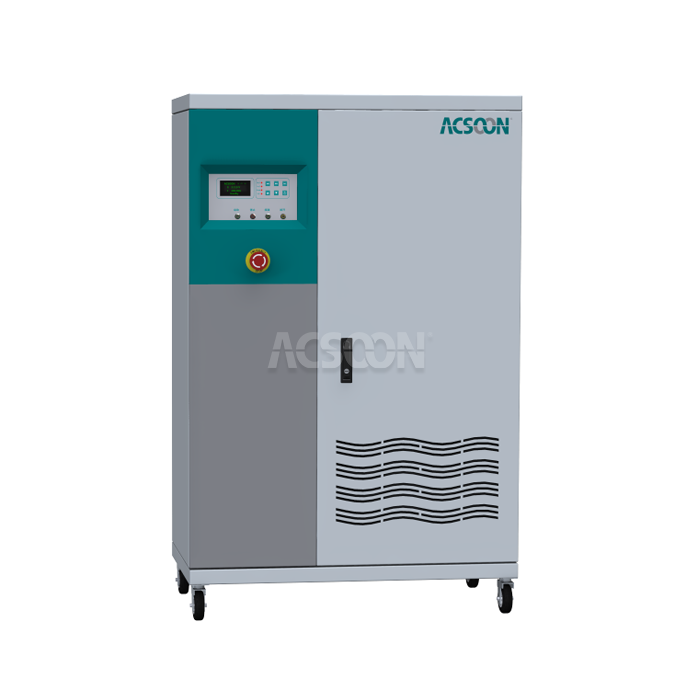
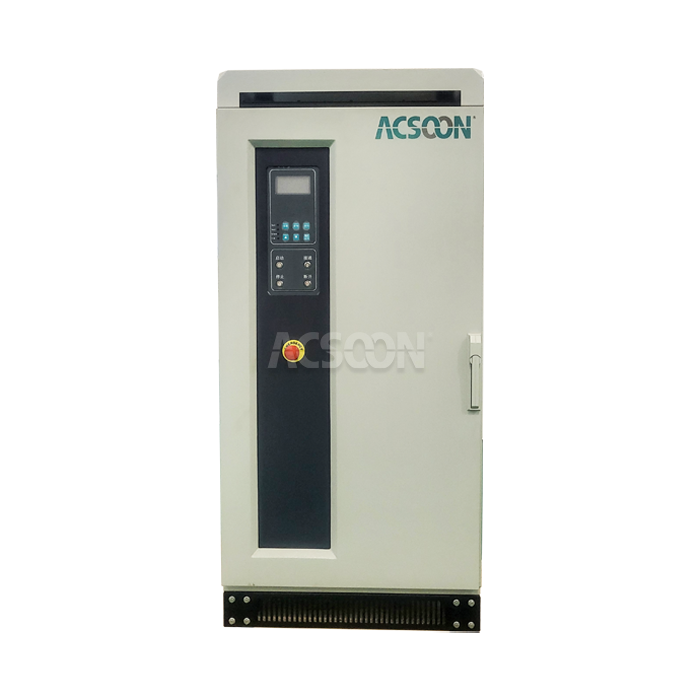
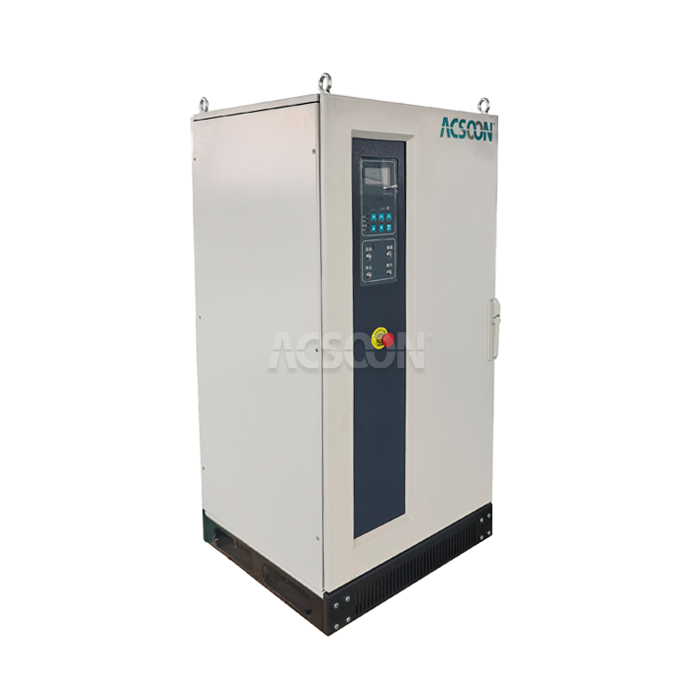
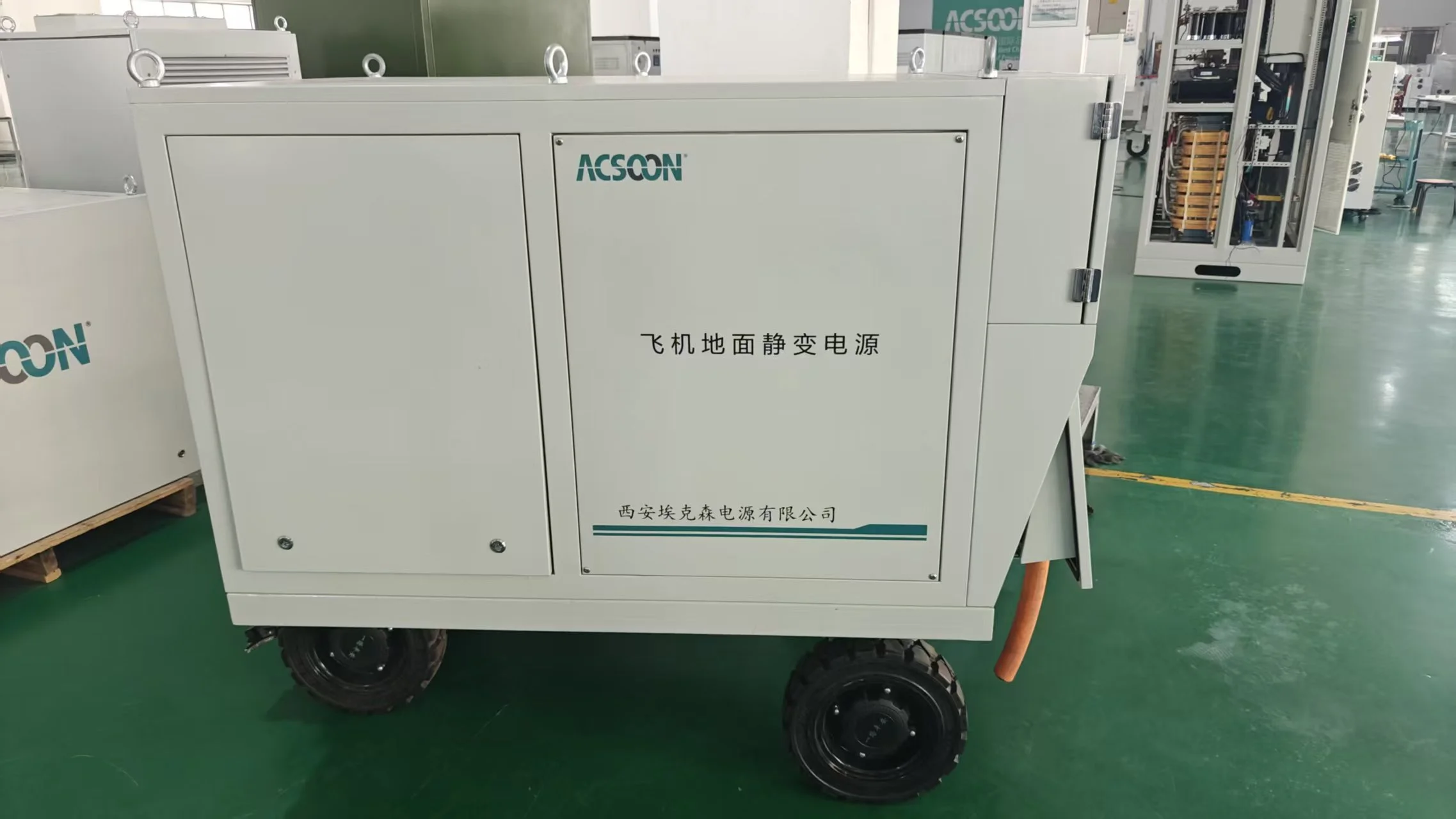
Because it uses 115VAC at 400 Hz frequency, commercial aviation uses smaller and lighter transformers than the conventional 50/60 Hz systems. Aircraft power supply makers can optimize electrical distribution while retaining power quality at this higher frequency. The military frequently uses 28VDC systems for emergency battery charging, avionics, and navigational equipment. To meet these needs, ground support equipment transforms power from utilities into outputs that are compatible with aviation standards. To demonstrate this conversion capability, our ACSOON GPU400L-330090 model takes an input of 3-phase 380V at 50/60 Hz and produces a steady 3-phase 200VAC at 400 Hz output with a capacity of 90 kVA. For crucial ground operations, the unit keeps the phase angle symmetry at 120°±1° under balanced loads and 120°±2° even when 30% of the load is uneven.
Environmental Stressors and System Response
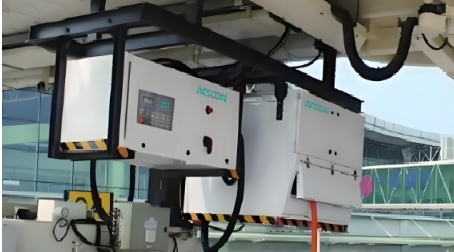
Power systems must incorporate improved thermal management to account for the effect of altitude on cooling efficiency, which is caused by a decline in air density. Equipment used on passenger boarding bridges faces special problems, including constant vibrations, fluctuating temperatures, and exposure to the fumes produced by jet fuel. Our static frequency converters, which have an IP54 rating, resist dust and splash water, making them ideal for use in semi-outdoor settings. Radar systems, communication equipment, and lightning strikes all cause electromagnetic interference, which requires extensive shielding and filtering. To ensure that sensitive navigation and flight control systems are not interfered with by electrical noise, aviation power supplies have multi-stage electromagnetic interference suppression that complies with MIL-STD-461 and DO-160G specifications.
Compliance with Aviation Safety Standards
FAA, EASA, and military specifications establish baseline requirements for electrical system integrity. These standards mandate specific voltage tolerances, harmonic distortion limits, and transient suppression capabilities. Xi'an Jerrystar Instrument Co., Ltd. maintains AS9100 aerospace quality management certification, ensuring every unit undergoes rigorous testing before deployment. Our quality control process includes 100% functional testing, environmental stress screening, and verification of all protection mechanisms.
Key Factors Influencing Power Supply Reliability in Severe Conditions
Engineering reliable power systems requires balancing multiple technical objectives while minimizing weight and maximizing efficiency. The aviation industry accepts no compromises when electrical failures could endanger aircraft or personnel.
Redundancy and Fault-Tolerant Design
Critical power paths incorporate parallel circuits and automatic switchover mechanisms. When primary components experience degradation, backup systems activate seamlessly, maintaining uninterrupted power delivery. This redundancy extends to control circuits, cooling fans, and protection devices. Maintenance facilities particularly value this approach, as diagnostic equipment remains operational even during component replacement procedures.
Thermal Management Technologies
Heat dissipation challenges intensify in enclosed spaces beneath passenger boarding bridges or within compact ground support vehicles. Advanced power converters utilize forced-air cooling with temperature-monitoring systems that adjust fan speeds dynamically. Aluminum heat sinks with optimized fin geometry maximize surface area while maintaining structural rigidity against vibration loads. Some military applications demand liquid cooling or conduction cooling where ambient temperatures regularly exceed component ratings. The 26-meter power cable included with our GPU400L-330090 model features thermal-resistant insulation capable of sustained operation in high-temperature ramp environments. Cable management systems prevent kinking and abrasion damage that could compromise electrical integrity during repeated deployment cycles.
Electromagnetic Shielding and Power Quality
Aerospace power systems employ multilayer shielding combining ferrite cores, capacitive filtering, and physical metal enclosures. These measures attenuate conducted and radiated emissions while preventing external interference from penetrating sensitive control circuits. Output filters maintain low ripple voltage, typically under 200 mV peak-to-peak, protecting microprocessor-based avionics from data corruption or reset events. Achieving phase angle symmetry within ±1° requires precision control algorithms and high-quality magnetic components. This specification becomes critical when powering multiple aircraft power supply systems simultaneously, as phase imbalance can trigger protective relays or damage rotating machinery. Our engineering team invested significant development effort in optimizing transformer designs and control firmware to meet these stringent requirements.
Maintenance Strategies for Extended Service Life
Reducing unexpected breakdowns is a major benefit of implementing preventive maintenance programs according to manufacturer recommendations. Before these problems impair operations, regular inspections identify worn contactors, capacitors nearing end-of-life, and degradation in the cooling system. Modular power supply designs are advantageous for MRO facilities because they allow workers to change circuit boards or cooling assemblies without extensively disassembling the system. Research conducted at commercial airports has shown that ground power units can go over 50,000 operating hours without a problem when properly maintained. This dependability is a result of proactive replacement of wear-prone items during scheduled downtime and component derating, in which parts function well below maximum ratings.
Comparative Analysis: Aviation vs. Automotive Power Systems
Automotive power supplies run in mostly safe situations with few voltage transients, emphasizing mass manufacturing efficiency and minimizing costs. Qualifying testing for aviation equipment is necessary, and this includes exposing them to salt fog, fungus, shock, vibration, and simulating high altitude. When choosing components, long-term dependability takes precedence over short-term savings. For example, semiconductor devices, capacitors, and connections are designed for use in flight and can withstand extreme temperatures.
Choosing the Best Aircraft Power Supply Systems for Harsh Environments
Procurement decisions impact operational readiness for years following equipment installation. Engineers and procurement managers must evaluate multiple criteria beyond initial purchase price.
Reliability Metrics and Testing Standards
Mean Time Between Failures (MTBF) calculations provide statistical forecasts of component longevity under specific operating conditions. Respected manufacturers release these numbers using either field data from operational units or procedures outlined in MIL-HDBK-217. By quickly identifying units that could fail due to environmental stress, we can ensure that only strong units are sent to our customers' facilities. Within condensed durations, testing techniques replicate years of operating stress. To find design flaws before equipment is put into service, thermal cycling between extremes of temperature, combined vibration and temperature testing, and accelerated life testing are all used. When our facilities conduct these evaluations, they follow the environmental testing baseline in the aerospace sector, RTCA DO-160G.
Military vs. Commercial Aviation Requirements
There are supplementary demands for chemical agent resistance, tactical deployment scenarios, and combat operation in military specifications. Efficiency in operations, low maintenance requirements, and interoperability with current infrastructure are the three key priorities in commercial aviation. While both industries require utmost dependability, military procurement often necessitates unique setups and long-term support obligations. Thanks to its adaptable production methods, the ACSOON brand is able to service both marketplaces. Commercial airport operators need standardized units quickly; therefore, our engineering team works with defense contractors on specific projects while keeping production capacity full.
Evaluating Manufacturer Capabilities
Leading aerospace power supply manufacturers demonstrate long operating histories, substantial engineering resources, and comprehensive certification portfolios. Companies like Honeywell, Eaton, and Collins Aerospace have established reputations through decades of successful product deployments. Emerging suppliers can compete by offering specialized capabilities, responsive customer service, and competitive pricing while maintaining equivalent quality standards.
When assessing suppliers, procurement professionals should verify:
- Current aerospace quality certifications, including AS9100 and ISO 9001
- FAA and EASA compliance documentation for aviation-specific products
- In-house testing capabilities for environmental qualification
- Technical support availability across global time zones
- Spare parts inventory and lead times for critical components
Xi'an Jerrystar Instrument Co., Ltd. satisfies these criteria through our 15 years of specialization in aviation power systems. Our 5,000-10,000 square meter manufacturing facility in Shaanxi Province, China, combines modern production equipment with experienced engineering staff dedicated to advancing power conversion technology.
Procurement Strategies for Reliable Aircraft Power Supplies
Strategic sourcing approaches optimize total cost of ownership rather than minimizing initial purchase price alone. Lifecycle costs encompass installation, maintenance, energy consumption, and eventual replacement expenses.
Supplier Evaluation and Certification Verification
Qualifying new suppliers requires thorough assessment of manufacturing processes, quality management systems, and financial stability. Site visits reveal capabilities that specification sheets cannot convey, including production capacity, testing equipment sophistication, and workforce expertise. Long-term supplier relationships enable collaborative product development, where manufacturers adapt designs to meet specific customer requirements. Certification compliance verification extends beyond reviewing certificates to understanding scope limitations and expiration dates. Some certifications apply only to specific product lines or manufacturing locations, creating potential gaps in quality assurance coverage. We maintain comprehensive documentation accessible to procurement teams conducting due diligence evaluations.
Custom vs. Off-the-Shelf Solutions
Standard products offer shorter lead times and lower costs through production economies of scale. Custom configurations address unique installation constraints, specialized voltage requirements, or integration with proprietary control systems. The decision involves balancing development costs, schedule pressures, and technical optimization. Our GPU400L-330090 model represents an optimized standard configuration addressing common airport ground support requirements. The 26-meter cable length suits typical passenger boarding bridge installations, while the IP54 enclosure rating balances environmental protection with cooling efficiency. Customers requiring modifications can leverage our OEM support capabilities for branding, cable length adjustments, or control interface customization.
Supply Chain Logistics and Risk Management
Global procurement introduces risks including shipping delays, customs complications, and currency fluctuations. Establishing adequate inventory buffers prevents operational disruptions when supply chain disruptions occur. Dual-sourcing strategies reduce dependence on single suppliers, though maintaining multiple qualified sources increases procurement overhead. We mitigate these concerns through partnerships with established logistics providers experienced in aerospace equipment transportation. Custom shock-absorbing packaging protects sensitive electronic components during international shipping, while moisture-proof wrapping prevents corrosion during extended transit periods or storage in humid climates.
ACSOON Brand Commitment to Customer Success
Beyond delivering quality products, we view customer relationships as long-term partnerships. Our 24/7 technical assistance hotline connects customers with engineers who understand both product functionality and application requirements. When installations encounter unexpected challenges, our team provides rapid troubleshooting support, minimizing downtime. Comprehensive warranty coverage demonstrates our confidence in product reliability. On-site maintenance services address major repairs or performance optimization, particularly valuable for customers operating multiple units across distributed facilities. Regular software updates enhance functionality and incorporate lessons learned from field deployments, ensuring equipment remains current throughout its operational life.
Future Trends and Innovations Enhancing Power Supply Reliability
Technology advancement continuously expands capabilities while addressing emerging operational requirements. Procurement teams investing in next-generation equipment gain competitive advantages through improved efficiency, reduced maintenance, and enhanced monitoring capabilities.
Solid-State Power Conversion Technologies
Silicon carbide and gallium nitride semiconductors enable higher switching frequencies, reducing passive component size and improving power density. These wide-bandgap devices tolerate higher operating temperatures and deliver superior efficiency compared to traditional silicon-based designs. As manufacturing costs decline, solid-state architectures will gradually replace conventional transformer-based systems in demanding applications.
IoT-Enabled Predictive Maintenance
Embedded sensors monitoring temperature, vibration, electrical parameters, and component health enable predictive maintenance strategies. Cloud connectivity allows fleet-wide data aggregation, identifying trends that precede failures across multiple units. Maintenance teams receive automated alerts when parameters drift beyond normal operating ranges, scheduling interventions before failures occur.
Energy Efficiency and Environmental Sustainability
Aviation industry environmental commitments drive demand for high-efficiency power systems minimizing energy waste. Modern frequency converters achieve efficiencies exceeding 90%, reducing utility costs and heat generation. Regenerative designs capture braking energy or reverse power flows, returning energy to the grid during certain operational modes. We actively research emerging technologies, evaluating applicability to aviation power supply challenges. Our engineering roadmap incorporates solid-state components as they achieve commercial viability, ensuring customers access cutting-edge capabilities without sacrificing proven reliability.
Conclusion
Reliability of aircraft power supplies in harsh environments results from meticulous engineering, quality manufacturing, and rigorous testing protocols. Systems must withstand temperature extremes, vibration, humidity, and electromagnetic interference while delivering clean, stable power essential for safe aircraft operations. Procurement decisions should prioritize supplier qualifications, certification compliance, and long-term support capabilities alongside technical specifications. The ACSOON GPU400L-330090 model exemplifies these principles, combining robust construction, precise output regulation, and comprehensive protection features. Partnering with experienced manufacturers ensures access to reliable power solutions meeting current operational needs while embracing innovations that will define tomorrow's aerospace industry.
FAQ
What causes most aircraft power supply failures in harsh environments?
Thermal stress ranks as the leading failure mechanism, as temperature cycling degrades solder joints, capacitors, and semiconductor devices. Vibration loosens mechanical connections and induces fatigue in structural components. Corrosion from salt spray or chemical exposure compromises electrical contacts and enclosure integrity. Proper design mitigation, including conformal coating, vibration dampening, and thermal management, extends operational life significantly.
How do aviation power systems differ from industrial ground units?
Aviation specifications mandate substantially tighter voltage regulation, lower harmonic distortion, and comprehensive transient protection. Environmental qualification testing for aerospace applications far exceeds industrial standards, including altitude simulation, salt fog exposure, and electromagnetic compatibility verification. Component selection emphasizes long-term reliability and temperature performance rather than cost optimization typical of commercial industrial equipment.
What certifications should I verify when selecting a power supply manufacturer?
The AS9100 aerospace quality management certification demonstrates systematic quality processes specific to aviation manufacturing. ISO 9001 provides baseline quality assurance applicable across industries. Product-specific FAA or EASA approvals confirm regulatory compliance for aviation applications. Environmental certifications like ISO 14001 indicate responsible manufacturing practices increasingly valued in procurement evaluations.
Partner with JERRYSTAR for Mission-Critical Power Solutions
Aircraft power supply reliability cannot be left to chance when operational readiness depends on consistent electrical performance. Xi'an Jerrystar Instrument Co., Ltd. brings 15 years of specialized experience manufacturing ACSOON brand frequency converters and ground power units trusted by commercial airports, military installations, and aerospace manufacturers worldwide. Our GPU400L-330090 model delivers 90kVA of clean 400Hz power through a ruggedized IP54-rated package engineered specifically for passenger boarding bridge applications. As both manufacturer and supplier, we control quality at every production stage while maintaining inventory for rapid delivery, addressing urgent procurement requirements. Contact our team at acpower@acsoonpower.com to discuss your specific power conversion needs and discover how our custom solutions, comprehensive testing, and dedicated technical support can enhance your operational capabilities.
References
1. Anderson, P. (2019). Aerospace Electrical Systems: Design and Performance Standards. Technical Publishing International.
2. Davies, M., & Richardson, T. (2021). Ground Support Equipment Reliability in Modern Aviation Operations. Journal of Aerospace Engineering, 34(2), 112-128.
3. Federal Aviation Administration. (2020). Advisory Circular AC 150/5220-25: Airport Ground Power Systems. U.S. Department of Transportation.
4. International Organization for Standardization. (2018). ISO 9001:2015 Quality Management Systems - Requirements for Aerospace Applications. Geneva: ISO Press.
5. Miller, J. (2022). Power Electronics for Harsh Environments: Military and Aerospace Applications. Wiley-IEEE Press.
6. RTCA, Inc. (2019). DO-160G: Environmental Conditions and Test Procedures for Airborne Equipment. Washington, DC: Radio Technical Commission for Aeronautics.