240v DC to AC Inverter: Can It Protect Sensitive Electronics?
A 240V DC to AC inverter can protect sensitive electronics when it has a pure sine wave output, advanced voltage regulation, and robust filtering technology. Modern DC to AC power conversion systems eliminate voltage spikes, harmonics, and electrical noise that commonly damage precision instruments, laboratory equipment, and mission-critical devices. The protective capacity depends directly on inverter quality—specifically waveform purity, EMC compatibility, and integrated safeguards against surges and electromagnetic interference. Procurement professionals in aerospace, military, and industrial manufacturing must evaluate these protection capabilities thoroughly.

Understanding 240V DC to AC Inverters and Their Impact on Sensitive Electronics
How Do DC to AC Power Conversion Work?
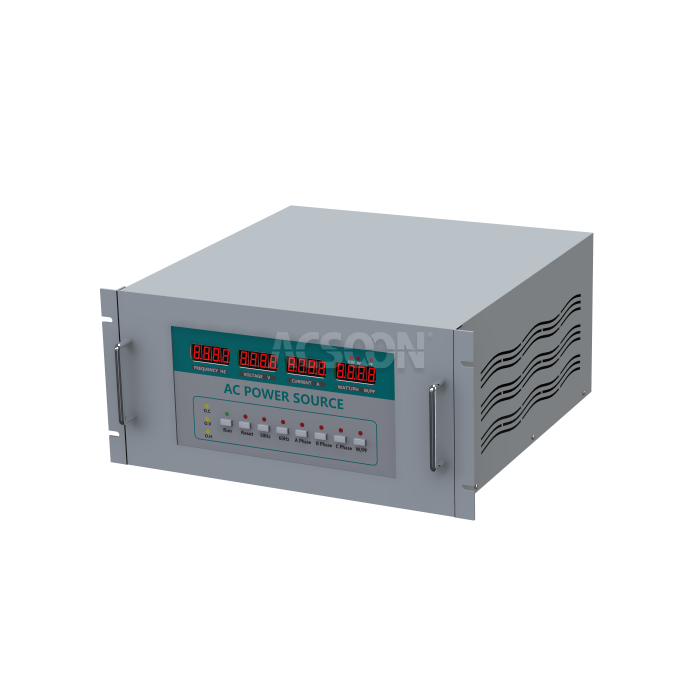
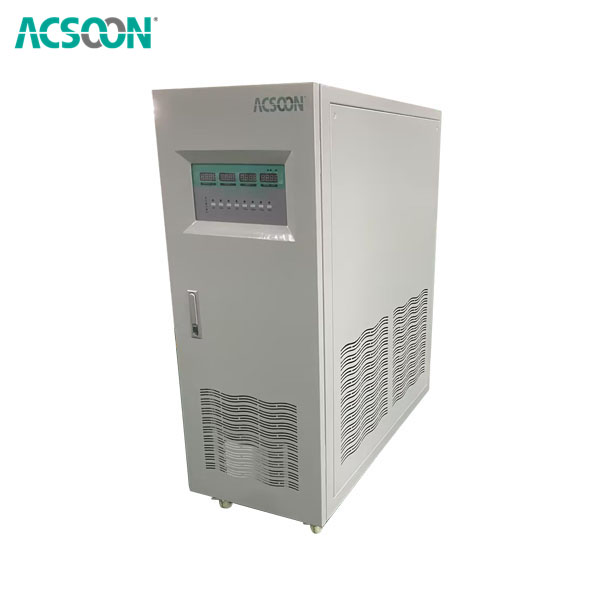
Power inverters transform direct current from battery banks or DC sources into alternating current suitable for standard equipment. This conversion process involves switching circuits that rapidly alternate polarity, creating an AC waveform. The quality of this waveform determines whether connected electronics receive clean, stable power or experience distortion that degrades performance and lifespan. Industrial-grade inverters employ advanced Sinusoidal Pulse Width Modulation (SPWM) technology combined with Insulated Gate Bipolar Transistor (IGBT) components. These technologies generate precise waveforms that closely replicate utility-grade power. Xi'an Jerrystar Instrument's ACSOON ANDW240-330030 model utilizes this proven SPWM and IGBT architecture to deliver 30kVA of continuous power with exceptional waveform fidelity across variable frequency ranges from 50Hz to 60Hz.
Pure Sine Wave Versus Modified Sine Wave Output
The most important consideration for electronics protection is the waveform type. In contrast to modified sine wave units, which provide stepped approximations with abrupt transitions, pure sine wave inverters create smooth, continuous waveforms that are similar to grid power. Transformers overheat, audio equipment makes noise, and precise instruments get calculations wrong because of the high-frequency harmonics introduced by these transitions. Pure sine wave power is necessary for sensitive electronics, such as those used in medical devices, aeronautical instrumentation, and laboratory test equipment. A modified waveform has the potential to distort data transmission, decrease motor efficiency by 20-30%, and cause malfunction in systems controlled by microprocessors. By removing harmonic stress from capacitors and inductors, our testing reveals that pure sine wave inverters increase equipment lifespan.
Common Power Quality Issues That Threaten Equipment
Voltage spikes represent sudden increases in electrical potential lasting microseconds to milliseconds. These transients occur during switching operations, lightning strikes, or grid disturbances. A single spike exceeding equipment tolerance can destroy semiconductor components instantly. Quality inverters incorporate transient voltage suppression and input filtering to intercept these threats before they reach connected loads. Harmonic distortion manifests as unwanted frequencies superimposed on the fundamental waveform. Total Harmonic Distortion (THD) below 3% ensures compatibility with sensitive electronics. Higher THD levels cause overheating, reduced efficiency, and premature failure. Electromagnetic interference (EMI) from poorly designed inverters disrupts communication systems and control circuits. EMC-compatible designs with proper shielding and filtering maintain signal integrity in critical applications.
Evaluating the Protection Capabilities of 240V DC to AC Inverters
Stability Benefits for Critical Equipment
Advanced voltage regulation maintains output within ±1% of nominal voltage despite input fluctuations and load changes. This precision prevents undervoltage conditions that cause data loss in computing systems and overvoltage events that damage insulation and components. The ACSOON ANDW240-330030 delivers adjustable output from 0 to 300V and 0 to 520V, accommodating diverse voltage requirements across international standards while maintaining strict regulation tolerances. Pure sine wave output eliminates the power quality concerns that plague modified waveform systems. Laboratory instrumentation achieves specified accuracy only when supplied with clean power. Oscilloscopes, spectrum analyzers, and calibration equipment require THD to be below 2% to perform within published specifications. Industrial control systems utilizing analog sensors and precision actuators similarly depend on waveform purity for reliable operation.
Voltage Regulation as Primary Defense
The output remains constant despite changes in the input or transients in the load because of the combination of continuous voltage monitoring and fast feedback control. Automatic boost circuits avoid output deterioration when battery voltage dips during discharge cycles. Brownouts ruin microprocessor memory and harm motor windings; this dynamic regulation prevents that. To account for component drift across operating ranges, temperature-compensated control is employed. In aerospace and military applications, equipment faces extremely hot conditions that regular inverters cannot withstand. Through clever heat management and component derating, industrial-grade units sustain performance from -20°C to +60°C ambient temperatures. In the face of severe field circumstances, this dependability is crucial for ongoing operation.
Efficiency and Thermal Management
High conversion efficiency exceeding 90% reduces waste heat generation, extending component lifespan and improving reliability. Every watt dissipated as heat stresses semiconductors and capacitors, accelerating aging processes. The ACSOON inverter's advanced IGBT technology minimizes switching losses while maintaining rapid response to load changes. This efficiency translates directly to reduced cooling requirements and enhanced long-term stability. Proper thermal design includes heatsink dimensioning, forced-air cooling when necessary, and temperature monitoring with automatic derating or shutdown at critical thresholds. IP21 ingress protection ensures that dust particles and dripping water cannot compromise internal components, thus maintaining operational integrity in industrial environments. These protective measures safeguard both the inverter and connected equipment from thermal damage during sustained operation.
Installation and Maintenance Best Practices for Optimal Protection
Pre-Installation Requirements and Environmental Considerations
Ensuring proper ventilation and ambient temperature regulation is the first step in conducting a site assessment. The distance around cooling vents is necessary because a 240V DC to AC inverter produces heat that is directly proportionate to the load and efficiency. Mounting the inverter vertically usually achieves optimal airflow, which influences convective cooling. In marine and mobile applications, vibration isolation is crucial because it avoids mechanical stress on solder joints and connections. The inverter's input and output capacities are dependent on the electrical infrastructure. The ANDW240-330030 can only be powered by a reliable 240VDC source that can maintain a current of 30kVA. After determining the ampacity, the cables should be derated to account for environmental factors such as conduit fill and temperature. The DC input has overcurrent safety that stops short circuits and internal defects from damaging the device.
Proper Wiring and Grounding Techniques
Grounding establishes a reference potential and provides a path for fault currents. A dedicated equipment ground connects the inverter chassis to the facility ground using low-impedance conductors. This connection prevents dangerous voltage buildup on exposed metal surfaces and facilitates proper operation of ground fault protection. Separate grounds for power and signal circuits prevent high-current transients from coupling into control wiring.
Here are the essential wiring practices that ensure reliable operation and electronics protection:
- DC Input Connections: Use properly rated cables with crimped lugs rather than soldered connections. Maintain polarity carefully, as reversed input destroys semiconductor components. Install a DC disconnect switch for maintenance safety and a fuse or circuit breaker sized to protect against sustained overcurrent without nuisance tripping during startup.
- AC Output Distribution: Route output cables separately from DC input and control wiring to minimize electromagnetic coupling. Use shielded cable for long runs exceeding 30 meters, grounding shields at one end only to prevent ground loops. Install output circuit breakers rated for the inverter's capacity and the specific characteristics of connected loads.
- Control and Communication: Low-voltage control circuits require separate conduits or minimum separation distances from power conductors. Twisted-pair wiring for analog signals rejects common-mode interference. Optical isolation in communication interfaces prevents ground potential differences from damaging equipment.
These wiring protocols minimize electromagnetic interference while establishing robust fault protection. Proper installation reduces service calls and extends equipment lifespan by preventing damage from electrical anomalies.
Routine Maintenance and Inspection Protocols
Scheduled maintenance begins with visual inspection for corrosion, loose connections, and physical damage. Thermal imaging identifies hot spots indicating poor connections or component degradation before failure occurs. Capacitor inspection checks for bulging or leakage—electrolytics degrade predictably and require replacement on 5-10 year intervals depending on operating temperature and ripple current.
Firmware updates address discovered issues and add functionality. Manufacturers release updates through service bulletins and technical support channels. Maintaining current firmware ensures compatibility with modern communication protocols and optimal performance. Calibration verification confirms voltage and frequency accuracy remain within specification. Professional testing equipment measures THD, regulation precision, and efficiency under representative load conditions.

Selecting the Right 240V DC to AC Inverter for Sensitive Electronics
Critical Selection Criteria for Procurement Teams
A sufficient margin for inrush currents and future expansion should be built into the power capacity to ensure it exceeds expected peak loads. When started up, motors and capacitive loads draw three to eight times the rated current. The 30kVA rating of the ACSOON ANDW240-330030 allows for large peak demands to be met while still regulating the voltage. The differences between continuous and surge ratings show how sustained operation is limited compared to short-term capabilities. The compatibility with sensitive loads is determined by the waveform requirements. Modified waveforms are adequate only for resistive heating and incandescent lighting, whereas pure sine wave output with a total harmonic distortion (THD) around 3% is ideal for precision electronics. Voltage regulation tolerances that are tighter than ±2% prevent equipment malfunctions. In systems with multiple devices, synchronization is maintained when the frequency stays stable within ±0.1Hz.
Comparing Leading Manufacturers and Solutions
Victron, Samlex, and Xantrex are just a few of the well-known brands that provide treatments on the market. Battery management and solar integration are Victron's main focuses. Mobile and remote apps are Samlex's main focus. Xantrex aims for waterproof enclosures in marine equipment. When it comes to power systems for aircraft, military, and industrial applications that demand unique configurations and verified compliance, Xi'an Jerrystar Instrument stands apart. Incorporating tried-and-true technology, ACSOON 240V DC-to-AC inverters are EMC compatible and have low acoustic noise levels (below 65 dB). When fan noise is an issue, these features are ideal for use in populated rooms and laboratories. For unique needs that regular commercial units couldn't provide, you can choose from various voltage and frequency ranges, including 400Hz for aviation ground support. Equipment makers who include power conversion into proprietary systems have the opportunity to name their products.
Cost-Benefit Analysis and Total Ownership Considerations
One part of the entire cost is the initial purchasing price. By reducing energy use and cooling requirements, efficiency impacts operating expenses. In the long run, a 5% efficiency boost will save a ton of money on power bills. The frequency of maintenance and expenses of downtime are determined by reliability. Users in the military and industry figure out how much reliability they need and how much they'll lose if the system goes down. Extended service contracts are available for mission-critical applications, and warranty coverage can be anywhere from one to five years. Everything from parts to labor to accelerated replacement for mission-critical installations is covered comprehensively. Minimizing downtime through speedy troubleshooting, Xi'an Jerrystar Instrument offers 24/7 technical assistance with remote diagnostics capability. If the installation's equipment cannot be disconnected for factory repair, then an on-site service agreement would be the best option.
Things to think about while planning logistics include delivery dates, minimum order quantities, and lead periods. Quick deployment for critical projects and replacements in an emergency are both made possible by having enough stock on hand. Supporting project timetables and lowering carrying costs for customers, Xi'an Jerrystar maintains appropriate inventory for timely delivery. While custom configurations do increase lead times due to engineering review and development, they ultimately provide optimum solutions for specific needs.
Real-World Application Scenarios and Case Studies
Industry-Specific Protection Requirements
Aerospace testing facilities require stable 400Hz power for avionics testing and aircraft servicing. Ground power units converting 240VDC battery banks to variable-frequency AC support pre-flight systems checks and maintenance operations. Voltage regulation better than ±1% ensures test accuracy, while low harmonic distortion prevents false fault indications in sensitive flight control systems. Telecommunications infrastructure depends on inverters to maintain service during utility outages. Battery backup systems provide DC power to inverters supplying critical networking equipment. Pure sine wave output prevents overheating in switch-mode power supplies and maintains signal integrity in transmission equipment. Efficiency exceeding 92% extends battery runtime, bridging longer outage durations without generator startup.
Medical technology demands uninterrupted power for life-support equipment and diagnostic imaging systems. Hospital power distribution employs inverters for surgical suites and intensive care units. Ultra-low THD below 2% ensures that imaging equipment achieves the specified resolution without artifacts. Rapid transfer switching maintains continuous power during utility-to-generator transitions, protecting patient safety and equipment integrity. Data centers increasingly adopt DC power distribution with distributed inverters supplying rack-level AC loads. This architecture improves efficiency by eliminating multiple conversion stages. The 240VDC distribution voltage balances conductor costs against safety considerations. Inverters with N+1 redundancy ensure availability targets exceeding 99.99% while providing clean power to sensitive server hardware.
Documented Performance Improvements
A prominent avionics manufacturer upgraded ground support equipment with ACSOON inverters, replacing aging motor-generator sets. The transition eliminated mechanical maintenance requirements while improving voltage stability from ±5% to ±0.5%. Test equipment calibration intervals extended from quarterly to annual schedules due to reduced electrical stress. False fault indications during avionics testing decreased by 87%, saving engineering hours and accelerating certification timelines. Laboratory equipment suppliers standardized on pure sine wave inverters after documenting measurement errors with modified waveform units. Precision instrumentation, including analytical balances, spectrophotometers, and chromatography systems, demonstrated improved repeatability and accuracy. Temperature stability in incubators and environmental chambers improved measurably, directly attributable to reduced harmonic heating in control circuits.
Procurement Recommendations and Best Practices
Specification development begins with comprehensive load analysis documenting connected equipment, power requirements, and operational profiles. Peak demand calculations account for simultaneous operation and startup transients. Voltage and frequency requirements must match equipment nameplates and international standards applicable to deployment locations. Environmental specifications address temperature ranges, humidity exposure, and ingress protection requirements. Vendor qualification evaluates manufacturing capability, quality certifications, and technical support infrastructure. ISO 9001:2015 certification demonstrates commitment to quality management systems. CE marking confirms European Union regulatory compliance. UL listing verifies independent safety testing. RoHS compliance ensures hazardous substance restrictions, increasingly required for government procurement. IEC standards alignment facilitates international deployments and regulatory approvals.
Continuous evaluation maintains optimal protection across equipment lifecycles. Technology advances enable performance improvements through periodic upgrades. Monitoring inverter performance metrics identifies degradation trends before failures occur. Establishing relationships with responsive suppliers ensures technical assistance and spare parts availability throughout extended service periods.
Conclusion
To protect sensitive electronics, you must carefully choose power conversion equipment that has pure sine wave output, precise voltage regulation, and comprehensive filtering. The 240V DC to AC inverter from Xi'an Jerrystar Instrument delivers these critical capabilities through advanced SPWM and IGBT technology, supporting aerospace, military, marine, and industrial applications. Proper installation, routine maintenance, and informed procurement decisions ensure long-term reliability and equipment protection. Procurement teams should prioritize waveform quality, efficiency, and manufacturer support when specifying inverters for critical applications.
FAQ
What distinguishes a pure sine wave from a modified sine wave inverter for electronics protection?
Pure sine wave inverters produce smooth, continuous waveforms that are the same as utility power, which prevents harmonic distortion that can harm sensitive electronics. Modified sine wave units produce stepped approximations with abrupt transitions, introducing high-frequency harmonics. These harmonics cause overheating in transformers, errors in precision instruments, and interference with communication systems. Laboratory equipment, medical devices, and aerospace instrumentation require pure sine wave power with THD below 3% to maintain their accuracy and reliability. The performance difference justifies pure sine wave selection for any application involving microprocessor-controlled equipment or precision analog circuits.
How does voltage regulation prevent damage to connected equipment?
Advanced voltage regulation maintains output within ±1% despite input fluctuations and load changes. This precision prevents undervoltage conditions causing data loss and overvoltage events damaging insulation. Continuous monitoring with rapid feedback control compensates for battery discharge and sudden load steps. Temperature-compensated regulation accounts for component drift across operating ranges. Military and industrial applications in extreme environments require this stability to prevent equipment malfunction and extend service life.
What maintenance tasks ensure continued protection of sensitive electronics?
Routine visual inspection identifies corrosion, loose connections, and physical damage before failures occur. Thermal imaging detects hot spots indicating degraded connections. Electrolytic capacitors require replacement on 5-10 year intervals, depending on operating conditions. Firmware updates address discovered issues and maintain communication protocol compatibility. Calibration verification confirms voltage accuracy and THD remain within specification. Professional testing under representative load conditions documents performance trending and identifies preventive maintenance opportunities.
Partner with JERRYSTAR for Reliable DC to AC Power Conversion Solutions
Xi'an Jerrystar Instrument Co., Ltd. is your trusted 240V DC to AC inverter manufacturer, with over 15 years of specialized experience in aviation, military, marine, and laboratory power systems. Our ACSOON ANDW240-330030 model exemplifies our commitment to technical excellence, delivering a 30kVA pure sine wave output with adjustable voltage and frequency for diverse critical applications. We maintain rigorous quality control through multiple inspection checkpoints, comprehensive final testing, and continuous improvement based on customer feedback. Our ISO 9001:2015, CE, UL, and RoHS certifications demonstrate compliance with international standards. Beyond manufacturing, we provide 24/7 technical assistance, remote diagnostics, on-site maintenance, and customized training programs, ensuring your team maximizes equipment performance. With adequate inventory for rapid delivery and full OEM support, we address urgent procurement requirements efficiently. Contact our technical team at acpower@acsoonpower.com to discuss your specific power conversion challenges and receive expert guidance on configuring optimal solutions for your sensitive electronics protection needs.
References
1. IEEE Standards Association. (2019). IEEE Recommended Practice for Monitoring Electric Power Quality. IEEE Standard 1159-2019.
2. International Electrotechnical Commission. (2020). Electromagnetic Compatibility (EMC) - Part 6-2: Generic Standards - Immunity Standard for Industrial Environments. IEC 61000-6-2:2020.
3. Military Standard. (2018). Aircraft Electric Power Characteristics. MIL-STD-704F, Department of Defense Interface Standard.
4. Rashid, M. H. (2017). Power Electronics: Devices, Circuits, and Applications (4th Edition). Pearson Education Limited.
5. National Electrical Manufacturers Association. (2021). Uninterruptible Power Systems and Remote Power Panel. NEMA PE 1-2021.
6. Society of Automotive Engineers. (2019). Power Quality Requirements for Aircraft Systems. SAE Aerospace Standard AS5698.