




Aircraft Power Supply: How to Maximize Performance and Reliability?
For aviation operators across Southeast Asia—including Singapore Changi Airport, Kuala Lumpur International Airport, and emerging Vietnamese aviation hubs—the performance of an aircraft power supply system directly impacts flight readiness, maintenance efficiency, and operational cost control. In environments where aircraft turnaround time is tightly scheduled, even minor instability in ground or onboard power systems can lead to delays, avionics faults, or unnecessary maintenance checks. Therefore, maximizing reliability is not only a technical requirement but also a commercial necessity. Modern aviation depends on highly stable 400Hz AC ground power systems and 28VDC auxiliary systems that ensure aircraft can operate safely during maintenance, testing, and pre-flight preparation.
Understanding Aircraft Power Supply Systems: Core Architecture
AC vs DC Power in Aviation
The global aviation industry standardizes around two main electrical systems:
- 115V AC / 400Hz for avionics and onboard systems
- 28V DC for control systems, emergency backup, and battery charging
Aviation Power Distribution Overview
| System Type | Voltage | Frequency | Main Application |
|---|---|---|---|
| AC Power | 115V / 200V | 400Hz | Avionics, radar, cabin systems |
| DC Power | 28V | N/A | Backup systems, control logic |
| Ground Power | 115V/200V | 400Hz | Maintenance & pre-flight support |
A stable aircraft power supply ensures uninterrupted energy delivery during critical ground operations and system diagnostics.
Key Components in Aircraft Power Architecture
A modern aviation power system includes multiple integrated subsystems:
- Static frequency converters (50/60Hz → 400Hz)
- Transformer rectifier units (TRUs)
- Distribution panels with circuit protection
- Voltage regulators and load balancing systems
- Ground Power Units (GPU)
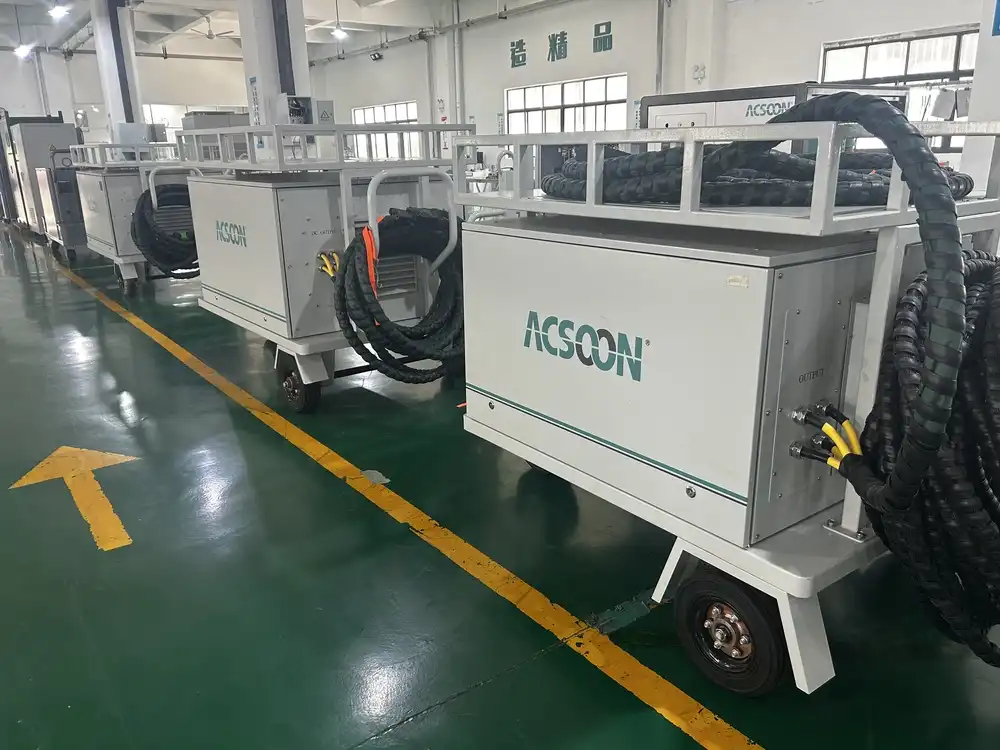
For example, ACSOON GPU400L-330090 provides 90kVA stable output for aircraft boarding bridge operations, ensuring continuous cabin system support during passenger handling.
Common Reliability Risks in Aviation Power Systems
Critical Failure Factors
| Risk Factor | Impact | Mitigation Method |
|---|---|---|
| Thermal stress | Reduced component lifespan | Forced-air cooling + derating design |
| Harmonic distortion | Avionics interference | Multi-stage filtering (<3% THD) |
| Voltage instability | System resets or faults | Automatic voltage regulation |
| Environmental exposure | Corrosion and insulation failure | IP54–IP65 enclosure protection |
In Southeast Asia, humidity and coastal salt exposure make environmental protection a critical procurement factor for any aircraft power supply system.
Identifying and Eliminating Performance Bottlenecks
Where Energy Loss Occurs in Aircraft Power Supply
Efficiency losses in aviation power systems typically come from:
- Transformer copper losses
- Cable resistance and voltage drop
- Reactive power in inductive loads
- Heat dissipation in converters
Efficiency Loss Breakdown
| Loss Source | Description | Impact Level |
|---|---|---|
| Copper loss | Conductor resistance heating | High |
| Core loss | Magnetic hysteresis in transformers | Medium |
| Reactive load | Poor power factor from inductive systems | High |
| Cable loss | Long-distance distribution drop | Medium–High |
Engineering Optimization Strategies
Modern aircraft power supply systems improve efficiency through:
- IGBT-based switching technology (>90% efficiency)
- Active power factor correction (PFC)
- Low-impedance cable design
- Intelligent thermal control systems
These improvements reduce both energy waste and maintenance frequency, which is especially valuable for high-utilization airports like Singapore Changi and regional MRO hubs.
Predictive Monitoring for Reliability Improvement
Modern systems integrate digital monitoring:
- Voltage stability tracking
- Real-time current analysis
- Thermal sensor feedback
- Fault history logging
Facilities using predictive maintenance report up to 40% reduction in unplanned downtime, especially in aircraft testing and maintenance environments.
Selecting the Right Aircraft Power Supply System
Key Procurement Criteria
Choosing a reliable aircraft power supply requires evaluating technical and operational parameters.
Selection Benchmark Table
| Parameter | Commercial Aviation | Military Aviation | MRO Facilities |
|---|---|---|---|
| Power rating | 60–90kVA | 30–120kVA | 20–100kVA |
| Voltage accuracy | ±2% | ±1% | ±2% |
| Frequency stability | ±0.5Hz | ±0.2Hz | ±0.5Hz |
| Environmental rating | IP54 | IP65+ | IP54–IP65 |
| Duty cycle | Medium–High | Very High | High |
Supplier Capability Comparison
| Supplier Type | Strength | Limitation |
|---|---|---|
| OEM aviation brands | High certification, system integration | High cost, long lead time |
| Specialized GPU manufacturers | Fast delivery, flexible customization | Limited aircraft system integration |
| General industrial suppliers | Low cost | Not aviation-certified |
JERRYSTAR focuses on ground-based aircraft power supply systems designed for rapid deployment, flexible maintenance, and multi-aircraft compatibility.
Redundancy and System Reliability Design
High-reliability aviation operations require redundancy strategies:
- Dual power feed architecture
- Modular replaceable converter units
- Backup GPU systems for gate operations
- Automatic transfer switching (ATS)
This ensures uninterrupted operations even during maintenance or component failure scenarios.
Procurement Strategy and Lifecycle Cost Optimization
Total Cost of Ownership (TCO) Breakdown
| Cost Element | Mobile GPU System | Fixed Installation |
|---|---|---|
| Initial CAPEX | Low–Medium | High |
| Installation cost | Minimal | High (civil works) |
| Maintenance cost | Medium | Low |
| Downtime risk | Medium | Low |
| ROI timeline | Short–Mid | Long-term |

Certification and Compliance Requirements
Any professional aircraft power supply must comply with:
- MIL-STD-704F (Aircraft power characteristics)
- DO-160G (Environmental conditions)
- ISO 9001 / AS9100 (Quality management systems)
These standards ensure compatibility with international aircraft fleets and regulatory approval in ASEAN aviation hubs.
Supplier Evaluation Checklist
Before procurement, verify:
- MTBF ≥ 50,000 hours
- Factory testing reports (100% load test)
- Local technical support availability
- Spare parts availability
- Warranty coverage (2–3 years minimum)
Maintenance and Troubleshooting Best Practices
Preventive Maintenance Schedule
| Maintenance Type | Frequency | Key Focus |
|---|---|---|
| Visual inspection | Monthly | Cables, connectors |
| Electrical testing | Quarterly | Voltage, frequency stability |
| Thermal imaging | Quarterly | Hotspot detection |
| Full system calibration | Annually | Performance verification |
Common Fault Diagnosis in Aircraft Power Supply
Typical issues include:
- Output voltage deviation
- Cooling fan degradation
- Cable resistance increase
- Harmonic distortion rise
Digital diagnostic systems simplify troubleshooting and reduce downtime in busy airport environments.
Upgrade Strategy for Aging Systems
Modernizing legacy aircraft power supply systems improves:
- Efficiency (up to +15%)
- Monitoring capability
- Load handling stability
- Maintenance cost reduction
Retrofitting control modules is often more cost-effective than full system replacement.
Future Trends in Aircraft Power Supply Systems
Smart Aviation Power Systems
Emerging technologies include:
- IoT-based monitoring platforms
- AI-driven predictive maintenance
- Remote fleet management dashboards
Energy Efficiency Improvements
| Technology | Benefit |
|---|---|
| Silicon carbide (SiC) semiconductors | Higher efficiency (>95%) |
| Digital twin modeling | Predict system failures |
| Hybrid energy integration | Reduced grid dependency |
Green Airport Infrastructure Integration
Southeast Asian airports are increasingly integrating:
- Solar-powered ground systems
- Battery-supported GPU systems
- Low-emission airport operations strategies
Conclusion
Maximizing performance and reliability in an aircraft power supply system requires a balanced approach combining:
- High-efficiency power conversion technology
- Robust environmental protection design
- Predictive maintenance systems
- Proper supplier selection and lifecycle planning
For aviation operators in Singapore, Malaysia, and Vietnam, the most effective strategy is adopting scalable, certified, and digitally monitored power systems that support both current operations and future expansion.
FAQ
What voltage and frequency specifications are standard in aviation power supplies?
Commercial aircraft typically use 115VAC at 400Hz for primary AC systems, while military platforms commonly employ 28VDC for avionics and mission systems. Ground power units must provide these outputs with tight regulation, usually within ±2% voltage tolerance and ±0.5Hz frequency stability. Our GPU400L-330090 delivers 3×200VAC at 400Hz from standard 380V three-phase utility input, making it compatible with international airport infrastructure while meeting aviation specifications.
How can I verify power supply unit reliability before purchase?
Request documentation, including MTBF ratings, certification copies (AS9100, FAA, and EASA), and customer reference lists from similar applications. Conduct factory audits examining quality control procedures and testing protocols. We perform 100% functional testing on every ACSOON unit and maintain ISO 9001-certified quality management systems that ensure consistent reliability across our production.
What benefits do backup power systems provide in aviation applications?
Redundant power supplies ensure continuity during maintenance, prevent mission delays from equipment failures, and protect sensitive avionics from power interruptions that could corrupt software or damage components. Ground support equipment with backup capability allows continued operations during primary unit servicing, maximizing aircraft availability in high-tempo operational environments.
Partner with JERRYSTAR for Superior Ground Power Solutions
Xi'an Jerrystar Instrument Co., Ltd. brings over 15 years of specialized expertise as an aircraft power supply manufacturer serving aviation, military, marine, and industrial testing sectors worldwide. Our ACSOON brand GPU400L-330090 represents proven 400Hz frequency conversion technology engineered specifically for demanding ground support applications. We maintain substantial inventory enabling fast delivery to meet urgent operational requirements, while our custom engineering capabilities address unique specifications that standard products cannot satisfy.
Reach our technical team at acpower@acsoonpower.com to discuss your specific power conversion requirements. We provide detailed technical consultations, custom quotations, and comprehensive product documentation that supports informed procurement decisions. Our AS9100 certification, combined with FAA and EASA approvals, ensures you receive aerospace-grade quality backed by 24/7 technical support and comprehensive warranty coverage. Whether you need single units for specialized applications or fleet-wide standardization programs, JERRYSTAR delivers reliable power solutions that maximize your operational performance.
References
1. Moir, I., & Seabridge, A. (2008). Aircraft Systems: Mechanical, Electrical, and Avionics Subsystems Integration. John Wiley & Sons.
2. Glennon, T. P. (2012). "Ground Power Systems for Commercial Aircraft." SAE International Journal of Aerospace, 5(2), 456-471.
3. Federal Aviation Administration. (2019). Advisory Circular 150/5220-20A: Airport Snow and Ice Control Equipment. U.S. Department of Transportation.
4. Society of Automotive Engineers. (2016). ARP5015: Electric Power Characteristics for Aircraft Ground Support Equipment. SAE Aerospace Standard.
5. Department of Defense. (2004). MIL-STD-704F: Aircraft Electric Power Characteristics. U.S. Military Standard.
6. European Union Aviation Safety Agency. (2020). Certification Specifications for Large Aeroplanes CS-25: Electrical Systems and Equipment. EASA Regulatory Framework.