




How Does a 400hz Ground Power Supply Support Aircraft Maintenance?
A 400Hz ground power supply plays a critical role in modern aircraft maintenance by delivering stable, aviation-grade electrical power without relying on the aircraft’s Auxiliary Power Unit (APU). This ensures technicians can safely operate avionics, environmental systems, and diagnostic equipment during inspections, troubleshooting, and repair tasks. By eliminating unnecessary APU usage, maintenance facilities significantly reduce fuel consumption, mechanical wear, and operational costs while improving turnaround efficiency. For aviation hubs in Southeast Asia—such as Singapore Changi, Kuala Lumpur International Airport, and major Vietnam MRO bases—this technology directly supports high aircraft utilization and strict on-time performance targets.
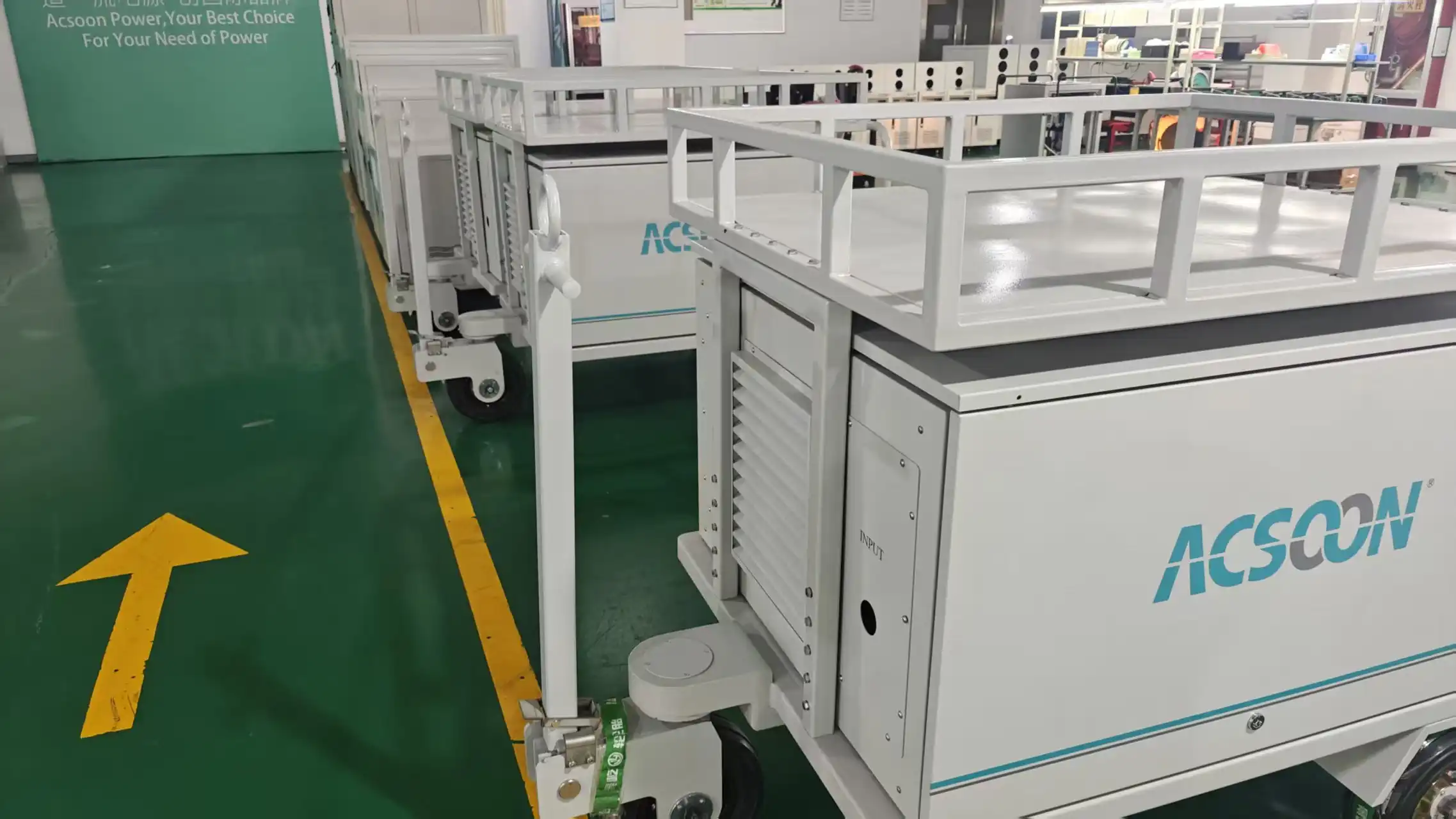
Understanding 400Hz Ground Power Supply in Aircraft Maintenance
Why Aviation Uses 400Hz Power
Aircraft electrical systems are designed around 400Hz frequency instead of the 50Hz/60Hz used in national grids. This enables:
- Smaller transformers and motors
- Up to 70% weight reduction
- Higher power density
- Better system efficiency
Key Frequency Comparison
| Power Type | Frequency | Main Use | Aircraft Compatibility | Key Limitation |
|---|---|---|---|---|
| Utility Power | 50/60Hz | Industrial / Grid | Not compatible | Too heavy for equipment |
| Aircraft Power | 400Hz | Aviation systems | Fully compatible | Requires conversion |
| DC Power | 28VDC | Avionics backup | Partial systems | Limited load capacity |
How a 400Hz Ground Power Supply Works
A modern 400Hz ground power supply converts standard three-phase utility electricity into stable aviation-grade output using solid-state conversion technology.
Typical performance parameters include:
- Voltage stability: ±1% to ±2%
- Harmonic distortion: <3% THD
- Phase balance: 120° ±1°
- Fast transient response for load changes
Core System Architecture
| Component | Function | Benefit in Maintenance |
|---|---|---|
| Rectifier Stage | AC → DC conversion | Stable energy base |
| Inverter Stage | DC → 400Hz AC output | Precise frequency control |
| Digital Controller | Real-time regulation | Prevents voltage fluctuation |
| Cooling System | Thermal management | Ensures continuous operation |
Application in Maintenance Operations
During aircraft maintenance, a 400Hz ground power supply enables:
- Avionics system testing without engine start
- Hydraulic and flight control diagnostics
- Cabin environmental system operation
- Battery charging and electrical troubleshooting
This ensures aircraft remain fully operational during ground checks while eliminating dependency on onboard power generation.
Key Benefits of Using 400Hz Ground Power Supply in Maintenance
Operational Efficiency and Fuel Savings
APU operation typically consumes significant jet fuel during ground maintenance. Using ground power eliminates this cost.
APU vs Ground Power Comparison
| Factor | APU Power | 400Hz Ground Power Supply |
|---|---|---|
| Fuel Consumption | High (200–400 lbs/hour) | Zero |
| Maintenance Wear | High | Minimal |
| Noise Level | High | Low |
| Emissions | Significant | None on aircraft |
For high-traffic airports in Singapore and Malaysia, this translates into substantial annual savings.
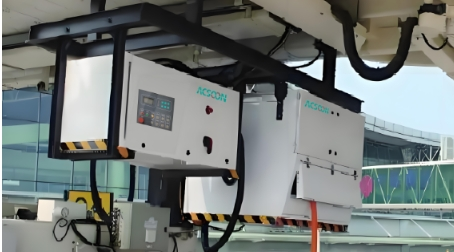
Regulatory Compliance and Safety
Aviation ground power must comply with international standards:
- MIL-STD-704F (Military aircraft power quality)
- DO-160G (Environmental and EMC standards)
A certified 400Hz ground power supply ensures:
- Stable voltage delivery
- Electromagnetic compatibility
- Safe aircraft interface
- Reduced risk of avionics damage
Extended Aircraft and Equipment Lifespan
Reducing APU usage directly extends its service life, which is critical given overhaul costs ranging from $200,000 to $500,000.
Additionally, stable ground power:
- Reduces thermal stress on avionics
- Prevents voltage fluctuation damage
- Improves diagnostic accuracy
- Minimizes unscheduled maintenance events
Fixed vs Mobile 400Hz Ground Power Supply Systems
Different airport environments require different configurations.
Installation Type Comparison
| Feature | Fixed System | Mobile System |
|---|---|---|
| Installation | Permanent infrastructure | Portable trolley/unit |
| Power Capacity | Higher (80–180kVA+) | Medium (30–90kVA) |
| Flexibility | Low | High |
| Best Use Case | Major airports, hangars | Remote stands, MRO, backup |
| Initial Cost | High | Moderate |
Operational Suitability in Asia-Pacific Context
| Facility Type | Recommended Solution | Reason |
|---|---|---|
| Changi-style hub airports | Fixed system | High aircraft turnover |
| Vietnam emerging airports | Mobile system | Flexible expansion |
| MRO facilities (Malaysia) | Hybrid system | Mixed workload |
| Military airbases | Mobile system | Tactical deployment |
Hybrid Deployment Strategy
Many modern facilities adopt a hybrid approach:
- Fixed systems for gates and hangars
- Mobile systems for overflow and remote stands
- Shared backup units for emergency operations
This approach maximizes ROI while maintaining operational resilience.
Technical Considerations Before Procurement
Key Performance Parameters
When selecting a 400Hz ground power supply, engineers typically evaluate:
- Voltage stability under dynamic loads
- Frequency precision and phase balance
- Load transient recovery time
- Environmental protection level
Technical Benchmark Table
| Parameter | Recommended Standard | Importance |
|---|---|---|
| Voltage Stability | ±2% | Aircraft safety |
| Frequency Accuracy | ±0.5Hz | Avionics compatibility |
| THD | <3% | Signal integrity |
| Protection Rating | IP54 or higher | Harsh environment use |
Environmental Suitability
Southeast Asia presents unique operating conditions:
- High humidity
- Coastal corrosion
- Heavy rainfall
- High ambient temperature
A reliable 400Hz ground power supply must include:
- Anti-corrosion coating
- Thermal protection system
- Sealed enclosure design
- Dust and moisture resistance
Procurement Strategy and ROI Optimization
Total Cost of Ownership (TCO) Model
| Cost Element | Fixed System | Mobile System |
|---|---|---|
| Initial Investment | High | Medium |
| Maintenance Cost | Low | Medium |
| Energy Efficiency | High | High |
| Flexibility Value | Low | High |
Supplier Evaluation Criteria
Procurement teams in Singapore, Vietnam, and Malaysia typically prioritize:
- ISO 9001 certification
- Local service support availability
- Spare parts accessibility
- Delivery lead time
- Custom engineering capability
Manufacturers like JERRYSTAR provide ACSOON solutions with configurable output ranges, rapid delivery capability, and OEM customization support for regional aviation projects.
Maintenance Best Practices for Long-Term Reliability
Routine Maintenance Schedule
| Interval | Task | Purpose |
|---|---|---|
| Monthly | Visual inspection & load test | Prevent early faults |
| Quarterly | Electrical calibration | Maintain accuracy |
| Annual | Full system servicing | Extend lifespan |
Common Failure Prevention Measures
- Prevent overheating through airflow management
- Inspect connectors for wear and oxidation
- Monitor harmonic distortion trends
- Replace aging capacitors proactively
Predictive maintenance significantly reduces downtime in high-utilization airports.
Conclusion
A 400Hz ground power supply is a foundational component in modern aircraft maintenance operations, ensuring stable electrical performance, reduced operational costs, and compliance with global aviation standards.
Choosing between fixed and mobile configurations depends on infrastructure maturity, aircraft traffic density, and operational flexibility requirements. In fast-growing aviation markets such as Vietnam, Singapore, and Malaysia, hybrid deployment strategies are increasingly becoming the most efficient and cost-effective approach.
FAQ
Why does aviation use a 400 Hz frequency instead of the standard 60 Hz?
The higher frequency enables significant weight reduction in electrical components. Transformers, motors, and generators operating at 400Hz utilize smaller magnetic cores, reducing equipment weight by approximately 70% compared to 60Hz equivalents. This weight savings directly improves aircraft fuel efficiency and payload capacity, making 400Hz the established standard across commercial and military aviation since the 1950s.
What maintenance practices extend the lifespan of ground power units?
Regular inspection of electrical connections prevents resistance buildup and hotspots. Filter replacement maintains cooling airflow, preventing thermal stress on electronic components. Annual calibration verification ensures voltage and frequency accuracy within specifications. The modular design of solid-state converters facilitates component replacement during scheduled maintenance, extending overall system life beyond 20 years with proper care.
Can portable units handle all maintenance scenarios?
Portable ground power units suit many applications but have capacity limitations. They excel in supporting smaller aircraft, emergencies, and facilities with changing operational layouts. Heavy maintenance on large aircraft requiring extended high-power delivery typically demands fixed-mounted units with greater capacity reserves. Selection should match your specific fleet composition, maintenance schedules, and facility infrastructure to optimize operational efficiency.
Partner with JERRYSTAR for Reliable Aviation Ground Power Solutions
JERRYSTAR delivers specialized ground power equipment engineered specifically for demanding aviation maintenance environments. Our ACSOON brand GPU400-330075 combines solid-state reliability with practical features, including digital diagnostics, automatic voltage compensation, and transport mobility. As an established 400 Hz ground power supply manufacturer with over 15 years of industry experience, we support commercial airports, military airbases, MRO facilities, aerospace manufacturers, and naval applications worldwide.
We maintain substantial inventory enabling rapid delivery for urgent requirements while supporting custom configurations matching unique operational needs. Our ISO 9001-certified manufacturing processes ensure consistent quality across every unit. Connect with our engineering team at acpower@acsoonpower.com to discuss your specific power requirements, request detailed specifications, or obtain procurement quotations. Whether you need standard units or customized solutions, JERRYSTAR provides the technical expertise and manufacturing capability to support your aircraft maintenance operations with dependable, efficient power conversion equipment.
References
1. Smith, J.R. (2021). Aircraft Electrical Systems: Principles and Applications. Aviation Technical Publishers.
2. Department of Defense (2020). MIL-STD-704F: Aircraft Electric Power Characteristics. U.S. Government Printing Office.
3. RTCA, Inc. (2019). DO-160G: Environmental Conditions and Test Procedures for Airborne Equipment. Radio Technical Commission for Aeronautics.
4. Anderson, M.K. & Thompson, P.L. (2022). "Ground Support Equipment Optimization for Modern Aircraft Maintenance." Journal of Aviation Technology and Engineering, 11(2), 45-62.
5. International Air Transport Association (2021). Airport Handling Manual: Ground Power Operations. IATA Publications.
6. Wilson, R.D. (2020). Frequency Conversion Technology for Aerospace Applications. Professional Engineering Publishing.