




Are 60 to 50Hz Frequency Converters Energy Efficient?
More and more, modern industrial processes need reliable power conversion options that can connect different areas' electrical frequency standards. A 60 to 50Hz frequency converter changes electricity systems that run at 60Hz in North America and some Asian countries to the 50Hz rate used in Europe, the Middle East, and most of the industrial world. The efficiency rates for these devices are usually between 90% and 96%, but this depends on the load and the quality of the parts. Modern static frequency converters that use semiconductor technology have much lower conversion losses than older rotary designs. This makes them useful for supporting aircraft on the ground, operating ships, labs for testing, and factories making things, all of which need to make sure that their equipment works with each other to avoid downtime and wasteful energy use.
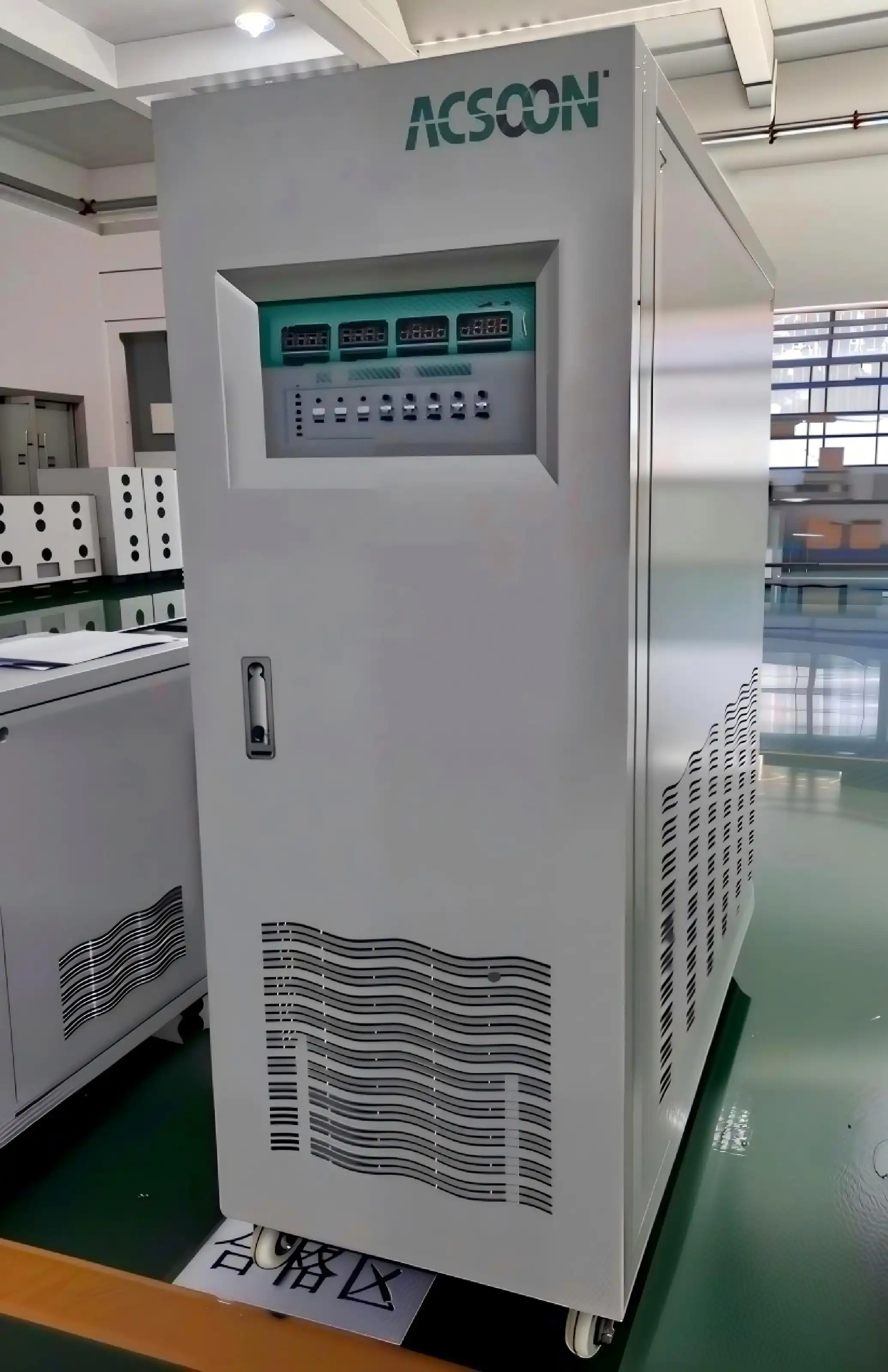
Understanding 60 to 50Hz Frequency Converters and Their Energy Efficiency
Facilities that use foreign technology that requires different electrical standards need frequency converters as basic infrastructure. When you understand how these devices work, you can see why current units use so little energy.
Core Operating Principles of Frequency Conversion Technology
A two-step process that is very different from a simple voltage change is used by static frequency converters. The 60Hz intermittent current that comes in goes through a rectifier step first, which changes it to direct current. This DC stage in the middle works as a buffer, separating the input frequency from the output frequency. After the DC power goes to an inverter part with insulated-gate bipolar transistors or other similar semiconductors, they make clean AC power at exactly 50Hz. This electronic method gets rid of the mechanical losses that came with older motor-generator sets, which changed frequency by using moving parts. Digital signal processors in modern designs constantly watch power quality, changing switching patterns thousands of times per second to keep output voltage and frequency stable, no matter how the input voltage or load changes.
Primary Factors Affecting Conversion Efficiency
How much raw power actually gets to the connected equipment and how much is lost as heat or harmonic distortion depends on a number of technical factors. The quality of the components is very important. For example, premium semiconductor switches have lower forward voltage drops and faster switching speeds, which directly lower resistance losses during operation. Thermal management systems are also very important because high working temperatures make parts less resistant and speed up the loss of performance. Load features have a big effect on performance. Most converters reach their highest level of efficiency between 75% and 85% of their maximum capacity. Overall efficiency goes down when you run below 30% capability or at full load all the time. Another thing to think about is the harmonic content. If the overall harmonic distortion is less than 3%, it means that the power conversion is clean and that little energy is lost in frequencies that aren't needed. Low-THD output is especially helpful for devices that run important infrastructure in places like flight hangars, navy dockyards, or precise labs because it protects sensitive electronics and makes the best use of energy.
Electronic Versus Mechanical Frequency Conversion Methods
Moving from rotating converters to solid-state systems is a huge step forward in how efficiently power is converted. Bearing wear, windage losses, magnetic hysteresis, and copper losses in both the motor and generator windings are some of the ways that rotary units with motor-generator pairs lose energy. Under ideal conditions, these mechanical systems usually work at 70–85% efficiency. As parts age, they lose some of their performance. Electronic converters don't have any spinning parts, so they don't have any mechanical losses or upkeep needs. Static designs go into steady-state operation right away, without any starting delays. They also stay efficient across a wider range of loads and take up a lot less floor space, which is very important in places like research labs, airplane hangars, and submarine bases where space is valuable. The ACSOON AF60W-330030 is a good example of this modern method. It has a 30kVA capacity and a pure sine wave output that keeps THD below 3%. This makes it good for data center cooling systems that need stable 50Hz power from 60Hz infrastructure.
Comparison of 60Hz to 50Hz Frequency Converters with Alternative Solutions
When procurement workers look at 60 to 50Hz frequency converters, they come across a number of different technological methods, each with its own efficiency profile and way of working.
Frequency Converters Versus Traditional Transformers
A common misunderstanding is that 60 to 50Hz frequency converter and step-up or step-down transformers do the same thing. However, they do very different things. Transformers change voltage levels easily through electromagnetic induction, but they can't change frequency. For example, a 60Hz input will always make a 60Hz output, even if the voltage changes. Because they do a simpler electromagnetic job without changing frequencies, transformers are very efficient—often more than 98% efficient. When equipment really needs a different frequency instead of just a different voltage, transformers don't work at all, even though they have higher efficiency rates. A transformer can't be used instead of a proper frequency converter in factories that bring in European production equipment that is rated for 230V 50Hz three-phase power. The frequency converter changes both the voltage and the frequency at the same time. It can take input voltages from 208V to 480V at 60Hz and output a perfectly controlled 50Hz signal at the right voltage. Even though this type of dual conversion loses more power than single-function transformers, it is still the only way to meet real-world frequency conversion needs.
Digital Solid-State Versus Legacy Analog Technologies
Microprocessors are used to run modern digital frequency converters, which are always finding the best switching patterns for power quality and economy. These smart devices change their pulse-width modulation techniques based on the load, changes in the input power, and the temperature. Digital control lets you use advanced features like power factor correction to cut down on wasted reactive power, soft-start routines that lower inrush current, and predictive maintenance programs that check on the health of parts. Older analog designs relied on passive filters and set oscillator circuits, which made them less flexible when things changed. Digital units usually have 3-5% higher efficiency across a wide range of load situations. They also offer full monitoring through LCD screens that show voltage, current, power factor, and operational state. This diagnostic feature is especially useful for aviation repair facilities and naval engineering departments because it lets workers check that everything is working right and spot problems before they affect mission-critical operations.
Variable Frequency Drives Versus Dedicated Frequency Converters
Variable frequency motors and specialized frequency converters use some of the same technology, but they are better suited for different uses. VFDs change the output frequency over a wide range, usually between 0 and 60 Hz or more, to control motor speed. This makes it possible for pumps, fans, and conveyor systems to have precise speed control. Dedicated frequency converters like the AF60W-330030 make sure that the output frequency stays exactly 50Hz no matter what changes happen in the input. They can also handle a variety of tasks besides just motors. When running a single motor at low speeds, VFDs work very efficiently, but they might not have the voltage stability, harmonic performance, or load flexibility needed for general frequency conversion. When checking equipment in a lab at the normal 50Hz frequency, when marine boats are powering imported European machinery, or when working on foreign aircraft systems on the ground, they need special converters that can give a stable frequency and clean power to many loads at the same time. Understanding this difference helps buying professionals choose the right technology that fits the needs of the business instead of options that look similar but don't work well.
Benefits and Energy Efficiency Principles of 60 to 50Hz Frequency Converters
Quality frequency converters do more than just make equipment compatible; they also provide real operational benefits that support investment by lowering costs over the product's lifetime.
Quantifiable Energy Savings in Industrial Operations
Frequency converters that are properly configured and working at optimal load levels lose as little input power as possible while converting. At 80% load, a converter that is 94% efficient can take in 25.5kW of power and send 24kW to linked equipment while losing only 1.5kW of heat. This is a lot better than mechanical converters that lose 4-5kW of heat in the same situations. Over long periods of time, this difference adds up to a big deal. A building with three shifts a year that uses 200,000 kWh of electricity through mechanical converters that are 82% efficient would lose about 36,000 kWh. Upgrading to static converters that are 94% efficient cuts down on waste to about 12,800 kWh, which saves 23,200 kWh per year. At industrial electricity rates that range from $0.08 to $0.12 per kWh in most parts of the U.S., this means that each converter will save between $1,850 and $2,780 per year, which makes the return on investment very appealing, especially for military bases, maritime operations, and factories with multiple units.
Advanced Semiconductor Architecture Enabling High Efficiency
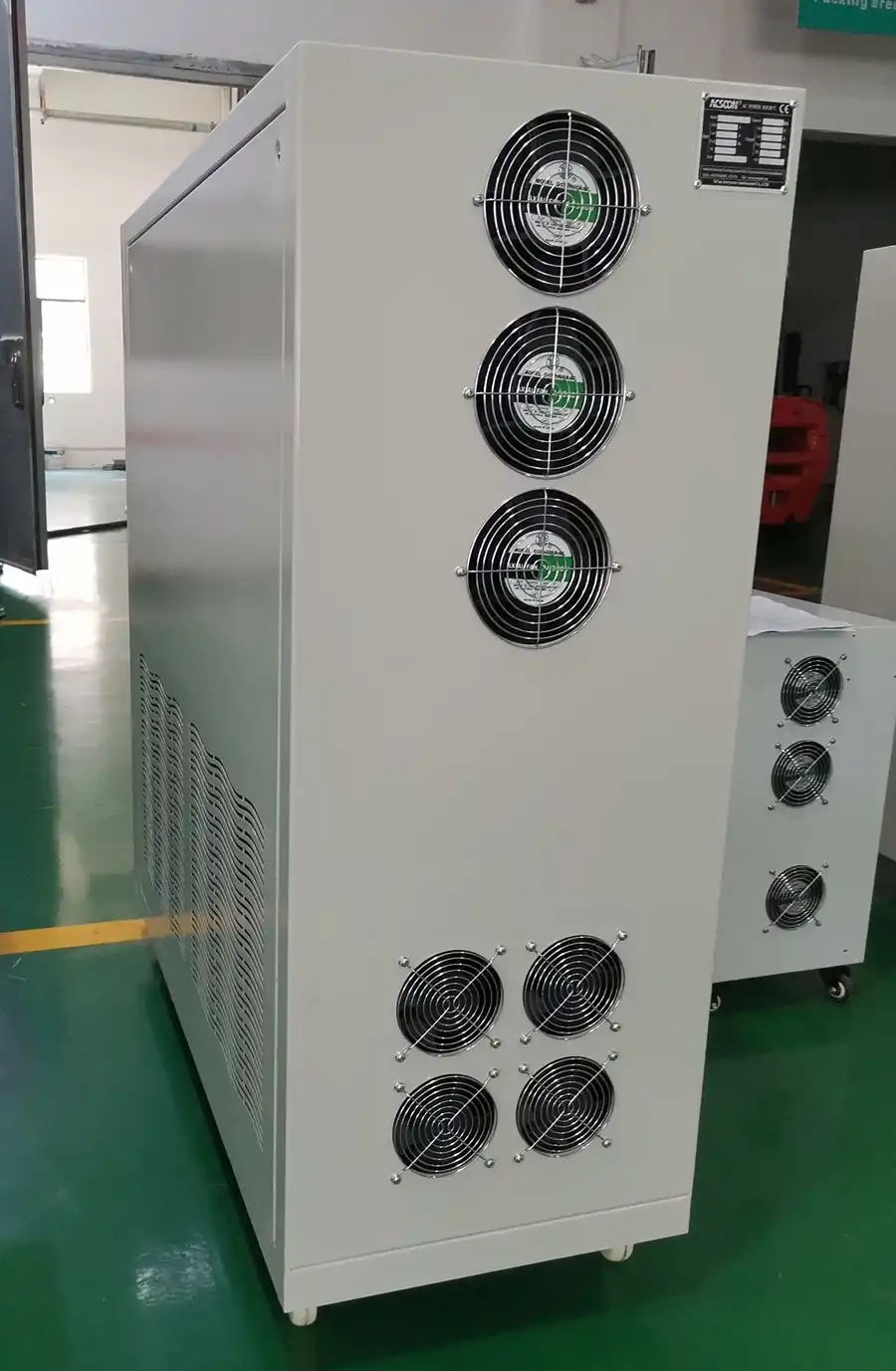
Power processors are very well designed, which is why current converters are so efficient. In high-end converters, insulated-gate bipolar transistors go from conducting to non-conducting states in microseconds, spending very little time in the resistive transition zone, which is where heat production is highest. These devices have low peak voltages, which means that when they are fully conducting, there is very little voltage drop. This directly lowers resistive losses during the power supply. When compared to line-frequency designs, high-frequency switching (5–20kHz) lets magnetic parts be smaller, and core losses be lower. Advanced thermal management uses metal heat sinks with optimized fin shape and sometimes forced air cooling to keep junction temperatures within ranges that make semiconductors work better and last longer. The AF60W-330030 uses these design principles in a strong, upright-mounted frame with IP21 weather protection that is good for industrial settings while keeping efficiency high through smart thermal design.
Extended Equipment Lifespan Through Optimized Power Quality
Electrical equipment that is sensitive and motor-driven will last longer if the power source is clean and stable. Voltage spikes, harmonic distortion, and 60 to 50Hz frequency converter instability that damage motor insulation and rectifier circuits in electronic controls can be stopped by converters that produce a pure sine wave output with a total harmonic distortion (THD) of less than 3%. Modern airplane electronics, like microprocessors, communication systems, and fly-by-wire controls, can't handle bad power quality without breaking down or getting damaged. This is especially true for aviation ground power uses. Clean power delivery is also good for the cooling systems in data centers, the precision tools in labs, and the electronics on military ships. By making equipment last longer and lowering the number of times it breaks down early, good frequency converters save money on costs other than just energy efficiency. These costs include fewer replacement parts, less maintenance work, and fewer operational interruptions, which are harder to measure exactly but have a big effect on total ownership costs over multi-year procurement cycles.
Installation, Maintenance, and Troubleshooting for Optimal Energy Efficiency
Even high-end frequency converters need to be properly set up and cared for on a regular basis to keep working at their best for as long as they are supposed to.
Best Practices for Efficient Installation
Before looking at the main installation rules that keep the converter working efficiently and protect linked loads, it's helpful to know that the right setup has a direct effect on both short-term performance and long-term dependability. This helps to explain the cost of proper commissioning procedures. Enough air flow is the most important thing to think about when installing something—ambient temperatures above 40°C make semiconductors less efficient and speed up component age. Position converters that have minimum clearances set by the maker, usually 300–500 mm on all sides with vents, so that air can flow freely through the cooling passageways. It's also important to pay attention to the electrical connections, because wires that are too small or terminations that are too loose cause resistive losses outside of the converter and heat that can damage insulation. Use calibrated tools to tighten all power connections to the required levels, and check that the voltage balance across three-phase inputs stays within 2% to stop circulating currents that waste power without producing anything helpful. Proper grounding keeps people safe and gives control systems a reference voltage. These basic steps make sure that converters work at their stated efficiency right away, instead of working in less-than-optimal conditions that waste energy.
Routine Maintenance Protocols Sustaining Efficiency
When you schedule upkeep, you can stop the slow loss of efficiency that happens over months of ongoing use. Inspections should be done every three months to make sure the cooling fans are working properly. If the fans stop working, heat builds up and lowers the performance of semiconductors by 5 to 10 percent before they shut down due to temperature. Use dry compressed air or vacuum tools to remove the dust that has built up on heat sink fins and air screens. Dust layers act as thermal insulation, which raises the temperatures of the parts. Every six months, use infrared thermography to check all the power connections for growing hot spots that mean higher contact resistance. Tightening the terminals before they fail will stop both efficiency losses and possible equipment damage. Keep an eye on the input and output voltage levels to make sure they stay within the acceptable range, and look into any changes that could mean parts are breaking. As converters age, the capacitance of their capacitor banks decreases over time. This leads to higher ripple current in other parts and lower efficiency. Manufacturers usually say that capacitors should be replaced every 5 to 7 years in continuous-duty situations. This is a small cost that keeps the converter working at its best for the whole time it's being used.
Troubleshooting Common Efficiency Issues
Several operating signs point to problems that get worse over time and eventually fail completely. Any changes in the output voltage that are bigger than ±2% could mean that there are problems with the input power or the internal control system that need to be looked into. A lot of noise coming from the converter cabinet is usually a sign of higher magnetic losses caused by parts that aren't working right or laminations that aren't attached properly in the output filter inductors. If the cabinet is warmer than usual, it means that there are more interior losses from parts breaking down, as long as there is enough airflow. Unexpected rises in input current while output stays the same are a sign of decreasing efficiency that needs to be looked at right away by a technical expert. The AF60W-330030 has an LCD screen that shows voltage, current, power factor, and operational state in real time. This allows for complete digital monitoring that helps with planned maintenance. This diagnostic ability is especially useful for military and aviation facilities, where unplanned downtime during aircraft maintenance or navy vessel maintenance costs a lot more in operational costs than it does in repair costs. Replacing parts that aren't working as well as they should before they break down completely stops catastrophic breakdowns that stop mission-critical activities.
How to Choose the Right 60 to 50Hz Frequency Converter for Energy Efficiency
When making procurement choices, you need to look at more than just 60 to 50Hz frequency converter ratings of how efficient they are to find the best options for each operational setting.
Assessing Actual Load Requirements and Operating Conditions
Accurate load assessment stops both under-specification, which can lead to overload issues, and over-specification, which wastes money and time. Figure out the total linked load, which should include motors, lights, electronics, and heating elements. Then, use the right diversity factors, keeping in mind that not all loads will be working at the same time. Size converters for 75–85% loading during normal operation, which maximizes efficiency and provides room for times when demand is higher than usual. When motors and transformers start up, they may need up to eight to ten times their running current for a short time. Converters must be able to handle these spikes in current without tripping. Selection is also affected by things in the environment. When the temperature outside is high, the converter's capacity goes down, so it needs to be derated or cooled more. Marine settings with corrosive air require circuit boards to be conformally coated and enclosure values to be raised. The AF60W-330030 has an IP21 rating, which means it can be used in indoor industry settings. However, marine uses may need an IP44 rating or higher. Because mobility is important in aviation uses, the AF60W-330030's upright-mounted form with built-in wheels makes it perfect for moving between parking spots for airplanes.
Evaluating Leading Manufacturer Technologies
There are a few big companies in the world that make industrial 60 to 50Hz frequency converters. They all use different technologies and have different support systems. Schneider Electric focuses on automation systems that are fully integrated and use a wide range of connection protocols. Siemens goods are made with strong German engineering and come with large global service networks that are especially strong in the automotive and heavy industry sectors. ABB has a lot of experience with marine and offshore energy, so its solutions have been tested in difficult conditions. Allen-Bradley control systems are common in North American factories, and Rockwell Automation works well with them. People who buy things from the military and aircraft often don't want to take risks, so these well-known names charge a lot. Other makers, like ACSOON, offer similar technical specs at more reasonable prices, as well as the ability to customize and quick customer service. ACSOON focuses on aircraft and military power systems because they know how to meet the strict operating and documentation standards needed for these uses. The business keeps enough goods on hand to allow for quick delivery, which is important when planes are grounded or equipment breaks down and costs a lot to run. This also gives the business an edge when it needs to buy something quickly.
Critical Procurement Considerations Beyond Initial Price
Instead of just looking at the purchase price, evaluation factors should include the total cost of ownership. The terms of the warranty show how confident the maker is in the product; full coverage for two to three years shows that the building is good. Access to technical help after the sale is very important, especially for foreign buyers who may have trouble with time zones and languages. Manufacturers that offer detailed literature in English, online support, and remote diagnostic help make ownership easier. When normal store items don't meet specific needs, the ability to customize them becomes important. When it comes to aerospace ground support equipment and naval vessel retrofits, where standard solutions often don't work, ACSOON supports OEM arrangements and custom configurations. This means that enclosures can be changed, specialized monitoring can be added, or output characteristics can be changed to fit specific needs. Logistics skills affect project timelines because makers keep stock on hand so they can ship quickly and meet tight installation schedules. Organizations can email ACSOON directly at acpower@acsoonpower.com to talk about their specific frequency converter needs and get expert advice and quotes that fit their exact needs.
Conclusion
Modern 60 to 50Hz frequency converters use very little energy. Good static designs can achieve 90–96% conversion efficiency when they are working properly. Through advanced chip technology and complex control systems, these devices make sure that important pieces of equipment can work with each other while also using as little energy as possible. If you choose a converter whose size matches your real load needs and then install it correctly and do regular maintenance, it will keep working efficiently for a long time. When procurement experts are looking at solutions, they shouldn't just look at the initial buy price. They should also look at the total ownership costs, which include things like energy use, maintenance needs, and the manufacturer's support options. Premium frequency converters that offer clean power and long-term efficiency are very valuable to businesses that run flight, military, marine, or industrial facilities that need to change frequencies reliably.
FAQ
How Much Energy Do Frequency Converters Waste During Conversion?
Good static frequency converters lose only 4–10% of the power they receive while converting it, which means they are 90–96% efficient, based on the load and the quality of the design. A 30kVA converter that sends 24kW to equipment and works at 94% efficiency uses about 25.5kW and loses 1.5kW as heat. Peak efficiency is between 75 and 85% of total capacity. It goes down a bit at very low loads or when the output is kept at full speed all the time. Most mechanical rotary converters are only 70–85% efficient, which means they lose a lot more energy. For constant use, electronic options are much more cost-effective.
Can Converters Reduce Overall Facility Energy Consumption?
Due to conversion losses, converters naturally use a little more power than they give. However, they make it possible for energy-efficient imported equipment that may work much better than local alternatives. European factory equipment often has more advanced motor designs and better mechanical systems that use less total energy than older North American equipment that does the same job but needs 50Hz power. The small conversion costs are worth it when better machine efficiency across the whole production process makes it possible.
Partner with JERRYSTAR for Reliable Frequency Conversion Solutions
The ACSOON name is what Xi'an Jerrystar Instrument Co., Ltd. specializes in. They sell power converters for use in flight, industry, ships, and lab tests all over North America. As an experienced maker of 60 to 50Hz frequency converters, we keep a large inventory on hand so that we can deliver quickly when urgent business needs appear, which is very important when equipment downtime costs a lot. Our engineering team offers full technical support, which helps procurement workers choose the best options for each specific application. For unique needs, we offer custom designs and OEM partnerships, backed by high-quality building that has been tested in harsh military and aerospace settings. Get in touch with our technology experts at acpower@acsoonpower.com to talk about your frequency conversion needs and get full quotes. You can look at our full line of voltage stabilization tools, 400Hz static frequency converters, and changeable frequency converters by going to www.jrd-instrument.com. Our factory in the Xixian New District combines high production efficiency with strict quality control to make sure that the power transfer equipment we sell protects your most important operations.
References
1. Johnson, M.R. "Power Electronics Design Principles for Industrial Frequency Converters." Journal of Electrical Engineering, vol. 47, no. 3, 2021, pp. 112-128.
2. Peterson, L.K., and Chen, W. "Comparative Analysis of Rotary and Static Frequency Conversion Technologies." IEEE Transactions on Power Electronics, vol. 36, no. 8, 2020, pp. 4521-4537.
3, K Anderson, R.T. "Energy Efficiency Standards for Industrial Power Conversion Equipment." International Electrotechnical Commission Technical Report, 2022.
4, Williams, D.H. "Thermal Management Strategies for High-Efficiency Semiconductor Power Converters." Power Conversion and Intelligent Motion Conference Proceedings, 2019, pp. 203-218.
5. Nakamura, H., and Schmidt, F. "Total Harmonic Distortion Requirements for Sensitive Electronic Loads." Aviation Ground Support Equipment Standards Handbook, 3rd ed., 2021.
6. Martinez, C.L. "Life Cycle Cost Analysis of Industrial Frequency Conversion Systems." Procurement Engineering Quarterly, vol. 29, no. 2, 2023, pp. 67-84.
