




Can a 415v Voltage Stabilizer Improve Power Quality?
A 415V voltage stabilizer can dramatically improve power quality by correcting voltage fluctuations, protecting sensitive equipment, and ensuring consistent electrical output. These devices continuously monitor three-phase power supplies and automatically adjust voltage variations to stay within ±2% tolerance, protecting critical machinery in industrial, military, and research environments. By stabilizing voltage sags, surges, and imbalances, they prevent costly equipment failures, extend operational lifespan, and maintain reliable performance in demanding applications.
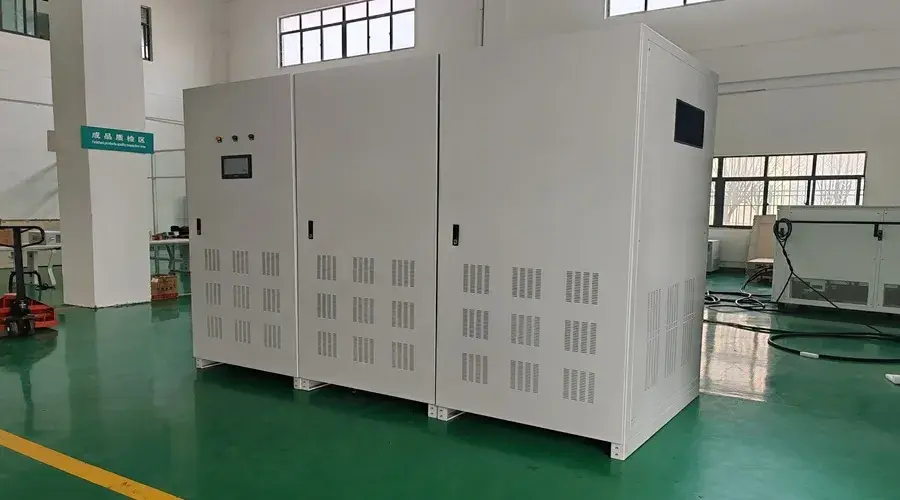
Understanding 415V Voltage Stabilizers and Their Role in Power Quality
What Is a Three-Phase Voltage Stabilizer?
A three-phase 415V voltage stabilizer is specialized equipment designed to maintain consistent voltage levels across industrial power systems. Unlike simple voltage regulators that passively condition power, these stabilizers actively correct fluctuations in real-time. They play an essential role in environments where precision equipment cannot tolerate voltage deviations beyond narrow margins. In aviation ground support, defense installations, and laboratory testing facilities, stable power directly impacts mission-critical operations and measurement accuracy.
How do static SCR-controlled stabilizers work?
Modern stabilizers employ thyristor-based SCR (silicon-controlled rectifier) technology to deliver precise voltage regulation. The ACSOON AF30-330200 model exemplifies this approach with its 200kVA capacity and modular silicon control architecture. This unit accepts three-phase 415V input with voltage variations up to ±20% while delivering tightly regulated output at 415V ±2%. The static control mechanism responds within milliseconds to input changes, eliminating mechanical wear associated with older servo-controlled designs. This technology proves particularly valuable in marine applications where vibration and harsh conditions challenge traditional electromechanical systems.
Automatic Voltage Balance and Protection Features
Advanced stabilizers incorporate automatic three-phase balancing to correct asymmetrical loads that cause phase imbalances. The capability to handle 200% overload for 10 seconds protects equipment during startup surges common with motors, compressors, and pumps. Integrated protection circuits guard against overvoltage, undervoltage, short circuits, and thermal overload conditions. These safety mechanisms reduce downtime by preventing cascade failures that can shut down entire production lines or testing facilities.
Key Factors That Affect Power Quality and How 415v Voltage Stabilizers Address Them
Common Power Quality Issues in Industrial Settings
Voltage sags frequently occur during heavy machinery startup, drawing excessive current and causing temporary voltage drops that disrupt programmable logic controllers and robotic systems. Surges from lightning strikes or utility switching operations send damaging overvoltage spikes through distribution networks. Harmonic distortion introduced by variable frequency drives and switching power supplies degrades waveform quality, causing overheating in transformers and neutral conductors. Manufacturing facilities with CNC machines experience these challenges regularly, where even brief power anomalies ruin precision work and scrap expensive materials.
Correction Techniques Applied by Modern Stabilizers
Static SCR technology enables rapid voltage correction without moving parts. When input voltage drops below a setpoint, thyristors adjust tap positions electronically to boost output voltage. During overvoltage conditions, the system reduces output proportionally to maintain the ±2% regulation band. This correction method operates continuously across the full ±20% input range at 50Hz or 60Hz frequencies. Data centers housing server farms particularly benefit from this protection, as computing equipment cannot tolerate voltage variations beyond manufacturer specifications without triggering shutdowns or data corruption.
Maintenance Best Practices for Optimal Performance
Regular thermal imaging inspections identify developing hot spots in connections and semiconductor components before failure occurs. Environmental monitoring ensures the IP20 indoor or IP54 outdoor enclosure maintains appropriate operating temperatures. Scheduled cleaning prevents dust accumulation on heatsinks and cooling fans that could compromise thermal management. We recommend quarterly inspections for critical infrastructure applications where unplanned outages carry severe operational consequences. Documentation of voltage trend data helps identify upstream utility issues requiring coordination with power providers.
Comparing Different 415v Voltage Stabilizer Solutions for Optimal Power Quality
Automatic vs. Manual Voltage Regulation
Automatic stabilizers continuously monitor voltage and adjust output without operator intervention, making them ideal for unmanned facilities or applications requiring immediate response. Manual stabilizers require operators to adjust tap settings based on meter readings, introducing human delay and potential error. Most defense and aerospace applications mandate automatic regulation given the critical nature of ground power units and test equipment operation.
| Feature | Automatic Voltage Stabilizer | Manual Voltage Stabilizer |
|---|---|---|
| Operation Mode | Real-time automatic correction | Operator-controlled adjustment |
| Response Speed | Milliseconds-level response | Delayed (manual intervention required) |
| Accuracy | High precision regulation | Dependent on operator skill |
| Application Suitability | Critical industrial, aerospace, defense | Low-critical or budget-sensitive setups |
| Risk of Error | Very low | Relatively high |
Online vs. Offline Stabilization Approaches
The distinction between these configurations affects response characteristics significantly. Online stabilizers condition power continuously, even under normal voltage conditions, providing zero transfer time during disturbances. This approach suits sensitive loads like laboratory instrumentation where any momentary variation affects measurement validity. Offline stabilizers engage only when voltage exceeds preset thresholds, offering energy efficiency advantages but introducing brief switching delays acceptable for less sensitive equipment.
| Feature | Online Voltage Stabilizer | Offline Voltage Stabilizer |
|---|---|---|
| Power Conditioning | Continuous | Activated on deviation |
| Transfer Time | Zero interruption | Brief switching delay |
| Power Quality Output | Highly stable | Moderately stable |
| Energy Efficiency | Lower | Higher |
| Ideal Applications | Data centers, labs, precision instruments | General industrial equipment |
Capacity Selection and Scalability Considerations
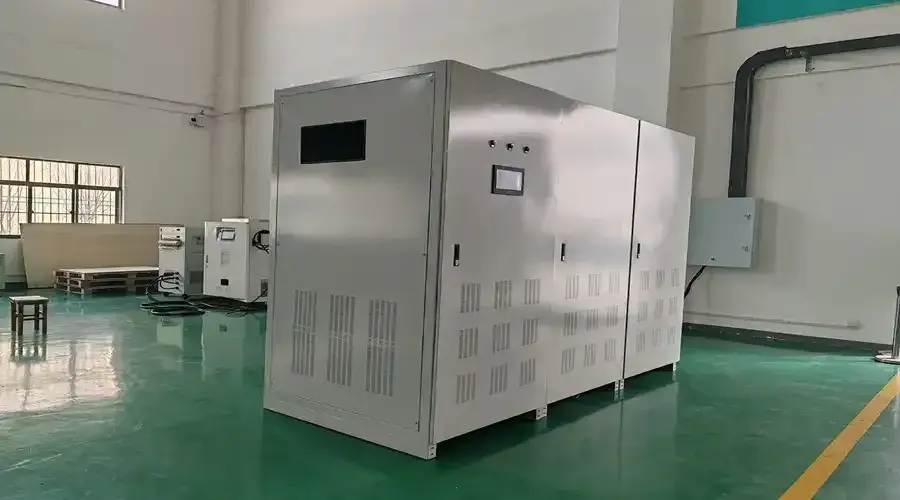
Proper capacity selection requires calculating total connected load plus a safety margin for inrush currents. The 200 kVA rating of our ACSOON AF30-330200 model handles substantial industrial loads, including multiple CNC machines, robotic arms, and auxiliary systems simultaneously. Undersized stabilizers fail during peak demand periods, while oversized units increase capital costs unnecessarily. We recommend sizing at 125% to 150% of the calculated steady-state load for most industrial automation applications. Modular architecture allows parallel operation for redundancy in facilities where any downtime interrupts production schedules or safety systems.
Procurement Considerations: How to Choose and Buy the Right 415v Voltage Stabilizer
Evaluating Supplier Capabilities and Certifications
When sourcing 415v voltage stabilizer equipment for mission-critical applications, supplier credentials matter significantly. ISO 9001 certification demonstrates consistent quality management across manufacturing processes. CE approval confirms compliance with international safety and electromagnetic compatibility standards required for military and aerospace procurement. Xi'an JERRYSTAR Instrument Co., Ltd. maintains these certifications while operating a 5,000-10,000 square meter facility dedicated to power conversion equipment. Our specialization in aviation and military power systems provides domain expertise that generic industrial equipment suppliers cannot match.
Adequate inventory for urgent deployments distinguishes manufacturers with robust supply chain management from vendors dependent on extended lead times. We maintain stock of critical models and components to support rapid deployment scenarios common in defense and marine applications.
Total Cost of Ownership Analysis
The initial purchase price represents only one component of lifetime costs. Energy efficiency impacts operating expenses over decades of service life. Static SCR stabilizers typically achieve higher efficiency than older transformer-based designs, reducing electricity consumption and heat generation, requiring climate control. Protection features preventing equipment damage deliver measurable savings by avoiding replacement costs for connected machinery. Reliability directly influences maintenance expenses and downtime penalties.
Warranty terms reflect manufacturer confidence in product durability. Comprehensive coverage that reduces procurement risk is especially valuable for remote installations, where service access is logistically challenging. Our warranty programs account for the demanding conditions typical in marine vessels, offshore platforms, and field operations.
Installation Requirements and Bulk Order Support
Professional installation ensures proper grounding, thermal management, and integration with existing electrical infrastructure. We provide technical support throughout commissioning processes, including verification testing and operator training. Bulk procurement for multi-site deployments or fleet standardization is prioritized for scheduling and volume pricing that aligns with government contracting practices. Our OEM support enables private labeling for equipment manufacturers integrating stabilizers into larger systems like mobile laboratories or containerized data centers.
Real-World Applications and Case Studies of 415v Voltage Stabilizer Use
Industrial Manufacturing and Automation
Precision manufacturing depends on unwavering power quality to maintain tolerances measured in microns. CNC machining centers use servo motors requiring clean, stable voltage for accurate positioning control. Voltage variations cause dimensional errors that scrap expensive aerospace components or medical device parts. Robotic assembly systems with programmable controllers lose position data during power disturbances, requiring time-consuming recalibration. PLC-controlled production lines experience nuisance trips disrupting just-in-time manufacturing schedules when voltage quality deteriorates.
A multinational aerospace contractor implemented our ACSOON stabilizers across their precision machining facility after experiencing recurring quality issues traced to utility voltage variations. Within three months of installation, scrap rates declined by 34% while unplanned downtime decreased by 41%. The stabilizers paid for themselves just by cutting down on material waste, and the improvements in the life of the equipment kept giving value.
Telecommunications and Data Infrastructure
Cell towers in remote locations often receive marginal power quality from extended distribution lines susceptible to voltage drop. Server farms hosting cloud services cannot tolerate voltage variations causing equipment lockups or data corruption. Telecom equipment manufacturers specify narrow voltage tolerances that exceed typical utility delivery standards. Our AF30-330200 model with an IP54 outdoor rating protects equipment in harsh environmental conditions, while the three-phase automatic balancing corrects asymmetrical loads common in telecom installations.
Emerging Smart Grid Integration
Modern stabilizers increasingly incorporate IoT connectivity, enabling remote monitoring and predictive maintenance. Voltage trend logging identifies developing utility issues before they cause equipment problems. Smart integration allows facilities to participate in demand response programs by adjusting non-critical loads during peak pricing periods while maintaining protection for essential systems. These capabilities position voltage stabilization as part of comprehensive energy management strategies rather than standalone protective devices.
Conclusion
Power quality has a direct effect on the reliability of operations, the life of equipment, and the cost of production in the defense, aerospace, marine, and industrial sectors. Three-phase stabilizers employing static SCR control deliver precision voltage regulation, protecting sensitive equipment from utility disturbances. The ACSOON AF30-330200 exemplifies modern stabilizer capabilities, featuring robust protection, automatic balancing, and industrial-grade construction for demanding environments. Proper procurement requires evaluating supplier expertise, certifications, and support capabilities alongside technical specifications. As infrastructure relies more on electronic controls and precision equipment, 415v voltage stabilizer changes from being optional to being essential.
FAQ
Can a Voltage Stabilizer Handle Sudden Voltage Spikes?
Yes, quality stabilizers incorporate surge suppression and voltage clamping circuits that protect against transient overvoltage events. The ACSOON AF30-330200 responds within milliseconds to voltage changes, limiting downstream exposure to damaging spikes. The 200% overload capacity for 10 seconds handles inrush currents that accompany voltage recovery after momentary interruptions.
What Maintenance Intervals Do You Recommend?
We recommend quarterly inspections for mission-critical applications, including thermal imaging, connection torque verification, and ventilation system cleaning. Annual comprehensive testing should check voltage regulation accuracy across the full input range and verify protection circuit functionality. Remote monitoring capabilities reduce site visit requirements by alerting maintenance teams to developing issues before failures occur.
How Do Stabilizers Differ from Voltage Regulators in Three-Phase Systems?
Stabilizers provide continuous automatic correction across wide input voltage ranges, typically ±20% or more. Voltage regulators generally handle narrower ranges and may employ different correction mechanisms. Three-phase stabilizers also address phase balance issues that single-phase regulators cannot correct. The terminology sometimes overlaps, but stabilizers represent the more comprehensive solution for industrial power quality management.
Partner with JERRYSTAR for Superior Voltage Stabilization Solutions
Xi'an JERRYSTAR Instrument Co., Ltd. stands ready to solve your most challenging power quality requirements with the ACSOON brand 415V voltage stabilizer line. Our engineering team brings over a decade of specialized experience in aviation, military, marine, and laboratory power systems where failure is not an option. The AF30-330200 model shows our commitment to technical excellence, with static SCR control, three-phase automatic balancing, and comprehensive protection circuits in IP20 or IP54 enclosures.
As both a manufacturer and trading company, we offer competitive pricing, customization capabilities, and maintained inventory supporting rapid deployment schedules critical to defense procurement and emergency installations. Contact our technical sales team at acpower@acsoonpower.com to discuss your specific voltage stabilization needs, request detailed specifications, or arrange factory acceptance testing. We welcome inquiries from government procurement offices, OEM partners, and industrial engineering teams seeking a reliable supplier of 415V voltage stabilizers capable of delivering proven solutions with full technical support.
References
1. Institute of Electrical and Electronics Engineers. (2019). IEEE Standard 1159-2019 - IEEE Recommended Practice for Monitoring Electric Power Quality. IEEE Standards Association.
2. Dugan, R.C., McGranaghan, M.F., Santoso, S., and Beaty, H.W. (2012). Electrical Power Systems Quality (3rd Edition). McGraw-Hill Professional.
3. Bollen, M.H.J. and Gu, I.Y.H. (2006). Signal Processing of Power Quality Disturbances. IEEE Press Series on Power Engineering, Wiley-Interscience.
4. International Electrotechnical Commission. (2015). IEC 61000-4-30:2015 - Electromagnetic Compatibility (EMC) - Testing and Measurement Techniques - Power Quality Measurement Methods. IEC Publications.
5. Sankaran, C. (2017). Power Quality. CRC Press, Taylor & Francis Group.
6. Arrillaga, J., Watson, N.R., and Chen, S. (2000). Power System Quality Assessment. John Wiley & Sons, Ltd.