




Can a 60hz to 50hz Frequency Converter Save Energy and Costs?
A properly designed 60 Hz to 50 Hz frequency converter delivers measurable energy savings and operational cost reductions by precisely matching equipment to its optimal frequency rating. Unlike simple transformers, these solid-state power converters prevent motor overheating, excessive mechanical stress, and premature component failure that occur when frequency-sensitive machinery operates outside its design parameters. Industries utilizing equipment across international power grid standards can reduce maintenance expenses by up to 30% while extending machinery lifespan, making frequency conversion a strategic investment rather than just a compatibility solution.
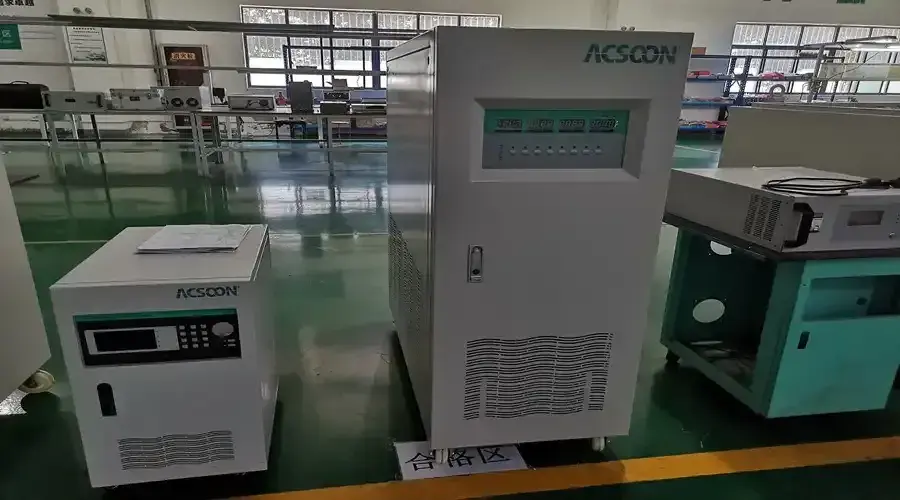
Understanding 60Hz to 50Hz Frequency Converters
What Frequency Conversion Technology Actually Does?
Power grids operate at different fundamental frequencies worldwide—60 Hz in North America and parts of Asia and 50 Hz throughout Europe, Africa, and much of the Middle East. This seemingly small difference creates significant operational challenges when moving industrial equipment across borders. A static frequency converter addresses this incompatibility through a sophisticated double-conversion process: incoming AC power is rectified to DC, filtered to remove harmonics, then inverted back to AC at the required output frequency using IGBT technology. This process differs fundamentally from voltage transformation, which merely steps voltage levels up or down without altering frequency.
Why Is Frequency Relevant for Industrial Equipment?
The relationship between voltage and frequency (V/f ratio) governs the magnetic flux density in induction motors. When a 50Hz-rated motor receives 60Hz power, it operates 20% faster than designed, generating excessive centrifugal forces and heat that accelerate bearing wear and winding insulation breakdown. Synchronous equipment like conveyors, precision machine tools, and process control systems experience timing errors that compromise product quality. Railway signal systems, which demand absolute reliability, particularly benefit from clean frequency conversion—our ACSOON AF60W-330010 model delivers pure sine wave output specifically engineered for such critical applications.
Core Components and Working Principles
Modern frequency conversion systems integrate several specialized subsystems. The rectifier stage converts three-phase AC input (208-480V in the AF60W-330010) to a stable DC voltage. An intermediate DC bus with capacitive filtering eliminates ripple and provides energy storage during load transients. The inverter stage, controlled by advanced digital signal processors, synthesizes the target frequency output through pulse-width modulation. This architecture ensures harmonic distortion remains below 2%, protecting sensitive electronics while maintaining power quality standards required by aerospace and military specifications.
Energy Efficiency and Cost Benefits of Frequency Converters
Quantifying Energy Savings in Motor-Driven Systems
Operating motors at their design frequency maximizes electromechanical efficiency. When a 50Hz motor runs on 60Hz power without conversion, the increased slip losses and iron core losses can reduce efficiency by 8-15%, translating to substantial energy waste in continuous-duty applications. Our research indicates that industrial facilities converting from direct grid connection to properly sized static frequency converters achieve efficiency improvements approaching 92%, particularly in variable-torque applications like fans and pumps where the power consumption relationship follows cubic laws.
Energy savings manifest across several operational dimensions. Reduced thermal losses mean less heat dissipation, lowering HVAC demands in equipment rooms. Smoother torque delivery decreases mechanical vibration, reducing parasitic energy losses in coupled machinery. These cumulative benefits create compelling returns in facilities operating multi-shift production schedules.
Extended Equipment Lifespan and Maintenance Reduction
The financial impact of frequency conversion extends beyond utility bills. Equipment operating within its designed parameters experiences dramatically lower failure rates. Bearing assemblies in motors running at correct speeds last 40-60% longer before replacement becomes necessary. Electrical insulation systems avoid the thermal stress that causes premature dielectric breakdown. We have documented cases in marine applications where a shore-power 60 Hz to 50 Hz frequency converter reduced generator maintenance costs by $45,000 annually by eliminating the need to run diesel generators during extended port stays.
Predictable maintenance intervals replace emergency repairs. Scheduled bearing replacements during planned downtime cost substantially less than catastrophic failures during peak production. The upright-mounted design with integrated wheels in our AF60W-330010 model facilitates quick repositioning during facility reconfigurations, protecting infrastructure investments as operational needs evolve.
Real-World Return on Investment
A North American aerospace manufacturer relocated precision CNC equipment from their European facility and faced a choice: purchase new 60 Hz equipment or implement frequency conversion. Analysis revealed the converter solution delivered ROI within 18 months through avoided capital expenditure. The installation preserved proprietary machine calibrations and operator expertise while enabling immediate production continuation. Similar outcomes occur in laboratory testing environments where simulation of international grid conditions supports product certification workflows without establishing overseas testing facilities.
Government procurement operations particularly value the total cost of ownership perspective. Equipment standardization across multi-national installations becomes achievable when frequency barriers disappear. Training materials, spare parts inventories, and maintenance procedures remain consistent regardless of deployment location, generating administrative efficiencies that compound over equipment lifecycles spanning 15-20 years.
Frequency Converter vs Transformer: Understanding the Technical Distinction
Performance Differences That Matter
Confusion often arises between transformers and frequency converters because both modify electrical parameters. Transformers excel at voltage conversion through electromagnetic induction but cannot alter frequency—the output frequency always matches the input. When specifications demand both voltage adaptation and frequency conversion, sequential deployment of both technologies becomes necessary unless a static frequency converter handles both functions simultaneously through its internal voltage regulation capabilities.
Power quality represents another critical distinction. Transformers pass through harmonics, voltage sags, and transient disturbances present on utility feeds. Quality 60 Hz to 50 Hz frequency converters provide complete electrical isolation, regenerating clean power that protects sensitive control systems from grid disturbances. The IP21 protection grade in industrial models like ours ensures reliable operation in environments where dust and moisture would compromise transformer insulation.
When Each Technology Makes Sense
Straightforward voltage adaptation without frequency requirements remains the domain of transformers, which offer simpler, lower-cost solutions. Portable equipment moving between regions with identical frequencies benefits from transformer-based voltage matching. However, scenarios involving frequency incompatibility, power quality concerns, or requirements for adjustable output parameters demand the capabilities that only static converters provide.
Marine shore power connections illustrate this decisively. International vessels designed for 50Hz internal systems cannot safely operate critical navigation and life-support equipment directly from 60Hz dock power. The frequency mismatch would damage motor-driven pumps, ventilation systems, and refrigeration compressors. A robust frequency converter becomes non-negotiable safety equipment, not an optional upgrade.
Market Overview and Brand Considerations
Global manufacturers including Schneider, Siemens, ABB, Eaton, Toshiba, Mitsubishi, and Delta Electronics offer frequency conversion solutions spanning diverse power ratings and application requirements. Pricing varies considerably based on output power capacity, waveform quality, and environmental ratings. Entry-level 5kVA units may start around $3,000, while industrial 50kVA systems approach $25,000-$40,000. The 10kVA rating of the AF60W-330010 positions it effectively for department-level applications requiring dedicated power conditioning without facility-wide distribution costs.
Procurement decisions should weigh manufacturer support infrastructure against initial pricing. Equipment downtime during critical operations costs exponentially more than the converter purchase price. Our ISO 9001:2015 certification, combined with CE and UL compliance, ensures that quality management systems support long-term reliability rather than merely meeting minimum specifications.
How to Choose the Right 60Hz to 50Hz Frequency Converter for Your Business?
Assessing Your Technical Requirements
Proper sizing begins with accurate load characterization. Calculate the total connected load, then apply appropriate safety margins—typically 20-30% for motor starting inrush currents. Resistive heating loads draw steady current, while inductive motors present reactive power demands that converters must accommodate without voltage droop. The three-phase 208-480V input flexibility in models like the AF60W-330010 simplifies integration into diverse facility electrical infrastructures without requiring dedicated transformation.
Environmental conditions influence reliability significantly. Ambient temperature ranges, altitude, and humidity levels affect thermal management and insulation performance. Equipment deployed in coastal marine environments benefits from conformal coating and corrosion-resistant enclosures. Laboratory installations prioritize low acoustic emissions to maintain comfortable working conditions. Railway signal applications demand exceptional reliability since failures directly impact operational safety—our pure sine wave output ensures signal integrity under all load conditions.
Evaluating Supplier Capabilities and Support
Technical specifications represent only part of the procurement equation. Supplier responsiveness during the critical post-installation period often determines project success. We provide 24/7 technical support, recognizing that power system issues occur unpredictably. Remote diagnostics capability enables rapid issue resolution without dispatching technicians, minimizing downtime. Complex situations receive on-site engineering support backed by our 15 years of experience in aviation and military power systems.
Warranty terms reflect manufacturer confidence in product durability. Extended warranty options provide budget predictability for lifecycle planning. Regular firmware updates maintain compatibility with evolving grid conditions and regulatory requirements. Our commitment includes custom-designed shock-absorbing packaging, moisture-proof wrapping, and GPS-tracked shipping, ensuring equipment arrives ready for installation rather than damaged and requiring claims processing.
Customization and Inventory Availability
Standard catalog products serve many applications adequately, but specialized requirements often demand tailored solutions. OEM support capability enables private labeling for system integrators and equipment manufacturers. Custom voltage configurations, specialized monitoring interfaces, and application-specific protection algorithms transform generic converters into optimized subsystems. Our 5,000-10,000 square meter manufacturing facility in Shaanxi Province maintains adequate inventory for quick delivery, addressing urgent procurement timelines common in military and industrial emergency replacement scenarios.
The combination of manufacturing capability and trading company flexibility positions us uniquely to serve both high-volume production contracts and immediate single-unit needs. This responsiveness proves particularly valuable for R&D laboratories and testing facilities where project timelines depend on rapid equipment acquisition. Prototyping support and small-batch custom production enable proof-of-concept validation before committing to large-scale deployments.
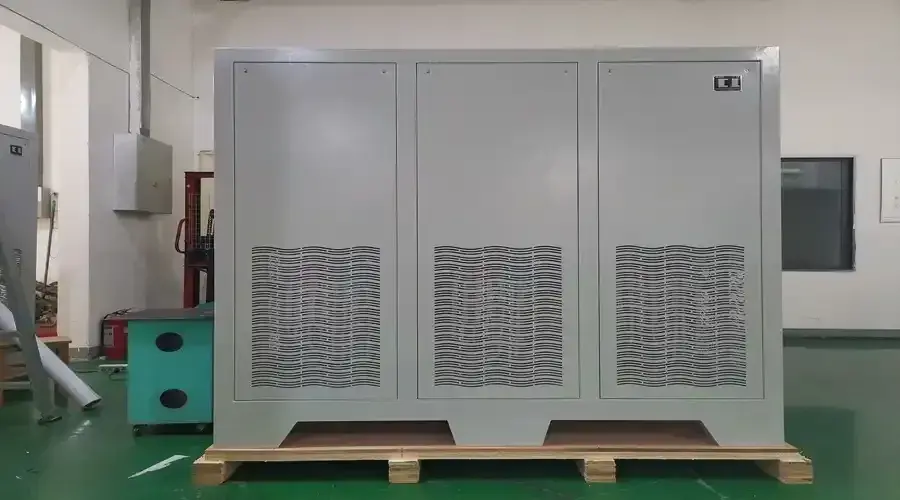
Troubleshooting and Measuring Output of 60Hz to 50Hz Frequency Converters
Common Operational Challenges and Solutions
Frequency instability typically traces to input power quality issues or internal control circuit malfunctions. Utility voltage fluctuations exceeding converter input tolerances can cause the control system to lose synchronization. Installing input line conditioning or upgrading to models with wider input voltage ranges resolves most cases. Output frequency drift may indicate aging capacitors in the DC bus requiring replacement during preventive maintenance cycles.
Voltage fluctuations under varying load conditions suggest undersized converter ratings or improper installation practices. Excessive cable length between converter and load introduces voltage drop that appears as output instability. Consulting load-cable-distance derating tables during installation planning prevents these issues. Overheating generally results from inadequate ventilation, blocked cooling airflows, or ambient temperatures exceeding equipment ratings. The upright-mounted design with integrated wheels facilitates positioning for optimal cooling airflow without compromising floor space efficiency.
Verification and Measurement Techniques
Validating converter performance requires appropriate instrumentation. True RMS multimeters measure output voltage accurately despite harmonic content that skews averaging-type meters. Digital frequency counters confirm output frequency stability within specified tolerances—typically ±0.5 Hz for industrial applications. Power quality analyzers capture transient events, harmonic spectra, and power factor characteristics essential for certifying compliance with sensitive equipment requirements.
Measurement procedures should document baseline performance during commissioning to establish reference points for future troubleshooting. Periodic verification maintains operational confidence, particularly in critical applications where undetected degradation could cascade into larger system failures. Our smart monitoring systems provide continuous performance tracking, alerting operators to developing issues before they impact production or safety.
Maintenance Best Practices
Routine maintenance extends equipment lifespan while maintaining peak efficiency. Quarterly inspections should verify cooling fan operation, check for dust accumulation on heat sinks, and confirm proper torque on electrical terminations. Annual maintenance includes capacitor bank testing, insulation resistance verification, and control circuit calibration. These procedures prevent the majority of field failures, maximizing return on investment through uninterrupted availability.
Documentation practices support long-term reliability. Maintaining logs of operating hours, load profiles, and environmental conditions enables predictive maintenance strategies. Trending analysis identifies gradual component degradation before sudden failures occur. Our commitment to customer success includes maintenance training for facility personnel, empowering teams to perform basic diagnostics and routine servicing without relying exclusively on external support.
Conclusion
The strategic value of 60 Hz to 50 Hz frequency converter technology extends well beyond simple equipment compatibility. Properly implemented power conditioning protects capital investments, reduces operational expenses, and enables global standardization of industrial processes. The documented energy savings, extended equipment lifespan, and maintenance cost reductions create compelling financial justification, typically delivering positive ROI within two years.
Quality matters decisively in equipment supporting critical operations. Converters meeting rigorous standards through ISO 9001:2015 processes, CE certification, and UL listing provide confidence that performance specifications will be maintained throughout service life. The combination of technical excellence and responsive support infrastructure determines whether frequency conversion delivers its full potential value.
FAQ
Do I really need a frequency converter if my equipment is rated for dual frequency?
Some modern equipment incorporates switchable input frequency capability, but verifying this through manufacturer documentation remains essential. Universal motors and electronic loads often tolerate frequency variation, but induction motors, timing-dependent systems, and precision machinery require matched frequency. Even dual-rated equipment may exhibit reduced efficiency or altered performance characteristics when operating at a non-native frequency.
How does a frequency converter differ from a variable frequency drive?
Variable frequency drives (VFDs) adjust output frequency dynamically to control motor speed for process optimization. Static frequency converters maintain a fixed output frequency for grid simulation and equipment compatibility. VFDs typically receive a single-frequency input and vary output; converters receive one standard frequency and output a different standard frequency. Applications requiring precise speed control use VFDs, while international equipment compatibility demands frequency converters.
Can I verify energy savings in my specific application?
Baseline power consumption measurement before converter installation, compared against post-installation data, quantifies actual savings. Power meters capturing kWh over representative operational periods provide empirical evidence. Thermal imaging before and after installation reveals efficiency improvements through reduced heat generation. We assist customers in establishing measurement protocols that document performance improvements supporting capital expenditure justification.
Partner with JERRYSTAR for Reliable Frequency Conversion Solutions
Xi'an Jerrystar Instrument Co., Ltd. stands ready to support your power conversion requirements with proven ACSOON technology. Our 60 Hz to 50 Hz frequency converter solutions deliver the reliability demanded by aviation, military, marine, and industrial manufacturing applications. As both manufacturer and supplier, we provide customization capability and maintain inventory depth, ensuring rapid response to urgent procurement needs.
Our AF60W-330010 exemplifies engineering excellence—10kVA capacity, three-phase 208-480V flexibility, pure sine wave output, and mobility-enhancing wheeled construction. Backed by comprehensive certifications and 15 years of specialized expertise, we deliver more than equipment; we provide partnership in optimizing your operational efficiency. Contact our technical team at acpower@acsoonpower.com to discuss your specific requirements and receive a detailed quotation tailored to your application parameters.
References
1. Institute of Electrical and Electronics Engineers (IEEE), "IEEE Standard 519-2014: Recommended Practice and Requirements for Harmonic Control in Electric Power Systems," IEEE Power and Energy Society, 2014.
2. Mohan, Ned, Undeland, Tore M., and Robbins, William P., "Power Electronics: Converters, Applications, and Design," John Wiley & Sons, Third Edition, 2003.
3. International Electrotechnical Commission, "IEC 61000-4-7: Electromagnetic Compatibility - Testing and Measurement Techniques - General Guide on Harmonics and Interharmonics Measurements," IEC Standards, 2009.
4. Department of Energy, "Motor Systems Tip Sheet #11: Estimate Energy Savings for Adjustable-Speed Drive Applications," Office of Energy Efficiency and Renewable Energy, Advanced Manufacturing Office, 2014.
5. National Electrical Manufacturers Association, "NEMA MG 1-2016: Motors and Generators," NEMA Standards Publication, 2016.
6. Rashid, Muhammad H., "Power Electronics Handbook: Devices, Circuits, and Applications," Academic Press, Fourth Edition, 2017.