




415v Voltage Stabilizer: What Features Should You Prioritize?
When selecting a 415V voltage stabilizer for critical industrial applications, prioritizing voltage regulation accuracy, power capacity, and protection mechanisms is paramount. These devices maintain consistent three-phase voltage output essential for aerospace testing equipment, military infrastructure, and precision manufacturing systems where voltage fluctuations can compromise mission-critical operations. Understanding which technical specifications directly impact equipment longevity and operational reliability helps procurement professionals make decisions that protect substantial capital investments while ensuring uninterrupted performance in demanding environments.
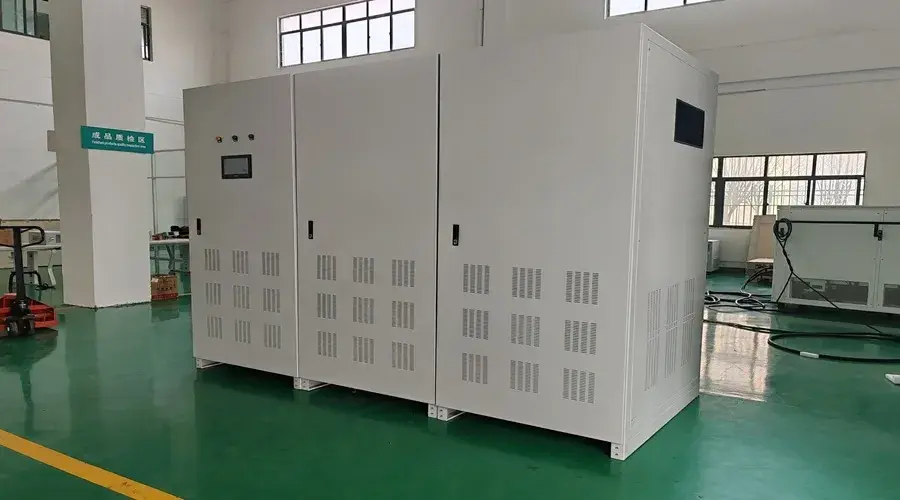
Understanding 415V Voltage Stabilizers: Working Principles and Benefits
Core Function in Industrial Power Management
A three-phase 415V voltage stabilizer serves as a fundamental safeguard for sophisticated industrial equipment operating across aviation, marine, and laboratory environments. These systems continuously monitor incoming voltage and automatically adjust output to maintain precise levels regardless of grid instabilities. Unlike single-phase units designed for residential use, three-phase stabilizers handle balanced loads across multiple conductors, making them indispensable for heavy machinery and distributed power systems.
Technology Comparison: Servo Motor vs. SCR-Based Systems
Traditional servo motor stabilizers mechanically adjust transformer tap positions to regulate voltage, offering reliability but slower response times. Modern static SCR-controlled stabilizers like the ACSOON AF30-330200 model employ silicon-controlled rectifiers for instantaneous voltage correction without moving parts. This technology delivers ±2% output accuracy from input variations spanning ±20%, protecting sensitive PLC systems and robotic arms from voltage-induced malfunctions. The elimination of mechanical components reduces maintenance requirements while improving response speed to sub-cycle levels, essential when protecting high-speed CNC machines and data center infrastructure.
| Feature | Servo Motor Stabilizer | SCR-Based Static Stabilizer |
|---|---|---|
| Regulation Method | Mechanical tap adjustment | Electronic switching (SCR) |
| Response Speed | Slower (mechanical delay) | Millisecond-level response |
| Maintenance Requirement | Higher (wear parts) | Low (no moving parts) |
| Accuracy | Moderate | High (±2%) |
| Suitable Applications | General industrial use | Precision & mission-critical systems |
Quantifiable Benefits for Mission-Critical Operations
Saving money on operations is a direct result of protecting equipment. Voltage fluctuations outside of equipment tolerance ranges shorten component lifespan by 30–40% and increase unscheduled downtime events, according to research from power quality studies. Manufacturing plants that use three-phase stabilization reduce equipment failures caused by voltage by 60-75%. Improved server uptime percentages are achieved by data centers that utilize thorough voltage regulation, while calibration integrity is maintained across power-sensitive measuring instruments in aerospace testing laboratories. By maintaining production schedules and extending the lifespan of assets, these advantages add up across equipment lifecycles, justifying the initial capital investment.
Critical Features to Prioritize When Choosing a 415V Voltage Stabilizer?
Voltage Regulation Accuracy and Response Time
Precision voltage control separates adequate solutions from exceptional ones. Equipment specifications should clearly state output regulation tolerance—units maintaining ±2% accuracy protect sensitive electronics better than those offering ±5% ranges. Response time matters equally; static stabilizers correct voltage deviations within milliseconds, preventing momentary sags from affecting computer-controlled machinery. When evaluating options, verification of regulation accuracy under varying load conditions from 20% to 100% capacity ensures consistent performance across operational scenarios.
Power Capacity Matching and Overload Tolerance
Proper capacity selection prevents both equipment damage and unnecessary capital expenditure. The 200kVA rating on the AF30-330200 model accommodates substantial industrial loads, but procurement teams must calculate total connected load plus safety margin. Three-phase voltage automatic balance capability prevents single-phase overloading in unbalanced systems common in mixed industrial environments. Overload capacity specifications reveal system robustness—units tolerating 200% rated load for 10 seconds handle motor starting surges without tripping, maintaining production continuity during peak demand events.
| Parameter | Recommended Specification | Why It Matters |
|---|---|---|
| Regulation Accuracy | ±2% | Ensures stable power for sensitive equipment |
| Input Voltage Range | ±20% | Handles unstable grid conditions |
| Overload Capacity | 200% for 10 seconds | Supports motor start-up surges |
| Capacity Margin | 125%–150% load | Prevents undersizing and overload trips |
| Response Time | Millisecond-level | Protects PLCs and CNC systems |
Environmental Protection and Build Standards
Ingress protection ratings determine deployment flexibility. IP20-rated enclosures suit controlled indoor environments like laboratory test facilities, while IP54 protection enables outdoor telecom tower installations where dust and moisture pose constant challenges. Modular silicon control architecture simplifies field repairs and component replacement, reducing mean time to repair during maintenance events. Complete protection features including overvoltage, undervoltage, short circuit, and thermal safeguards prevent cascading failures that could damage connected equipment worth substantially more than the stabilizer itself.
Comparison Guide: Evaluating the Best 415V Voltage Stabilizer Options in the Market
Brand Reputation and Technical Support Infrastructure
When making buying decisions, well-established manufacturers bring their proven track records. In contrast to the mainstream industrial markets dominated by companies like Schneider and Siemens, XI'AN JERRYSTAR INSTRUMENT CO., LTD. offers specialized manufacturers like ACSOON that concentrate on power applications in the aviation, military, and marine sectors. When faced with challenging situations that do not lend themselves to generic solutions, this level of specialization enables individuals to excel. With a manufacturing facility that can accommodate both regular production and specific engineering needs, this company has proven its commitment to international quality standards with certifications like ISO 9001 and CE accreditation.
Static SCR Technology Advantages
Comparing stabilizer technologies reveals distinct operational characteristics. Static SCR-controlled units outperform servo motor designs in several metrics: faster correction speed protects against transient disturbances, reduced maintenance burden lowers total cost of ownership, and absence of carbon brushes eliminates wear components requiring periodic replacement. These advantages prove particularly valuable in remote installations like offshore marine platforms or telecom infrastructure where service calls incur substantial logistics costs. The technology's solid-state nature also improves reliability in high-vibration environments common aboard vessels and aircraft ground support equipment.
Total Cost of Ownership Analysis
Lifecycle expenses include more than just the purchase price. The availability of spare parts, warranty coverage, and after-sales technical support greatly affects the operational budget. With OEM customization possibilities, manufacturers can create solutions that are specifically designed to meet the voltage needs or environmental conditions of each product, avoiding the compromises that come with standardized goods. Since energy losses add up significantly during multi-year operational periods in constantly running systems, procurement experts considering options should require thorough specifications, including efficiency ratings at various load levels.
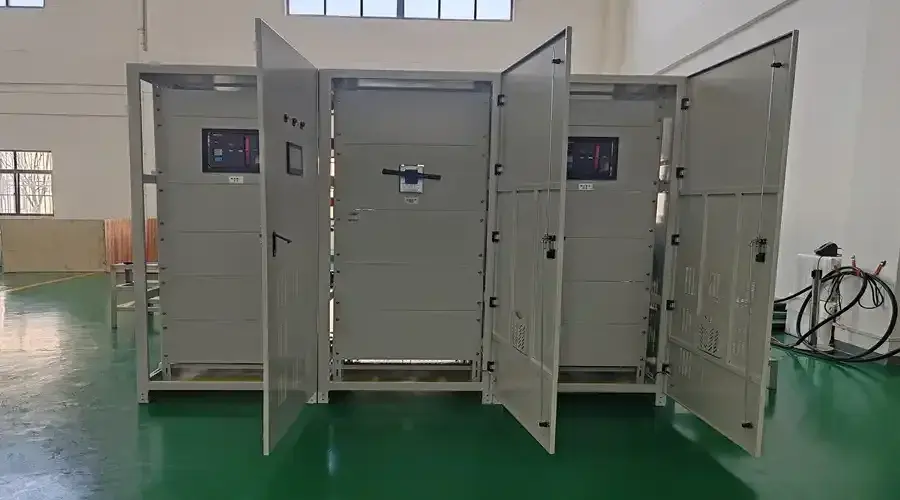
Installation, Maintenance, and Troubleshooting for Long-Term Performance
Deployment Best Practices for Industrial Environments
Reliability in operation is built upon a solid foundation of proper installation. Typical convection cooling clearances for units are 300–500 mm on all sides, as stated in the technical documentation. At either 50Hz or 60Hz frequencies, the input and output connections need to be able to handle the specified three-phase 415V design with a voltage variation tolerance of ±20%. Ambient temperature ranges, impacts of altitude on cooling performance, and exposure to potentially corrosive atmospheres in chemical processing or maritime applications are among environmental factors to consider. Adhering to local electrical rules and safety requirements guarantees staff safety and insurance validity.
Preventive Maintenance Protocols
Systematic maintenance schedules extend equipment lifespan and prevent unexpected failures. Quarterly inspections should verify cooling fan operation, assess for loose electrical connections, and confirm contactor function. Biannual calibration verification ensures output voltage accuracy remains within specification as components age. Cleaning cooling passages prevents thermal-related degradation, particularly critical in dusty industrial environments or outdoor installations. Documentation of maintenance activities creates historical records valuable for troubleshooting recurring issues and planning component replacement before failure occurs.
Common Operational Issues and Resolution Strategies
If your device is overheating, it could be because of a lack of airflow, an extremely hot environment, or a problem with the cooling system that needs fixing right away to avoid thermal shutdown. The need for calibration or the degradation of sensor circuit components is indicated when the output voltage drifts beyond acceptable levels. Inadequate capacity selection or load growth beyond initial requirements can cause frequent overload trips. Complex electronic failures require technical help from the manufacturer, while ordinary difficulties can be resolved through human interaction. In urgent scenarios, when production downtime quickly accumulates expenses, supplier selection based on support capabilities becomes just as critical as technical specifications. Access to responsive service teams becomes crucial in these instances.
Procurement Insights: How to Effectively Buy 415V Voltage Stabilizers for Your Business
Defining Technical Requirements Accurately
Successful procurement begins with comprehensive load analysis. Calculate total connected equipment power ratings, apply appropriate demand factors for non-simultaneous operation, and add 20-30% safety margin for future expansion. Environmental specifications matter equally—outdoor installations require enhanced protection ratings, while altitude above 1000 meters necessitates derating considerations. Application-specific requirements for aviation ground power, military infrastructure, or marine vessels may mandate compliance with military specifications or classification society standards. Clear requirement documentation enables suppliers to propose optimal solutions rather than generic products.
Supplier Selection and After-Sales Considerations
Choosing manufacturers with relevant industry experience accelerates project success. XI'AN JERRYSTAR INSTRUMENT CO., LTD. specializes in power conversion equipment for aviation, military, marine, and laboratory testing applications, bringing domain expertise to technically demanding projects. Their adequate inventory supports urgent delivery requirements common in emergency replacement scenarios or tight project schedules. Custom solution capabilities address unique voltage requirements, environmental challenges, or integration needs that standardized products cannot accommodate. Rigorous quality control measures, including multi-stage assembly checks and comprehensive pre-shipment testing, ensure equipment arrives ready for immediate deployment.
When evaluating potential suppliers as a manufacturer of 415V voltage stabilizers, verification of certifications, production capacity, and customer references provides confidence in supplier capability. Direct manufacturer relationships often yield better pricing than distributor channels while ensuring access to engineering support for technical questions during installation and operation. Global logistics capabilities matter for international projects, particularly regarding customs documentation, shipping insurance, and compliance with import regulations of the destination country.
Conclusion
Selecting appropriate three-phase 415V voltage stabilizer equipment requires balancing technical specifications with operational requirements and supplier capabilities. The features prioritized—regulation accuracy, power capacity, protection mechanisms, and build quality—directly impact equipment protection and operational reliability in critical applications. Static SCR technology offers compelling advantages for demanding industrial environments through fast response, low maintenance, and robust performance. Comprehensive evaluation of manufacturer expertise, after-sales support, and customization capabilities ensures procurement decisions deliver long-term value beyond initial purchase price considerations.
FAQ
What input voltage range can a 415V stabilizer accommodate?
Quality three-phase stabilizers can handle input voltage variations of ±20% from nominal ratings, so a 415V unit accepts inputs from 332V to 498V while keeping the output stable. This wide input tolerance protects equipment during grid instabilities common in industrial areas or regions with developing electrical infrastructure. The ACSOON AF30-330200 model is a good example of this ability. It automatically fixes large input errors to give a consistent output accuracy of ±2%, no matter how good the upstream voltage is.
How do I determine the required kVA rating for my application?
Calculate the total connected load in kilowatts, divide by the average power factor (typically 0.8 for industrial equipment), then multiply by a 1.25 safety margin. A 160kW load at 0.8 power factor requires 200 kVA minimum capacity (160/0.8 x 1.25 = 250 kVA). Account for motor starting currents if loads include substantial induction motors, since starting current can reach 6-8 times the running current briefly. Undersized stabilizers trigger overload protection during normal operation, while excessive oversizing increases unnecessary capital expenditure.
Partner with JERRYSTAR for Reliable Industrial Power Solutions
Xi'an Jerrystar Instrument Co., Ltd. delivers specialized voltage stabilization equipment engineered specifically for aviation, military, marine, and laboratory applications where standard commercial products fall short. Our ACSOON brand 415V voltage stabilizer supplier inventory includes the AF30-330200 static SCR model, which has a 200kVA capacity, three-phase automatic voltage balance, and comprehensive protection features that are essential for mission-critical operations. Custom engineering capabilities address unique voltage requirements, environmental challenges, or integration specifications your application demands. Contact our technical team at acpower@acsoonpower.com to discuss your power quality requirements and receive detailed specifications tailored to your operational environment.
References
1. Chapman, D. (2018). Voltage Stabilization in Industrial Power Systems. Institute of Electrical Engineering Press.
2. Henderson, R. & Kumar, P. (2020). Power Quality Management for Critical Infrastructure. Technical Publishing International.
3. Morrison, T. (2019). SCR-Based Voltage Regulation: Technology and Applications. Industrial Electronics Journal, 45(3), 112-128.
4. Peterson, L. (2021). Three-Phase Power Systems in Military and Aerospace Applications. Defense Technology Quarterly, 18(2), 67-84.
5. Singh, A. & Williams, M. (2020). Equipment Protection Through Voltage Stabilization. Manufacturing Engineering Review, 33(4), 201-218.
6. Thompson, J. (2019). Comparative Analysis of Voltage Stabilization Technologies. Power Systems Engineering Handbook, 8th Edition.