




Can a Power Frequency Converter Improve Equipment Performance?
A power frequency converter does make equipment work much better by letting you precisely control motor speed, cutting down on energy use, and increasing the equipment's useful life. These gadgets change the power that comes in to match certain frequency and voltage needs. This lets motors and other sensitive equipment work at their most efficient. Power frequency converters solve important problems in areas like aviation ground support, marine applications, laboratory testing, and industrial manufacturing where equipment dependability and performance consistency are crucial. They do this by getting rid of fixed-speed restrictions and providing clean, stable power with little harmonic distortion.
Understanding Power Frequency Converters and Their Role in Equipment Performance
What Is a Power Frequency Converter and How Does It Work
A power frequency converter changes the frequency of electricity from one type to another while keeping the voltage stable and the pattern intact. These complex devices, unlike simple voltage transformers, rebuild the whole AC waveform, which lets you precisely control both the frequency and voltage output. The main idea behind the technology is to use advanced semiconductor switching circuits to change receiving AC power from AC to DC and then back to AC at the desired frequency. This method lets equipment that was made for different electrical standards—like 400Hz systems for airplanes or 50Hz machines in Europe—work perfectly on normal 60Hz power lines in North America. Through multistage filters and waveform synthesis, the translation process keeps the quality of the power. These days, static power frequency converters use insulated gate bipolar transistors (IGBTs) that switch thousands of times per second. This makes outputs that are smooth sine waves with less than 2% total harmonic distortion. This level of accuracy keeps delicate computer parts safe and makes sure motors get the exact power qualities they need for the best torque delivery and heat management.
Key Types of Frequency Conversion Technologies
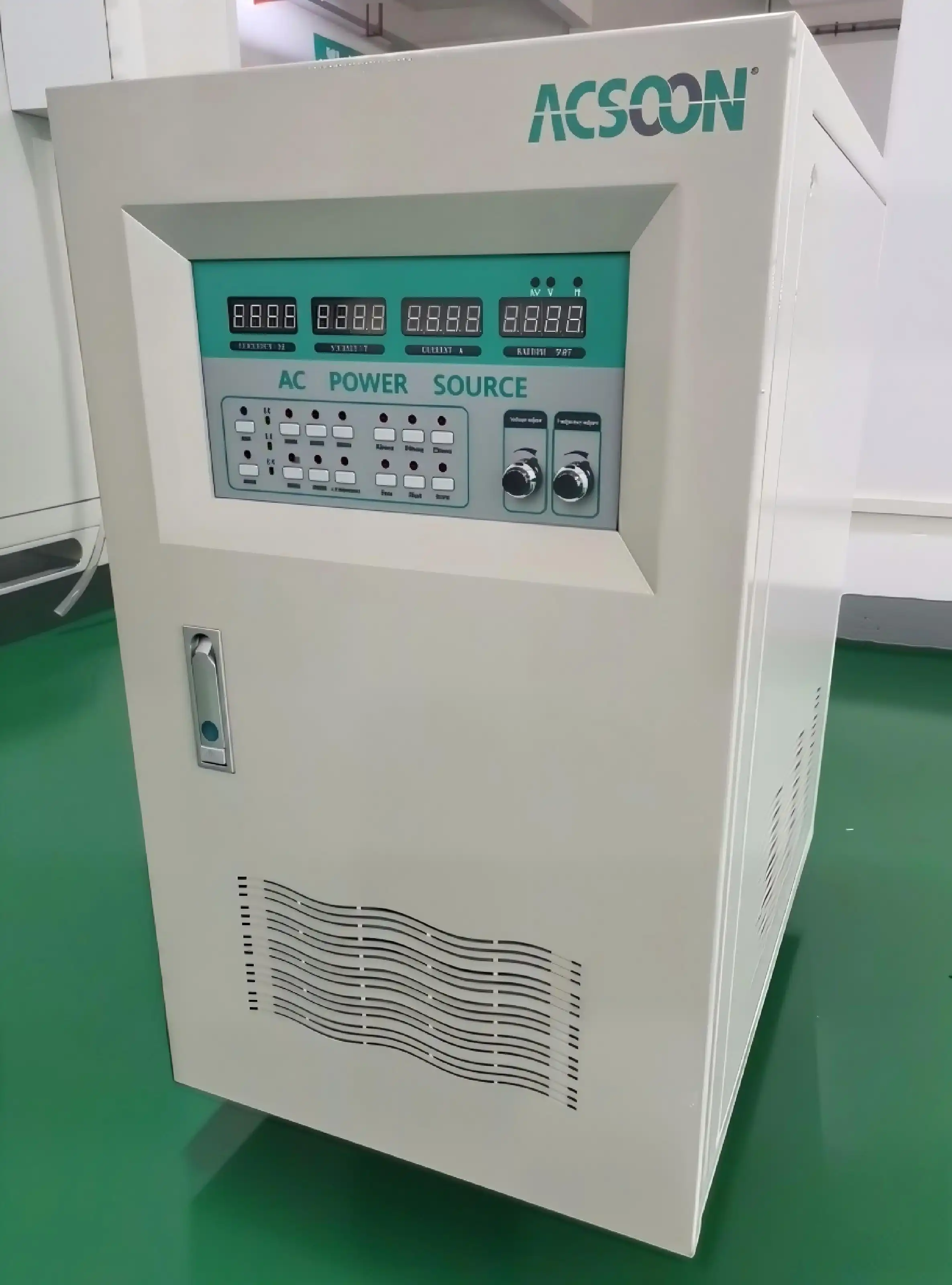
Three-phase static power frequency converters are the best way to send power to industrial and military uses that need it. The loads that these units can handle range from 10kVA to over 100kVA, and they keep the voltage and phase balance even across all three legs. The upright form with built-in wheels makes it easier to move in places like repair hangars, test cells, and production facilities where equipment placement changes all the time. Power circuits in variable frequency drives (VFDs) are similar, but they are used for different things. VFDs mostly change motor speed within a small frequency range to control HVAC and pumps. True power frequency converters, on the other hand, have output frequencies that run from 50Hz to 499.99Hz, which makes them compatible with a wide range of foreign equipment standards. While single-phase power frequency converters can work for lighter-duty tasks and certain lab tools, they aren't as powerful or good at handling heavy loads as three-phase setups.
Industrial Applications Driving Performance Improvements
For pre-flight checks, maintenance, and replacing auxiliary power units (APUs), aviation ground support activities need 400Hz power. This high frequency is used in commercial airplane electrical systems to make transformers lighter and increase power density. Technicians can turn on electronics, weather control systems, and hydraulic pumps using ground power units with precise power frequency converters instead of starting the plane's engines. This saves fuel and noise while still ensuring real operational testing conditions. The corrosive ocean and fluctuating power quality on land make marine uses more difficult. Power frequency converters with an IP rating of 21 or higher keep the electronics inside safe from dust and water while still providing stable power to hotel loads, navigation systems, and communication equipment while the ship is at dock. The ability to store fault events is very helpful for fixing intermittent electricity problems in harsh marine service conditions.
Key Performance Benefits of Using Power Frequency Converters
Enhanced Energy Efficiency and Operational Cost Reduction
When equipment is running at its set frequency point, it is most efficient. This means that energy bills will be lower and heat stress will be lower. Motors that are pushed to run on the wrong frequency have high current draw, high heat production, and low power factor. These are all signs of an electrical mismatch that power frequency converters fix. Lab tests show that motors that run at optimized frequencies use 15–30% less energy than motors that run constantly at full load at a set speed. The effect on the economy goes beyond the cost of power. Fewer thermal cycles protect insulation systems, bearings, and the stability of the windings, which delays costly motor repairs and rewinds. Manufacturers say that installing power frequency converter systems cuts their upkeep costs by more than 40%. This is mostly because fewer things break down, and parts need to be serviced more often. All of these saves add up quickly in factories that use a lot of motors and work different shifts.
Soft Start Functionality and Mechanical Stress Mitigation
When a traditional across-the-line motor is started, it creates inrush currents that are six to eight times the standard running current. These currents cause mechanical shocks that move through the gear components. Controlled acceleration rates in power frequency converters raise the motor's speed slowly over a few seconds, while the starting current is limited to 150% of its rated value. This slow speed increase keeps gears, couplings, and driven equipment safe from damaging torque spikes and lowers the stress on the electrical infrastructure. Soft starting is especially helpful for pump systems because rapid flow start-up causes water hammer, which are pressure spikes that damage pipes, valves, and pipe supports. Gradual speed ramping makes it possible for fluid columns to speed up gradually, which prevents hydraulic shock. When power frequency converters handle acceleration and braking curves instead of mechanical clutches or fluid connections, there are fewer product spills and belt slippage in conveyor systems.
Equipment Longevity and Reduced Downtime
Harmonic interference can't get to electrical controls and variable speed drives when the result is a pure sine wave with a THD of less than 2%. Programmable logic controls, motor drives, and instruments that can pick up voltage notches and common-mode noise are now used in a lot of industrial processes. Poor power quality causes these systems to lose data, shut down without warning, and fail parts before they should. High-quality power frequency converters work like power filters, keeping important loads from being affected by noise upstream while providing a clean, stable voltage no matter what changes happen at the input. This way of thinking about safety is shown by the ACSOON AF60W-330050 type. This static power frequency converter can handle changes in facility voltage without affecting its performance. It has a 50kVA rating and can accept three-phase inputs from 208V to 480V. The output frequency can be changed from 50Hz to 499.99Hz, which works with both normal manufacturing equipment and specialized test equipment that needs high frequencies. Built-in fault event logging records timestamps for disturbances and diagnostic codes. This lets maintenance teams find trends and fix problems before they happen.
Comparing Power Frequency Converters with Alternative Solutions
Frequency Converters versus Soft Starters
Soft starters lower the current needed to start a motor by controlling the voltage rise. However, they can't change the regularity of operation or keep the speed constant. Because they are less expensive at first, these devices are better for situations where fixed-speed equipment needs to be started up every once in a while. But soft starters don't save energy while they're running, and they can't change to power levels that aren't native to the equipment. Power frequency converters cost more up front, but they give you full control over your motor, including the ability to change speeds and acceleration rates. Applications that need tools to work with other countries' systems, process speeds that can be changed, or the highest energy efficiency can afford the extra cost because they save money and can do more. Instead of just looking at the purchase price, people making choices about what to buy should think about the total cost of ownership over the life of the tools.
Variable Frequency Drives versus Frequency Converters
Variable frequency drives change the speed of the motor to control the process. However, they usually only work in certain frequency bands (0-60Hz or 0-120Hz) and need power at the normal grid frequency. True power frequency converters can take in different frequencies and output exact frequencies over a much wider range. This makes them necessary for using tools in different countries and for certain types of tests. Motor speed modulation in VFDs saves energy in HVAC, pumping, and material handling uses. They work well with building automation and process control systems. Different situations call for different power frequency converters, such as powering equipment made for different electrical standards, simulating flight conditions in test cells, or allowing power links from port to ship, where frequency and voltage may be very different from the facility supply.
Single-Phase versus Three-Phase Configurations
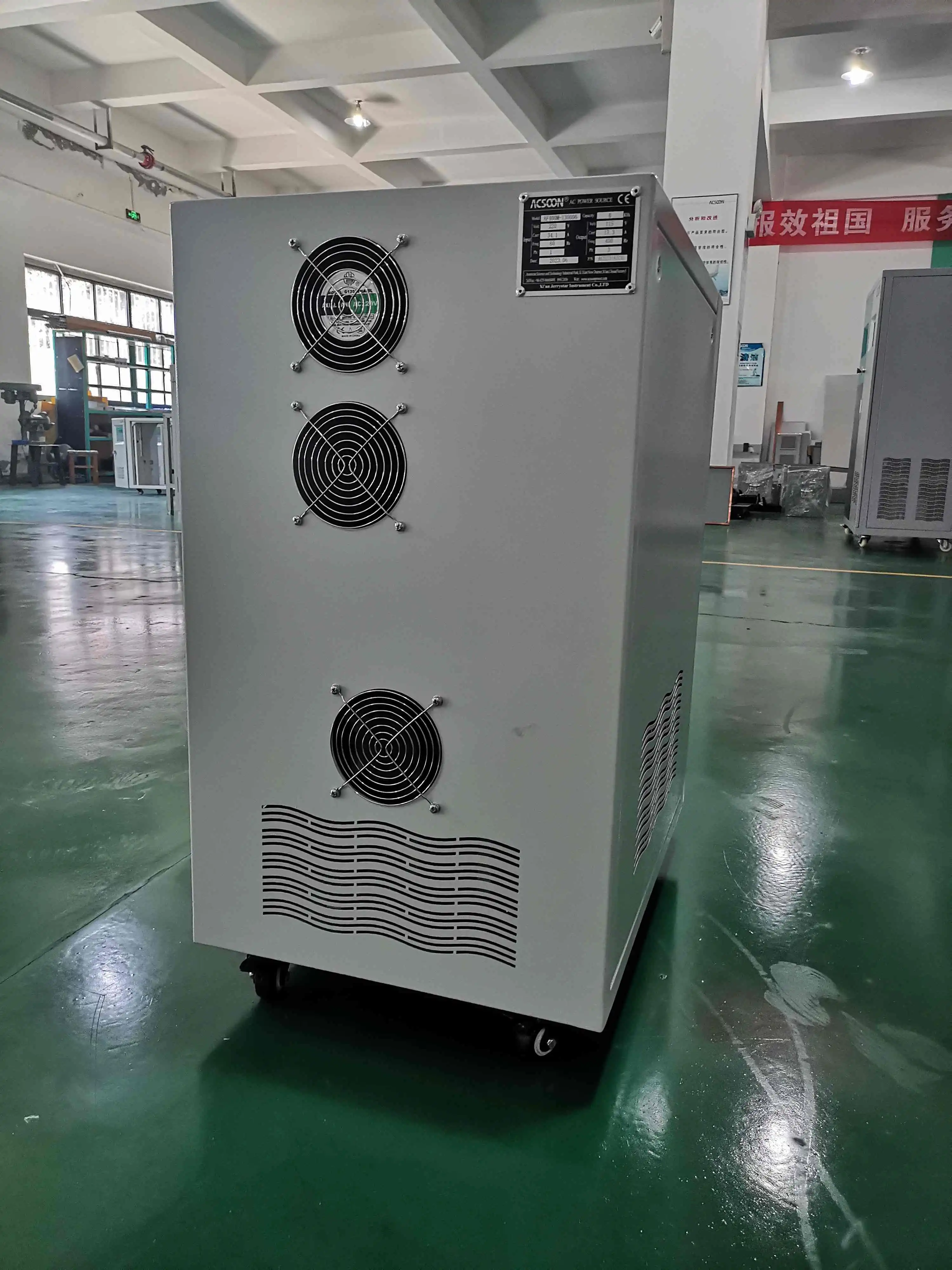
Single-phase power frequency converters are used for lab instruments, small tools, and movable gear that only needs a small amount of power, usually less than 5kVA. These small units are easier to put in places with limited room, and they are also cheaper than three-phase options. Single-phase power supply, on the other hand, causes motors to have pulsating force and limits the size of equipment that can be used successfully. Three-phase designs distribute equal power across multiple phases, which lets motors run smoothly and make the best use of wire and semiconductor capacity. Three-phase systems are most often used in marine, aircraft ground support, and industrial processing because they have a higher power density, less current per phase, and can work with heavy-duty equipment. The AF60W-330050's three-phase architecture can handle 50kVA constantly while keeping a small size thanks to high switching rates and efficient thermal design.
How to Select and Procure the Best Power Frequency Converter for Your Business
Critical Technical Specifications to Evaluate
Power grade is what you use to choose a power frequency converter. Add 20 to 25 percent to the total associated load to account for surge currents and future growth. This includes the motor's nameplate value, resistive heating elements, and any other equipment that is attached. Undersized power frequency converters are always overloaded, which causes safe shutdowns and speeds up the wear and tear on the parts. Models with a 50kVA capacity, like the AF60W-330050, are good for mid-range uses like aircraft ground support carts, naval kitchen equipment, and industrial test stands that run multiple motors at the same time. Installation freedom is based on the input voltage range. When demand is high, voltage sag can happen in buildings with old electrical equipment, causing supply voltage to drop as much as 10% below normal. Even though the input voltage runs from 208V to 480V three-phase, power frequency converters work effectively without the need for expensive voltage regulators or special transformers. The frequency range of the output must include both normal power frequencies (50Hz and 60Hz) and any special needs, like 400Hz for aerospace uses or variable frequencies for motor testing routines.
Evaluating Manufacturers and Quality Standards
Well-known brands stick to strict engineering and quality control standards that they've learned over many years of working in the field. Companies that work on flight and military power systems have stricter design validation and component screening procedures than companies that make consumer-grade tools. This is because failure in these areas could mean mission compromise and safety risks. With its ACSOON name, Xi'an Jerrystar Instrument Co., Ltd. shows how this kind of specialization works by making power frequency converters for high-reliability uses in flight, marine, industrial, and lab settings. Marks of certification are proof that safety and efficiency standards have been met. For products sold in the European Union, look for the CE mark. For products sold in North America, look for the UL mark. For products used in the military, look for the MIL-STD mark. IP ratings tell you how resistant a cage is to dust and water getting in. For example, an IP21 rating means that it can protect against solid items bigger than 12 mm and water drops falling vertically, making it good for industrial settings inside. For outdoor installations or places that will be washed down, higher IP ratings are needed.
Procurement Strategies for B2B buyers to buy things
Direct relationships with manufacturers get rid of the markups that distributors add on top of the price. They also give you access to technical support, the ability to customize products, and faster service. Integrators and equipment makers who are building power frequency conversion into bigger systems can use private marking with help from companies like JERRYSTAR. This freedom is useful for creating exclusive service programs or making products stand out in markets with lots of competition. Delivery lead times are based on how much inventory is available, which is a very important factor when serving time-sensitive military contracts or emergency equipment fixes. If suppliers keep enough stock on hand, they can ship within days instead of the weeks or months that are common for build-to-order businesses. Because JERRYSTAR is committed to keeping a deep stockpile, it can quickly meet pressing needs and accommodate customization requests at its 5,000–10,000 square meter factory in Xi'an, China. Before finalizing purchase orders, especially for pressing government or military purchases, procurement workers should make sure that they know exactly what is in stock and when it will be delivered.
Maximizing Equipment Performance with Power Frequency Converters: Best Practices
Professional setup and integration of the system
For power frequency converters to work safely and reliably, they need to be properly grounded. Connect the frame of the equipment to the ground at the building using wires that are the right size according to the electrical code. This will make sure that fault currents have a low-impedance path. Before connecting equipment to a three-phase system, the phase rotation must be checked. If the rotation is wrong, the motors will spin backwards, which can damage directed parts like pumps and fans. Simple phase rotation meters that cost less than $100 can help you avoid mistakes that cost a lot of money during launch. The ambient temperature has a direct effect on the ability and lifespan of a power frequency converter. When power semiconductors are working, they produce a lot of heat, so they need enough air flow to keep junction temperatures safe. Place power frequency converters away from heat sources, make sure they are at least the minimum distances recommended in the installation instructions, and make sure that cold air flows freely. To keep the full power output, facilities with high outdoor temperatures may need to upgrade to bigger power frequency converter types or add extra cooling.
Protocols for routine maintenance and monitoring
Inspections should be done every three months to make sure the cooling fan is working, that there is no strange noise or shaking, and that dust isn't building up on the heat sinks and other internal parts. Cleaning with compressed air gets rid of electrical dust that can make power connections track and arc over. With thermal image scans, problems like loose connections and failed parts can be found early on, before they cause unplanned downtime. If there are hot spots that are 15°C above usual working temperatures, they need to be looked into and fixed right away. Advanced power frequency converters like the AF60W-330050 have a problem event recording feature that makes maintenance intelligence very useful. Every month, look over the events that have been recorded and look for trends that could point to weak parts, problems with the input power, or incorrect loading. Frequent problems may happen at the same time as electrical events in the building, such as when a big motor starts up or when welding is done. This information lets us fix problems before they happen, instead of fixing them after the fact, which saves money on repairs and keeps production going.
Performance Improvement and Parameter Changes
Fine-tuning acceleration and slowdown rates to fit process needs is helpful in many situations. Aggressive ramps cut down on cycle time, but they may stress the machinery or lead to problems with the quality of the product. Conservative steps make tools last longer, but they slow down output. Write down the original settings for the parameters and make small changes while keeping an eye on how the equipment works and the quality measures for the result. This method uses evidence to find the best balance points for each application. Monitoring power quality shows places where things could be better. Find the input power factor and compare it to utility rate models that charge more for low power factors. Some power frequency converters have features that fix the power factor. These features lower the amount of reactive power used, which lowers energy costs without affecting the performance of the equipment. In the same way, output harmonic analysis makes sure that sensitive loads get clean power that meets the requirements set by the maker. This keeps expensive monitoring and control systems from breaking down too soon.
Conclusion
Power frequency converters make a real difference in a wide range of industrial settings by precisely controlling motors, saving energy, and keeping equipment safe. These devices get rid of the problems that come with fixed-speed operation and make it possible for tools from different countries to work together and for specialized tests to be done. Soft starting, clean power delivery, and wide frequency range change all work together to lower operating costs and increase the life of equipment. When looking at frequency conversion options, businesses should put technical dependability, manufacturer expertise in key uses, and full support at the top of their list of priorities. Choosing, installing, and maintaining things the right way will get you the best return on your investment and make sure they work consistently in tough industrial, military, marine, and flight settings.
FAQ
How much energy can a frequency converter save?
How much energy is saved depends on the duty cycle and load factors of the device. When compared to throttle or bypass flow control methods, variable torque loads like fans and pumps usually save 20 to 40 percent of the energy used. Smaller savings are seen in constant torque uses, mostly because mechanical losses in clutches and fluid joints are eliminated. Motor performance goes up by 5 to 15% when equipment is run at its optimal frequency compared to when it is run off-frequency.
What distinguishes frequency converters from standard inverters?
Power frequency converters can take in different frequencies and give out exact frequencies over a wide range, which lets international tools work. Standard inverters usually change DC to AC at a set frequency or let you change the frequency a little from the standard grid frequency. To keep waveform quality and voltage stability across their entire working range, power frequency converters use more complex control methods and power conditioning.
How do I verify compatibility with existing motors?
Check the voltage and frequency numbers on the motor's nameplate, and then make sure that these values are covered by the power frequency converter's output standards. Most commercial motors can handle changes of up to 10% in power and 5% in frequency. Some specialized tools may need to be perfectly matched in terms of frequency. For example, 400Hz aircraft systems can't work well on 60Hz power. If the paperwork isn't clear or isn't available, talk to the equipment's makers.
Contact JERRYSTAR for Reliable Power Frequency Converter Solutions
The ACSOON brand static power frequency converters that Xi'an Jerrystar Instrument Co., Ltd. makes are perfect for flight ground support, military uses, marine installations, and industrial testing settings. Our AF60W-330050 model gives you 50kVA of clean, stable three-phase power. The output frequency can be changed from 50Hz to 499.99Hz, so it works with both local and foreign standards for equipment. As both a manufacturer and a trading business, we keep a large collection on hand to ensure quick delivery. We also offer custom solutions that are made to fit each customer's needs. Our engineering team offers expert advice to help you choose the best power frequency converter and integrate it into your system. They also offer full support after the sale. Military contractors and people who work for the government can benefit from our experience providing vital power systems whose dependability has a direct effect on mission success. Get in touch with our team at acpower@acsoonpower.com to talk about your specific needs with experienced power frequency converter providers who know how to meet the technical needs and time constraints of aerospace, military, and industrial uses. We offer cheap quotes, chances to work with original equipment manufacturers (OEMs), and faster delivery for projects that need power transfer solutions right away.
References
1. Chapman, Stephen J. "Electric Machinery Fundamentals, Fifth Edition." McGraw-Hill Education, 2012.
2. Mohan, Ned, Undeland, Tore M., and Robbins, William P. "Power Electronics: Converters, Applications, and Design, Third Edition." John Wiley & Sons, 2003.
3. IEEE Standards Association. "IEEE Recommended Practice for Monitoring Electric Power Quality - IEEE Standard 1159-2019." Institute of Electrical and Electronics Engineers, 2019.
4. Department of Defense. "Interface Standard: Aircraft Electric Power Characteristics - MIL-STD-704F." U.S. Department of Defense, 2004.
5. Bose, Bimal K. "Modern Power Electronics and AC Drives." Prentice Hall, 2002.
6. International Electrotechnical Commission. "Rotating Electrical Machines - Part 1: Rating and Performance - IEC 60034-1." International Electrotechnical Commission, 2017.