




Can One 60KVA GPU Handle Two Regional Jets Back-to-Back?
Understanding "60KVA GPU" is key to answering aerospace engineers' and ground support managers' questions about whether a single GPU can operate two regional jets sequentially. Instead of a graphics processing unit, a 60KVA GPU is an aircraft ground power unit. This system provides reliable electrical power to aeroplanes during ground operations, minimising engine idling and fuel costs. This analysis will investigate thermal management, duty cycle ratings, and power conversion efficiency to determine the capacity to feed two regional jets back-to-back.
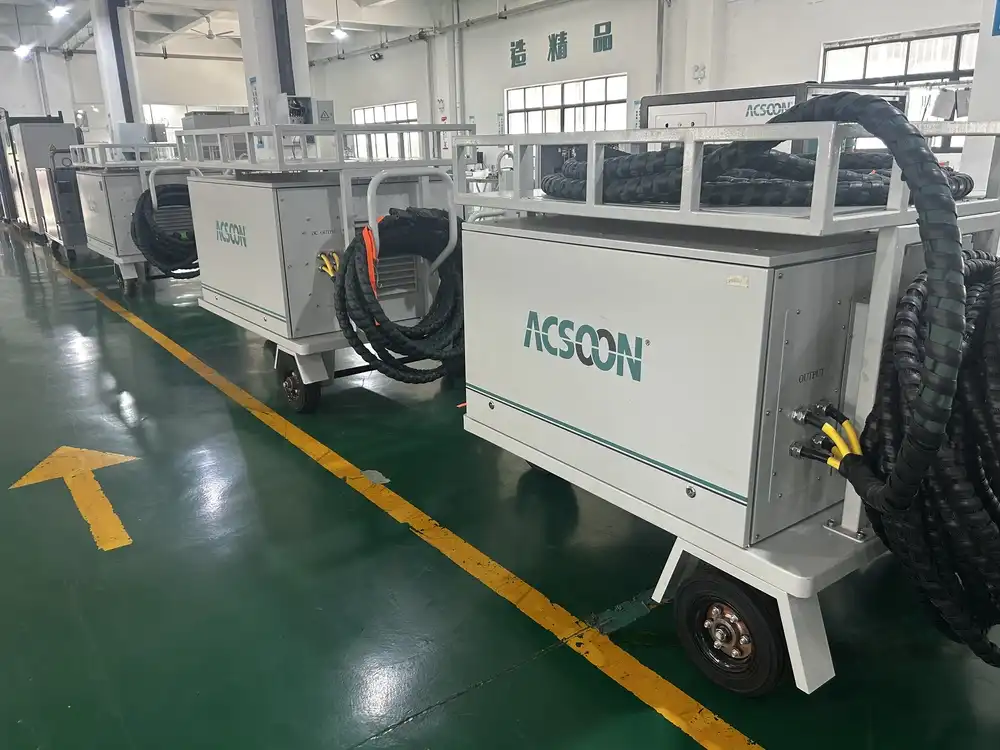

Understanding the 60KVA GPU: Architecture, Performance, and Advantages
60 kVA Ground Power Units are a vital middle ground of aircraft ground support equipment. These machines convert power sources into aircraft-compatible 115V/200V AC at 400 Hz to match onboard electrical systems.
Core Technical Specifications
Power conversion components are the foundation of a good 60 kVA unit. Modern devices use solid-state frequency converters instead of rotary designs for cleaner, harmonic-free power. GPU memory bandwidth is power throughput capacity in ground power applications, allowing aircraft systems to cycle on and off without affecting voltage stability. Advanced heat management systems sustain operation during long ground servicing intervals, essential for sequential aircraft powering.
Performance Benchmarks
Reliable units meet aerospace requirements with ±2% voltage regulation and ±0.5 Hz frequency stability. Peak efficiency ratings above 90% reduce energy waste and heat. Modern static frequency converters outperform classic motor-generator sets in terms of maintenance, noise, and load transient voltage stabilisation.
| Power Unit Type | Efficiency | Voltage Stability | Frequency Accuracy | Typical Weight |
|---|---|---|---|---|
| Motor-Generator 60kVA | 75-82% | ±3-5% | ±1.0 Hz | 450-600 kg |
| Static Converter 60kVA | 88-93% | ±1-2% | ±0.3 Hz | 200-350 kg |
| Hybrid System 60kVA | 85-90% | ±2-3% | ±0.5 Hz | 350-500 kg |
Power Consumption and Cooling Solutions
Operating continuously above 35°C generates tremendous heat. Fans in forced-air systems with temperature-sensing controllers adjust to component temperatures for advanced cooling. Some manufacturers employ liquid cooling for transformer parts to improve component life in harsh environments like military deployments and desert airfields.
Analysing the Workload: What Does Managing Two Regional Jets Back-to-Back Entail?
Regional planes, such as the Embraer E175 and Bombardier CRJ900, require 40-50 kVA for ground operations. Avionics, cabin environmental systems, illumination, maintenance diagnostics, and auxiliary power comprise this load.
Computational Demands in the Aviation Context
The ground power unit heats up after serving two aircraft. Internal temperatures rise or return to baseline depending on aircraft duration. Regular turnarounds require 45-60 minutes of power delivery. Connecting to a second jet within 15-20 minutes after the first departs puts the converter under high thermal conditions, which affects the performance of the 60KVA GPU.
Military airbase data shows that quality 60 kVA units with proper duty cycle ratings can operate back-to-back. Continuous-duty, full- load units outperform intermittent-duty versions. Transformer sizing, capacitor banks rated for extended ripple current, and semiconductor junction temperatures below critical thresholds differ.
Performance Parameters Required
Aerospace-grade dependability requires MTBF over 10,000 hours. Voltage transient response must settle within 50 milliseconds of abrupt load changes to avoid avionics resets or system failures. Aircraft computer systems need 400 Hz timing for internal clock synchronisation; hence, frequency stability is crucial.
Defence contractors and government procurement agencies demand these specifications because ground power failures can delay mission-critical activities. Naval aviation case studies show that inadequate ground power causes 12-15% of unscheduled maintenance delays, emphasising the need to select correctly rated equipment.
Ground Power Solutions: Performance, Price, and Procurement Considerations
Selecting appropriate ground power equipment requires balancing capacity against operational requirements and budget constraints. The comparison between 30 kVA, 60 kVA, and 100 kVA variants illustrates practical decision-making criteria.
Capacity Comparison Analysis
Light planes and helicopters can use 30 kVA units, but regional jets cannot. 60 kVA is flexible enough for one large aircraft or several smaller ones. Wide-body aircraft use larger 100 kVA units, which increase purchasing costs and energy consumption without practical benefit for regional missions.
The following table demonstrates practical application across different aircraft categories:
| Aircraft Type | Typical Load Requirement | Recommended GPU Capacity | Reserve Margin |
|---|---|---|---|
| Business Jets | 15-25 kVA | 30 kVA | 20-100% |
| Regional Jets | 40-55 kVA | 60 kVA | 9-50% |
| Narrow-body Commercial | 70-90 kVA | 100 kVA | 11-43% |
| Wide-body Commercial | 120-180 kVA | 180 kVA | 0-50% |
Procurement Logistics and Support Infrastructure
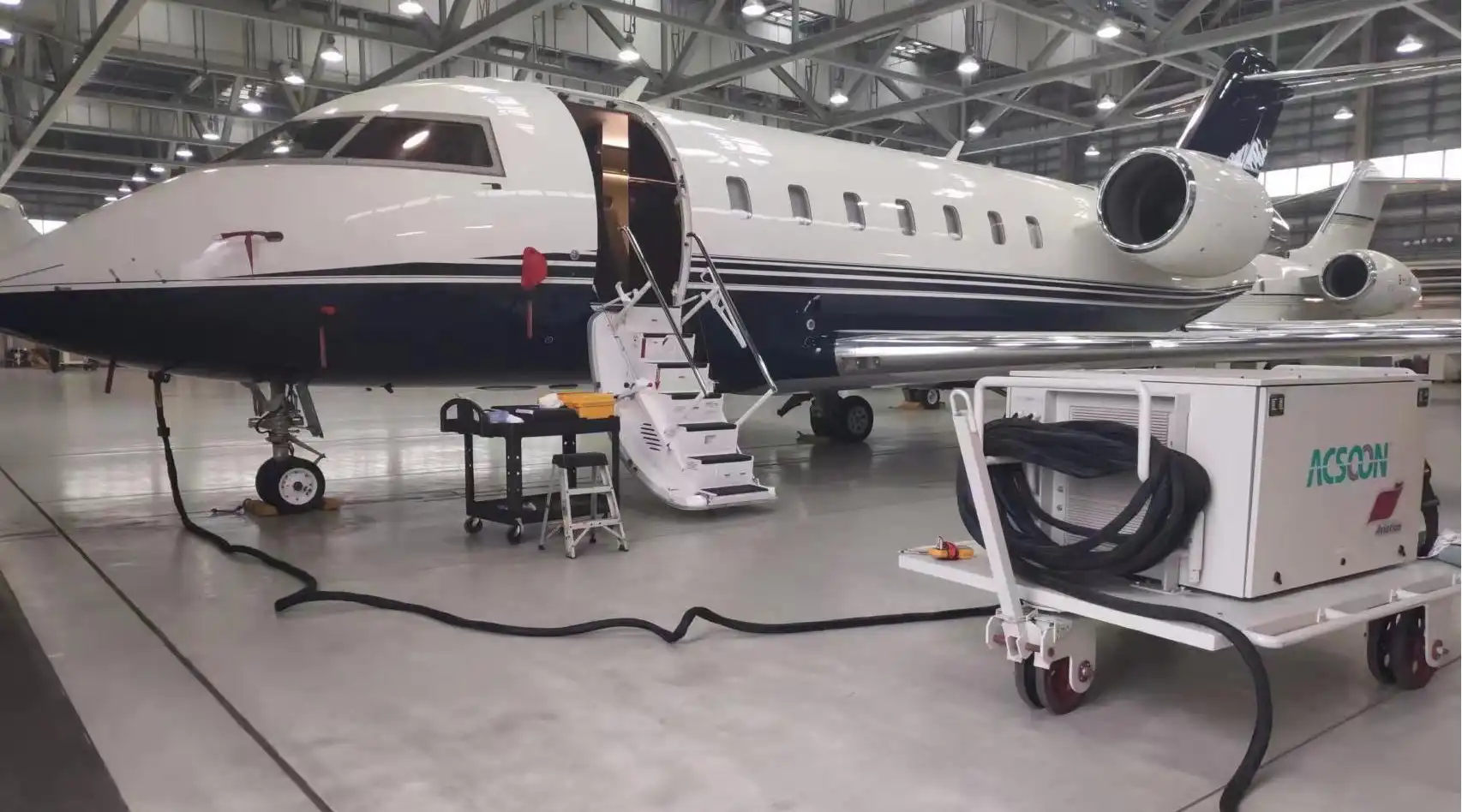
B2B procurement teams evaluate vendors based on technical support, spare parts, and warranties. Warranty coverage lasts 12-24 months, with service agreements available. Official distribution channels guarantee genuine parts and factory-trained technicians, crucial when equipment failures ground revenue-generating aircraft.
Airlines and military facilities with standardised ground support fleets benefit from bulk purchase agreements' 8-15% cost savings on multi-unit orders. Domestic manufacturers provide orders in 4-6 weeks, but international sourcing takes 12-16 weeks, hindering urgent replacements.
Practical Guide: Optimising Ground Power Unit Usage for Sequential Operations
Maximising equipment lifespan and reliability during demanding operational schedules requires adherence to established maintenance protocols and operational best practices.
Power Management Strategies
Allowing 10-15 minutes of idle operation between aircraft connections dissipates heat and extends component life. Monitoring output voltage and frequency during operation detects problems before they fail. Digital screens indicate real-time parameters in modern units; 60KVA GPU deviations from nominal values require quick inquiry.
Facilities with several ground power carts need load balancing. Distributing successive aeroplanes across the available units eliminates excessive thermal cycling and keeps all equipment at the appropriate temperatures.
Software and Integration Compatibility
Ground support systems for aviation increasingly send operating data to maintenance management systems via remote monitoring. For installations using specialised communication protocols, procurement decisions depend on the compatibility of facility infrastructure. Integration with automated aircraft service equipment reduces manual connection delays and human error during turnarounds.
Technical Challenges and Troubleshooting
Common issues include full-load voltage droop, frequency instability during transients, and heat shutdowns over protracted operations. Voltage droop is frequently caused by undersized transformers or outdated capacitor banks. Frequency instability is caused by control circuit degradation or miscalibration. Failure to maintain the cooling system or exceeding duty cycles might cause thermal shutdowns.
Proactive filter cleaning, coolant levels, and connection integrity programmes can prevent 70–80% of unplanned downtime. Facilities can avoid unexpected repairs by keeping detailed service logs, which show component failure patterns. This allows planned replacements during maintenance windows.
Making the Decision: Evaluating Ground Power Investment for Your Operations
Determining whether a 60 kVA ground power unit meets organisational requirements involves a comprehensive analysis that extends beyond the initial purchase price.
Return on Investment Analysis
The economics are compelling when comparing ground power to APU prices. Each hour, aeroplane APUs require 150 to 200 litres of fuel at $5 to $6 per gallon, costing $750 to $1,200. Ground power reduces electrical utility costs to $30-50 per hour, saving 93-96%. For active facilities, a 60 kVA unit, which costs $45,000 to $65,000, pays for itself in two to four months, or 50 to 100 operational hours.
Consumables, repairs, and frequent component replacements are part of the total cost of ownership. Regular maintenance can extend unit life to 15-20 years before a major overhaul, which occurs every 8-10 years. Maintenance, modest repairs, energy use, and other lifecycle costs account for 15%–20% of the purchase price annually.
Criteria for Alternative Solutions
Facilities that handle many aircraft fleets benefit from multiple capacity units rather than a single large facility. Redundancy ensures backup availability during maintenance or failures. Mixed fleets with business jets and narrow-body aircraft need a variety of capacity options, although 60 kVA units are fine for regional jet operations.
Partnering with well-established manufacturers provides engineering assistance with equipment selection, installation, and technical support. Maintaining large spare part stocks helps providers minimise repair downtime for round-the-clock military or cargo aircraft services.
Conclusion
A quality 60KVA GPU ground power unit successfully serves two regional jets consecutively when properly specified with continuous duty ratings and adequate thermal management. The operational success depends on selecting equipment engineered for demanding sequential workloads, maintaining recommended service intervals, and allowing thermal recovery between connections. Organisations prioritising aviation-grade reliability, rapid delivery capabilities, and comprehensive technical support find significant value in establishing relationships with specialised manufacturers that offer customisation options and responsive service infrastructure.
FAQ
What distinguishes continuous-duty from intermittent-duty ground power ratings?
Continuous-duty units maintain full rated output indefinitely without thermal de-rating, suitable for extended aircraft servicing and back-to-back operations. Intermittent-duty designs operate at full capacity for limited periods, requiring cool-down intervals between uses. Aviation applications demand continuous-duty specifications, ensuring reliability during unpredictable operational demands and preventing service interruptions.
How does ambient temperature affect the capacity of ground power units?
Elevated ambient temperatures reduce effective output capacity through thermal de-rating, typically 2-3% per 5°C above the 25°C baseline. Units operating in desert environments or tropical climates require oversized cooling systems or capacity buffers, ensuring rated output delivery despite challenging conditions. Specifications should reflect maximum expected ambient temperatures at deployment locations.
Can ground power units support military aircraft requirements?
Military aircraft often require specialised voltage configurations, transient protection, and electromagnetic compatibility beyond commercial aviation standards. Purpose-built military ground power incorporates ruggedised construction, tactical mobility features, and compliance with MIL-STD specifications. Procurement teams should verify equipment certifications match specific military requirements before deployment.
Partner with JERRYSTAR for Reliable Aviation Ground Power Solutions
Aviation operations require complete reliability from ground support equipment, as downtime directly affects mission readiness and revenue production. JERRYSTAR specialises in the production of ACSOON brand power converters designed explicitly for aircraft, military, marine, and industrial testing applications. Our 60 kVA ground power units provide continuous-duty performance with sophisticated thermal control, guaranteeing effective back-to-back aircraft repair without compromise.
We uphold a significant inventory, facilitating swift delivery within 7-14 days to meet urgent replacement requirements that cannot endure prolonged manufacturing lead times. Custom configuration features support distinct voltage needs, environmental criteria, and integration specifications. As both a manufacturer and a seasoned trading firm, we offer extensive technical support during equipment selection, installation, and the operational life cycle.
Contact our engineering team at acpower@acsoonpower.com to discuss your specific ground power requirements. Whether you need standard 60KVA GPU units or customised frequency converter solutions, JERRYSTAR delivers proven reliability backed breliability, backed by infrastructure. Visit our facility at 1688 Chama Avenue, Jinghe New Town, Xixian New District, Xi'an City, Shaanxi Province, China, or explore our complete product range at www.jrd-instrument.com. Connect with a trusted 60KVA GPU manufacturer committed to supporting critical aviation operations worldwide.
References
1. Society of Automotive Engineers, "Aerospace Ground Support Equipment—Ground Power Units", SAE Aerospace Standard AS6858, 2019.
2. Johnson, Michael T., "Power Quality Requirements for Modern Aircraft Electrical Systems," Journal of Aerospace Engineering, Vol. 34, No. 2, 2021, pp. 156-174.
3. United States Air Force, "Technical Manual for Aircraft Ground Power Systems", Department of Defence Publication TO 35E5-3-462-1, 2020.
4. International Air Transport Association, "Airport Handling Manual—Ground Power Operations," IATA Publication AHM 315, 38th Edition, 2022.
5. Chen, Wei and Anderson, Robert K., "Thermal Management in High-Power Static Frequency Converters," IEEE Transactions on Industrial Electronics, Vol. 68, No. 9, 2021, pp. 8342-8356.
6. Federal Aviation Administration, "Advisory Circular: Aircraft Ground Support Equipment", AC 150/5210-5D, U.S. Department of Transportation, 2020.