




100KVA UPS: Online Double Conversion, Zero Transfer Time
For important tasks that need a reliable power supply, a 100KVA UPS with online double-conversion technology is necessary. This system changes alternating current (AC) to direct current (DC) and then back to AC, ensuring a steady and clean power supply. When there is a power cut, this system keeps sensitive equipment in places like airports, military control rooms, ship navigation systems, and high-precision labs running without any delay or break in power.
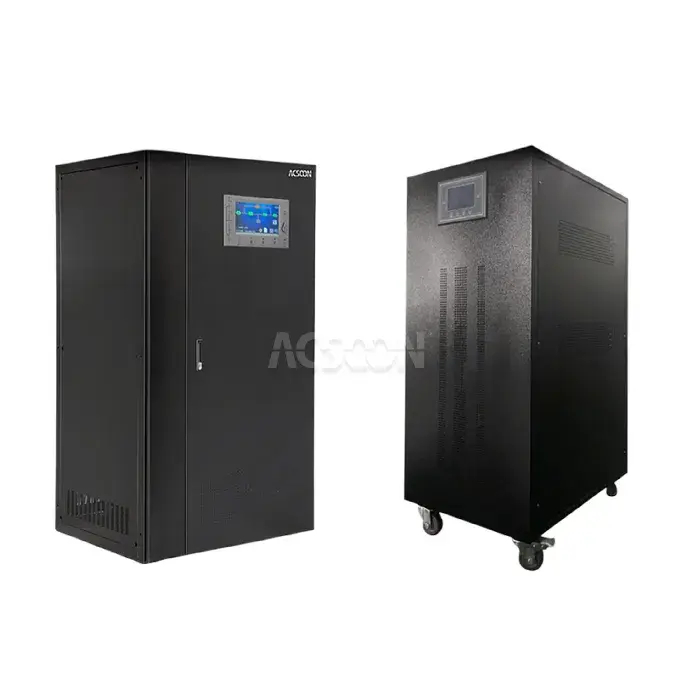
Understanding 100KVA UPS and Its Core Technology
What Defines a 100 kVA Capacity System?
A 100KVA UPS uninterruptible power supply is a strong system that can handle big electrical demands, usually between 80kW and 90kW, depending on the power factor. This makes it perfect for places like data centres, industrial control systems, aerospace testing labs, and ships, where losing power could be dangerous or damage costly equipment. The KVA rating shows how much apparent power the system can handle, which is different from the real power in watts. The real power depends on the power factor, which is often between 0.8 and 0.9 in today's systems.
Online Double Conversion Architecture Explained
The gold standard for power protection is online double conversion. A rectifier converts AC to DC, charges the battery bank, and powers a high-frequency inverter from utility power. This inverter isolates connected equipment from grid disruptions by providing completely conditioned AC power with stabilised voltage and frequency. Continuous processing eliminates transfer time, unlike line-interactive or standby. When utility power goes out, the battery bank maintains DC bus voltage without switching, keeping critical systems running.
Technical Specifications That Matter
High-capacity uninterruptible power systems usually work with an input voltage between 380V and 480V for three-phase power. They provide an output voltage that is carefully controlled to stay within ±1% accuracy. Efficiency has improved significantly, with newer models achieving 94-96% efficiency in double conversion mode and up to 98% in economy mode. The power factor correction helps ensure clean and reliable power while keeping harmonic distortion below 3% THD. These standards affect how much it costs to run the system and how well the equipment is protected, so they are important to consider when buying.
Sizing and Selecting a 100KVA UPS for Your Business Needs
Calculating Your Actual Load Requirements
An accurate load assessment avoids both undersizing and unnecessary oversizing. We recommend performing a full power audit to identify all important equipment, startup surge currents, and expected increases over the next three to five years. Peak demand in industrial settings is often 20-40% higher than average consumption, especially when motors, compressors, or variable frequency drives are all running at the same time. Accounting for transient loads is critical in aircraft testing facilities, laboratory apparatus, and marine propulsion control systems. Adding a 20-25% safety margin to your calculated total load ensures the system operates at peak efficiency while allowing for future growth.
Comparing Capacity Options
| Capacity | Typical Load Support | Best Applications | Average Efficiency |
|---|---|---|---|
| 50KVA | 40-45kW | Small data rooms, laboratory sections | 93-95% |
| 80 kVA | 64-72kW | Medium industrial lines, marine auxiliary systems | 94-96% |
| 100KVA | 80-90kW | Large facilities, military installations, aerospace ground support | 95-96% |
| 120 kVA | 96-108kW | Enterprise data centres, major industrial operations | 95-97% |
Choosing between these capacities depends on your immediate needs and scalability requirements. A facility currently drawing 60kW might benefit more from an 80kVA unit if no expansion is planned, while operations targeting growth should consider the 100KVA UPS platform. The marginal cost difference often justifies the larger capacity when factoring in installation labour and future upgrade expenses.
Online Versus Offline Topology Selection
Online or offline (standby) installations affect protection quality. Flight instruments, military communication systems, and precision manufacturing equipment that cannot tolerate millisecond disruptions need online double conversion systems for continuous power conditioning. Offline systems, which use battery power only during outages, are cheaper but require 4-10 milliseconds of transmission time, which is too long for sensitive digital equipment. Line-interactive models, with switching times of 2-4 milliseconds, are suitable for less-critical applications. For high-value equipment and operational continuity, online architecture is the only true zero-transfer-time protection.
Performance and Maintenance of 100KVA UPS Systems
Energy Efficiency and Operational Cost Reduction
Cool characteristics in modern high-capacity power protection systems save energy while protecting. Eco-mode operation allows qualified utility power to avoid duplicate conversion under steady conditions, increasing efficiency to 98% while retaining battery charge and quick switchover. In labs and offices, smart cooling systems alter fan speed based on internal temperature and load, saving energy and noise. A constantly loaded 100kW system with 2% efficiency improvements saves $8,000–$12,000 in electricity over five years, assuming industrial power rates of $0.10–$0.15 per kWh.
Essential Maintenance Practices
Preventive maintenance extends system life and ensures reliability. Voltage, internal resistance, and temperature should be evaluated periodically across all cells to assess battery health. Quarterly checks check capacitor integrity, cooling system performance, and electrical connections for heat or corrosion. Annual servicing includes professional load bank testing, firmware updates, and cooling fan replacement. Keep ambient temperatures between 20 and 25 degrees Celsius and humidity below 60% to extend battery life and electronic component dependability.
Battery Technology Comparison
Battery selection affects backup endurance, maintenance, and ownership cost. Valve-regulated lead-acid batteries are the cheapest option, lasting 5-8 years in controlled environments. These traditional batteries function well in aerospace ground power units and industrial applications with unlimited space and weight. A 10-15-year lifespan, 30% less weight, and 50% smaller footprint make lithium-ion technology ideal for naval installations and space-constrained military sites, despite its 2-3 times higher cost. Lithium alternatives can withstand higher working temperatures and provide more stable discharge voltage, which improves inverter performance and backup runtime.
Market Comparison and Leading 100KVA UPS Brands in 2024
Established Global Manufacturers
Several well-known companies dominate the high-capacity power protection market, each with unique features. Modular scalability lets Schneider Electric's Galaxy series expand capacity without replacing equipment. Eaton prioritises energy efficiency, with the 93PM series rated 96%. Schneider's APC's cloud-connected platforms for distributed sites provide remote monitoring. Delta Electronics' competitive price and performance indicators attract cost-conscious procurement executives from several sites.
Specialized Solutions for Niche Requirements
Specialised configurations solve operating challenges beyond ordinary alternatives. Transformerless designs eliminate isolation transformers, reducing weight by 30-40% and enhancing economy while maintaining galvanic isolation through new switching mechanisms, making them excellent for marine vessels where weight affects fuel usage. In acoustically optimised versions, sound-dampening enclosures reduce operational noise to below 55dB at one metre, meeting strict laboratory and office standards. Remote facilities that need more time for grid restoration or orderly shutdown can use battery cabinets to provide 2-4 hours of backup time.
Price and Value Considerations
| Factor | Budget Range | Mid-Range | Premium Solution |
|---|---|---|---|
| Initial Cost | $18,000-$24,000 | $25,000-$32,000 | $33,000-$45,000 |
| Warranty Coverage | 1-2 years | 2-3 years | 3-5 years |
| Efficiency Rating | 93-94% | 94-95% | 95-96% |
| MTBF Rating | 150,000 hours | 200,000 hours | 250,000+ hours |
To balance the cost of buying something with its long-term value, think about how hard it is to install, how much energy it uses over time, and how easy it is to get support. Higher-priced options are worth the extra cost because they often offer better efficiency, longer warranties, and better monitoring, which helps avoid unexpected problems. The cost of installation usually adds 10 to 15 per cent to the price of the equipment, based on how much work is needed to prepare the site, improve electrical systems, and set up the equipment properly. Government and military buyers often care more about reliability and support than the initial price, because a power system failing in serious situations can cause big problems that are much worse than the cost of the equipment.
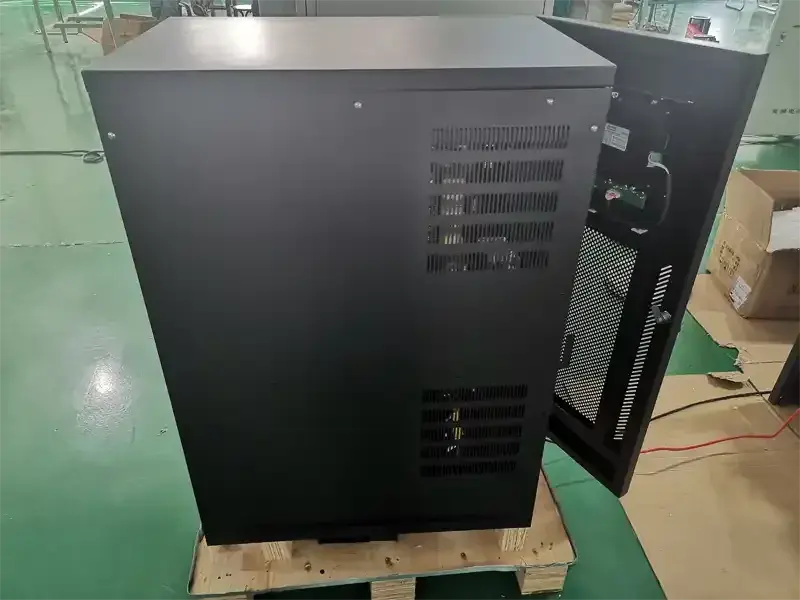
Procurement and Implementation Guide for 100KVA UPS
Identifying Qualified Suppliers and Manufacturers
Manufacturers with IEC 62040 for uninterrupted power systems, MIL-STD for military use, and marine classification group permissions for ship installation are qualified. Production capacity is crucial for projects with a high unit count or tight delivery deadlines. Manufacturing requires 5,000–10,000 square feet.
Custom Configuration Capabilities
Most standard catalogue products don't fit every application. Aviation equipment requires 400 Hz frequency conversion. Marine areas require corrosion-resistant and shake-resistant enclosures. Medical isolation transformers are needed in labs. Military systems need high security and electrical interference protection. Partnership with custom solution vendors ensures your power system works with what you have and fits your application's needs, which standard goods can't.
Installation and Ongoing Support Essentials
Professional installation by factory-trained specialists ensures system performance and warranty validity. Getting the system ready involves testing it under different loads, prepping the batteries, and teaching your personnel to use it. Maintenance plans include frequent check-ups, rapid access to replacement parts, and emergency response pledges, preventing unexpected operational stoppage. When choosing a supplier, check support. Their response speed, replacement parts inventory, and local technicians all affect how well your system operates over time.
Conclusion
Choosing the right high-capacity 100KVA UPS power protection entails balancing technical specifications, application requirements, and lifecycle costs. Online double conversion design with zero transfer time is the only acceptable level of protection for mission-critical aerospace, military, maritime, and precision industrial activities in which even a brief power outage has catastrophic effects. Proper sizing considers current loads, future growth, and transient demands unique to your equipment. Maintenance procedures and battery technology selections have a substantial impact on long-term reliability and total ownership costs. Working with competent manufacturers who provide customisation capabilities, enough inventory, and quick technical support guarantees that your power protection investment performs reliably throughout its operational life.
FAQ
What backup runtime can I expect from a 100KVA UPS?
Runtime depends primarily on your actual load and battery configuration. A fully loaded 80kW system with standard battery cabinets typically provides 10-15 minutes of backup—sufficient for brief outages or orderly shutdown procedures. Extended runtime configurations with additional battery strings support 30 minutes to several hours of operation, necessary for facilities lacking backup generators or where restoration takes longer. Battery technology also affects duration, with lithium-ion providing more consistent voltage throughout discharge compared to lead-acid alternatives.
How does ambient temperature affect system performance?
Temperature significantly impacts both electronic components and battery performance. Operating environments above 25°C accelerate battery ageing, reducing expected lifespan by approximately 50% for every 10°C increase. High temperatures also decrease efficiency and may trigger thermal protection that reduces output capacity. Marine and industrial environments often require additional cooling capacity or temperature-hardened components to maintain reliability in challenging conditions.
Can I connect a 100KVA UPS to existing backup generators?
Most high-capacity systems integrate seamlessly with standby generators, though compatibility verification prevents operational issues. The generator must provide stable voltage and frequency within the UPS input tolerance, typically ±10% voltage and ±5% frequency. Proper sequencing ensures the uninterruptible power system conditions the generator output, protecting connected equipment from switching transients. Coordination with automatic transfer switches requires careful engineering to prevent simultaneous switching that could damage equipment.
Partner with JERRYSTAR for Reliable 100KVA UPS Solutions
Xi'an Jerrystar Instrument Co., Ltd. brings specialized expertise in high-capacity power conversion systems serving aviation, military, marine, and industrial sectors. Our ACSOON brand power converters integrate seamlessly with uninterruptible power systems, addressing the unique frequency conversion requirements of aerospace ground support and specialized industrial applications. As both manufacturer and trading company, we maintain 5,000-10,000 square meters of production facilities at 1688 Chama Avenue, Jinghe New Town, enabling rapid customisation and adequate inventory for urgent delivery demands. Our experience in aviation and military power systems positions us to understand your critical application requirements and deliver solutions that meet stringent reliability standards. Whether you need a standard 100KVA UPS supplier or custom-engineered power protection integrating frequency conversion, our technical team provides consultation from specification development through installation support. Contact our power systems specialists at acpower@acsoonpower.com to discuss your project requirements and receive a detailed quotation tailored to your operational needs.
References
1. Institute of Electrical and Electronics Engineers. "IEEE Standard for Uninterruptible Power Systems Performance and Test Requirements." IEEE Std 1778-2018, October 2018.
2. Lawrence Berkeley National Laboratory. "Energy Efficiency Improvements and Cost Savings Opportunities for Data Centres." U.S. Department of Energy, 2019.
3. Aamir, Muhammad, et al. "Review: Uninterruptible Power Supply Technologies for Critical Facilities." Journal of Power Electronics, Vol. 19, No. 4, 2019, pp. 1097-1114.
4. Military Standard. "Requirements for the Environmental Engineering Considerations and Laboratory Tests, MIL-STD-810H." U.S. Department of Defence, January 2019.
5. American Society of Heating, Refrigerating and Air-Conditioning Engineers. "Thermal Guidelines for Data Processing Environments, Fourth Edition." ASHRAE Technical Committee 9.9, 2021.
6. Rasmussen, Neil. "Battery Technology for Single-Phase UPS Systems." Schneider Electric White Paper 30, Revision 2, 2020.
