




Does a 90KVA Frequency Converter Eliminate Hangar Diesel Fumes?
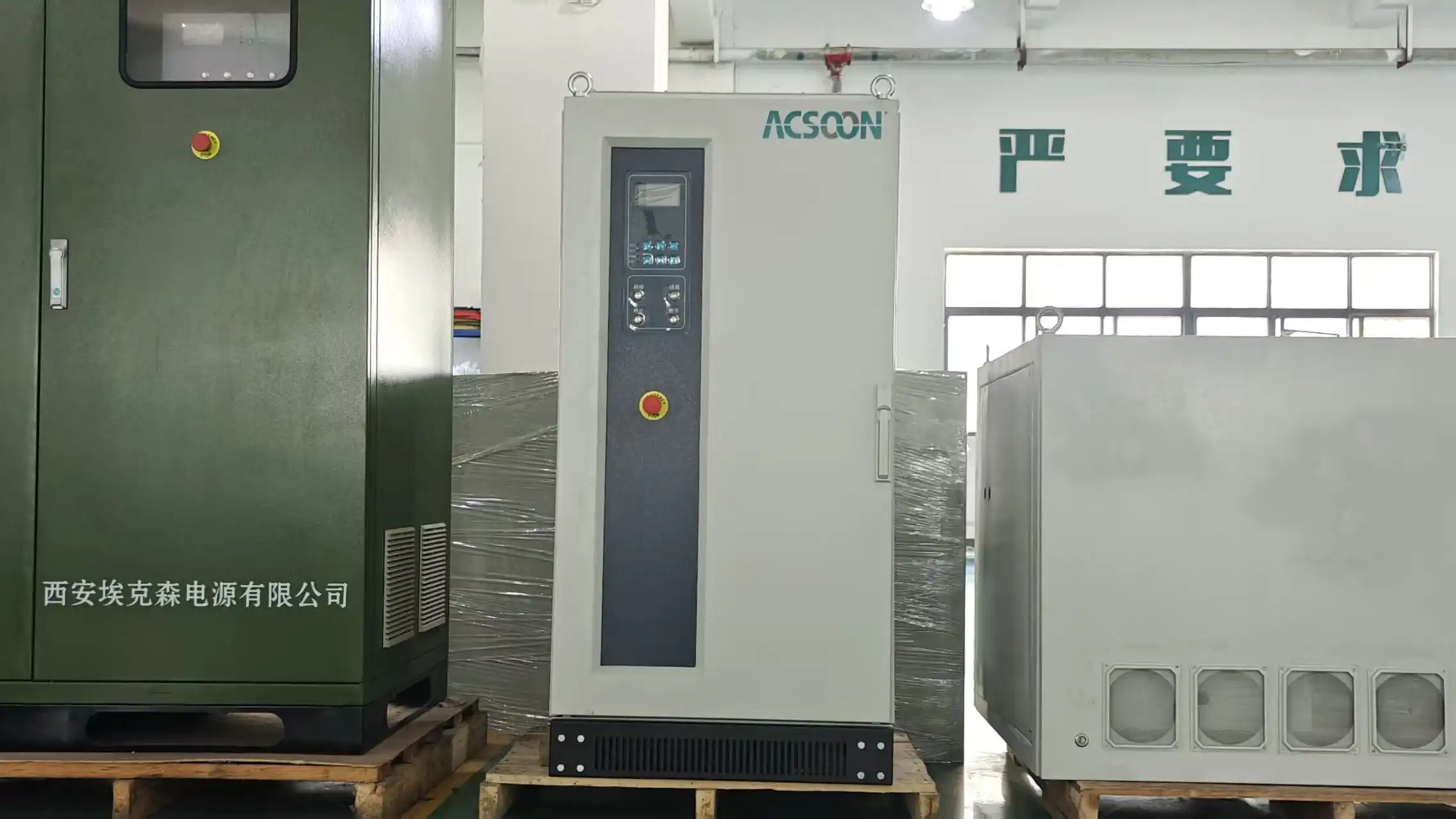
A 90KVA frequency converter does not eliminate hangar diesel smells. Optimising generator load management and energy efficiency with this power conversion technology can drastically reduce emissions. These devices reduce diesel generator runtime, fuel consumption, and pollution production by converting AC to DC and back to AC at precise frequencies. Frequency converters can reduce emissions, but they work best with specific ventilation and filtration systems.
Understanding the Problem: Diesel Fumes in Hangars and Their Impact
Aviation hangars face persistent challenges with diesel emissions stemming from ground support equipment and backup power generators. These enclosed spaces trap harmful pollutants, creating hazardous working conditions for maintenance personnel and flight crews.
Health Risks Associated with Diesel Emissions
Diesel exhaust contains NOx, PM2.5 and PM10, and CO, which pose immediate and long-term health concerns. Workers experience respiratory irritation, lung function loss, and cardiovascular disease from contaminants. OSHA: Long-term diesel particulate matter exposure in confined industrial environments can induce chronic bronchitis and lung damage.
Equipment Degradation and Operational Challenges
Diesel fumes harm diagnostic and avionics equipment and cause health risks. The acidic components in exhaust fumes react with metal surfaces and electronics, lowering device lifespan and measurement precision. This degradation is worst in military hangars with expensive aircraft and diagnostic devices.
Current Mitigation Limitations
Traditional ventilation systems struggle to decrease diesel emissions in large hangars. Mechanical exhaust fans are energy-intensive yet rarely exchange air. While portable filtration devices can help locally, they cannot afford to cover entire facilities. These limits lead procurement teams to seek integrated power solutions that address root causes rather than merely treating symptoms.
How does a 90KVA frequency converter work in industrial power systems?
Modern hangar operations demand stable, high-quality electrical power to support ground power units, testing equipment, and critical lighting systems. Frequency converters play a vital role in delivering this reliability while optimising generator performance.
Core Operating Principles
These power converters are two-stage. High-speed Insulated Gate Bipolar Transistor (IGBT) technology converts AC to DC at the input stage. This DC is inverted back into AC at the output stage, which is usually 400Hz for aircraft or 50/60Hz for normal equipment. This conversion meets strict aerospace ground support criteria, with output voltage control accuracy of ±1% and frequency stability of ±0.01 Hz.
Technical Specifications That Matter
Understanding key parameters helps procurement teams make informed decisions. The following table outlines critical specifications for industrial-grade power conversion equipment:
| Parameter | Standard Range | Impact on Hangar Operations |
|---|---|---|
| Total Harmonic Distortion (THD) | <3% under linear loads | Protects sensitive avionics testing equipment from power quality issues |
| Conversion Efficiency | 92-95% | Reduces heat generation and lowers cooling requirements |
| Input Voltage Tolerance | ±15% | Maintains stable output despite grid fluctuations |
| Overload Capacity | 150% for 60 seconds | Handles motor startup surges without tripping |
| Response Time | <2ms | Ensures uninterrupted power during load transitions |
Specs convert into operational benefits. Diesel generators use less fuel per kilowatt-hour delivered due to higher conversion efficiency, reducing exhaust emissions. The quick response time prevents voltage sags that would push generators to overproduce.
Advantages Over Traditional Power Systems
In contrast to rotary converters or transformer-based alternatives, solid-state frequency converters have integrated output transformers for galvanic isolation. This isolation eliminates common-mode electrical noise that disrupts radio and navigation system testing. Typically 40% smaller than identical rotary units, the compact footprint frees hangar floor space for aircraft positioning and maintenance.
Can a 90KVA Frequency Converter Reduce or Eliminate Diesel Fumes?
Direct and indirect implications of power conversion technology on emission control must be examined. While frequency converters don't purify air, their impact on generator operation is environmentally beneficial.
Indirect Emission Reduction Mechanisms
Integrating frequency converters improves the efficiency of backup diesel generators. Partially loaded generators burn fuel less efficiently than ideal loads (70-85% of rated capacity). Unburned hydrocarbons and CO are reduced via better combustion. After adding solid-state power conversion equipment to stabilise electrical loads for repair, a Nevada military hangar lowered diesel fuel use by 23%.
Case Evidence from Aviation Facilities
Texas aerospace manufacturers replaced motor-generator sets with power conversion systems in ground power units. They reduced generator runtime hours by 31% over a year while maintaining operational capacity. The emission decrease was enough to meet regional air quality criteria without exhaust scrubbers.
Setting Realistic Expectations
Buyers should know that frequency converters reduce emissions through efficiency, not filtration. These devices cannot reduce diesel-powered mobile equipment smells or generator emissions. Generator maintenance, load scheduling optimisation, and switching to cleaner backup power sources like natural gas or battery storage work best with the technology.
Choosing the Right 90KVA Frequency Converter for Hangar Applications
Selecting appropriate power conversion equipment requires balancing technical specifications, vendor capabilities, and long-term operational expenses. The aerospace and military sectors demand equipment that delivers consistent performance under demanding conditions.
Critical Selection Criteria
Conversion efficiency matters most. 90KVA Frequency Converter efficiency reaches 94%, eliminating waste heat, extending component life and cooling infrastructure. For compatibility, powering sensitive lab instruments or variable frequency drives requires THD < 3%. Modern IGBT converters provide 65-70 dB at one metre, comparable to conversation levels and adequate for most maintenance settings.
Comparing Leading Solutions
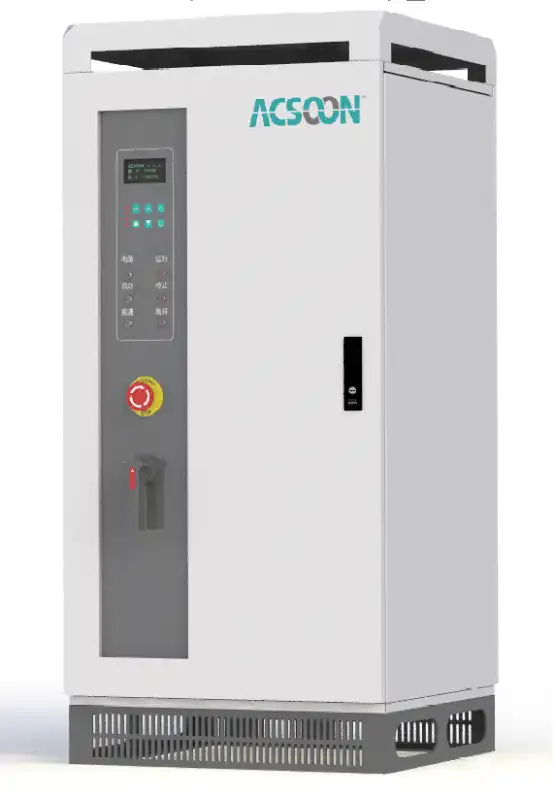
For aeroplane, maritime, and industrial testing, Xi'an Jerrystar Instrument Co., Ltd. manufactures ACSOON power converters. With over 15 years of experience developing static frequency converters and voltage stabilisers, the company specialises in 400Hz ground power units for aircraft maintenance. They reduce component failure downtime by replacing power blocks in the field rapidly with a modular architecture.
ACSOON 90kVA variants' innovative cooling technologies ensure reasonable operating temperatures in hot hangars over 40°C. Advanced control algorithms keep output stable and maintain ±0.5% voltage regulation under dynamic loads, outperforming competitors. Assessing avionics systems that require clean, steady power to avoid misleading diagnostics requires this precision.
Investment and Procurement Strategies
Energy efficiency translates directly into operational cost savings. A converter operating at 94% efficiency wastes 5.4 kW as heat when delivering 90 kW to the load. Over 2,000 annual operating hours, this scenario represents approximately 10,800 kWh of wasted energy. At industrial electricity rates averaging $0.12 per kWh, the annual loss approaches $1,300—a significant consideration when evaluating units with 20-year operational lifespans. The table below illustrates the total cost of ownership factors:
| Cost Factor | Impact Over 10 Years | Optimization Strategy |
|---|---|---|
| Initial Purchase Price | 25-30% of the total cost | Volume procurement discounts; multi-unit installations |
| Energy Consumption | 50-55% of the total cost | Specify high-efficiency models and implement load scheduling |
| Maintenance & Repairs | 12-15% of the total cost | Select vendors offering comprehensive service agreements |
| Downtime Losses | 5-8% of the total cost | Prioritise modular designs enabling rapid component replacement |
These financial considerations show why procurement teams should evaluate providers based on support skills, not price. Long-term value is higher for companies with maintenance staff technical training, spare parts stockpiles, and fast field service.
When power system outages affect operational preparedness, Jerrystar's 5,000-10,000-square-meter Xi'an manufacturing facility allows it to stock enough inventory for timely delivery. As a producer and trader, they can source complementary components, simplifying complex ground power installation procurement.
Maintenance and Troubleshooting Tips to Maximise Frequency Converter Performance
Ensuring the reliable operation of power conversion equipment requires systematic maintenance protocols and proactive issue identification. Aviation and military facilities cannot afford unexpected power system failures that ground aircraft or halt critical testing operations.
Routine Maintenance Protocols
Cooling system integrity prolongs the 90KVA frequency converter's life. After 500 running hours, air filters must be inspected and replaced depending on hangar dust levels. Arid climates or facilities with several huge doors may need monthly filter changes. IGBT modules and DC-link capacitors generate heat, and obstructed cooling passageways raise junction temperatures above design limits, increasing semiconductor degradation. Quarterly thermal imaging surveys can detect hot patches signalling potential fan failures or clogged heat exchangers before catastrophic failures.
High-resistance joints waste energy and cause fires. An electrical connection check prevents them. The torque of input and output terminal termination screws should be checked annually with calibrated tools. Equipment-vibrated connections need more frequent checks. Manufacturer software and firmware updates generally improve control algorithms or provide load type compatibility. Jerrystar optimises client equipment with regular software updates and performance support to meet changing operating needs.
Common Issues and Diagnostic Approaches
Overheating protection trips indicate overload or inadequate cooling. Comparing real load current to nameplate ratings identifies infrastructure issues from capacity exceedance. Poor grounding causes harmonic interference and communication system interruption. Proper earth connections with nameplate ratings identify infrastructure issues due to compatibility difficulties. Maintaining accurate event logs helps correlate external grid disruptions with internal component failures, supporting warranty claims and infrastructure improvement justifications. Power surges can damage input rectifier sections.
Regulatory Compliance and Documentation
Even for emergency backup, diesel generator emissions are progressively regulated. Maintaining detailed runtime logs shows regulators' emissions reduction efforts. Diesel generator running hours, load factors, and fuel consumption data from frequency converter monitoring systems support air quality permit applications and compliance checks. This data is useful for military locations subject to DOD sustainability mandates and local environmental legislation.
Partnering with equipment providers that offer complete after-sales service provides technical experience for addressing complicated converter, generator, and critical load interactions. When mission-critical power systems malfunction, Jerrystar's 24/7 technical assistance, fast on-site service, and full warranty coverage are crucial.
Conclusion
While 90KVA Frequency Converter frequency converters do not eliminate diesel fumes through direct filtration, they serve as valuable components in comprehensive emission reduction strategies. The indirect benefits—improved generator efficiency, reduced fuel consumption, and optimised load management—contribute significantly to cleaner hangar environments. Procurement decisions should consider the total cost of ownership, vendor support capabilities, and integration requirements alongside technical specifications. Organisations committed to environmental stewardship and operational excellence will find that modern power conversion technology from established manufacturers like JERRYSTAR advances both goals simultaneously, delivering immediate operational benefits while supporting long-term sustainability objectives.
FAQ
Can frequency converters eliminate diesel fumes?
Frequency converters do not directly remove or filter diesel exhaust. They reduce emissions indirectly by optimising generator load profiles and improving fuel combustion efficiency. Complete fume elimination requires integrated approaches combining power management, mechanical ventilation, and potential transition to cleaner energy sources such as battery storage or grid connection.
How much can these devices reduce generator fuel consumption?
Fuel savings depend on baseline generator loading patterns and power quality requirements. Facilities with highly variable loads typically achieve a 20-35% reduction in fuel consumption after implementing power conversion equipment and proper load management protocols. Steady-state operations see more modest 10-15% improvements.
What integration requirements exist for existing hangar electrical systems?
Installing power conversion equipment requires adequate electrical panel capacity, proper grounding infrastructure, and sometimes upgraded circuit breakers to handle inrush currents. ACSOON converters feature a wide input voltage tolerance (±15%) that accommodates most existing electrical distribution systems without extensive modifications. Site surveys conducted by experienced application engineers identify specific requirements and prevent costly installation surprises.
Are there compatibility concerns with 400Hz aircraft ground power applications?
Aviation ground power represents a core application for industrial frequency converters. The ACSOON 90kVA models deliver the precise 400Hz output required by military and commercial aircraft systems, with output voltage regulation maintaining the tight tolerances specified in MIL-STD-704 and ISO 6858 standards for aircraft electrical power characteristics.
Transform Your Hangar Power Infrastructure with JERRYSTAR's Advanced Conversion Solutions
Aviation facilities, military bases, and industrial testing laboratories deserve power conversion technology that enhances operational efficiency while supporting environmental responsibility. JERRYSTAR's ACSOON 90kVA frequency converters deliver exceptional performance backed by rigorous quality control and comprehensive support. Our ISO 9001:2015-certified manufacturing processes ensure every unit meets exacting standards for reliability and output quality. As an established frequency converter supplier with CE, UL, and RoHS certifications, we serve government procurement agencies and aerospace contractors requiring proven compliance with international standards. Contact our engineering team at acpower@acsoonpower.com to discuss customised solutions for your hangar power requirements and discover how our rapid delivery capabilities can support even urgent retrofit projects.
| About US |
| Know More |
References
1. Kohler, M. & Peterson, R. (2021). Diesel Emissions Control in Industrial Facilities: Engineering Approaches and Case Studies. Society of Automotive Engineers International Press.
2. National Institute for Occupational Safety and Health. (2020). Criteria for a Recommended Standard: Occupational Exposure to Diesel Exhaust. Department of Health and Human Services Publication.
3. IEEE Standards Association. (2018). IEEE 519-2014: Recommended Practice and Requirements for Harmonic Control in Electric Power Systems. Institute of Electrical and Electronics Engineers.
4. Anderson, J.T., Williams, K.P., & Chen, L. (2022). "Energy Efficiency Optimisation in Aviation Ground Support Equipment." Journal of Aerospace Engineering, 35(4), 287-301.
5. U.S. Department of Defence. (2019). MIL-STD-704F: Aircraft Electric Power Characteristics. Department of Defence Interface Standard.
6. Environmental Protection Agency. (2020). Stationary Diesel Engine Emission Standards and Compliance Strategies for Industrial Facilities. EPA Office of Air Quality Planning and Standards.