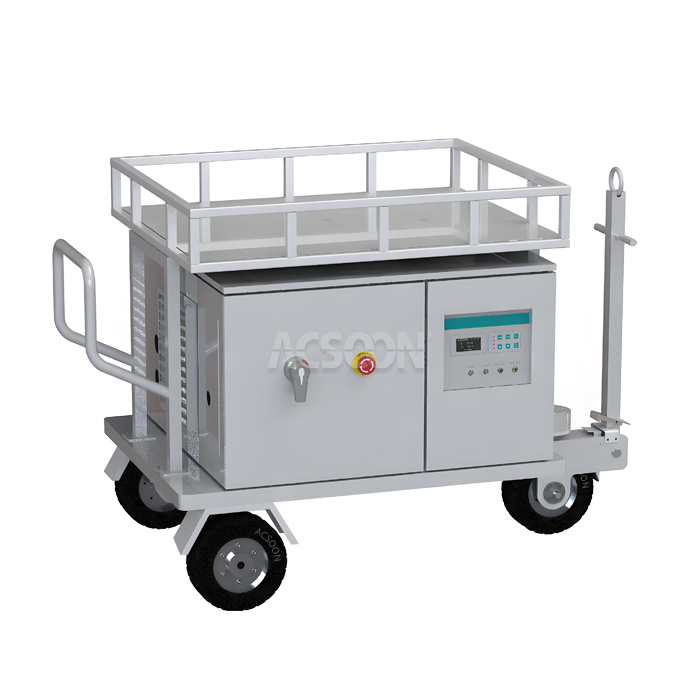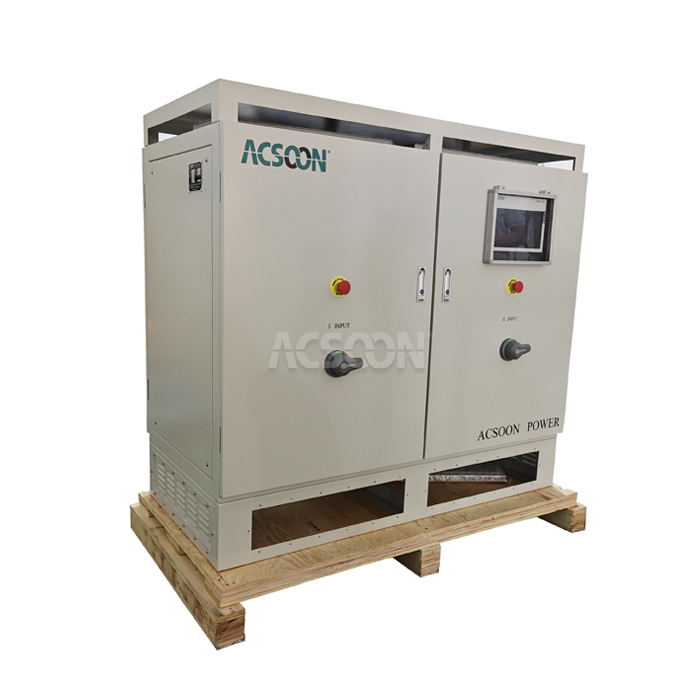




How an Aviation Maintenance Team Selected a 28V DC GPU: 200A, 400A or 800A
From a Current Rating to a Complete Ground-Power Requirement
A request for a “28V DC GPU” often arrives with only one number attached: 200A, 400A or 800A. In an aviation maintenance project, however, that number is only the beginning. The ground power unit, output cable, aircraft connector, input supply and operating environment work as one system. If any part is specified incorrectly, the unit may be oversized, difficult to install or unable to maintain the required voltage at the aircraft during the most demanding part of the task.
This application case describes the engineering path used when an aviation maintenance team needed one DC ground-power solution for routine hangar work while retaining the option to support higher-current tasks. Customer and aircraft identities are withheld. The purpose of the case is to show the questions that led to the final configuration, not to claim that one ampere rating fits every fleet.
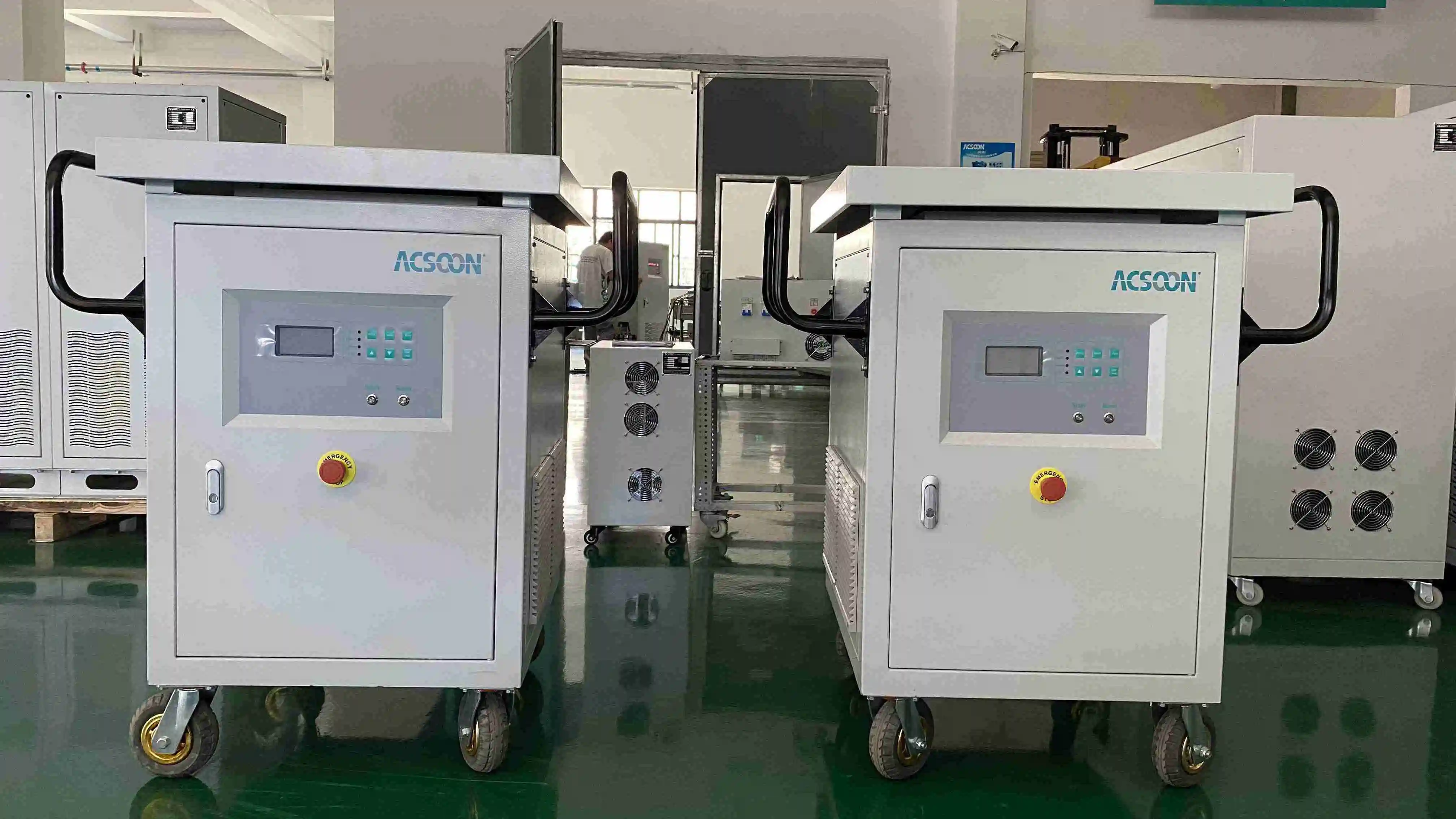
The initial request
The starting request was straightforward: a mobile 28V DC GPU for maintenance use. The purchasing team wanted a current rating that would not become obsolete as the workshop scope expanded. The technicians, meanwhile, wanted stable DC power at the aircraft connector, straightforward operation and clear protection against abnormal conditions.
Three options were discussed: 200A, 400A and 800A. Choosing the highest rating would have appeared safe, but it would also have affected cabinet size, input capacity, cable design, handling and project cost. The engineering review therefore separated the requirement into four operating modes: avionics and instrument checks, battery-support work, simultaneous onboard DC loads, and any potential engine-start event.
Why continuous current and start current were separated
Continuous current defines the thermal duty the GPU must sustain during maintenance. Engine starting is different: it can involve a much higher current for a limited period. The peak magnitude, duration and recovery between starts are essential. A statement such as “the aircraft may need 800A” is incomplete unless the team also knows whether that demand lasts for a fraction of a second, several seconds or substantially longer.
The aircraft maintenance manual and external-power interface requirements remain the controlling references. Where measured data are available, technicians should record current during the actual ground task. This prevents a short start peak from being confused with the normal maintenance load and avoids selecting a continuous rating based on an unverified assumption.
How the three ratings were evaluated
Option | Engineering fit | Procurement implication |
200A | Suitable when the defined task is routine maintenance and the verified continuous load remains below the rating with margin. | Compact and economical, but limited if the future task list expands materially. |
400A | Provides more headroom for broader maintenance work and concurrent DC loads. | A balanced option when flexibility matters, subject to actual aircraft requirements. |
800A | Appropriate for verified high-current or start-duty requirements. | Requires closer review of AC input, cable, connector, mobility and peak-duty capability. |
The review did not treat 800A as an automatic upgrade. Instead, every option was checked against the intended task list and site utilities. This is particularly important in hangars where the available AC feeder may limit the practical GPU configuration.
Cable voltage drop changed the discussion
DC systems are sensitive to voltage drop because the current is high and the output voltage is comparatively low. The voltage shown at the GPU terminals is not necessarily the voltage delivered at the aircraft connector. Cable length, conductor cross-section, connection resistance and current all influence the result.
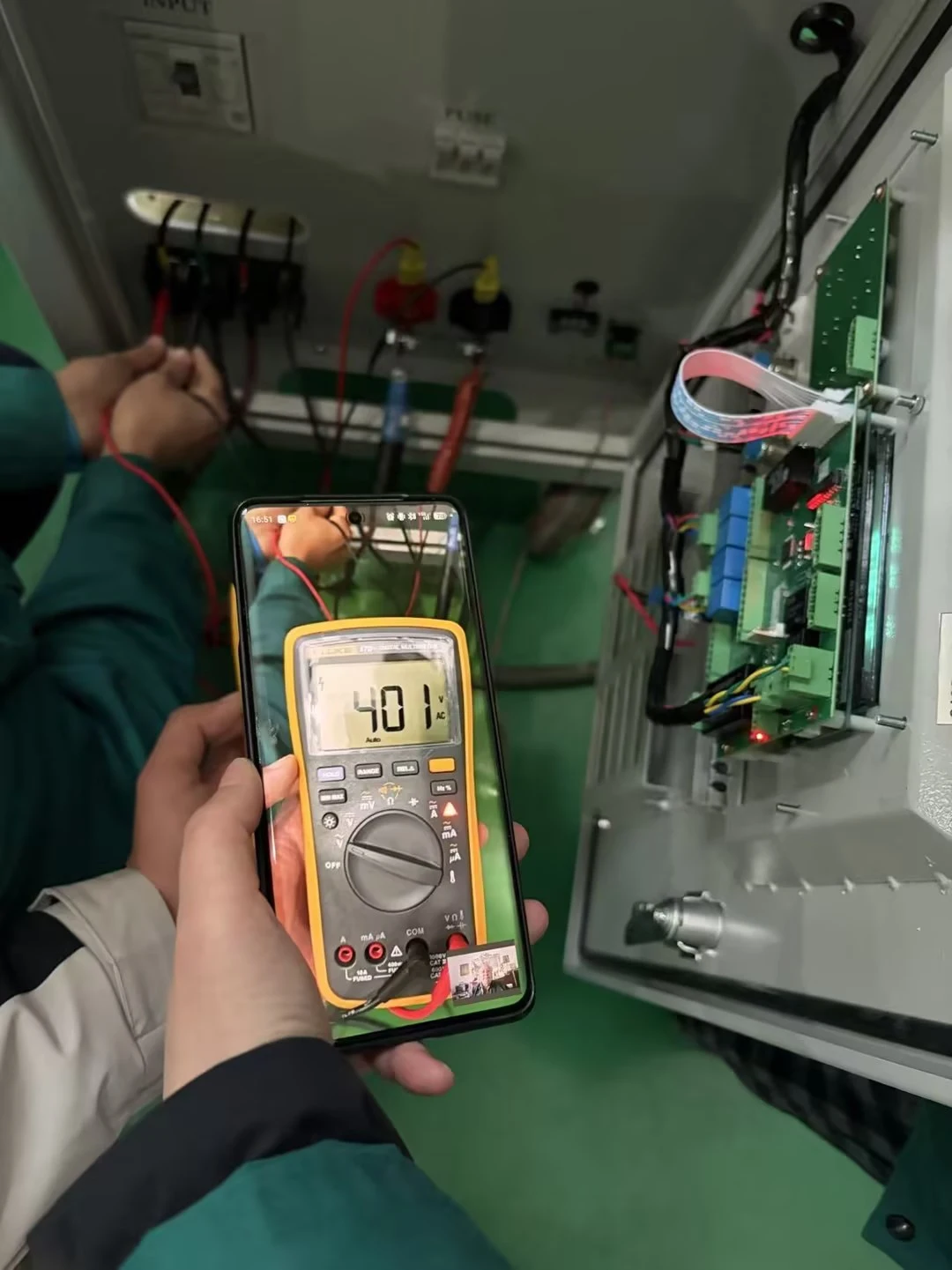
For this reason, the cable was specified with the GPU rather than added as an accessory after the current rating had been chosen. The acceptance plan included output checks at the load end under representative current, inspection of the connector and confirmation that cable handling remained practical for the maintenance crew.
Environmental and operational questions
The team also reviewed whether the unit would remain indoors, move between hangar positions or operate near an apron. That decision affected the cabinet arrangement, mobility, ingress protection and cable management. Ambient temperature and altitude were included because power-electronic equipment may require derating outside its stated operating conditions.
Other project inputs included local mains voltage, phase and frequency; earthing; preferred display and controls; emergency stop requirements; transportation constraints; and the language and format of operating documents.
Acceptance criteria agreed before production
A useful acceptance plan turns a general purchase description into measurable evidence. For this project type, the checklist should include:
· Visual and dimensional inspection against the approved drawing
· Verification of AC input and rated DC output
· Voltage regulation and ripple checks under representative load
· Current-limit and overload-function checks according to the approved specification
· Operation of overvoltage, undervoltage, overtemperature and short-circuit protection
· Display, alarm and emergency-stop checks
· Cable and connector inspection, including polarity and labeling
· Run test at the agreed duty point
· Review of manual, drawings, test report, packing list and serial-number records
Outcome and lesson for buyers
The final selection was based on the verified operating envelope, not on the largest current printed in a catalogue. That approach gave the purchasing team a defensible specification and gave the technicians a configuration matched to their actual work. It also created a clearer path for future expansion: if engine-start duty or another aircraft type is added later, the load profile can be reviewed against the original design data.
For buyers comparing 200A, 400A and 800A 28V DC GPUs, the most useful RFQ is not the longest one. It is the one that clearly states the aircraft or load, ground task, continuous current, peak current and duration, cable length, connector, input supply and operating environment.
About the available solution
Xi’an Jerrystar Instrument Co., Ltd. designs and manufactures ACSOON AC/DC power converters, inverters and ground power units. The ACSOON ADCW series is designed for continuous 28VDC or 270VDC ground-power applications and is available in fixed or mobile arrangements. Published options include multiple AC inputs and output-current ratings. Project configuration should always be confirmed against the final technical requirement.
Review the 28V DC GPU range: https://www.acsoonpower.com/product/179.html
Company overview: https://www.jrd-instrument.com/