




How Do Military Aircraft Power Supplies Support Radar and EW Systems?
Military aircraft power supply systems turn generator outputs into carefully controlled, noise-free power that keeps mission-critical operations going. They are the electrical backbone of modern radar and Electronic Warfare (EW) weapons. These specialized power conversion units keep voltage levels steady, usually 115V AC at 400Hz or 28V DC, even when they have to deal with the high G-forces, temperature changes, and electromagnetic interference that are common in battle zones. If you don't have reliable power conditioning that keeps voltages stable and harmonic distortion to a minimum, sensitive radar transceivers and EW bugging pods could lose their signals, hit false targets, or stop working altogether during important battles.
Understanding Military Aircraft Power Supply Systems
Modern defense aircraft rely on complicated electrical systems that combine power production, conversion, and distribution into networks that work together. At the heart of these systems are generators that are powered by engines and produce variable-frequency AC power. This power goes through several steps of filtering before it reaches sensitive electronics. If a generator fails or there are high demand spikes when radar systems pulse at full power, battery banks can be used as an emergency backup.
Core Components and Their Functions
Power production units on airplane propellers make raw electrical energy that changes based on the engine's rotational speed (RPM). This causes frequency instability that isn't good for sensitive electronics. Solid-state frequency converters, like the ACSOON GPU-330180, take this unstable input and turn it into a stable 400Hz output that meets MIL-STD-704F standards. These converters use modern silicon carbide switching parts that can handle fast changes in load without causing voltage drops. This is very important because AESA radar arrays draw sudden bursts of more than 50kW during scan cycles.
Distribution networks have many layers of safety, such as electromagnetic interference filters that stop radar signals from going back into the power bus and circuit breakers that can handle arcing conditions at 50,000 feet. If one generator goes out, mission systems won't be affected because there are backup paths and automatic transfer switches that can reroute power in milliseconds. Ground power units work with aircraft systems to provide testing power before takeoff and maintenance power when the engines are off. This lets techs check the alignment of the radar and the calibration of the EW suite without having to start up auxiliary power units.
Safety and Redundancy Mechanisms
Thermal management is one of the hardest problems in engineering because convection cooling doesn't work above 40,000 feet, where the air density drops a lot. Baseplates that are cooled by conduction move heat straight from power electronics to aircraft cold plates or liquid cooling rails. This keeps junction temperatures within safe working ranges. Overvoltage safety circuits can find problems with the power source very quickly and separate faulty areas before they affect other equipment. These safety features meet strict military standards that put system survival ahead of self-preservation. For example, the power source keeps working during voltage spikes that would normally shut down commercial units; it only shuts down when there is a high risk of fire.
How Military Aircraft Power Supplies Enable Radar and EW Systems
The electrical needs of radar sites and electronic warfare packages are very high and push the edges of current military aircraft power supply technology. Active Electronically Scanned Array (AESA) radars need power loads that pulse and rise in microseconds. This causes voltage fluctuations that can damage sources that weren't built well. For EW jamming emitters to work, they need high-voltage DC rails that are higher than 270V to power traveling wave tube amplifiers and keep ripple voltages below 50mV peak-to-peak so that enemy signal processors can't use modulation effects.
Design Principles for High Reliability
To reach five-nine uptime in battle situations, the design must be thoroughly tested at baseplate temperatures ranging from -55°C to +85°C. When a carrier is in use, conformal coating and hermetic seals keep circuit boards safe from salt fog, rust, and fungus growth in humid deployment zones. Every capacitor, inductor, and semiconductor works well below its highest values thanks to practices called "component derating." This makes the Mean Time Between Failure (MTBF) more than 100,000 hours. Real-time diagnostics constantly check the output quality and send out alerts when voltage control goes over ±1% tolerance or harmonic distortion gets close to the limits set by the manufacturer. With these predictive maintenance features, workers on the ground can repair broken units during planned maintenance, so they don't have to deal with problems while the plane is in the air.
Electromagnetic Compatibility and Signal Integrity
MIL-STD-461G compliance makes sure that power sources don't give off RF signatures that can be picked up by enemy systems or damage stealth profiles. Multiple stages of input screening lower the amount of conducted emissions below the limits set by CE102 while keeping a holdup time high enough to handle 50-millisecond power outages without losing output. Output filters get rid of switching noise that would show up as false signals in sensitive receiver front-ends otherwise. This keeps radar sensitivity high enough to find targets at long range. When shielding is more than 60dB effective at key frequencies, it stops radiated emissions from linking into nearby cable bundles. This keeps the electromagnetic cleanliness needed for integrating multiple functions of aircraft.
Power Conditioning for Optimal Performance
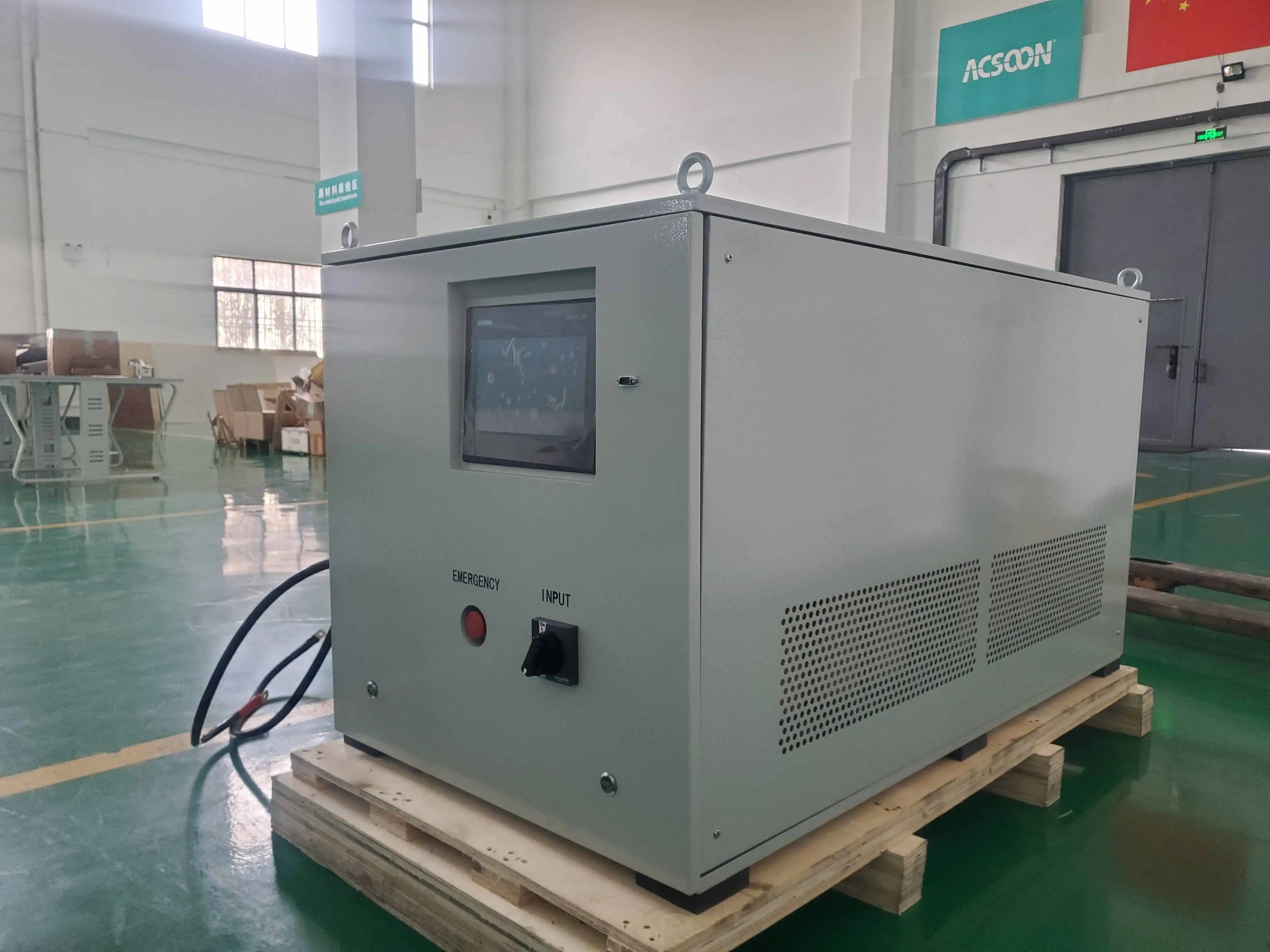
With its 180kVA capacity, the ACSOON GPU-330180 is a great example of advanced power conditioning technology. It can handle multiple airplanes at the same time while operations are happening on the ground. This solid-state converter changes three-phase 380V 50Hz utility power to three-phase 115V/200V 400Hz aircraft power. It also provides voltage transient recovery that meets ISO 6858 standards, which is important for starting radar cooling pumps and gyroscopes without causing voltage drops that cause faults that aren't necessary. Different types of planes can use the same facility because it has variable output setups. For example, F-16 fighters need 115V single-phase distribution, while C-130 carriers need 200V three-phase distribution. Digital control loops keep the frequency stable within ±0.1Hz even when the load changes quickly or when multiple radar modes are turned on at the same time. This keeps the phase-locked timing circuits in EW processors in sync.
Comparing Military and Commercial Aircraft Power Supplies
Both commercial and military flights need solid electrical systems, but the differences in how they are designed show that the two have very different ways of doing things. Commercial planes put passenger safety first by having fail-safe designs that shut down smoothly. Military platforms, on the other hand, need a fail-operational capability that keeps missions running even if parts get damaged or enemy action happens.
Design Philosophy and Durability Standards
Commercial power sources for military aircraft power supply work in climate-controlled, pressurized rooms, and they need to be serviced every thousand flight hours, with an FAA inspection. As required by MIL-STD-461 RS105, defense power systems can withstand 160-knot slipstream forces, gun shaking harmonics exceeding 50G acceleration, and nuclear electromagnetic pulse (NEMP) transients in unpressurized equipment bays. Because military designs have to be light, they use unusual materials like aluminum-lithium alloys and beryllium oxide thermal plates, which can produce more than 8kW per cubic inch of power, compared to 2kW per cubic inch in commercial designs.
Operational Performance Metrics
The difference is clear in the reliability metrics: private supplies aim for 0.999 availability with planned repair access, while military requirements expect 0.99999 availability during long carrier operations with few spare parts. When the commercial power goes out, the cabin lights up, and the generator cuts off power. But when the military power goes out, the radar warning detector and countermeasure dispensers must keep running even though they are getting too hot. This lets the pilot avoid threats. Because of this design focus on durability, military power conversion equipment costs 5–10 times more per kilowatt than commercial versions. The higher price is due to thorough qualification testing, obsolescence management programs, and technical data packages that allow depot-level repair.
Case Study Insights
New improvements to the F/A-18 Super Hornet EW kits needed changes to the power source so that the Next Generation Jammer pods could use 30kW of power all the time. Commercial-grade converters that were tried in this situation failed after 200 hours because they weren't managing heat well enough and didn't have enough input transient protection. Units specifically made to meet MIL-STD-704F kept the voltage within the required range during catapult launches that produced 4G acceleration spikes and stopped landings that exceeded 6G deceleration, accumulating over 5,000 flight hours without any repair being done. This practical proof shows the real performance gap that calls for engineering that is tailored to the military.

Procurement Considerations for Military Aircraft Power Supplies
To choose the right power conversion equipment, you have to weigh the technical performance against prices over the whole life of the equipment, delivery times, and the vendor's skills. Procurement managers need to look at more than just whether or not a supplier meets the requirements. They also need to see how well they've worked with long-term military projects in the past and how well they can handle obsolescence as part makers stop making parts after 20 years of platform lifecycles.
Technical Specification Evaluation
In addition to important specs like output power rate and efficiency, important factors include the ability to handle input transients according to MIL-STD-1275 and the length of holdup time during generator load transfers. Temperature derating graphs show if the unit keeps working at full capacity when the temperature in the cockpit is above 55°C or if it needs to work at a lower capacity, which could make mission planning harder. The amount of efficiency has a direct effect on how the airplane manages its heat. For example, a 90% efficient supply makes 18kW of waste heat at 180kVA output, so it needs a lot of cooling. Output impedance specs tell you if the supply can handle capacitive loads from radar power amplifiers without oscillation, which is a common problem that comes up during tests at the airplane level.
Supplier Credibility Assessment
Manufacturers with a history like JERRYSTAR show their credibility by actively participating in defense standards groups and putting out reports on military qualification tests. ISO 9001 certification is a basic way to make sure of quality, but AS9100 aircraft certification and ITAR registration show a stronger commitment to meeting the needs of the defense business. Looking at how sellers have done on similar platforms in the past through government contract databases shows if they meet deadlines and fix technology problems after delivery. Geographical factors are important. Using domestic sources lowers the risk of geopolitical disruptions in the supply chain and makes ITAR compliance easier for secret uses. However, some international makers offer lower prices that make up for the more difficult logistics.
Delivery and Support Infrastructure
Lead times for special military aircraft power supply units are usually between 26 and 40 weeks from the time of order to delivery. This means that you need to plan your purchases ahead of time and make sure they work with the schedules for airplane modifications. When vendors keep popular configurations like the ACSOON GPU-330180 in stock, they can supply ground support equipment more quickly. This cuts down on project timelines when facility changes are needed to support the deployment of new airplanes. The warranty should cover more than just one year. It should cover at least three years to account for the longer approval testing that delays the first practical use. Premium suppliers are different from commodity suppliers because they offer full technical support, such as on-site setup help, operator training, and access to skilled application experts. JERRYSTAR's full lifecycle support model includes regular health checks, calibration services, and proactive component expiration alerts that keep maintenance groundings from happening when they are least expected.
Maintenance and Troubleshooting Tips for Military Aircraft Power Supplies
Disciplined preventive maintenance schedules that find signs of wear and tear before they lead to breakdowns are needed to keep military aircraft's power supplies operationally ready. Military aircraft power supplies supporting radar and EW systems get stressed out over time because of thermal cycles, capacitor aging, and high-frequency switching wear, which makes them less and less effective. Structured repair procedures increase service life and lower the total cost of ownership.
Common Failure Indicators and Diagnostics
If the voltage control drifts more than 1.5%, it means that the output filter capacitor is degrading or there are calibration problems in the feedback loop that need to be fixed right away. Higher levels of noise or harmonic content at the output often mean that parts of the input filter have failed, letting utility transients travel downstream. When running temperatures are higher than normal, it means that cooling paths are blocked or fans in forced-air systems aren't working. Modern units, like the ACSOON GPU-330180, have built-in test equipment that gives diagnostic codes that pinpoint specific problem conditions. This speeds up debugging compared to older designs that needed oscilloscope analysis.
Preventive Maintenance Schedules
High-current connectors should have their connections checked every three months to make sure they are tight. Vibrations can cause contacts to open, which raises the resistance and causes localized heating. As part of their annual maintenance, isolation transformers are tested for dielectric strength and insulation resistance checks that go beyond 100 megohms to ground. This keeps the electricity safe. Changing electrolytic capacitors every 5 to 7 years keeps them from failing due to drying out at the end of their useful life. This is especially important in hot places where aging happens quickly. Checking the output precision against approved voltage and frequency standards keeps it within the acceptable range. This is very important for radar systems that need accurate power quality for the best detection range.
Technical Training Recommendations
To effectively fix, maintenance staff need to receive specialized training that covers both the theory of power electronics and methods that are specific to each platform. Technicians can correctly read symptoms instead of replacing whole units if they know about the effects of transformer saturation, silicon carbide switching features, and digital control loop behavior. Training programs given by vendors, like those by JERRYSTAR, include practical drills using real tools, lessons on how to read schematics, and safety rules for working with high-voltage systems. Cross-training repair teams on different types of power supplies makes them less reliant on a single person and gives them more options when deployment surges happen.
Conclusion
Reliable electrical power conversion is the unseen base that makes radar tracking and electronic warfare possible in modern military aircraft. When planes fly through challenging areas, the advanced engineering in systems like the ACSOON GPU-330180—from meeting MIL-STD-704F transient compliance requirements to advanced thermal management—directly leads to mission success. When purchasing teams have to balance technical needs with limited funds, they do better when they work with experienced providers who know both the rules and the facts of running a business. The difference between commercial and military power technology will continue to grow as next-generation platforms use higher voltage designs and sensors that use more power. This will make choosing a provider with knowledge even more important to the success of a program and the readiness of the fleet.
FAQ
What voltage specifications do military radar systems typically require?
Most current military radars run on 115V AC three-phase power at 400Hz frequency, which comes from airplane generators and is changed using frequency conversion equipment. More and more, 270V DC buses are being used in high-power AESA systems to lower the weight of the conductors while still handling power levels over 100kW. For lower-power monitoring radars, legacy systems may still use 28V DC distribution. The exact voltage depends on the type of radar. For example, mechanically scanned arrays usually use 115V AC motor drives, while solid-state phased arrays like high-voltage DC tracks reduce conversion losses.
How does EMI protection differ between military and commercial power supplies?
Filters in military power supplies meet MIL-STD-461 standards, which means they block 20 to 30dB more electromagnetic waves than what the FAA requires for private use. This keeps these waves from interfering with important systems for communication and guidance. The standards for shielding efficiency are a lot stricter, especially when it comes to protecting against high-power microwave risks from the outside and nuclear electromagnetic pulse settings. Commercial units focus on making sure that passenger gadgets work with each other, but military designs have to work with planned jamming signals and radar broadcasts that are stronger than 1kW in small equipment bays.
What recent technological advancements improve military power supply performance?
Adopting silicon carbide semiconductors lets switching rates go above 100kHz, which reduces the size of magnetic components and boosts efficiency to 94% or higher. Digital control systems offer real-time adaptive filtering that improves performance under different load situations, as well as predictive tests that show signs of wear and tear before they happen. Advanced thermal interface materials and built-in heat pipes improve the efficiency of cooling, allowing for higher power levels that are necessary for setups with limited space. These new features can be found in modern tools, such as JERRYSTAR's newest products, and they provide real operating benefits.
Partner with JERRYSTAR for Mission-Critical Power Solutions
To make sure that radar and EW systems always have power, you need to work with specialized manufacturers who have experience in the military business. JERRYSTAR makes precision-engineered power conversion equipment, like the ACSOON GPU-330180, which is designed for tough military uses and has a 180kVA capacity, MIL-704F compliance, and a number of setup choices. Our ISO 9001-certified factory in Xi'an keeps up with production demands, meeting both urgent prototype needs and large-scale production promises. It also keeps a lot of goods on hand to make quick deliveries possible. Our engineering team can help you with technical questions to make sure that your specifications are perfectly aligned, whether you need special voltage outputs for specific aircraft platforms or standard ground power units for base operations. Contact our experts at acpower@acsoonpower.com to talk about your needs with a military aircraft power supply manufacturer with a lot of experience. They can help you with everything from the initial design to training for base maintenance. We give you the dependability your tasks need and the flexibility your plans need.
References
1. Department of Defense, "MIL-STD-704F: Aircraft Electric Power Characteristics," U.S. Department of Defense Interface Standard, March 2004.
2. Society of Automotive Engineers, "AS9100D Quality Management Systems – Requirements for Aviation, Space and Defense Organizations," SAE International Aerospace Standard, September 2016.
3. Sarlioglu, B., and Morris, C.T., "More Electric Aircraft: Review, Challenges, and Opportunities for Commercial Transport Aircraft," IEEE Transactions on Transportation Electrification, Vol. 1, No. 1, June 2015, pp. 54-64.
4. Emadi, K., and Ehsani, M., "Aircraft Power Systems: Technology, State of the Art, and Future Trends," IEEE Aerospace and Electronic Systems Magazine, Vol. 15, No. 1, January 2000, pp. 28-32.
5. Rosero, J.A., Ortega, J.A., Aldabas, E., and Romeral, L., "Moving Towards a More Electric Aircraft," IEEE Aerospace and Electronic Systems Magazine, Vol. 22, No. 3, March 2007, pp. 3-9.
6. International Organization for Standardization, "ISO 6858:1982 Aircraft Ground Equipment – General Requirements for Voltage, Frequency and Wave Form of AC External Power," International Standard, December 1982.
