




What Are the Latest Innovations in Military Aircraft Power Supply Design?
Advanced solid-state technologies, modular architectures, and higher power density capabilities are at the heart of the newest improvements in military aircraft power supply design. These meet the changing needs of modern defense weapons. Modern military aircraft power supply systems include silicon carbide (SiC) switching components, smart digital control systems, and better ways to handle heat that make them more efficient while also making them lighter and smaller. These new ideas help the move to higher voltage architectures like 270VDC, make it possible for next-generation avionics like AESA radars and electronic warfare systems to work together without any problems, and keep mission-critical reliability even in the coldest arctic conditions and hottest desert conditions.
Evolution of Military Aircraft Power Supply Systems
The transformation of power conversion tools for military aircraft is the result of decades of engineering improvement efforts to address basic operating problems. In the beginning, systems used rotary generators and bulky transformers that made them heavier and needed to be serviced often. These older designs had trouble getting rid of heat and weren't very adaptable to the different electrical loads that current combat planes have.
From Rotary to Solid-State Architecture
Moving toward solid-state power generation was a major step forward in the electrical systems used in military aircraft. Getting rid of mechanical parts cuts down on failure spots and upkeep needs while making the system more responsive overall. Solid-state designs allow for fast switching rates that improve power quality and lower harmonic distortion, which are very important for sensitive aviation equipment that works in places with weak electromagnetic fields.
Modular Design Philosophy
Modern power systems are built with modular designs that let technicians change individual parts without taking whole units off planes. This method cuts down on repair downtime by a huge amount and helps meet fleet readiness goals. Modular designs also make it easy to customize for different mission types. This means that the same basic platform can be used for fighter jets, transport planes, and rotary-wing platforms, all of which have different operating needs.
Material Science Advancements
New materials, like aluminum-lithium alloys and composite housings, have made it possible to reduce weight by a lot without affecting the strength of the structure or the efficiency of the electromagnetic protection. These materials can handle the high levels of vibration that happen during carrier landings and high-G battle moves. They also keep their thermal conductivity, which is important for passive cooling systems. Better conformal coatings and encapsulation methods keep sensitive electronics safe from salt fog, humidity, and fungus growth in marine settings.
Key Innovations Driving Performance Optimization
Recent advances in technology have made a big difference in how military power systems convert, distribute, and control energy in tough operating situations. Modern defense flight needs to deal with problems like power efficiency, thermal management, and electromagnetic compatibility. These new ideas solve those problems.
High-Frequency Switching Technology
Power control integrated circuits in military aircraft power supply can now work at switching speeds higher than 500 kHz, which makes it possible for passive component sizes to be cut down by a huge amount. This high-frequency process makes inductors and capacitors smaller while improving their transient response, which is important for pulsed loads like radar systems. Silicon carbide semiconductors work at higher junction temperatures than regular silicon devices. This lets thermal designs be bolder and simplifies the cooling system.
Digital Control and Monitoring Systems
With embedded microcontrollers, you can check the power quality in real time, flexibly handle the load, and make predictions about what might go wrong. This wasn't possible with analog control schemes. These smart systems find strange trends in how they work and fix them before they go wrong, which greatly increases the mean time between failures (MTBF) measures. Digital tracking connections let repair workers keep an eye on the health of the power system from afar while the plane is in flight. This gives them information they can use to take preventative action.
Thermal Management Breakthroughs
Baseplate conduction cooling methods have improved to be able to handle power levels higher than 50 watts per cubic inch without using forced air flow. Using integrated heat pipes and vapor chambers in heat spreader technologies moves heat from semiconductor junction points to cold plates placed on airplanes with little difference in temperature. These passive thermal solutions work consistently at heights where normal flow cooling methods can't work because the air density isn't high enough.
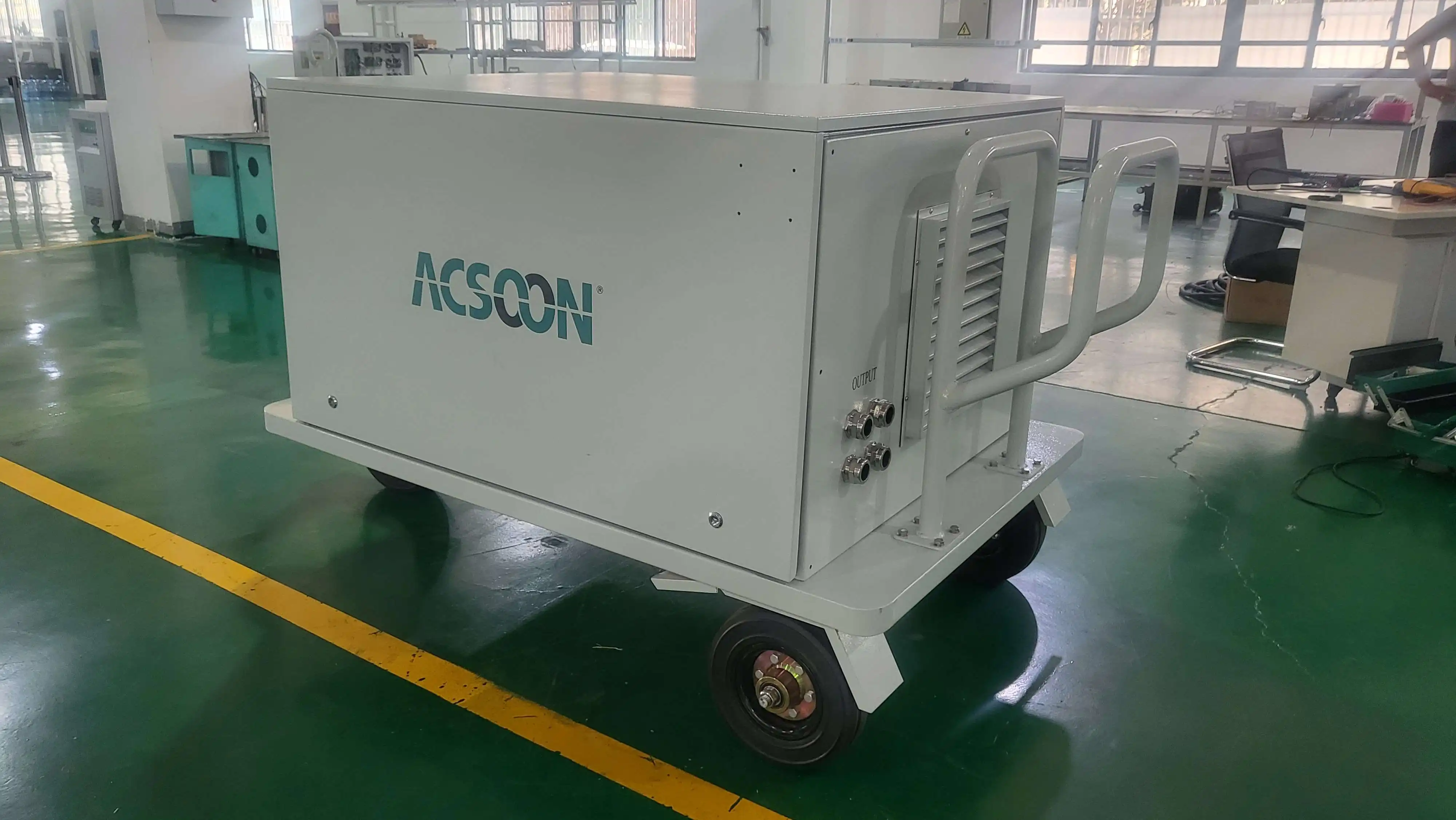
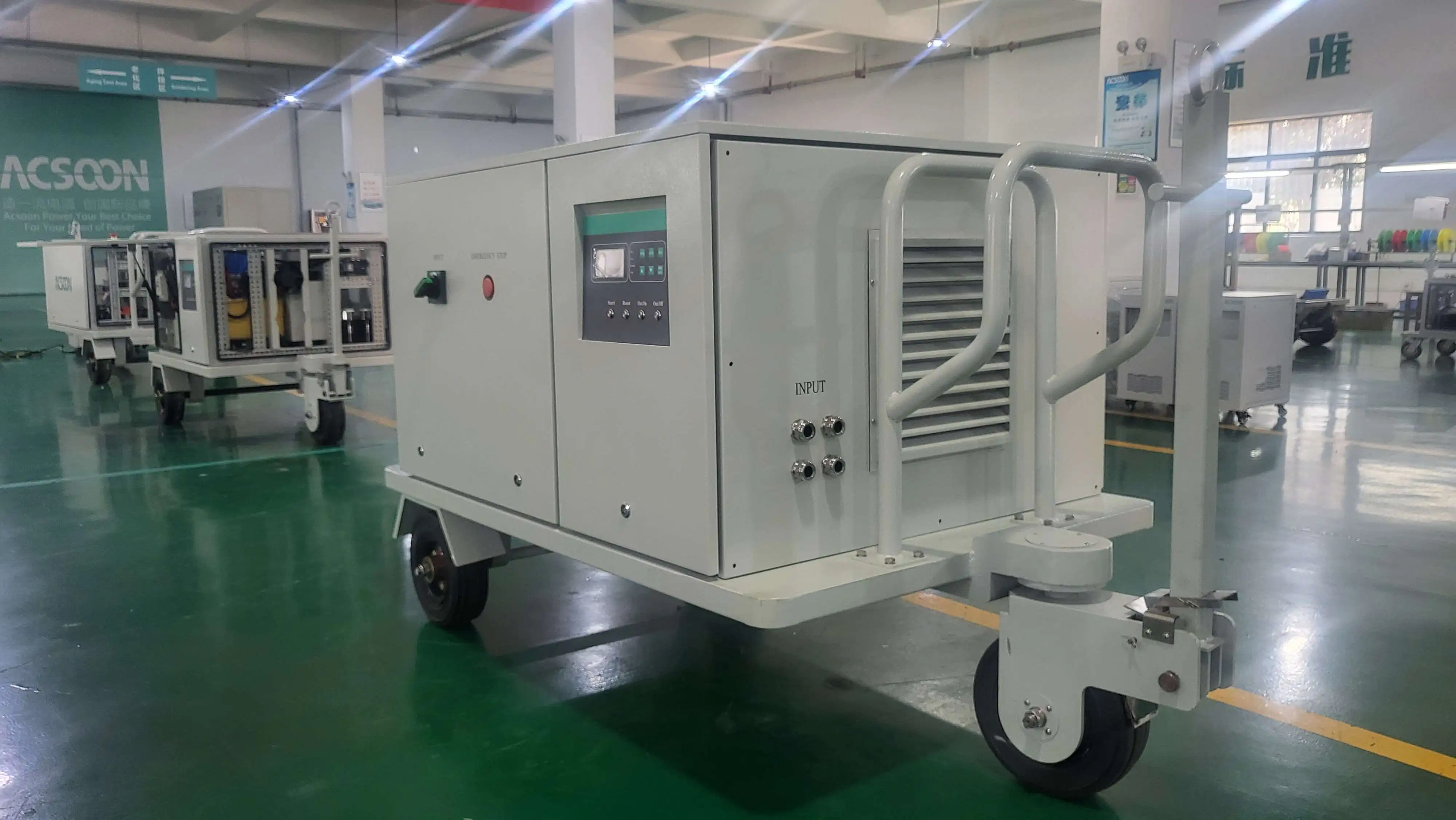
With its 180kVA solid-state construction and 400Hz power conversion, the ACSOON GPU-330180 is a great example of these current design concepts. This ground power unit changes regular 3-phase 380V, 50Hz utility power into the exact 115V/200V, 400Hz output that military aircraft systems need. It meets the strict requirements of MIL-STD-704F, which means that voltage transient recovery is up to military standards. Its ISO 6858 approval proves that it works well in aviation conditions. It can be set up on the ground or moved around on wheels, so it can be used for ground support operations with fighter jets, transport planes, and tactical helicopters at different airfield repair sites.
Comparing Military Aircraft Power Supplies: What to Choose?
To choose the right power conversion tools, you need to carefully look at their technical specifications, operational needs, and overall prices over their entire life. Professionals in procurement have to weigh different concerns, such as the cost of the original purchase, the reliability of the product over time, and its ability to adapt to changing mission needs.
Critical Performance Metrics
Efficiency ratings have a direct effect on running costs by lowering the need for cooling and the amount of energy used during long activities on the ground. Most military-grade systems are more than 90% efficient, which means they produce less waste heat, which makes airplane thermal control systems work harder. Power factor adjustment makes the best use of the electrical infrastructure that is available while lowering harmonic distortion, which can mess up sensitive transmission gear.
Military Versus Commercial Standards
When it comes to environmental testing, military standards are much stricter than private flight standards. The equipment has to work reliably in temperatures ranging from -55°C to +85°C, withstanding long-term shaking patterns that mimic gunshots and carrier catapult launches, and it has to be able to handle voltage spikes that would destroy consumer electronics. The need for higher longevity comes from the fact that military systems have to keep running even when they are damaged, while private systems would shut down to protect themselves.
Supplier Evaluation Criteria
Aside from technical specifications, buying choices should also take into account how much experience the maker has with defense applications, how well they follow international military standards, and how many technical support services they offer. Suppliers who have been certified with ISO 9001 quality management show that they use organized methods to keep the quality of their products consistent. OEM ties and being an approved dealer give you peace of mind about authentic parts and warranty validity, which are important for long-term service deployments of equipment.
Procurement and Integration Considerations for B2B Clients
To successfully buy specialized power switching tools, you need to plan for more than just the initial purchase. Defense companies and government procurement offices have to deal with a lot of complicated approval rules while also making sure that new platforms will work with old ones.
Lead Time Management
Because they use specialized parts and strict quality control methods, military aircraft power supply systems often have longer production cycles. For normal setups, procurement workers should expect lead times of 12 to 24 weeks. For custom solutions, extra engineering time is needed. Setting up a framework with qualified providers gives your business priority production times and inventory allocation for when it needs it most.
Certification and Compliance Documentation
When the military buys something, they have to show that it meets all of the requirements spelled out in MIL-STD standards. This includes proof of outdoor testing results and proof that the item is electromagnetically compatible. For all important parts, suppliers must give thorough test results, material approvals, and proof of traceability. This paperwork speeds up the approval process through military acceptance procedures and helps meet the standards for airworthiness certification.
After-Sales Support Infrastructure
For tools that will be used for decades, technical help is available well after the warranty time ends. When judging a company, you should look at how many field service technicians are available, how many spare parts they have, and how well they train their repair staff. Suppliers that offer predictive maintenance contracts and remote testing services can keep operations running smoothly and lower the total cost of ownership by replacing parts before they break.
JERRYSTAR's ACSOON brand shows its dedication to full customer support by offering customized technical advice, configurations that can be changed to meet specific voltage needs, and flexible shipping options that can meet urgent operating needs. The company keeps enough merchandise on hand to quickly fill important orders and supports OEM partnerships for integration needs that are specific to a platform.
Safety, Maintenance, and Compliance in Modern Designs
Safety at work and following the rules are important things that military power systems used in flight must have. A lot of fail-safe features and multiple layers of redundancy are built into modern designs to keep missions running even when parts break.
Regulatory Framework Adherence
MIL-STD-704 sets out all the electrical standards that military aircraft power supply systems must meet. It says what voltage and frequency ranges are allowed, as well as the transient response parameters and harmonic content limits. For compliance verification, a lot of tests need to be done in both regular and abnormal operating situations, such as when the generator fails, the load changes, and electromagnetic interference occurs. The ISO 6858 standards talk about the performance features of ground power units in detail. This makes sure that mobile power tools and airplane electrical interfaces can work together.
Predictive Maintenance Technologies
Embedded monitoring systems keep an eye on factors like output voltage stability, switching component temperatures, and capacitor health signs all the time. Machine learning systems look at past performance trends to find patterns of degradation that can tell you about problems weeks or months before they happen. This ability to predict the future makes condition-based maintenance methods possible, which find the best times to change parts and cut down on unplanned maintenance.
Risk Mitigation Strategies
Critical avionics systems are kept safe from breakdowns that spread by having multiple power routes, the ability to automatically reduce the load, and galvanic isolation between the input and output circuits. Electronics that are sensitive to electromagnetic pulses and lightning-induced spikes are protected by transient voltage reduction circuits that meet MIL-STD-461 standards. These safety measures make sure that mission systems can still work during electricity disturbances that would damage business equipment that isn't protected.
Conclusion
The constant improvement of military aircraft power supply systems shows how modern defense aviation is always trying to get more power, size, and weight while still being able to do more. Solid-state designs that use silicon carbide semiconductors, smart digital controls, and advanced heat management solutions have completely changed how well and reliably power systems work. When purchasing these important systems, procurement professionals need to look at technical specs, supplier abilities, and full lifecycle support services to make sure the task succeeds in all possible operating situations. Modern power conversion equipment can meet both current working needs and the needs of future platform growth thanks to its predictive diagnostics, modular designs, and ability to meet strict military standards.
FAQ
How do military power systems differ from commercial aviation units?
To meet military standards, electronics must be more resistant to damage from the environment, have electromagnetic shielding, and be able to keep working even when damaged, whereas private systems would shut down to protect themselves. Military units can handle wide temperature ranges, constant vibration, and voltage changes that are higher than what is recommended for business use, all while keeping tighter output control tolerances.
What advantages do solid-state designs provide?
Solid-state power conversion gets rid of moving parts and mechanical contactors, which eliminates major failure points and improves the power quality and rapid reaction. These systems make it possible to have higher power levels, require less upkeep, and support modular replacement methods that keep planes flying while they are being serviced.
Why is 400Hz frequency standard for military aircraft?
Compared to 50/60Hz industrial power, the 400Hz standard allows for smaller and lighter transformers and motors while still giving enough magnetic flux for electromagnetic devices. This frequency strikes a good mix between the efficiency of electrical parts and the practical size and weight limits that are important for aviation uses.
How does compliance certification impact procurement decisions?
MIL-STD compliance paperwork makes sure that equipment works well in military-specific settings and that different defense tools can talk to each other. The use of certified equipment speeds up the approval process for airworthiness and lowers technical risk during integration programs. This makes the higher extra costs worth it because they lower the costs of qualification.
Partner with JERRYSTAR for Advanced Military Power Solutions
Your reliable military aircraft power supply maker, JERRYSTAR, offers tried-and-true ACSOON brand equipment designed for mission-critical defense uses. Our GPU-330180 and a wide range of other products use modern solid-state technology, are compliant with MIL-STD-704F, and can be configured in a way that fits your unique needs. We keep a lot of inventory on hand so that we can quickly deploy for pressing buying needs and support OEM partnerships for integration projects that are specific to a platform. Our ISO 9001-certified quality management system guarantees consistently high-quality manufacturing. It is backed by full expert support, repair services, and the ability to ship products all over the world. Talk to our engineering team at acpower@acsoonpower.com about your power conversion needs and learn more about how JERRYSTAR solutions improve tactical readiness for fighter aircraft, transport vehicles, rotary-wing systems, and ground support equipment.
References
1. Smith, J.R., and Thompson, M.K. "Advanced Power Electronics for Next-Generation Military Aircraft Systems." Journal of Aerospace Engineering and Technology, Vol. 45, No. 3, 2023, pp. 234-251.
2. Defense Standardization Program Office. "MIL-STD-704F: Aircraft Electric Power Characteristics." Department of Defense Interface Standard, 2016.
3. Williams, P. A. "Silicon Carbide Semiconductor Applications in Aviation Power Conversion." IEEE Transactions on Power Electronics, Vol. 38, No. 7, 2023, pp. 8956-8971.
4. International Organization for Standardization. "ISO 6858: Aircraft Ground Power Supplies - General Requirements." ISO Standard, 2017.
5. Rodriguez, C.L., and Chen, H. "Thermal Management Strategies for High-Density Military Power Systems." International Journal of Heat and Mass Transfer, Vol. 196, 2022, pp. 123-142.
6. Anderson, T. W. "Predictive Maintenance Technologies for Military Aviation Electrical Systems." SAE International Journal of Aerospace, Vol. 16, No. 2, 2023, pp. 187-205.