




How Does a 60hz to 50hz Frequency Converter Improve Your Equipment?
A 60Hz to 50Hz frequency converter transforms electrical power from the North American standard (60Hz) to the international standard (50Hz), ensuring equipment operates at its designed specifications. This solid-state device prevents motor overheating, corrects rotational speeds, and eliminates timing errors in sensitive machinery. By utilizing advanced IGBT technology, the converter provides clean, stable power that protects capital-intensive assets from frequency-related damage, extends equipment lifespan, and maintains precise operational parameters across different power grid environments.
Understanding the Need for 60Hz to 50Hz Frequency Conversion
The Global Frequency Divide and Its Industrial Impact
Electrical frequency standards vary significantly across continents. North America predominantly uses 60Hz power, while Europe, Asia, and most other regions operate on 50Hz systems. This seemingly minor 10Hz difference creates substantial compatibility challenges for manufacturers, military installations, and marine operations that source equipment internationally or relocate machinery across borders.
When a motor designed for 50Hz operation runs on a 60Hz supply without proper conversion, the rotational speed increases by approximately 20%. This acceleration causes excessive centrifugal stress on mechanical components, leading to premature bearing failures and catastrophic equipment breakdowns. The voltage-to-frequency ratio becomes imbalanced, generating excess heat that degrades insulation materials and shortens motor life expectancy by years.
Real-World Consequences of Frequency Mismatch
There are serious operational dangers for aerospace companies testing ground support equipment to European specifications in North American facilities that do not have frequency conversion capabilities. Acquiring components manufactured by a precision CNC machine calibrated for 50Hz using 60Hz electricity can lead to expensive manufacturing flaws and possible safety failures in aviation assembly due to dimensional accuracy issues.
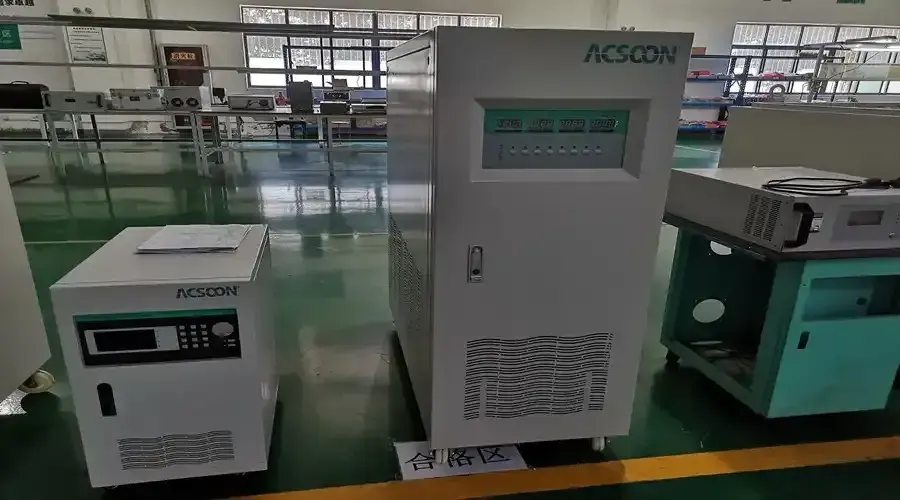
Another important use is in railway signal systems. Frequency fluctuations interfere with the precise time sequences needed for these installations that rely on safety. Train scheduling and collision avoidance systems are put at risk when a signal controller built for 50Hz is fed a 60Hz input, leading to dangerous timing inconsistencies. The ACSOON AF60W-330010 model, with its pure sine wave output optimized for railway signal integrity, tackles this difficulty head-on.
The military's purchasing divisions are cognizant of the fact that frequency incompatibility endangers mission readiness. Reliable conversion solutions are essential for testing imported equipment or deploying domestically manufactured systems to foreign bases. Not only does equipment failure due to frequency incur maintenance expenses, but it also causes operational downtime, mission delays, and possible dangers to crew safety.
How Do 60Hz to 50Hz Frequency Converters Work and Improve Equipment Performance?
Technical Architecture of Modern Converters
Static 60 Hz to 50 Hz frequency converters employ a double-conversion topology that completely isolates input from output. The incoming 60Hz AC power first passes through a rectifier stage, converting it to DC voltage. Advanced filtering removes harmonic distortion and voltage fluctuations from the original grid supply. An IGBT-based inverter then synthesizes a precise 50Hz AC waveform with controlled voltage and frequency characteristics.
This architecture delivers significant advantages over alternative methods. The DC intermediate stage decouples the output from input grid instabilities, ensuring clean power delivery regardless of source quality. Modern units achieve efficiency ratings exceeding 92%, minimizing energy losses during conversion. Harmonic distortion remains below 2%, protecting sensitive electronic equipment from power quality issues that could trigger malfunctions or data corruption.
Performance Benefits That Extend Equipment Life
Proper frequency conversion directly impacts equipment longevity and operational reliability. Here are the core advantages this technology provides:
- Optimized Motor Performance: Motors run at their designed torque-speed curves, which reduces mechanical stress from incorrect rotational speeds and prevents premature component wear.
- Thermal Management: The correct frequency prevents overheating from voltage-frequency ratio imbalances, which keeps insulation intact and extends service intervals.
- Precision Control: Sensitive timing circuits and control systems receive power at their exact specifications, ensuring that automated processes and safety mechanisms operate accurately.
- Reduced Maintenance: Equipment operating within design parameters experiences fewer failures, lowering maintenance costs and extending replacement cycles.
These advantages translate to tangible operational improvements for industrial facilities. A marine vessel docked at a 60Hz shore power facility can safely operate its 50Hz-designed HVAC, navigation, and communication systems without running onboard diesel generators. The converter eliminates fuel consumption costs while reducing noise and emissions during port stays.
Laboratory environments conducting compliance testing benefit from the ability to simulate international grid conditions accurately. Export-bound products can be rigorously validated against destination-country frequency standards, which helps identify potential issues before market entry and avoid costly recalls or warranty claims.
Verification Methods for Conversion Accuracy
Ensuring conversion accuracy requires systematic monitoring approaches. Digital frequency meters provide real-time output verification, confirming stable 50Hz delivery under varying load conditions. Oscilloscopes reveal waveform quality, detecting any distortion that could affect sensitive equipment. Thermal imaging identifies hotspots indicating inefficient conversion or overload conditions requiring attention.
The ACSOON AF60W-330010 incorporates smart monitoring systems that continuously track output parameters. These built-in diagnostics alert operators to deviations before they impact connected equipment, enabling proactive maintenance that prevents unexpected failures during critical operations.
Comparative Analysis: Frequency Converters vs Other Solutions
Frequency Converters Versus Voltage Transformers
Having a good grasp of the various functional distinctions between power conversion devices helps avoid expensive procurement errors. A voltage transformer can only change the voltage level, for example, from 480V to 208V or similar changes. It cannot change the frequency. Just using a transformer to connect a motor rated for 50Hz to a 60Hz supply causes the motor to operate at the wrong speed and put unnecessary thermal stress on it.
When it comes to voltage and frequency, a 60 Hz to 50 Hz frequency converter has you covered. With a three-phase input voltage range of 208V to 480V at 60Hz, the AF60W-330010 can take in three-phase power and output it at a perfect 50Hz. Because of its two functions, frequency converters are the best option for ensuring interoperability of devices across borders.
Analog Versus Digital Converter Technologies
Earlier analog converter designs relied on rotating machinery or basic electronic components with limited precision. Modern digital converters utilize microprocessor control and advanced power electronics that deliver superior performance characteristics. Digital systems provide tighter frequency regulation, faster responses to load changes, and comprehensive protection features, including overload shutoff, short-circuit protection, and thermal monitoring.
Energy efficiency represents another critical differentiator. Digital IGBT technology minimizes switching losses, achieving efficiency levels that analog systems cannot match. For high-capacity installations operating continuously, this efficiency difference generates substantial energy cost savings over the equipment lifecycle.
Leading 2024 Model Innovations
Newer converter models have improvements made with the user in mind, which boost their operational value. The AF60W-330010, an upright model with wheels, is one example of a portable design that allows for convenient movement between test stations and more versatility in placement within facilities. Reliability in industrial settings is ensured by IP21 ingress protection, which prevents solid objects and water drips.
Algorithms designed to prevent overloads can effectively differentiate between transient inrush currents that occur when motors start up and continuous overloads that require shutting down. While preserving strong equipment protection, this discrimination stops nuisance trips. Through the use of centralized dashboards, facility managers are able to remotely monitor converter performance across dispersed installations, which helps them to better allocate resources and schedule maintenance.
Procurement Considerations for 60Hz to 50Hz Frequency Converters
Supplier Evaluation Criteria
Choosing the right source for a 60 Hz to 50 Hz frequency converter is crucial for the long-term success of the investment. Trust in a manufacturer grows when their credentials, including years of experience and certifications, are easy to verify. Power systems for the aircraft, military, marine, and laboratory are Xi'an Jerrystar Instrument Co., Ltd.'s forte, and they've been perfecting this area for over 15 years. Because of this specialized knowledge, we are able to design products that can withstand the most rigorous environments without sacrificing dependability.
Certification objectively demonstrates conformity with quality standards and safety regulations. With its ISO 9001:2015 quality management accreditation, CE mark for access to the European market, and UL listing for conformity in North America, the ACSOON brand is well-known and respected. Complying with IEC 61000 EMC guarantees electromagnetic compatibility with delicate nearby equipment, while adhering to RoHS and REACH is a manifestation of environmental responsibility.
The capacity to personalize sets apart producers who have a profound understanding of industrial needs from those who merely sell catalog items. Typical converters might not be able to meet the unique waveform requirements of railway signal applications. The AF60W-330010 shows its application-specific design expertise by producing a pure sine wave output that is engineered to maintain signal control system integrity.
Capacity Selection and Pricing Dynamics
The converter's capacity should be sufficient to meet the demands of the connected load plus a reasonable margin of safety. Installations of industrial machinery, maritime auxiliary systems, and laboratory test equipment are all suitable candidates for mid-range uses of 10kVA units like the AF60W-330010. When operating normally, undersized converters trigger overload protection, while oversized converters incur unnecessary capital expenditures.
The pricing reflects both capacity and advanced features that improve use and reliability. A premium price tag is reasonable when you consider the decreased failure risk and increased service life that come with features like smart monitoring systems, ruggedized construction, and enhanced overload protection. After accounting for downtime costs and maintenance needs, procurement managers calculate the total cost of ownership and see that the initial price is just a portion of the lifespan spending.
Logistics and Post-Sale Support Considerations
Specialized power equipment requires careful handling during transportation. Jerrystar employs custom-designed shock-absorbing packaging with moisture-proof wrapping to protect sensitive components. Secure palletization accommodates bulk orders, while GPS-tracked shipping provides real-time location visibility. Comprehensive insurance coverage mitigates financial risk during international transit.
After-sales support quality directly affects operational continuity. Round-the-clock technical assistance ensures expert guidance remains available regardless of shift schedules or time zones. Remote diagnostics capabilities allow support engineers to troubleshoot issues without site visits, minimizing response time. When on-site service becomes necessary, qualified technicians resolve complex problems efficiently. Regular firmware updates address emerging compatibility issues and enhance functionality, extending product relevance over time.
Warranty terms warrant careful examination during procurement. Extended warranty options provide cost-effective protection for installations where replacement would disrupt critical operations. Adequate inventory for quick delivery addresses urgent requirements that cannot accommodate extended lead times common with specialized equipment.
Leading Brands and Their 60Hz to 50Hz Frequency Converter Solutions
Established Global Manufacturers
Several multinational corporations maintain strong positions in the frequency conversion market. Schneider Electric offers comprehensive power management portfolios, including frequency conversion solutions backed by extensive global service networks. Siemens leverages deep automation expertise to integrate frequency converters with broader industrial control systems. ABB emphasizes high-power applications serving heavy industrial and utility-scale installations. Mitsubishi focuses on precision motor control applications common in manufacturing automation.
These established brands provide proven reliability and broad dealer networks throughout Europe and North America. Their market presence ensures accessible replacement parts and local service availability that minimizes downtime when issues arise. However, their product lines often target general industrial applications rather than specialized requirements like aviation ground support or military power systems.
Specialized Aviation and Military Power Systems
Xi'an Jerrystar Instrument Co., Ltd. occupies a distinct market position through concentrated focus on aviation, military, marine, and laboratory applications. This specialization produces frequency converters engineered for the demanding reliability standards these sectors require. The ACSOON brand (supporting OEM arrangements) combines advanced technical capabilities with responsive customization that larger general-purpose manufacturers cannot economically provide.
The company's 5,000-10,000 square meter manufacturing facility enables both production scale and engineering flexibility. Operating as both a manufacturer and trading company, Jerrystar maintains adequate inventory for rapid deployment while supporting custom configurations for unique specifications. This dual capability addresses the common procurement challenge of balancing standardization benefits against application-specific requirements.
Matching Brand Offerings to Application Demands
Railway signal systems exemplify applications where specialized expertise proves critical. Generic frequency converters may provide 50Hz output but lack the waveform purity essential for timing-sensitive signal controllers. The AF60W-330010 specifically addresses this requirement through its pure sine wave output architecture, preventing the harmonic distortion that could generate false triggering or timing errors in safety systems.
Military procurement specifications often mandate domestic content or require security clearances incompatible with international supply chains. Understanding these constraints helps identify suitable suppliers. Marine applications face unique environmental challenges, including vibration, humidity, and space constraints that not all converter designs accommodate effectively. The upright-mounted configuration with wheels addresses space optimization and repositioning flexibility common in shipboard installations.
Comprehensive technical support extends beyond troubleshooting to include application engineering assistance. Complex installations benefit from manufacturer involvement during specification development, ensuring selected equipment truly matches operational requirements. Jerrystar's engineering team collaborates with clients to validate power quality requirements, environmental conditions, and integration constraints before finalizing equipment selections.
Conclusion
60 Hz to 50 Hz frequency converter technology protects equipment investments while enabling global operational flexibility. The transition from 60Hz to 50Hz power eliminates compatibility barriers that otherwise force organizations to maintain separate equipment inventories or accept reduced performance and reliability. Modern static frequency converters deliver this capability with exceptional efficiency, comprehensive protection features, and operational monitoring that supports proactive maintenance strategies. Strategic supplier selection that emphasizes industry-specific expertise, certification compliance, and responsive customization ensures procurement decisions meet the demanding operational requirements of the aviation, military, marine, and industrial sectors.
FAQ
What distinguishes a frequency converter from a voltage transformer?
Voltage transformers modify only voltage levels while maintaining the original frequency. Frequency converters alter both frequency and voltage as needed, providing complete power adaptation for equipment designed for different electrical standards. Running 50Hz equipment on 60Hz power through a voltage transformer alone still causes incorrect motor speeds and thermal stress.
How do I determine the required converter capacity for my equipment?
Calculate the total connected load by summing the nameplate ratings of all devices the converter will power simultaneously. Add 20-30% safety margin to accommodate inrush currents during motor starting and allow future expansion. The 10kVA AF60W-330010 suits applications totaling approximately 7-8kVA continuous load.
Can frequency converters damage connected equipment?
Quality frequency converters with pure sine wave output and proper capacity prevent equipment damage. Inferior units generating distorted waveforms or inadequate capacity may harm sensitive electronics or trigger protective shutoffs. Selecting certified equipment from established manufacturers like ACSOON ensures safe, reliable operation that protects connected assets.
Partner With JERRYSTAR for Reliable Frequency Conversion Solutions
Xi'an Jerrystar Instrument Co., Ltd. stands ready to address your power conversion challenges with proven expertise spanning aviation, military, marine, and industrial applications. Our ACSOON frequency converter solutions, including the 10kVA AF60W-330010 model, deliver the pure sine wave output and operational reliability your critical systems demand. As both a 60Hz-to-50Hz frequency converter manufacturer and supplier, we maintain adequate inventory for urgent requirements while supporting custom configurations tailored to your specific operational environment. Contact our engineering team at acpower@acsoonpower.com to discuss your application requirements and receive expert guidance on optimal equipment selection.
References
1. Institute of Electrical and Electronics Engineers. (2020). IEEE Standard for Interconnection and Interoperability of Distributed Energy Resources with Associated Electric Power Systems Interfaces. IEEE Standards Association.
2. International Electrotechnical Commission. (2019). Electromagnetic Compatibility (EMC) - Part 3-2: Limits for Harmonic Current Emissions. IEC 61000-3-2 Standard.
3. National Electrical Manufacturers Association. (2021). Motors and Generators: Application Guide for AC Adjustable Speed Drive Systems. NEMA Standards Publication MG 1.
4. Society of Automotive Engineers. (2018). Aerospace Ground Equipment - Electrical Power Characteristics. SAE Aerospace Standard AS6858.
5. U.S. Department of Defense. (2022). Military Specification: Power, Electrical, Alternating Current, Characteristics, and Utilization. MIL-STD-704F.
6. Zhang, H., & Morrison, R. (2021). Industrial Power Systems: Frequency Conversion Technologies and Applications. Academic Press Technical Publications.