




How Does a Power Frequency Converter Ensure Stable Output?
Precision engineering that blends advanced rectification, filters, and control technology in a power frequency converter makes sure that the output is stable. These gadgets change entering AC power into a DC middle stage. They then make clean AC power at the right frequency using inverter modules controlled by microprocessor-based feedback loops. The converter keeps an eye on voltage and frequency all the time to make up for changes in the input, keep harmonics below 2% THD, and keep the waveform quality stable, which is important for sensitive equipment in labs, military bases, and aircraft tests.
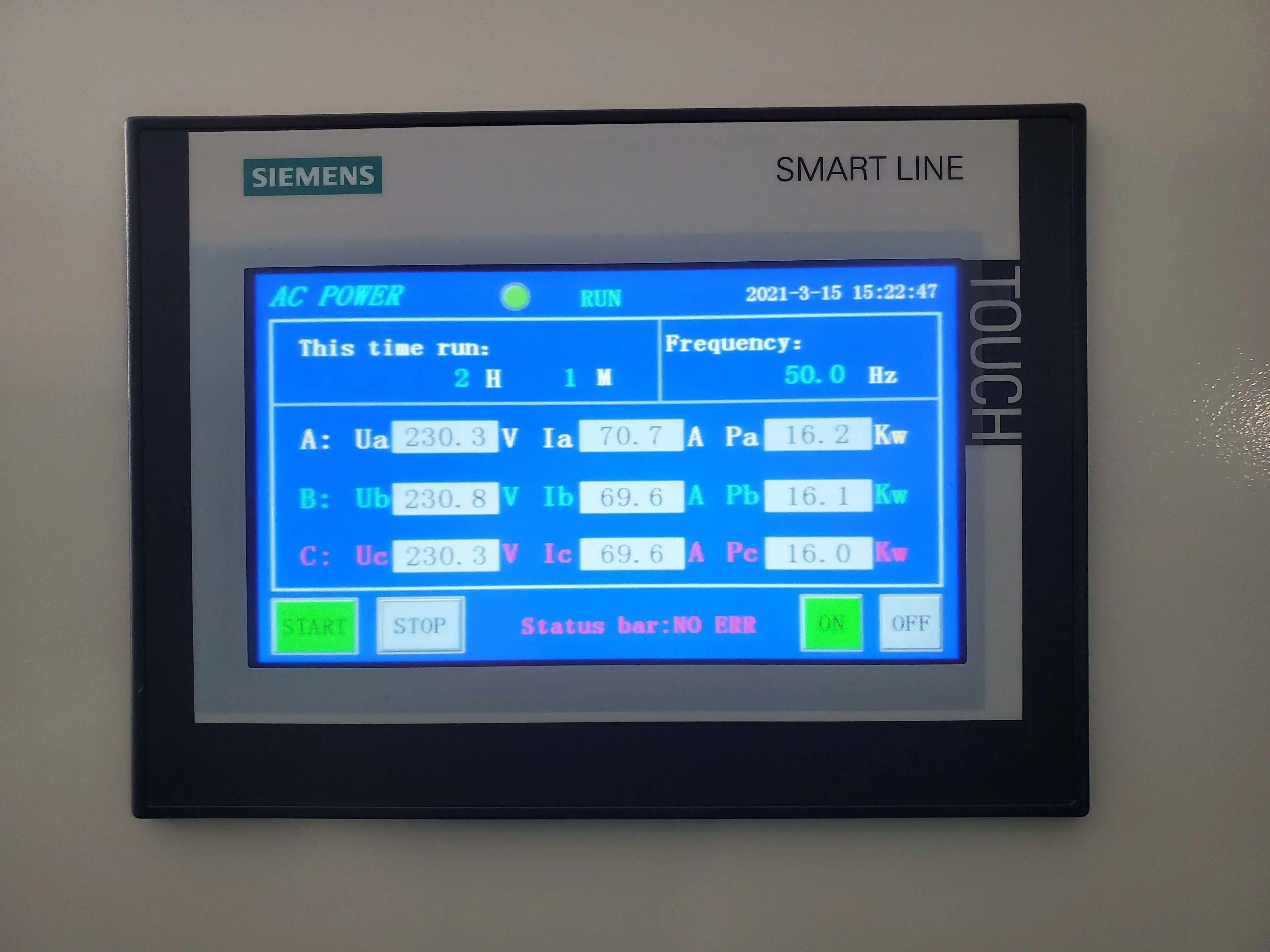

Understanding Power Frequency Converters and Their Role in Industrial Stability
Learn about power frequency converters and how they help keep industries stable. Power frequency converters are important parts of infrastructure that are used in places where regular grid power can't meet specific operating needs. Instead of changing the motor speed dynamically as variable frequency drives do, these converters focus on changing the input frequency to exact, stable output frequencies between 50Hz and 499.99Hz, based on the needs of the application.
What Distinguishes Frequency Conversion from Other Power Technologies
The main difference is between the practical goal and the design architecture. Normal inverters change DC to AC mainly for backup power uses, while VFDs change frequency just for controlling motor speed. Frequency converters, on the other hand, give stable, constant power at rates that are different from the utility source. This feature is very important for aircraft ground support equipment that needs 400Hz power, marine boats that travel around the world and use different grid standards, and lab testing chambers that need to keep the environment very precisely controlled. The process of conversion keeps the voltage stable even when the frequency changes. This keeps linked equipment safe from power quality problems that could cause it to break down early or stop working properly.
Core Functions Supporting Critical Applications
Keeping output stable requires a lot of tasks to be running at the same time. The converter controls the frequency and intensity of the voltage with an accuracy of usually within ±1%. This stops changes that could damage sensitive electrical systems. Waveform purity is still very important. High-quality units like the ACSOON AF60W-330050 produce a pure sine wave output with total harmonic distortion below 2%. This gets rid of the electrical noise that messes up precise instruments. Protection circuits instantly stop damage when they sense something is wrong, like an overload, a short circuit, or high temperatures. More advanced models store fault events, which include exact times when they happen and diagnostic data that maintenance teams use to find trends and stop problems from happening again.
The Core Technology Behind Stable Output in Power Frequency Converters
Getting stable output takes a lot of complex electrical engineering in a lot of different parts that all work together in a power frequency converter. Power stage parts that deal with high current and voltage are part of the technology stack. Digital control systems handle regulation changes at the microsecond level.
Rectification and DC Link Stabilization
Three-phase AC input goes through a rectifier bridge, which changes alternating current into direct current. This starts the conversion process. This corrected power, on the other hand, has large wave parts that would make processes further down unstable. These changes are smoothed out by capacitor banks in the DC link part, which makes a safe intermediate voltage reservoir. The DC bus voltage is usually between 400VDC and 800VDC, based on the input specs. It sets the stage for the inverter to work. Good capacitors with low equivalent series resistance (ESR) reduce impedance, which lets the system respond quickly to changes in load without voltage drop. This middle stage separates the input characteristics from the output performance. This lets the converter keep stable delivery no matter what is happening in the source grid.
Inverter Stage and Waveform Synthesis
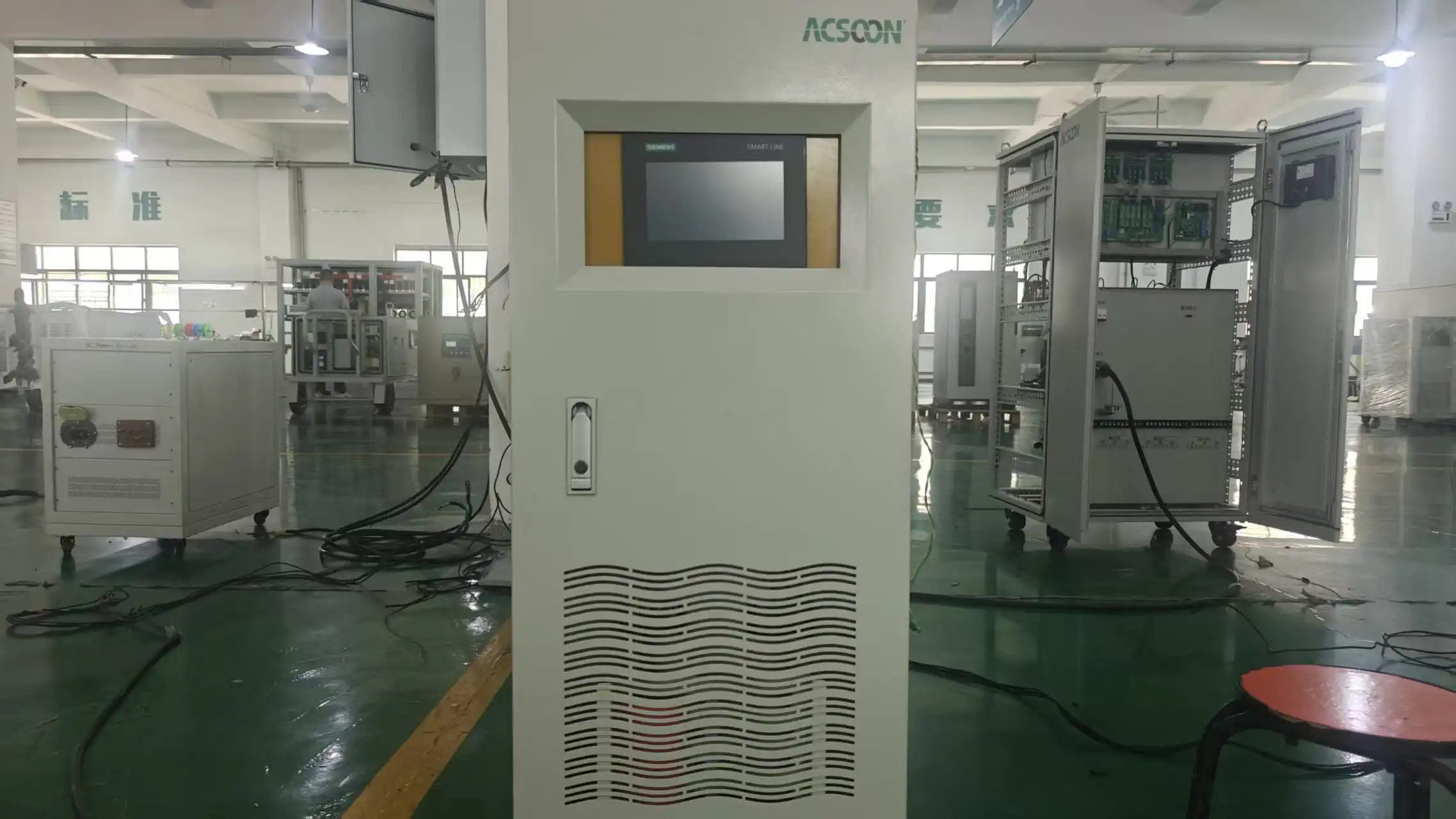
Using insulated gate bipolar transistors (IGBTs) or other similar power semiconductors, the inverter part turns the DC link back into AC power. These switches work in exact sequences that are controlled by pulse width modulation (PWM) algorithms. This makes high-frequency switching patterns that produce the output shape that is wanted. Space vector modulation methods are used in modern converters to make sure that switching patterns are as efficient as possible while also having the least amount of harmonic content. The switching frequency is usually between 5 and 20 kHz, which is well above the hearing range. After filtering, the result is a smooth sinusoidal wave. In some designs, output transformers keep the input and output circuits from touching each other, which improves safety and lowers the transfer of common-mode noise. This advanced inverter design is used by the ACSOON AF60W-330050 static frequency converter to provide 50kVA of output power with excellent waveform quality over a wide frequency range of 50Hz to 499.99Hz.
Real-Time Control and Feedback Systems
Microprocessor-based controls constantly check output parameters by comparing measured values to setpoints that have already been coded. Digital signal processors run control algorithms at update rates of kilohertz and figure out what changes need to be made to keep specs. When the load changes, closed-loop feedback devices adjust the inverter output to match the changes in current draw within milliseconds. This dynamic control stops voltage drops when heavy loads are turned on and stops overvoltage when loads are turned off. Throughout the power stage, temperature monitors collect data for thermal management. If safe working limits are reached, the cooling system can be adjusted or the protective shutdown can happen. By combining these control parts, you get a self-regulating system that stays stable even when the input conditions and load patterns change.
Harmonic Suppression and Filtering Technology
High-frequency harmonics are made by inverter switching, even with advanced PWM methods. These harmonics must be removed before they reach linked equipment. Multi-stage LC filters cut down on these useless frequencies while letting the main frequency component go through without any problems. To make a filter, you have to carefully choose the values of inductance and capacitance so that the cutoff frequencies are set above the output frequency and below the switching frequencies. Resonance situations that could make some harmonic orders louder are stopped by damping resistors. The output power has less than 2% total harmonic distortion, which meets strict power quality guidelines for military electronics, precision test tools, and aerospace ground support systems. By stopping harmonic heating in transformer windings and stopping resonance excitation in motor mechanical systems, this clean power supply makes devices last longer.
Practical Applications and Real-World Performance Cases
Understanding how power frequency converter technology works in theory is important, but looking at how it is used in real life shows how it answers real problems in industry. These systems make a wide range of industries more reliable, which directly leads to higher operating efficiency and lower costs.
Aerospace Testing and Ground Support Operations
Facilities that maintain aircraft and companies that make flight parts have to deal with special power needs because some of their equipment was originally made for 400Hz electrical systems. Normal grid power at 50Hz or 60Hz doesn't work with testing electronics, navigation systems, or environmental controls on the ground. Frequency converters fill in this gap, allowing full pre-flight testing without using the aircraft's backup power unit. One aerospace contractor that used ACSOON static frequency converters said that ground test cycle times were 40% shorter than when they used generators instead. The better waveform quality got rid of false fault codes that used to show up during electronics checks. This cut down on the time needed to figure out what was wrong and increased the number of tests that were completed successfully on the first try. Technicians could move the 50kVA unit between different airplane stands without using a forklift because it was movable and upright-mounted with wheels built in. This made operations more flexible.
Military Power Infrastructure Resilience
Critical systems that can't handle power outages or quality drops are run by defense sites. No matter what the local grid conditions are, command centers, communication hubs, and weapons systems need power that never goes out and meets exact specs. The military wants frequency converters that can handle a wide range of input voltages. For example, the AF60W-330050 can accept 3-phase input from 208V to 480V, so it can be used in places with different types of electricity facilities. The IP21 entry protection grade is good for warehouses and hangars because it keeps dust and drips out. Fault event storage lets repair staff look into power problems after the fact. Frequency conversion is especially useful in the military, where ships built to one national standard have to connect to base power that meets different standards when they go to foreign cities.
Laboratory Testing and Research Facilities
Precision testing settings need power quality that goes beyond what most utilities provide. Stable electricity is needed for environmental test rooms that go through temperature changes, shaking tables that simulate the stress of transportation, and equipment used to test materials that applies controlled loads. Changes in voltage or frequency cause measurement mistakes that make tests less valid and less reliable. When research schools put in specialized frequency converters for important test bays, the consistency of the data gets a lot better. The pure sine wave output stops resonance effects in inductive test loads that used to cause results to change for no clear reason. The ACSOON AF60W type can handle a wide frequency range, up to 499.99Hz. This lets special testing methods look at how the equipment works in high-frequency situations, which is useful for certification programs that need to prove performance in fault situations.
Manufacturing and Industrial Process Control
More and more, automation equipment from around the world is being used in production settings. This means that machines made for one electrical standard have to work with different energy systems. By changing the frequency, you can move equipment without having to pay a lot of money to rebuild the electrical system. In addition to making things compatible, frequency conversion improves process quality by getting rid of changes caused by the grid. A precision machining operation reported better surface finish after adding special converters for CNC equipment. They said the increase was due to the removal of tool chatter caused by changes in voltage. The converter's ability to keep the output stable even when the input changes by up to ±10% protects against grid disturbances that used to stop production. The time between maintenance checks got shorter as harmonic currents put less stress on the motor bearings and drive electronics.
Selecting the Right Power Frequency Converter for Your Application
When making procurement choices, you have to weigh technical needs against budget limits, seller skills, and long-term support needs for a power frequency converter. A methodical evaluation process makes sure that the chosen equipment meets current needs while also leaving room for growth in the future.
Power Rating and Load Characteristics
A thorough load study is the first step in getting the right size. Find the total nameplate values of all the related equipment, and then add the right safety margins. For general industrial uses, these are usually 20 to 30 percent, but they are higher for motor loads that have a lot of inrush current. The 50kVA rating of converters like the ACSOON AF60W-330050 makes them good for mid-range uses like small industrial cells, aircraft ground support carts, and lab test tanks. Think about the load power factor. Reactive loads need more current for the same amount of watts, which could mean the converter needs to be bigger than it needs to be. You should look at the duty cycle patterns because ongoing operation needs more careful thermal design than intermittent use. Write down the converter's peak and average load rates to make sure it can handle sudden demands without tripping the safety circuitry and still work well in normal situations.
Input and Output Specifications
Connect the converter's inputs to the power that's available at the building. Three-phase converters need a balanced source; make sure there is enough power where the converter is going to be installed. A large input voltage range gives you options for places with weak control or where you want to move your equipment. The linked equipment specifies the output voltage and frequency. Make sure the converter's adjustable range includes all the necessary working points. The frequency range can be changed from 50Hz to 499.99Hz, which works for both common and unique testing methods. The phase design needs to match the load needs. For example, three-phase is usually used for industrial motors, and single-phase is used for computer systems. Think about whether galvanic separation between the input and output is useful for your application. This is especially important if you are worried about ground loops or want to stop common-mode noise transfer.
Waveform Quality and Harmonic Performance
For important tasks, you need a pure sine wave output with little distortion. Check the manufacturer's specs for total harmonic distortion. For general use, you want values below 3%, and for sensitive electronics, you want values below 2%. The THD standard of the ACSOON converter is less than 2%, which meets strict military and aircraft needs. Check the conditions of the measurements; some makers give best-case numbers at certain load levels instead of worst-case ratings. Ask for harmonic spectrum data that shows the various harmonic amplitudes, especially the 3rd, 5th, and 7th orders that have the most significant effect on motor performance and transformer heating. The specs for voltage regulation tell you how stable the output is when the load changes. For static and dynamic regulation, look for ±1% or better. Frequency precision, which is usually given in parts per million or decimal numbers, shows how stable the output is, which is important for keeping all the equipment working together.
Physical Configuration and Environmental Factors
In addition to electrical specs, installation needs affect the choice of tools. The upright-mounted design with built-in wheels makes it easier for portable uses, while the rack-mount or wall-mount options are better for stable installations that need to save room. Make sure the size and weight match the room you have and the weight that can be put on the floor. Planning a placement depends on the cooling needs. For example, forced-air designs need enough space for air flow, and liquid-cooled units need cooling infrastructure in the building. The ingress protection rating shows how well it works in different situations. The IP21 grade offers basic protection that works well in industrial settings inside, while better ratings can handle harsh conditions outside. The range of temperatures in the area decides whether extra cooling or warmth is needed. For locations higher than 1000 meters, altitude derating may apply, which lowers the output power because cooling is less efficient at higher elevations.
Manufacturer Support and Customization Capability
The choice of a vendor goes beyond the specifications of the product and includes things like expert help, desire to make changes, and long-term availability of parts. Manufacturers with application engineering tools can help with planning, integration, and figuring out the right size, which lowers the risk of launch. The fact that Xi'an Jerrystar Instrument Co., Ltd. specializes in ACSOON brand converters for use in laboratories, military, aircraft, and ships shows that they know a lot about powering important infrastructure. Custom modification lets you meet specific needs, like when you need different communication methods, different output voltages, or combined distribution panels. Private labeling is possible for equipment integrators and system makers with OEM help. Make sure you have enough inventory for quick shipping. This is especially important for replacing military or work equipment that needs to be done right away. Check the warranty terms and availability of expert support. Look for makers that offer more than just product sales to help with application issues.
Conclusion
Power frequency converters have stable output because they have combined technology for rectification, DC stability, precise inverter control, and complex filtering. By understanding these rules, you can choose equipment that fits the needs of the task. Real-world uses in the military, in the lab, in industry, and in flight show that reliability and performance gains are real. Power ratings, waveform quality, environmental factors, and seller skills must all be taken into account when making procurement choices. As the needs for electrical infrastructure get more complicated and important, frequency conversion technology keeps getting better at being efficient, controlling things more accurately, and integrating things together. This makes it an important part of modern defense and industry operations.
FAQ
What maintenance intervals sustain optimal converter performance?
For mission-critical installations, routine maintenance usually includes inspections every three months, and for general industrial uses, it includes full service once a year. Visual checks make sure that there is no dust buildup on the cooling fins and that the warning lights are working properly. As part of the annual maintenance, the capacitor bank is tested, thermal imaging is used to find worn-out parts, link torque is checked, and software is updated. Facilities that work in tough settings may need to clean their filters and check their seals more often. By keeping an eye on trouble event logs, you can spot problems before they get bad, which lets you use predictive maintenance methods.
How do frequency converters differ from variable frequency drives?
Variable frequency drives change the output frequency to control the speed of a motor that is attached to them. They usually only run single loads at a frequency that is related to the RPM that is needed. Frequency converters change the steady input frequency of an electric service to a different stable output frequency. This lets the converter power a variety of loads that need a specific frequency, even if speed control is needed. VFDs have features like current limits and slip correction that are specific to motors, while converters focus on waveform purity and voltage control for general power distribution. When you need a stable frequency that is different from what the power source provides, you need converters instead of VFDs.
Can these units handle significant input voltage fluctuations?
Quality frequency converters keep the output fixed even if the input changes within certain ranges, which are usually ±10% for voltage and ±2% for frequency. The correction and DC link stage protects the output from changes in the input, and feedback control evens out any other problems. The AF60W-330050 can accept 208V to 480V as an input voltage, so it can work with a variety of building power systems without having to be reconfigured. If the input disturbances are too big, they may cause protective reactions, but regular grid changes that happen in industrial settings don't affect the steadiness of the output.
Partner With JERRYSTAR for Reliable Power Frequency Converter Solutions
Choosing the right power frequency converter maker has a direct effect on how well it works and how well it is supported in the long run. Xi'an Jerrystar Instrument Co., Ltd. is an expert in manufacturing ACSOON brand static frequency converters that are designed to work perfectly in demanding environments like laboratories, military bases, airplanes, and ships. Our 5,000–10,000-square-meter factory in Jinghe New Town, Xi'an, supports both standard models and customized designs that meet specific needs. It is both efficient at production and flexible when it comes to modification. Our expert team has a lot of experience with power systems in the military and flight, so they know how hard these fields are on electrical infrastructure. We keep enough inventory on hand to meet pressing buying needs quickly, because we know that downtime costs often exceed the prices of equipment in important applications. Custom engineering services take into account the specific power needs, mounting arrangements, or integration features that your application needs. OEM agreements let system integrators and equipment makers sell full solutions under their own brands. In addition to delivering products, we also offer full expert support to help buying teams with things like developing specifications, figuring out sizes, and planning installations. Email our applications engineering team at acpower@acsoonpower.com to talk about your unique needs for power switching. Whether you need replacement units right away or are preparing to build a new facility, our team is ready to provide you with reliable frequency converter solutions and quick expert help for the entire lifecycle of the equipment.
References
1. IEEE Standards Association. (2019). IEEE Recommended Practice for Monitoring Electric Power Quality. IEEE Standard 1159-2019.
2. Bose, B. K. (2020). Power Electronics and Motor Drives: Advances and Trends (2nd Edition). Academic Press.
3. Rashid, M. H. (2017). Power Electronics Handbook: Devices, Circuits, and Applications (4th Edition). Butterworth-Heinemann.
4. International Electrotechnical Commission. (2018). Electromagnetic Compatibility (EMC) - Part 3-2: Limits for Harmonic Current Emissions. IEC 61000-3-2:2018.
5. Mohan, N., & Undeland, T. M. (2020). Power Electronics: Converters, Applications, and Design (4th Edition). Wiley.
6. U.S. Department of Defense. (2016). Military Standard 1399: Interface Standard for Shipboard Systems - Section 300A: Electric Power, Alternating Current. MIL-STD-1399-300A.