




How Is Aircraft 400 Hz Power Supplied on the Ground?
On the ground, aircraft 400 Hz power comes from Ground Power Units (GPUs), which change regular commercial power (usually 50 Hz or 60 Hz) into the exact 115/200 VAC, 400 Hz, three-phase output that aircraft electrical systems need. These GPUs use solid-state frequency converters or rotary converters to change grid power into clean, stable electricity. This means that APUs don't have to run while the plane is parked, which saves fuel, lowers noise pollution, and lowers carbon emissions at airports around the world.
Understanding Aircraft 400 Hz Power on the Ground
The flight business has a very different set of rules for electricity than the rest of the world. A 50 Hz or 60 Hz alternating current power supply works for homes and companies, but an airplane needs a higher frequency power supply to work well.
Why 400 Hz Became the Aviation Standard
The choice of aircraft 400 Hz power as the standard comes from decades of technical work to make things better. Transformers and motors can make the same magnetic field strength with much smaller core sizes when they use higher frequency power. As the frequency goes up, physics says that the amount of magnetic flux needed goes down. This means that engineers can make electrical parts that weigh about 15 to 20 percent less than their 60 Hz versions. This lower weight directly leads to less fuel use and more goods or passengers being carried. Every pound saved on electricity systems means more cargo or passengers can be carried. In addition to saving weight, the higher frequency makes the dynamic reaction of electrical systems better. This keeps the bus voltage stable when heavy loads like hydraulic pumps turn on and off during critical operations.
Technical Specifications and Standards Compliance
The electricity systems in airplanes need to be very precise. A 115/200V AC, three-phase, four-wire system with a grounded neutral in a Wye link is usually used for the voltage setup. For solid-state converters, the frequency tolerance stays tightly controlled at 400 Hz ± 0.1%. This keeps timing mistakes in navigation equipment from happening, which could put flight safety at risk. Total Harmonic Distortion (THD) must stay below 3% when linear loads are applied to meet the requirements of MIL-STD-704F and DFS 400. These strict rules make sure that electronics suites that are sensitive get clean power that doesn't have any harmonic interference that could damage circuits or give navigation systems wrong information. To make sure that the power is evenly spread across all three phases, the phase shift must stay at 120° ± 1°.
Components of Aircraft 400 Hz Ground Power Systems
Ground power delivery systems are made up of several parts that are all linked to each other and work together to give parked planes stable power. Knowing about these factors helps buying managers choose the best options for their business needs.
Static Ground Power Units
Solid-state electronics in static GPUs turn regular power into aircraft 400 Hz power output that is safe for use in airplanes. These units have complex transformers made to work with high frequencies, frequency conversion circuits that exactly control the output features, and high-tech control interfaces that check the power quality in real time. When commercial three-phase power comes into the unit, it goes through input filtering steps that get rid of grid noise and harmonics. This starts the conversion process. After the power circuits change the incoming AC to DC, the DC feeds an inverter part that makes a clean 400 Hz output. Line Drop Compensation (LDC) hardware makes sure that the plane connector always gets 115V, even if voltage drops along long wire runs.
Rotary Ground Power Units
Rotary GPUs work in a different way. They use motor-generator sets, which have an AC motor powered by utility power that turns a specially wound alternator that makes 400 Hz output. These mechanical systems can handle a lot of extra power—often 200% of their normal power for short periods of time—which is very helpful when starting an engine, and the electrical needs go up a lot. The operating systems of rotary units are usually simpler than those of solid-state units. This makes them easier to identify and fix in the field. When there are short changes in the power supply, spinning machines can naturally "ride through" them because they have momentum. This keeps the output stable when grid changes might trip solid-state units.
Cabling and Connection Systems
Using standard plugs and special cables, GPUs are connected to airplanes. Compared to normal power frequencies, the higher frequency causes more inductive reactance and skin effect, which means that multi-strand wires are needed to keep the voltage drop to a minimum over long distances. Cable systems need to have an ingress protection grade of IP54 or higher to be able to handle jet blast debris, hydraulic fluid, and the rough weather that is typical on airport grounds.
Comparing Aircraft 400 Hz Ground Power with Other Power Sources
To choose the right ground power options, you need to know the operational trade-offs between different methods and how they fit with the needs of your task.
Advantages Over Commercial Frequency Power
Commercial power at 50 Hz or 60 Hz can't meet the needs of an airplane when connected directly. Not only would lower frequencies not work with electrical systems that were built for aircraft 400 Hz power, but they would also need huge transformers and motors that would make planes too heavy to fly. When airport gates are busy, even ground tools would become heavy and hard to move around. The productivity gains go beyond just losing weight. Electronic systems can respond more quickly when the power frequency is higher, and magnetic parts can work closer to their potential limits. This means that the power supply is more reliable and the voltage control is tighter. This protects expensive electronics from electrical problems that could be harmful.
Static Versus Rotary GPU Selection
It depends on the job to choose between standing and rotating ground power units. Static units have a lot of great benefits, such as not putting out any pollution when they are driven by grid energy, making very little noise so they can be used near passenger areas without bothering them, and being small so they can move around easily on crowded ramps. Maintenance needs are usually smaller because there isn't any rotating gear that could wear out bearings or break down. In response, rotary systems for aircraft 400 Hz power have strong overload handling, which is very important for military uses where quick engine starts can't wait. Because they are easier, maintenance teams that know basic electrical skills can fix them without needing to know a lot about solid-state electronics. In rural areas where it might take weeks to get new power electronics, some users prefer rotary units. This is because motor-generator parts can often be made locally.
Emerging Battery-Powered Solutions
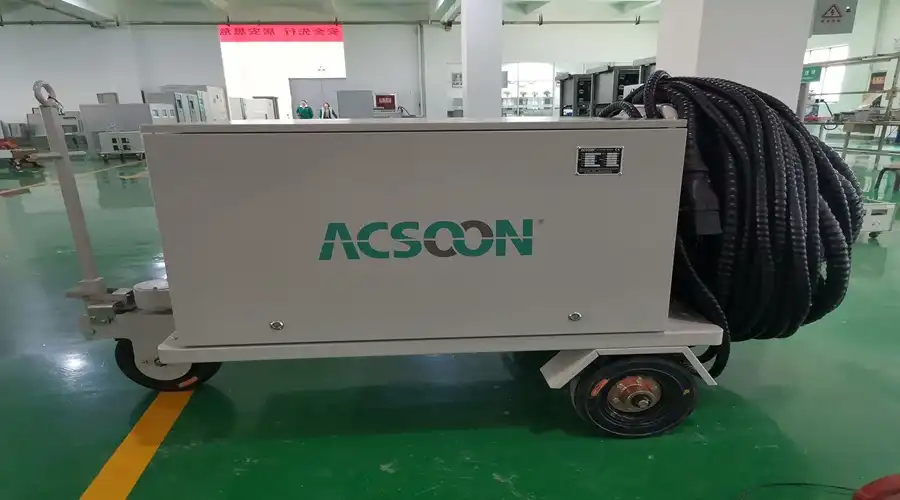
Ground power technology keeps getting better thanks to new ideas. The newest development is battery-powered electronic GPUs (e-GPUs), which combine the clean operation of static units with no need for grid infrastructure. This method is shown by the ACSOON CH-D90 line, which provides 90 kVA from battery DC power in situations where running wires would not be practical. These battery devices provide 3 to 200VAC at 400 Hz and have an IP54 grade for security. This means they can be used in remote parking areas that don't have access to fixed power lines. The CH-D90 can work with both battery power and 50/60 Hz, 380–480V three-phase mains electricity thanks to its hybrid capability. This gives it more operating freedom than single-mode units. Zero pollution and fuel use are in line with environmental efforts that are driving the growth of modern airports around the world.
Troubleshooting and Maintenance of 400 Hz Ground Power Systems
For ground power to be reliable, repairs must be done in a way that stops problems before they affect flight operations. Structured repair routines and knowing how to deal with common problems are two ways to protect both equipment investments and operating plans.
Common Operational Issues
Most of the time, line workers complain about voltage fluctuation. Causes include wire connections that are breaking down, which adds resistance that lowers the voltage below what is required, and circuit switches that are worn out, which adds occasional contact resistance. Systematic testing with accurate meters makes it easy to find out if the issue is with the GPU or with the links to other devices. Frequency fluctuations typically indicate internal problems within conversion circuitry. Solid-state units that experience frequency drift usually have control boards that aren't working right or crystal oscillators that aren't working right. These parts control the output properties. Usually, rotary units with changing frequencies have issues with speed control, like worn motor bearings, slipping drive belts, or governor systems that need to be adjusted.
Preventive Maintenance Best Practices
Inspections that are planned ahead of time find problems before they get bad enough to stop operations. Visual inspections should be done once a month to check for physical damage to housings, make sure the right cable strain relief is still in place, and make sure the cooling system inlets are still free of waste. Electrical tests are done every three months to make sure that the output voltage, frequency stability, and harmonic content are all meeting the requirements. Every year, qualified experts calibrate measurement systems to make sure they properly show the real output characteristics. It is important to keep track of calibration certificates in order to meet the standards for aerospace ground support equipment (ISO 1540) and aircraft electric power characteristics (MIL-STD-704F), which control flight operations.
Extending Equipment Lifespan
Protecting the environment has a huge effect on the life of a service. When units are kept outside, they should have weatherproof covers that keep electronics safe from water damage and UV rays that break down plastic parts. Cleaning regularly gets rid of built-up contaminants like hydraulic fluid, de-icing chemicals, and airborne particles that speed up rust and make electrical paths between wires. When operators are properly trained, they don't abuse the equipment, which shortens its life. Teaching workers to give parts enough time to warm up before applying full loads, not pushing beyond rated capacity, and using the right connection steps can keep sensitive parts from getting damaged by stress. These steps are especially important for solid-state units, where semiconductor devices fail horribly when used outside of their intended limits.
Procurement Guidance: How to Choose and Buy Aircraft 400 Hz Ground Power Equipment
When making strategic purchases, you have to weigh the short-term needs of operations against the overall cost of ownership over the long run. Technical standards are the basis, but the success of a purchase depends on the skills and lifecycle support of the provider.
Critical Technical Specifications
When choosing a power rating for aircraft 400 Hz power, you need to think about both high demand and a safety cushion. During normal ground operations, commercial narrowbody airplanes need 60–90 kVA, while widebody aircraft can need 120–180 kVA. Military uses often need more space to test weapons systems and calibrate radar, which require sudden changes in load that are higher than regular flight operations. Waveform quality factors should be looked at carefully. Total Harmonic Distortion (THD) standards should make it clear that THD stays below 3% under both linear and nonlinear loading situations. This is because more and more modern airplanes have switching power sources that create harmonic currents. Voltage regulation specs should promise accuracy within ±3% in all load situations, from 10% to 100% of stated capacity.
Features that make something portable affect how well it works. Fixed systems work well at gate points where planes are parked permanently, while movable units on trolleys can be moved around to accommodate different traffic patterns. The CH-D90 e-GPU on carts can be placed in remote parking lots where centralized power systems can't reach. This lets owners put capacity exactly where it's needed without having to spend money on new infrastructure.
Supplier Evaluation Criteria
Technical risk is lower when you buy from companies that have a history of working with aircraft. Look for providers that have the right quality standards that show they can control the manufacturing process and make sure the products are always the same. Xi'an Jerrystar Instrument Co., Ltd. specializes in ACSOON brand power converters and has a lot of experience with testing equipment in aircraft, the military, the ocean, and labs. This gives them the cross-domain knowledge to predict new needs. Delivery times are directly affected by how much can be made and how well the material is managed. Facilities that are between 5,000 and 10,000 square meters and have enough parts on hand allow for quick fulfillment when business needs require urgent equipment placement. Custom solution capability is just as important—standard goods don't always work perfectly in every situation, and providers who offer engineering changes make sure that equipment fits perfectly in each operating setting.
After-Sales Support Considerations
How quickly problems are fixed when operating problems happen depends on how easy it is to get in touch with technical help. When troubleshooting needs to be done, suppliers who keep contact lines open, provide thorough technical paperwork, and offer remote diagnostic capabilities keep airplane downtime to a minimum. Training programs that teach maintenance workers how to properly operate equipment and do regular maintenance make it more reliable between planned maintenance times. Long-term operating stability is protected by having spare parts on hand. Even the most stable equipment needs new parts from time to time, and obsolescence is a real risk with specialized aircraft equipment. When suppliers agree to long-term parts support and offer component-level service information, operators can keep equipment in good shape for a long time after the guarantee period is over. This protects capital investments.
Conclusion
Ground power devices that provide 400 Hz electricity are an important part of current aviation activities. The unique frequency lets airplane power systems be optimized for weight, and ground conversion equipment stops the APU from running wastefully when the plane is in park. As technology keeps getting better, battery-powered options like the ACSOON CH-D90 give airports, military bases, aerospace manufacturing plants, and other specialized aviation operations more operating freedom than ever before. A good buying process combines technical requirements with what the seller can do, putting quality, customization options, and quick support at the top of the list. This keeps the equipment operationally ready for as long as it lasts.
FAQ
Why do aircraft use 400 Hz power instead of standard 50 or 60 Hz?
The electrical systems in airplanes work at 400 Hz because higher frequencies let transformers and motors do the same job with a lot less weight and space—about 15-20% of the same 60 Hz components. This weight reduction directly leads to better fuel economy and higher payload capability, both of which are important for the economics and performance of aviation.
Can commercial power be used directly for aircraft ground servicing?
Commercial power at 50 Hz or 60 Hz can't directly run electrical circuits in an airplane that are intended to work at aircraft 400 Hz power. Specialized Ground Power Units change regular power from the grid into the exact voltage and frequency that airplanes need. This keeps sensitive electronics from getting damaged and gets rid of the need to use fuel-hungry Auxiliary Power Units while the plane is on the ground.
What maintenance intervals do 400 Hz ground power units require?
Maintenance plans are different for each type of unit and each working setting. Industry standards call for eye checks every month, electrical tests every three months, and yearly calibration by qualified experts. Maintenance that meets MIL-STD-704F and ISO 1540 standards for aircraft ground support equipment extends the life of the equipment and makes sure it works as it should.
Partner with JERRYSTAR for Reliable Aircraft 400 Hz Power Solutions
Electrical power reliability is very important in flight operations, and JERRYSTAR offers options that are trusted by commercial airlines, military bases, and specialized aerospace facilities around the world. Our ACSOON CH-D90 battery-powered e-GPU can run at 90 kVA without releasing any pollution in remote parking areas, and it can also be switched to use regular mains energy. JERRYSTAR is your best choice for aircraft 400 Hz power because they can do custom engineering, have a large collection for fast shipping, and offer full expert support. You can email our engineering team at acpower@acsoonpower.com to talk about specs, get technical documentation, or get cheap quotes that meet your exact operational needs.
References
1. Federal Aviation Administration. (2019). "Aircraft Electrical Power Systems: Standards and Specifications." FAA Technical Publication Series, Washington, DC.
2. Department of Defense. (2016). "MIL-STD-704F: Aircraft Electric Power Characteristics." Defense Standardization Program Office, Fort Belvoir, Virginia.
3. International Organization for Standardization. (2017). "ISO 6858: Aircraft Ground Support Electrical Supplies." ISO Technical Committee TC 20/SC 9, Geneva, Switzerland.
4. Smith, J.R., & Williams, P.D. (2018). "Ground Power Systems for Modern Aircraft: Engineering and Operational Considerations." Aerospace Engineering Journal, 45(3), 127-145.
5. Aviation Ground Support Association. (2020). "Best Practices for 400 Hz Ground Power Unit Maintenance and Operation." AGSA Technical Manual Series, Orlando, Florida.
6. Zhang, L., & Peterson, M.K. (2021). "Frequency Conversion Technology in Aviation Applications: Performance Analysis and Future Trends." International Journal of Aerospace Electrical Systems, 12(2), 89-104.