




What Are the Key Benefits of Using a Hertz Converter 60 to 50?
A hertz converter 60 to 50 Hz changes the power frequency so that tools can work with electricity that meets foreign standards. These specialized devices change North American 60Hz power to the 50Hz standard used in Europe, Asia, and Africa. This keeps motors from overheating, timing mistakes from happening, and equipment damage from happening. These converters use advanced solid-state technology and a double-conversion topology to give you galvanic isolation and pure sine wave output. This makes sure that your industrial equipment, marine systems, and lab instruments work safely and efficiently, even if the power grids in different areas are different.


Understanding the Need for Hertz Converters: Why Convert 60Hz to 50Hz?
There are two main frequencies used by electrical power systems around the world: 50Hz in most of Europe, Asia, Africa, and parts of Japan, and 60Hz in some parts of the Caribbean. This big difference has nothing to do with which standard is technically better; it has to do with how infrastructure has changed over time. When connected to the wrong frequency, equipment made for one frequency often doesn't work right or breaks, which poses major operating risks.
The Technical Impact of Frequency Mismatch
The voltage-to-frequency ratio is thrown off when 50Hz-rated equipment is connected to a 60Hz source without being properly converted. Induction motors have higher magnetic flux density, which causes the core to become saturated, produce too much heat, and break down the insulator too soon. Synchronous motors work 20% faster than their rated speed, which can lead to mechanical stress and poor product quality in industrial settings. When control systems use frequency as a time reference, they get the wrong results, which makes automated processes less precise.
Regional Power Standards and Global Operations
Frequency matching problems are always a problem for multinational companies. When a pharmaceutical company moves testing equipment from Germany to the United States, they need to deal with power transfer right away. When docked at 60Hz North American ports, marine boats built to foreign 50Hz standards need shore power that works with them. When research labs bring in European NMR spectrometers or mass spectrometers, they need ultra-stable 50Hz power to keep the magnetic field steady and the data safe. This is especially important in places where changes in the local grid could affect the accuracy of the measurements.
Industry Scenarios Requiring Frequency Conversion
There are three main situations where effective frequency conversion options are needed. Before shipping, factories that test goods that will be exported need to mimic international power conditions. For military and maritime activities to work, equipment must be able to work with other equipment in a variety of deployment places. Frequency mismatches in sensitive equipment can't cause timing mistakes that are acceptable for high-precision scientific study. All of these uses need complete dependability, very little harmonic distortion, and steady performance even when the load changes.
Core Benefits of Using a Hertz Converter 60 to 50
Using the right frequency adjustment has benefits that go beyond just making sure that the equipment works with each other. Because of these benefits, operations will run more smoothly, costs will go down, and the company will have an edge in global markets.
Equipment Protection and Operational Continuity
Frequency mismatches can cause catastrophic breakdowns, but a good hertz converter 60 to 50 can stop them. By keeping the right voltage-to-frequency ratio, these devices stop motors from getting too hot and make tools last a lot longer. Bearing wear goes down, thermal stress goes down, and maintenance times get longer when a CNC machining center runs at its set frequency. Most of the time, this protection is very helpful for expensive tools that can cost hundreds of thousands of dollars to repair. When equipment runs within certain limits instead of dealing with power conditions that don't work with it, operational stability is greatly improved.
Cost Savings Compared to Alternative Solutions
It is much more expensive to replace frequency-incompatible equipment than to install converter technology. A big aerospace company found this out when they moved their testing facilities from California to France. Instead of buying new test tools that cost $2 million, they used solid-state frequency converters that were only a tenth of the price. The return on investment was seen in the first year of business. Another option is motor rewinding services, but they don't guarantee quality and void maker warranties. Frequency conversion keeps the original equipment specs while letting you operate in different countries.
Operational Flexibility for Multinational Operations
Frequency conversion is a very useful tool for managing the global supply chain. Instead of using area power standards, manufacturers can choose equipment based on how well it works and how much it costs. Medical device makers can test their products under real international power conditions before they are certified for sale. This lowers the risk of not following the rules and speeds up the time it takes to get their products on the market. Marine owners can dock their ships at any port in the world without having to worry about whether the base power will work. This makes it easier to plan logistics across multiple operating areas and speeds up project timelines.
Enhanced Power Quality and Grid Isolation
Modern frequency converters with a double-conversion design do more than just change the frequency; they also improve the power quality. Input harmonics, voltage transients, and grid disturbances are filtered out during the AC-DC-AC conversion process. Under constant loads, the output power shows up as a clean sine wave with less than 3% total harmonic distortion. This galvanic separation keeps sensitive equipment safe from upstream electrical noise that is typical in factories. When measuring in a lab, tools can make measurements that can't be made again and again when the grid changes directly. More consistent operation of production equipment lowers the number of defects and raises total equipment efficiency measures.
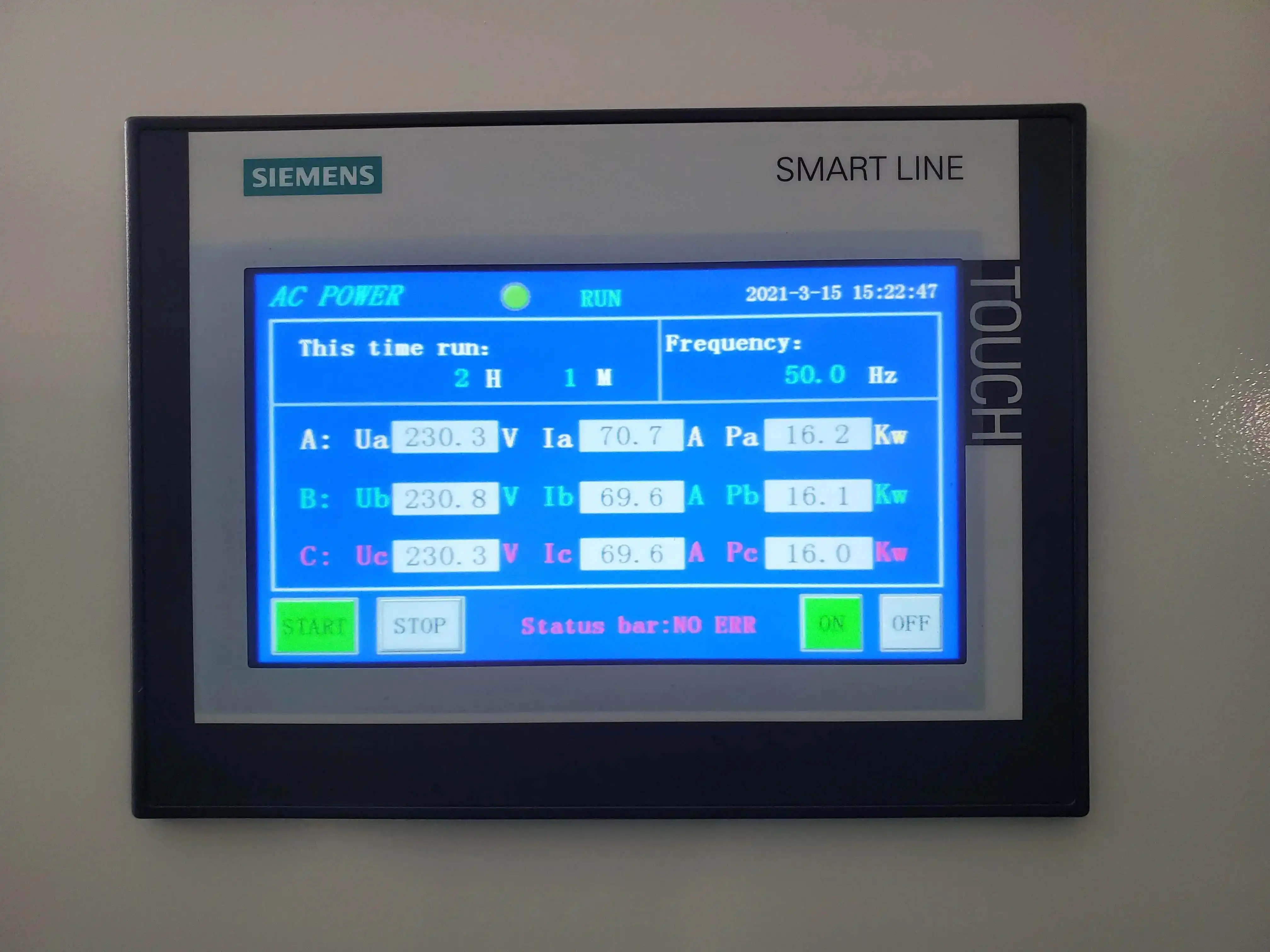
How Hertz Converters 60 to 50 Hz Work: Key Components and Principles
Knowing how frequency conversion equipment is put together technically helps buying teams look at the specs and compare different options in a smart way.
Double-Conversion Topology Explained
Power electronics are used in high-quality frequency converters instead of simple systems built on transformers. When 60Hz AC power comes in, it goes through a rectifier step that uses modern diode or thyristor arrays to change the alternating current to direct current. This direct current powers a bank of capacitors in the middle, which smooths out voltage ripple and stores energy for load changes. After that, a pulse-width modulation controller on an IGBT-based inverter stage makes an accurate 50Hz AC output. This PWM method makes a stepped pattern that is then turned into a pure sine wave by removing parts. Because the input and output steps are completely separate from each other, voltage spikes, harmonics, and other power quality problems on the source grid are protected against by galvanic separation.
Critical Performance Parameters
A converter's usefulness for challenging uses is based on a number of technical factors. Total harmonic distortion is a way to measure how pure the output signal is. Values below 3% are needed for sensitive electrical loads. Quality units usually have conversion efficiencies higher than 90% at full load, which means they waste less energy and need less cooling. Response time to changes in load should stay below two milliseconds to keep voltage from dropping when the motor starts up or during other short-lived events. If the input voltage range is good, the converter can keep the output fixed even if the grid voltage changes. Good units can handle changes of up to 15%. These factors directly affect how well the equipment works and whether it is compatible with other equipment.
Verification and Safety Standards
When choosing a hertz converter 60 to 50, it's important to pay attention to foreign safety certifications and guidelines for electromagnetic compatibility. When something has a CE mark on it, it means that it meets the safety and EMC standards set by the European Union. UL 1012 approval shows that testing for safety standards in the United States was done on industrial control equipment. Following the rules set by IEEE 519 keeps harmonic emissions within reasonable ranges, which keeps them from messing up other technology in the building. For electromagnetic interference control, military and aircraft uses may need extra certifications like MIL-STD-461. These approvals give you peace of mind that the equipment will work properly in the places it's supposed to be used and that it meets all safety standards.
Choosing the Right Hertz Converter: Key Factors for B2B Procurement
To choose the right frequency translation tools, you need to carefully look at the technical needs, the working conditions, and the supplier's abilities.
Power Rating and Load Characteristics
It's not enough to just add up the nameplate values of all the connected devices to get the right power output. Motor starting currents can be up to six times the working current, so converters need to be able to handle overloads or soft-starts. When it comes to problems, inductive loads are not the same as resistive heaters or electrical power sources. A full load study takes into account all of the working conditions, job cycles, and future growth needs. Undersized converters fail early because of heat stress, while large units waste money and don't work well at low loads. Expert providers help with figuring out loads and suggest the right safety gaps for each application.
Efficiency and Operating Costs
The energy economy has a direct effect on how much it costs to run tools over its lifetime. A converter that provides 50 kilowatts of power constantly uses a lot of power over the course of a year. A difference of five percentage points in efficiency costs thousands of dollars in energy over the course of ten years. When they are working at 70% to 80% of their rated load, which is normal for industrial settings, good converters are at their most efficient. Cooling needs are related to conversion losses, which affect the HVAC loads in a building and the amount of room needed for installation. Instead of just looking at peak efficiency specs, procurement teams should ask for efficiency curves across the whole working range when they are reviewing bids.
Supplier Reputation and Technical Support
Design quality, manufacturing standards, and the choice of parts all play a big role in how reliable equipment is. Power gadgets from well-known brands with decades of experience usually last longer and work better than cheaper options. The ACSOON brand is owned by Xi'an Jerrystar Instrument Co., Ltd., and it specializes in frequency conversion technology for use in flight, the military, ships, and factories. Their factory, which is between 5,000 and 10,000 square meters, can handle both standard output and unique solutions. When equipment is used in mission-critical situations where downtime costs thousands of dollars per hour, having access to technical help is very important. Suppliers who offer full after-sales support, easy access to extra parts, and application tech help are more valuable than equipment prices alone.
Customization Capability and Delivery Speed
Standard store items work well in many situations, but solutions that are specifically made for those situations are often needed. It may be necessary to have custom input voltage ranges, environmental enclosures that are made to fit specific conditions, multiple operation configurations, or tracking systems that are built in. Companies that offer in-house technical services and adaptable production methods are better able to meet specific needs. The availability of inventory has a big impact on project plans, especially when pressing building upgrades or equipment repairs need to happen. JERRYSTAR keeps enough in stock to deliver quickly, which takes into account the fact that government, military, and marine buying timelines are often unpredictable because of how quickly operational needs can change.
Practical Insights: Use Cases and Performance Reviews
Real-world examples show how frequency conversion technology can be used to solve problems in a wide range of industries.
Global Manufacturing and Product Testing
Companies that want to export depend on realistic power simulations to make sure their products work. A company in Wisconsin that makes home appliances sends freezers and washing machines to markets in Europe. In their quality assurance lab, Hertz converter 60 to 50 frequency converters are used to create real 50 Hz, 230 V test conditions. This makes sure that goods meet foreign safety and performance standards before they are shipped. Because of this feature, a pricey product recall wasn't needed when tests showed motor bearing problems that only happened when the frequency was 50Hz. It turned out that the money spent on testing was much better spent than on failures in the field and insurance claims across European delivery networks.
Marine and Shore Power Applications
At every port, international shipping companies have trouble with frequency matching. A container ship built to 50Hz standards with European HVAC systems, galley equipment, and tools for moving goods often stops at North American ports that provide 60Hz shore power. If the frequency conversion isn't done right, the ship's diesel engines will have to run all the time, which will waste fuel and raise the cost of upkeep. By installing a strong frequency converter, you can use shore power, which lowers noise, pollution, and running costs while you're in port. The benefits to the environment are in line with stricter rules being put in place by port authorities about how much pollution ships can release while docking.
High-Precision Laboratory Instrumentation
Power quality needs are very different for research labs that use imported analytical tools. European NMR spectrometers used in a pharmaceutical research lab need very stable 50Hz power to keep the magnetic field uniform. Even small changes in the local grid frequency of 0.1Hz can mess up spectral data, which makes the study less accurate. A good frequency converter with a crystal-controlled output frequency gives researchers the steadiness they need to get measurement repeatability on par with European sites. The clean, separated power also keeps sensitive electronics safe from voltage spikes that can happen in older lab buildings. This makes equipment last longer and requires less upkeep.
Conclusion
Frequency conversion technology is an important part of foreign trade, scientific study, and global industrial activities. There are many more benefits than just compatibility. These include protecting tools, lowering running costs, improving power quality, and having more strategic options. IGBT technology and double-conversion design in modern solid-state converters make them work better than older transformer-based methods. When choosing the right equipment, you shouldn't just look at the price; you should also think about the technical specs, the supplier's skills, and the equipment's long-term support needs. When businesses buy good frequency conversion solutions, they get operational benefits that build over the life of the equipment. This protects capital investments and gives businesses strategic freedom in a world economy that is becoming more linked.
FAQ
What safety risks exist when using 60Hz equipment on 50Hz power without conversion?
When you run equipment at the wrong frequencies, the motor gets too hot because the magnetic core is saturated, synchronous machinery goes too fast, and timing mistakes happen in frequency-dependent control circuits. These situations can cause insulation to break down, bearings to fail, and fires to start. In workplace settings, safety interlocks can break down, putting workers at risk.
How long do quality frequency converters typically last in industrial applications?
Solid-state converters that are well-designed and work within their rated specs can last for 15 to 20 years with regular upkeep. Slowly, capacitor banks and cooling fans break down parts that can be replaced during regular maintenance. Temperature, humidity, and the amount of electrical noise in the air all have a big effect on how long something lasts.
How can conversion accuracy be verified after installation?
Power testers that measure output frequency, voltage, total harmonic distortion, and load control make sure that the converter works properly. No matter what the load is, the output frequency should stay within plus or minus 0.1Hz of its standard value. Voltage regulation should keep THD below 3% for quality units that serve sensitive equipment, and voltage regulation should keep plus-or-minus 2% from zero load to full load.
Partner with JERRYSTAR for Reliable Frequency Conversion Solutions
Xi'an Jerrystar Instrument Co., Ltd. has a lot of experience with power transfer technology that is designed for use in flight, the military, ships, and factories. Our ACSOON brand variable frequency converters give mission-critical processes the technical dependability and performance stability they need. As both a producer and a trade company, we can provide a wide range of options, from standard catalog items to fully customized designs that meet the specific needs of your business. During the whole purchase process, our engineering team helps with application research, developing specifications, and planning for integration. JERRYSTAR has the technical depth and production capacity to meet tight deadlines, whether you need a hertz converter 60 to 50 supplier with instant stock for pressing deployments or a maker that can come up with custom solutions. Get in touch with our experts at acpower@acsoonpower.com to talk about your unique frequency conversion needs and find out how our knowledge helps businesses succeed in a wide range of power settings around the world.
References
1. Institute of Electrical and Electronics Engineers. "IEEE Standard 519-2014: Recommended Practice and Requirements for Harmonic Control in Electric Power Systems." IEEE Standards Association, 2014.
2. Rashid, Muhammad H. "Power Electronics: Circuits, Devices, and Applications." Fourth Edition, Pearson Education, 2014.
3. Mohan, Ned, Undeland, Tore M., and Robbins, William P. "Power Electronics: Converters, Applications, and Design." Third Edition, John Wiley & Sons, 2003.
4. International Electrotechnical Commission. "IEC 61000-3-2: Electromagnetic Compatibility - Limits for Harmonic Current Emissions." IEC Standards, 2018.
5. Bose, Bimal K. "Modern Power Electronics and AC Drives." Prentice Hall, 2002.
6. American Bureau of Shipping. "Guide for Power Conversion Equipment for Marine Applications." ABS Technical Publications, 2019.