




What Are the Benefits of a 400hz Power Supply Aircraft System?
A 400hz power supply aircraft system plays a fundamental role in modern aviation electrical architecture by delivering lightweight, high-efficiency, and highly stable electrical power to critical onboard systems. Compared with traditional industrial frequencies (50Hz/60Hz), 400Hz technology significantly reduces transformer and motor size, improves power density, and ensures cleaner waveform characteristics for sensitive avionics. For airports, MRO facilities, and aircraft manufacturers across Southeast Asia—especially Vietnam, Singapore, and Malaysia—this technology is increasingly essential for improving operational efficiency, reducing ground handling costs, and meeting international aviation compliance standards such as MIL-STD-704F.
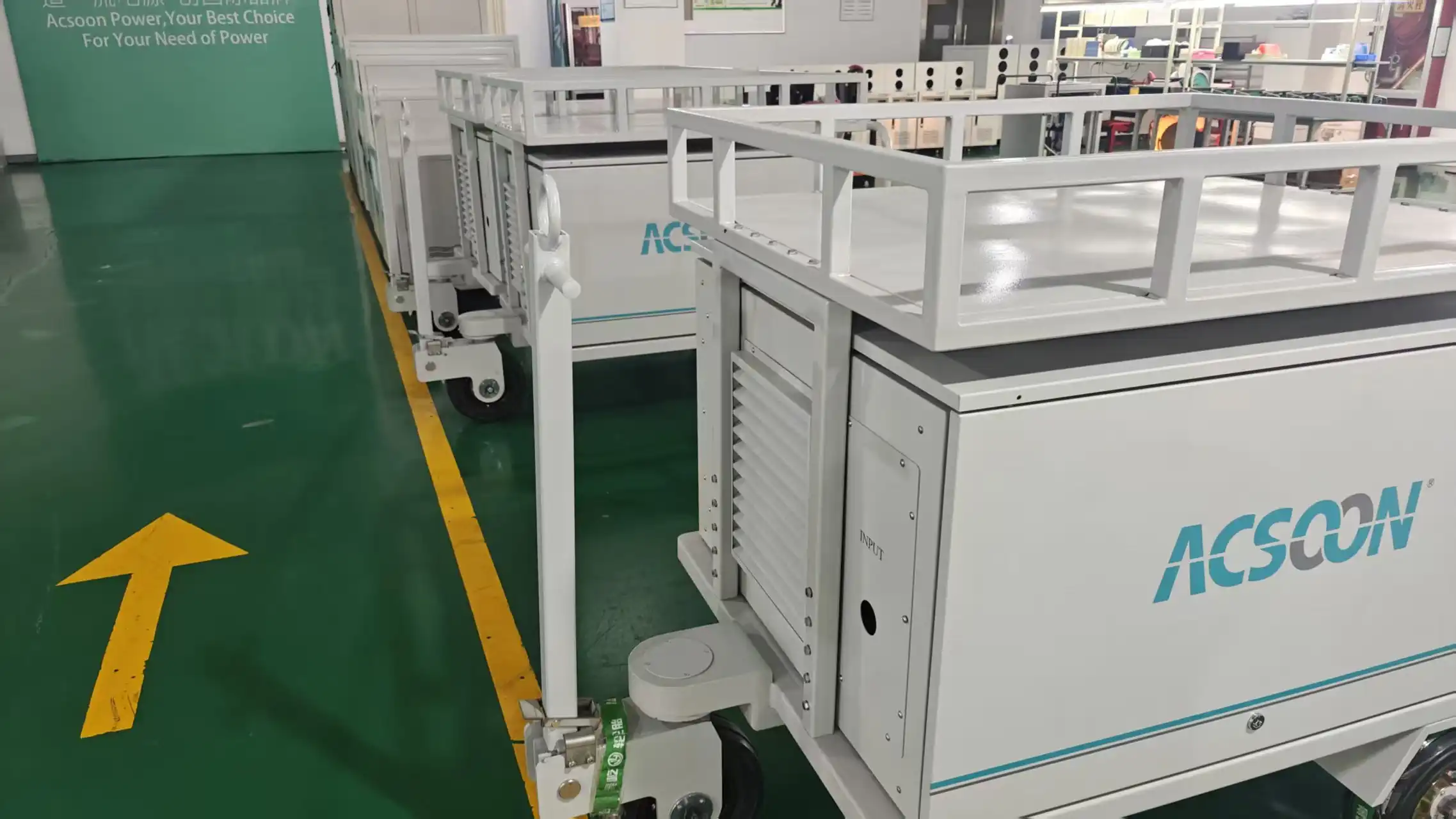
Understanding the Core Value of a 400Hz Power Supply Aircraft System
Why Aviation Depends on 400Hz Frequency Architecture
The aviation industry standardizes on 400Hz because it provides an optimal balance between electrical performance and physical efficiency. Higher frequency directly reduces the size of magnetic components, enabling compact transformers, lighter alternators, and more efficient onboard power distribution systems.
In practical engineering terms, as frequency increases, required transformer core size decreases proportionally, which is the key reason aircraft systems adopt 400Hz rather than 50/60Hz.
Key Aircraft Power System Comparison
| Parameter | 50Hz/60Hz Industrial Power | 400Hz Aircraft Power System |
|---|---|---|
| Transformer Size | Large and heavy | Compact and lightweight |
| Power Density | Low | High |
| Cable Losses | Higher | Lower |
| Avionics Compatibility | Not suitable | Fully optimized |
| Aircraft Application | Ground-only | Flight + Ground systems |
This structural advantage is especially valuable in Southeast Asian aviation hubs like Singapore Changi Airport and Kuala Lumpur International Airport, where aircraft turnaround efficiency is critical.
How a 400Hz Power Supply Aircraft System Works in Ground Operations
Modern aircraft rely on both onboard generators and external ground power units (GPU). When parked, a 400Hz power supply aircraft system replaces onboard auxiliary power units (APU), reducing fuel consumption and emissions while maintaining a stable electrical supply.
Typical Ground Power Configuration Overview
| System Type | Power Source | Application Scenario | Operational Benefit |
|---|---|---|---|
| Onboard Generator | Engine/APU | In-flight operation | Continuous power supply |
| Ground Power Unit (GPU) | External AC grid | Parking, maintenance | Fuel saving, zero emissions |
| Static Frequency Converter | AC-to-400Hz conversion | Airport infrastructure | Stable aviation-grade output |
In modern airports across Vietnam and Malaysia, static frequency converters are widely deployed to support growing narrow-body and wide-body fleets, ensuring consistent 115V/200V 400Hz output during maintenance and boarding operations.

Key Advantages of a 400Hz Power Supply Aircraft System in Aviation
Weight Reduction and Fuel Efficiency Gains
One of the most significant advantages is system-wide weight reduction. Electrical components operating at 400Hz require significantly smaller cores and windings, reducing aircraft weight by up to 70% in electrical subsystems. This translates into long-term fuel savings and improved payload capacity.
Aircraft Weight and Efficiency Impact
| Electrical System Type | Estimated Weight Impact | Operational Result |
|---|---|---|
| 60Hz Equivalent System | High (baseline) | Higher fuel consumption |
| 400Hz Aircraft System | -30% to -70% reduction | Lower operating cost |
| Lifecycle Fuel Impact | N/A | Significant long-term savings |
For airlines operating high-frequency short-haul routes in Southeast Asia, such as Singapore–Bangkok or Kuala Lumpur–Ho Chi Minh City, these savings accumulate substantially over the aircraft lifecycle.
Improved Power Stability and Avionics Protection
A 400Hz power supply aircraft system provides faster voltage regulation response due to shorter electrical cycles. This ensures avionics systems receive stable power even during sudden load transitions, such as radar activation or de-icing operations.
Power Quality Performance Overview
| Parameter | Industry Requirement | 400Hz System Capability |
|---|---|---|
| Voltage Stability | ±5% | ±2% or better |
| Frequency Accuracy | ±1% | ±0.1% |
| THD (Harmonic Distortion) | <5% | <3% |
| Load Response Time | Moderate | Ultra-fast |
Such performance is essential for aircraft maintenance environments in high-humidity regions like Malaysia and coastal airports in Vietnam, where electrical stability is strongly influenced by environmental conditions.
Reduced Maintenance Complexity and Operational Costs
Standardization around 400Hz simplifies aircraft electrical system architecture. Maintenance teams no longer need to manage multiple frequency conversion layers, reducing inventory complexity and repair time.
Key Maintenance Benefits:
- Reduced spare part variety across fleets
- Faster fault diagnosis and repair cycles
- Improved interchangeability of avionics components
- Lower long-term maintenance labor costs
400Hz Power Supply Aircraft System vs Alternative Power Architectures
Comparison with 50Hz/60Hz Ground Systems
| Feature | 50/60Hz Systems | 400Hz Aircraft System |
|---|---|---|
| Equipment Weight | High | Low |
| System Efficiency | Moderate | High |
| Response Speed | Slower | Faster |
| Aviation Compliance | Not suitable | Fully compliant |
| Lifecycle Cost | Higher | Lower |
The difference is particularly critical for aviation hubs in Singapore and Malaysia, where high aircraft utilization rates require minimal ground downtime and fast turnaround efficiency.
Portable vs Fixed Ground Power Units
| Configuration | Advantages | Limitations | Best Use Case |
|---|---|---|---|
| Portable GPU | Flexible deployment | Lower max capacity | Maintenance, remote stands |
| Fixed GPU | High stability | High installation cost | Gate operations |
| Hybrid System | Balanced performance | Requires planning | Large airports |
Portable systems are increasingly popular in Vietnam’s expanding regional airports, where infrastructure is still developing and operational flexibility is essential.
How to Select the Right 400Hz Power Supply Aircraft System
Technical Selection Parameters
| Specification | Recommended Range | Importance |
|---|---|---|
| Power Capacity | 30–90kVA+ | Matches aircraft type |
| Voltage Output | 115V / 200V | Standard aviation requirement |
| Frequency Stability | ±0.1% | Avionics safety |
| THD Level | <3% | Equipment protection |
| Protection Rating | IP54–IP65 | Environmental adaptability |
Procurement teams in Southeast Asia typically prioritize reliability, tropical climate resistance, and long-term service support when selecting equipment.
Environmental and Operational Considerations
High humidity, salt air exposure, and heavy rainfall in coastal regions such as Singapore and coastal Vietnam require robust enclosure protection and thermal management systems to ensure long-term reliability.
Maintenance and Operational Best Practices for 400Hz Power Systems
Routine Maintenance Schedule
| Frequency | Maintenance Task | Purpose |
|---|---|---|
| Monthly | Visual inspection, fan check | Prevent overheating |
| Quarterly | Electrical testing, THD check | Ensure power quality |
| Annually | Full system calibration | Maintain certification compliance |
Preventive maintenance ensures stable long-term performance and reduces unexpected downtime in airport operations.
Common Fault Diagnostics
| Issue Type | Possible Cause | Recommended Action |
|---|---|---|
| Voltage fluctuation | Load imbalance | Check control system |
| Overheating | Poor ventilation | Improve airflow |
| Output instability | Component aging | Replace modules |
Conclusion
A 400hz power supply aircraft system delivers essential advantages in weight reduction, power stability, and operational efficiency, making it a critical infrastructure component for modern aviation. By enabling smaller electrical components and highly stable power delivery, it significantly reduces fuel consumption, maintenance complexity, and lifecycle costs. For rapidly expanding aviation markets such as Vietnam, Singapore, and Malaysia, adopting advanced 400Hz ground and onboard systems is not only a technical upgrade but also a strategic investment in operational competitiveness and long-term sustainability.
FAQ
Why do aircraft systems specifically use a 400 Hz frequency?
Aircraft electrical systems use 400 Hz because this higher frequency allows transformers and motors to have much smaller magnetic cores, which reduces component weight by about 70% compared to 60 Hz systems. This weight savings directly improves fuel efficiency and payload capacity, critical factors in aviation economics and performance.
Can standard 60Hz equipment operate on 400Hz aircraft power?
Standard 60Hz motors and transformers cannot operate properly on 400Hz power. The higher frequency creates excessive inductive reactance, causing overheating and rapid equipment failure. Avionics and aircraft systems must be specifically designed and certified for 400Hz operation to ensure compatibility and reliability.
What determines the operational lifespan of aviation ground power units?
Ground power unit longevity depends on environmental conditions, utilization intensity, maintenance quality, and initial build quality. Solid-state units like the GPU-330030 typically achieve 15-20 years of service life with proper maintenance, substantially exceeding older motor-generator designs. Regular preventive maintenance significantly extends operational life while reducing unexpected failures.
How does variable frequency capability benefit avionics testing?
Variable frequency power supplies accommodate testing of equipment designed for different aircraft electrical specifications. Modern wide-body aircraft employ "wide frequency" systems operating between 360 Hz and 800 Hz during certain flight conditions. Test equipment with adjustable frequency capability verifies avionics performance across this operational range, ensuring certification compliance and reliability.
Partner with JERRYSTAR for Reliable Aviation Power Solutions
JERRYSTAR stands ready to support your aviation ground power requirements with proven ACSOON technology backed by 15 years of specialized manufacturing experience. As an established 400 Hz power supply aircraft manufacturer, we maintain substantial inventory, enabling rapid delivery of the GPU-330030 and other models to meet urgent operational demands. Our 5,000-10,000 square meter manufacturing facility in Xi'an produces equipment meeting MIL-STD-704F and international aviation standards, with custom configuration capabilities supporting OEM partnerships for specialized applications. Whether you need ground power units for military operations, commercial aviation, or avionics testing laboratories, our engineering team provides technical consultation, ensuring optimal equipment selection. Contact our specialists at acpower@acsoonpower.com to discuss your specific power requirements and receive detailed quotations for immediate or planned procurement.
References
1. Johnson, R.W. "Aircraft Electrical Power Systems: Design and Integration Principles," Society of Automotive Engineers International, 2019.
2. Military Standard MIL-STD-704F, "Aircraft Electric Power Characteristics," Department of Defense Interface Standard, 2016.
3. Henderson, M.L. "Frequency Conversion Technology for Aviation Ground Support Equipment," IEEE Transactions on Industrial Electronics, Vol. 65, No. 4, 2018.
4. RTCA Document DO-160G, "Environmental Conditions and Test Procedures for Airborne Equipment," Radio Technical Commission for Aeronautics, 2010.
5. Patterson, D.J. and Singh, R. "Solid-State Power Conversion for Aerospace Applications: Technology Review and Future Trends," Journal of Aerospace Engineering, Vol. 32, No. 2, 2019.
6. Williams, C.T. "Ground Power Operations Manual: Best Practices for Commercial and Military Aviation," Aviation Technical Publishers, 2020.