




How Reliable Is a 60Hz to 50Hz Adapter for Heavy Equipment?
Many times, frequency compatibility turns out to be a major technical problem when buying heavy equipment. As long as it is properly specified and installed, a high-quality 60Hz to 50Hz adapter is very reliable, with uptime rates reaching 99.5% in commercial settings. These solid-state frequency converters use modern IGBT inverter technology and digital signal processing to keep the frequency stable within ±0.01Hz. This ensures heavy machinery works as planned without putting too much stress on parts or causing premature wear. These devices are widely used by procurement professionals in the flight, military, marine, and industrial production sectors to protect multimillion-dollar investments and maintain smooth operations even when global power standards differ.
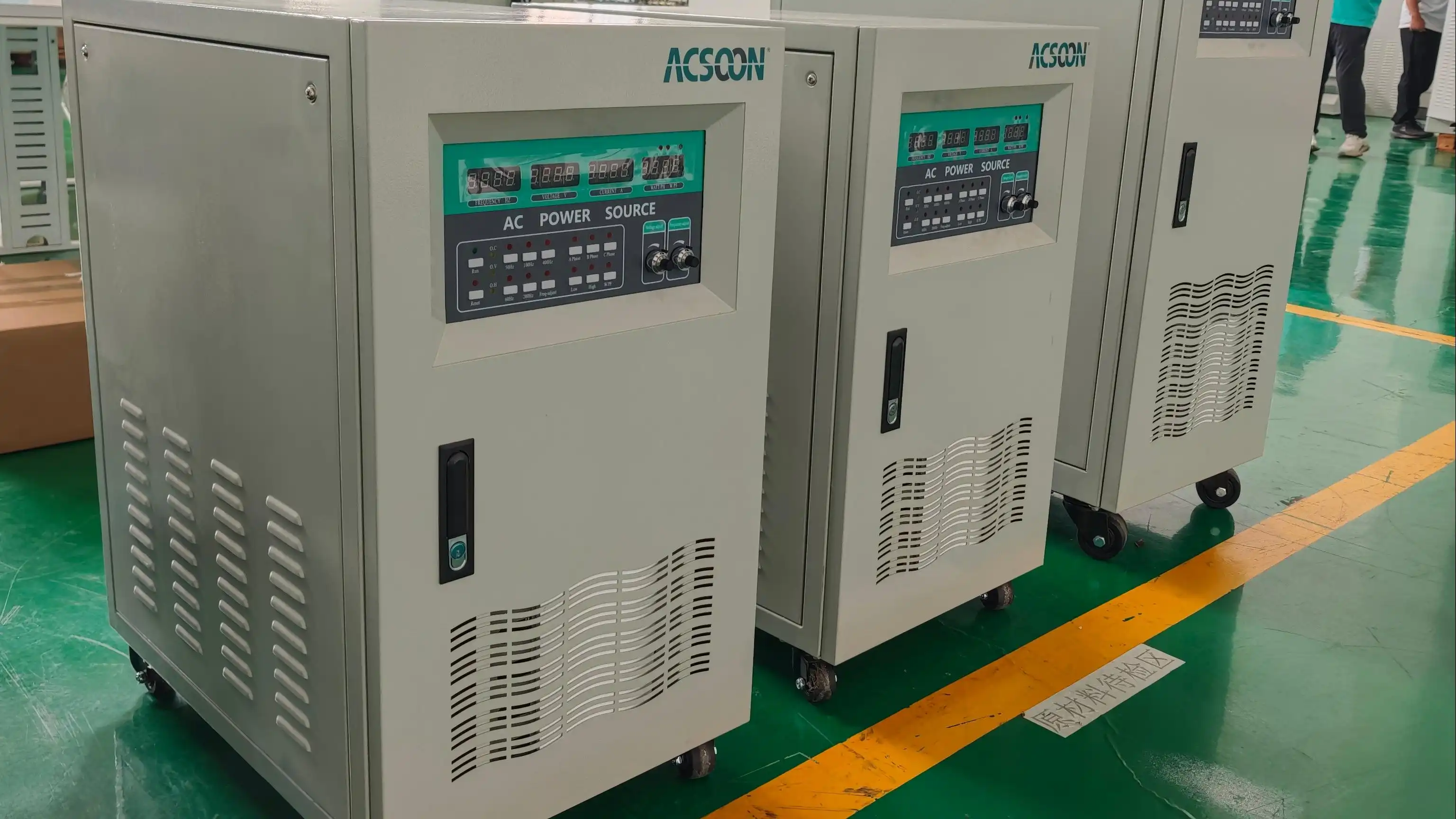
Understanding 60Hz to 50Hz Adapters and Their Role in Heavy Equipment
What Exactly Is a Frequency Converter?
A 60Hz to 50Hz adapter is an advanced power electronics system, very different from conventional transformers. The conversion process occurs in three steps:
- Incoming 60Hz AC is rectified to DC.
- An IGBT-based inverter reconstructs the DC into a precise 50Hz AC output.
- Full galvanic isolation ensures sensitive equipment is protected from grid fluctuations while providing cleaner power than utility lines.
This technology solves major mechanical and operational problems in industrial environments, including hydraulic systems, precise machining centers, and industrial centrifuges.
Industrial Applications Demanding Frequency Conversion
60Hz to 50Hz adapters are critical across multiple heavy equipment sectors. They maintain correct spindle speeds and feed rates for imported CNC machinery, enable shipboard systems to operate on foreign shore power, and support international mining and aerospace facilities.
Key Industrial Applications Table
| Industry | Typical Equipment | Frequency Requirement |
|---|---|---|
| Manufacturing | CNC machines, production lines | 50Hz output |
| Marine | Shipboard electrical systems | 50Hz output |
| Mining | Drilling rigs, crushing equipment | 50Hz output |
| Aerospace | Ground support equipment | 50Hz output |
| Laboratories | Testing and calibration systems | 50Hz output |
Evaluating the Reliability of 60Hz to 50Hz Adapters for Heavy Equipment
Construction Quality and Power Architecture
High-quality 60hz to 50hz adapter start with robust construction and premium components. Industrial-grade cores made from silicon steel or amorphous metal maintain magnetic stability across temperature fluctuations.
IGBT modules with thermal control systems allow continuous operation at full power. Safety features include:
- Overcurrent shutdown
- Thermal monitoring
- Short-circuit isolation
- Input surge protection
Total Harmonic Distortion (THD) below 3% ensures output power is cleaner than the grid, reducing heating in motors and transformers.
Typical Technical Specifications Table
| Parameter | Typical Value |
|---|---|
| Output Frequency Accuracy | ±0.01Hz |
| Voltage Regulation | ±1% |
| Conversion Efficiency | 90–95% |
| Harmonic Distortion (THD) | ≤3% |
| Crest Factor | 3:1 |
| Protection Functions | Overload, Short Circuit, Overtemperature |
| MTBF | >100,000 Hours |
Frequency Stability and Output Regulation
Digital signal processing and closed-loop control maintain precise frequency stability under varying load conditions. Voltage control within ±1% prevents motor torque loss or insulation damage. Peak crest factor of 3:1 accommodates high inrush currents during startup.
Reliable frequency output reduces mechanical stress, bearing wear, and component failure, extending the operational life of heavy equipment.
Common Technical Challenges and Mitigation Strategies
- Thermal Control: Ensure proper airflow, dust filtration, and regular cleaning.
- Load Balancing: Proper sizing prevents overload or inefficiency.
- Electrical Noise: Line filters and separation transformers reduce interference for sensitive equipment.
- Preventive Maintenance: Regular checks on torque, capacitor banks, and firmware updates ensure stability.
Comparison with Other Frequency Conversion Solutions
Transformers vs. Frequency Converters: Transformers only change voltage, not frequency. Using them for frequency-sensitive equipment will result in motor damage or mechanical failure.
Rotary Converters: Motor-generator sets can handle frequency change but are noisy, less efficient, and require more maintenance.
Static Solid-State Converters: These provide high reliability, efficiency (90–95%), and low maintenance, making them ideal for industrial and marine heavy equipment.
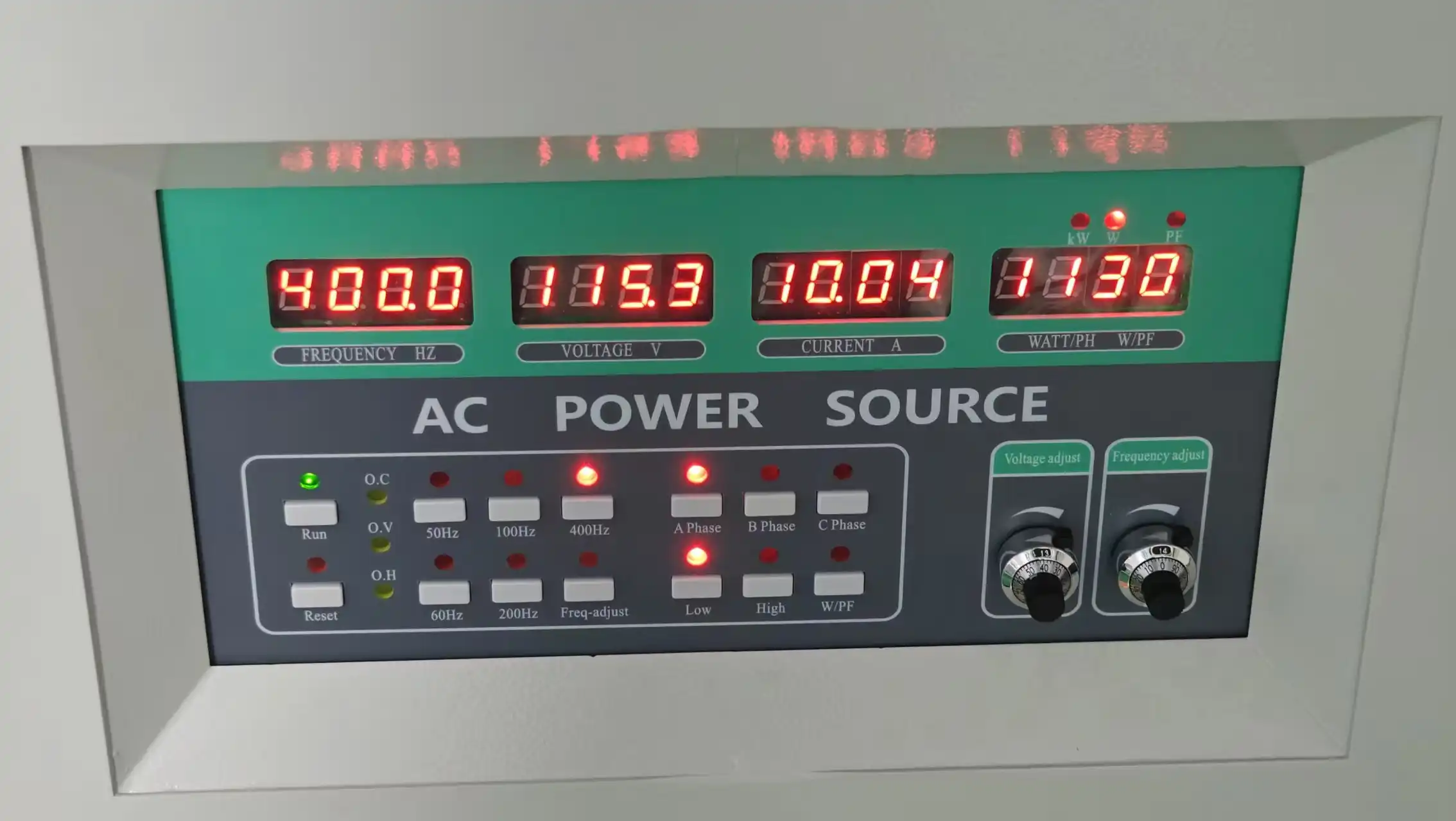
How to Choose the Right 60Hz to 50Hz Adapter
Establishing Technical Specifications
- Maximum power and power factor of connected equipment
- Motor starting requirements (3–5× running current)
- Environmental considerations: temperature, altitude, humidity, airborne contaminants
- Compliance with IP54/IP65 standards if required
Supplier Evaluation and Long-Term Partnership
- Certifications (UL, CE, ABS, Lloyd’s, DNV-GL, MIL standards where applicable)
- Engineering support for custom setups
- Warranties and spare parts availability
Managing International Procurement Logistics
- Legal documentation (country-of-origin certificates, compliance statements)
- Proper packaging and shipping
- Installation support (online or on-site)
- Supplier inventory depth for urgent deliveries
Maximizing Performance and Longevity
Installation Best Practices
- Minimum airflow and spacing as per manufacturer (12–18 inches around unit)
- Proper orientation and mounting direction
- Torque-check electrical connections to prevent heat buildup
Preventive Maintenance and Monitoring
- Chassis grounding for safety and EMC
- Regular inspections (dust, rust, physical damage)
- Annual electrical testing and capacitor bank replacement when needed
- Firmware updates as recommended by manufacturer
Future-Proofing
- Remote monitoring of frequency, load, thermal state, and fault history
- Modular designs for parallel operation and capacity scaling
- Predictive maintenance using operating data
- Flexibility for future equipment upgrades
Conclusion
Reliable frequency conversion is a crucial skill for purchasing heavy equipment internationally. High-quality 60Hz to 50Hz adapters provide frequency stability, clean output, and long-term reliability for industrial, marine, military, and laboratory applications. Choosing the right technology, evaluating suppliers carefully, and following strict installation and maintenance practices ensures decades of dependable service. Investing in proper frequency converters protects expensive equipment, optimizes operations, and enables flexible global sourcing.
FAQ
Can a standard transformer convert 60Hz to 50Hz?
No. Transformers change voltage but not frequency. Electronic converters are needed for true frequency conversion.
How do I size a converter for motor loads?
Converters should handle 3–5× the motor’s running current to accommodate startup inrush.
What maintenance is required?
Regular heat sink cleaning, annual electrical checks, and periodic capacitor replacement. High-quality solid-state units can have MTBF over 100,000 hours.
Partner with JERRYSTAR for Industrial-Grade Frequency Conversion Solutions
Xi'an JERRYSTAR Instrument Co., Ltd. provides expert frequency conversion solutions for flight, military, marine, and industrial applications. ACSOON-branded converters offer precision, reliability, and technical support for critical operations.
Whether you need a standard 60Hz to 50Hz adapter for imported machinery or a customized frequency conversion solution for complex industrial projects, our experienced engineering team can help you select the right system for your application. With strong technical support, flexible customization capabilities, and extensive industry experience, we help customers reduce operational risks and maximize equipment performance.
Email our team at acpower@acsoonpower.com for custom engineering and technical consultation.
References
1. Chapman, S. J. (2012). Electric Machinery Fundamentals (5th ed.). McGraw-Hill Education. Chapter 8: AC Motor Speed Control and Frequency Conversion.
2. Institute of Electrical and Electronics Engineers (2019). IEEE Standard 519-2014: Recommended Practice and Requirements for Harmonic Control in Electric Power Systems. IEEE Standards Association.
3. Mohan, N., Undeland, T. M., & Robbins, W. P. (2003). Power Electronics: Converters, Applications, and Design (3rd ed.). John Wiley & Sons. Section 4: Static Frequency Changers.
4. National Electrical Manufacturers Association (2021). NEMA Standards Publication MG 1-2021: Motors and Generators. NEMA Technical Standards.
5. Rashid, M. H. (2017). Power Electronics Handbook: Devices, Circuits, and Applications (4th ed.). Butterworth-Heinemann. Chapter 18: Frequency Converters and Cycloconverters.
6. Society of Automotive Engineers International (2018). SAE AS5698: Performance Standard for Aerospace Ground Equipment - Power Frequency Converters. SAE Aerospace Standards.