




What Is an External Power Unit Aircraft System and How Does It Work?
An external power unit aircraft system is a unique piece of ground support equipment that gives parked planes electricity without using the planes' own engines or extra power units. These systems change regular energy from the grid, which is usually 50Hz or 60Hz, into the exact 400Hz AC power that military and commercial planes need for their electronics, lights, climate control, and pre-flight system checks. These units lower running costs by up to 80% and increase the service life of important engine parts by getting rid of the need to run fuel-hungry APUs during ground operations. We've seen how this technology is now needed in all military bases, business hubs, and maintenance and repair shops around the world.

Understanding External Power Unit Aircraft Systems
Core Functions and Operational Principles
In flight activities, external power unit aircraft systems are used for three main tasks. They keep the power on while people get on and off the plane and while the plane is being serviced. This lets full avionics tests happen without draining the batteries on board, and it helps with engine starting processes in certain configurations. The conversion process starts when the unit gets three-phase power from the power grid and changes it into the 400Hz frequency that aircraft electrical systems need. This is done using either solid-state electronic components or rotary motor-generator sets. It's impossible to say enough about how precise this change needs to be. Avionics systems in airplanes need voltage stability within ±2% and frequency accuracy within ±0.5Hz to keep flight computers and guidance tools safe. To keep phase angle symmetry, there must be a 120-degree gap between the phases. ACSOON units meet this requirement at 120°±1° for balanced loads and 120°±2° even when the loads are 30% unbalanced, so they always work at their best even when practical needs change.
Power Source Technologies and Configuration Options
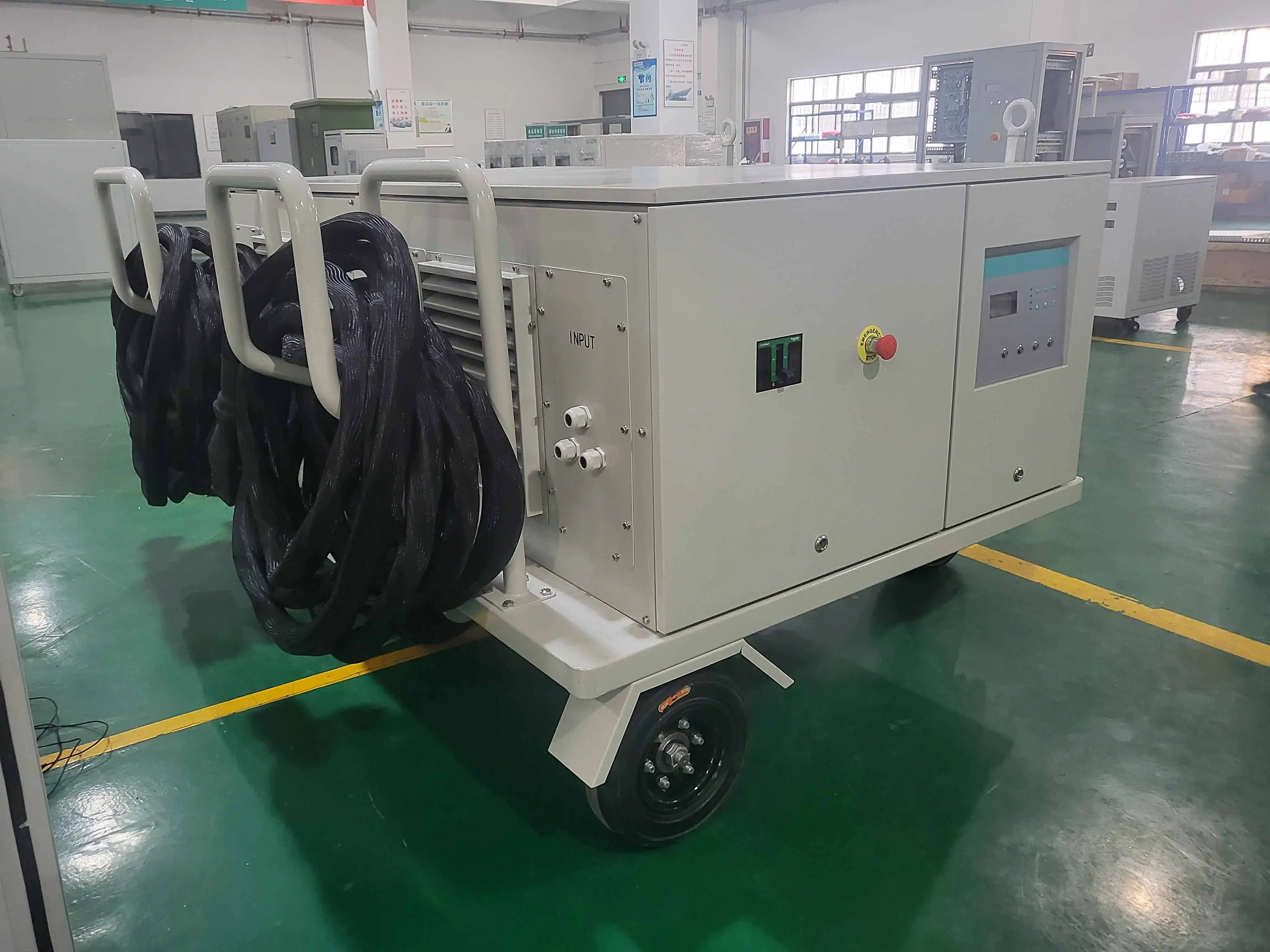
Three different types of technology are used in modern ground power systems. Electronic rectifiers and inverters are used in solid-state frequency converters to make them run quietly, require little upkeep, and have better transient response qualities. These systems work great when they are fixed under passenger boarding bridges, where noise levels need to be kept low, and space is limited. The ACSOON GPU400L-330090 model is a good example of this type. It delivers 90kVA through a ruggedized IP54-rated housing that has a 26-meter wire coil built in, which is best for gate operations. There is a lot of strength in rotary motor-generator sets when it comes to electrical feedback spikes. This makes them good for heavy repair settings where hydraulic test rigs create tough power needs. Mobile units driven by diesel serve rural stands and forward operating bases, allowing them to work without being connected to the grid. Battery-electric versions are becoming more common in airport operations that care about the environment. They combine zero-emission operation with the ability to be deployed quickly.
System Components and Energy Flow Architecture
In a ground power unit, the electricity line follows a carefully planned order. Input filtering steps protect against problems with the power source, and power factor adjustment circuitry makes the best use of energy. The goal of a 400Hz output is achieved by the conversion core, which can be electronic or electromechanical. The output then goes through regulation steps that keep the voltage stable even when the load changes. Automatic Line Drop Compensation is a very important improvement for professional systems. It works by using sense wires inside the output cable to measure the real voltage at the plane plug and then automatically adjusting the output to make up for cable resistance losses. The last layer of safety is protection circuits, which check for overvoltage, undervoltage, overcurrent, and phase loss. When strange things happen, these systems cut off the power within milliseconds to protect hundreds of thousands of dollars' worth of electrical systems in airplanes. Professional aviation-grade equipment is different from general industry power sources because it has these safety features built in.
Key Benefits and Advantages of External Power Unit Aircraft Systems
Operational Cost Reduction and Efficiency Gains
When you look at statistics on how much fuel is used, the financial case for using external power unit aircraft systems becomes stronger. When it is working on the ground, a normal narrow-body airplane APU uses about 150 pounds of jet fuel per hour. At the price of fuel right now, this means that the straight cost of fuel alone is $100 to $150 per hour. For a fleet with 12 daily turnarounds per plane, GPU use saves more than $600,000 per plane in fuel every year, which is a number that buying offices can't ignore. In addition to saving fuel right away, exterior power stops APU upkeep from building up. Every hour that the APU is used adds to the time between overhauls, which usually cost between $200,000 and $400,000 to fix up. TBO extensions of 20–30% are reported by airlines that use ground-based APUs less, which has a direct effect on repair costs and metrics for aircraft availability that drive income production.
Environmental Compliance and Sustainability Performance
There is more and more regulatory pressure on airports to reduce their pollution as cities grow around them. The 400–600 kg of CO2 and 2–4 kg of NOx that an APU produces during a flying cycle are taken away by ground power units. These cuts directly help airports follow ICAO's Carbon Offsetting and Reduction Scheme for International Aviation. They also help with local air quality rules that make it harder to use APUs at major airports. Getting rid of noise is another important factor. When the APU is running, it makes 70 to 85 decibels of noise at 10 meters, which is loud enough to bother ground workers' health and make it hard for passengers to board comfortably. Solid-state ground power units work at less than 65 decibels, which is below the OSHA limit for noise in the workplace. This means that ramp workers don't need to wear hearing protection. This sound benefit is especially useful for activities that happen at night, when airport noise limits are in place.
Technical Reliability and System Integration
The better power quality that exterior units offer is greater than what internal APUs can provide. Ground-based frequency converters keep the voltage within ±1%, while APU engines usually have a range of ±2% to 5% when they are working with changing mechanical loads. When software updates are being made to flight control systems and electronic flight bags are being synchronized, this extra steadiness is very important because voltage changes can mess up data transfers. Integration with Building Management Systems lets the success of all power units in a terminal be tracked from one place. Facilities managers can keep an eye on how things are being used, plan preventative maintenance based on real operating hours instead of calendar intervals, and get quick alerts when performance parameters start to deviate from what was planned. These are proactive features that can't be achieved with self-moving units.
Maintenance and Troubleshooting of External Power Unit Aircraft Systems
Preventive Maintenance Protocols and Inspection Schedules
Solid-state frequency converters need a lot less care than diesel or rotary peers, but it is still important to follow set procedures for external power unit aircraft maintenance. Inspections should be done every three months to make sure that the entry screens are still clear. If they get blocked, airflow is limited, which raises the temperature inside and shortens the life of parts. Thermal imaging scans done once a year find developing hotspots at busbar connections and power semiconductor junctions before they fail. This stops the need for expensive emergency fixes that happen when a catastrophic component fails. Another important part of upkeep is checking the calibration. We suggest checking the load bank once a year to make sure that the voltage control is accurate and that it can handle overloads. As part of the process, the rated load is put on 100% and then quickly increased to 125% while voltage stability and thermal efficiency are monitored. Units that fail to meet specifications during this testing need to be recalibrated or have parts replaced before they can be put back into service.
Common Operational Issues and Diagnostic Approaches
Inconsistent power flow is usually caused by three things. Voltage drift under load is often a sign of worn-out capacitors in the filtering steps or dirt on the cooling surfaces that stops heat from escaping properly. Frequency instability could be caused by an old crystal oscillator in the control circuits or electromagnetic interference from equipment nearby. When extension cables with different standards are put into the link line, phase imbalance problems are often caused by uneven cable impedance. When techs write down standard performance factors during commissioning, diagnostic efficiency goes up by a huge amount. By comparing current measures to specs for when the product was new, degradation trends can be found quickly. Technical support from the equipment's maker is very helpful when fixing complicated problems, and this should be taken into account when choosing a seller during buying.
Service Partnership and Warranty Considerations
The framework of maintenance contracts has a big effect on lifetime costs. Comprehensive agreements that cover yearly checks, calibration confirmation, and part replacement help keep costs down and make sure that only OEM-certified techs do important work. Reactive repair, on the other hand, usually costs 40–60% more over seven years of ownership, but it comes with a higher failure rate that stops activities. When buying something, warranty terms should be carefully thought through. Standard warranties cover production flaws for 12 to 24 months, which is the minimum level of protection. However, extended warranties that cover part replacement for 5 years or more shift the risk from the user to the maker. We've found that equipment backed by accessible technical support—including telephone consultation and rapid parts availability—delivers superior uptime compared to low-cost alternatives lacking robust after-sales infrastructure.
Comparing External Power Units: Making the Right Choice for Your Fleet
System Architecture Comparison: Solid-State Versus Rotary Technology
Which technology to use—external power unit, aircraft, solid-state, or rotary technology—depends on the needs of the business. Fixed systems that need quiet operation, small size, and little upkeep are great places for solid-state converters. Their electrical design gives them better power quality, with harmonic distortion below 3% and voltage control staying within ±1% of the load range. Since there are no rotating parts, there is no need for bearing upkeep, and when something breaks, the mean time to fix is shorter. Rotary units are better in situations where there is a lot of overload or where heavy current demands are constant. When there is a brief overcurrent, motor-generator assemblies handle it better than electrical components that are close to their thermal limits because they have more thermal mass. This trait is useful in maintenance and repair shops where checking hydraulic pumps and activating flight controls cause big inductive loads with lots of inrush currents.
Aircraft Compatibility and Power Specification Matching
Power system requirements are set by the makeup of the fleet. Commercial planes like the Boeing 737 and the Airbus A320 need 400Hz three-phase power, usually at 115V/200V, and can carry up to 180kVA of current for big wide-bodies and 60kVA for narrow-body planes. The ACSOON GPU400L-330090 gives off 90kVA at 3×200VAC, which makes it perfect for narrow-body commercial and military passenger planes. Business and regional airplanes often use 28V DC power systems, which means they need very different ground support tools. When they are in charge of mixed teams, procurement managers need to either keep separate GPU stocks or buy combination units that can output both AC and DC power. For the second method, it's easier to use less equipment, but it's more complicated and costs more per unit. These are trade-offs that need to be carefully weighed against operating patterns.
Brand Reputation and Performance Data Analysis
The choice of manufacturer includes more than just the initial cost of the technology. It also includes long-term dependability, access to expert assistance, and the ability to upgrade. ACSOON has built a good name in flight ground support by consistently delivering units that meet strict phase angle symmetry requirements and offer IP54 environmental protection that is suitable for ramp environments that are open to the elements. Because the brand supports OEM relationships, owners who have specific integration needs or branding tastes can make the product their own. As part of your due investigation, you should check that the company follows all the relevant standards. For example, ISO 6858 covers ground support systems for aircraft, and MIL-STD-704 covers the electrical power characteristics of aircraft used for military purposes. Manufacturer quality standards, like AS9100 aircraft quality management, show that design, production, and testing are done in a methodical way that leads to trustworthiness in the field.
Procurement Guide for External Power Unit Aircraft Systems
Supplier Qualification and Certification Verification
Because external power unit aircraft equipment is so important to flight operations, choices about where to get it have big effects. Suppliers who are qualified show that they can make the goods, have quality control systems that meet aircraft standards, and keep clear records of compliance testing. The 5,000–10,000 square meter factory that Xi'an Jerrystar Instrument Co., Ltd. runs is only for making flight and military power systems. They do both standard production and custom engineering for unique uses. Testing should be able to be done as part of verification. Reputable makers keep load bank facilities that let each unit be fully tested before it is shipped. This dedication to trying everything (rather than just checking a few samples) gives customers confidence that the equipment will work as expected from the moment it is installed. Factory acceptance testing, which lets the customer watch, adds another level of proof for expensive purchases.
Customization Capabilities and Technical Adaptation
Standard catalog goods work well for many uses, but sometimes changes need to be made to meet operating needs. Custom wire lengths can be made to fit certain gate shapes or hanger plans. Environmental hardening increases the temperature range that a product can be used in harsh areas or adds corrosion protection for marine settings where the salty air speeds up the breakdown process. Integration of the control system allows tracking from afar and an automatic link sequence, which makes the work of the ground team easier. Because ACSOON can be customized, it can be used to meet a wide range of needs while still keeping the core stability of well-tested designs. This versatility is especially helpful for operators who are switching to new types of planes or growing into new sites with unusual infrastructure. From defining needs to design approval, the engineering collaboration process usually takes two to four weeks. Depending on the complexity, production wait times are then six to eight weeks.
Financial Structuring and Volume Procurement Advantages
Strategic methods for buying things are helpful when buying capital tools. When you buy in bulk, you can negotiate prices that lower the cost of each unit by 10 to 20 percent compared to the cost of a single unit. Using the same maker for all of your fleet operations makes it easier to keep track of extra parts and train technicians. It also strengthens your relationships with your suppliers, which gives you priority support in an emergency. Leasing options are available instead of buying something directly. They turn capital expenditures into routine expenses with fixed monthly costs. This arrangement is good for businesses that are limited on cash flow or want to keep their capital allocation options open. Lease terms usually last between 3 and 7 years, and at the end of that time, you can either buy the equipment at a loss or change to newer technology. This gives you choices, so worries about obsolescence don't stop you from making an adoption decision.
Post-Purchase Support and Lifecycle Management
Getting equipment is more like the start of a relationship with a source than the end. During the ownership period, operating success is determined by how well warranties are managed, how easy it is to get expert help, and how readily available spare parts are. We suggest making clear support agreements that spell out how to handle technology questions, when to send parts in an emergency, and when to schedule yearly repair visits. Training programs for repair workers make sure that in-house workers can do routine tasks and know when a plant expert needs to be involved. Electrical theory that applies to converting power, system-specific repair methods, and safety rules for working with high-voltage equipment are all part of comprehensive training programs. This sharing of information makes us less reliant on outside service providers while still meeting safety standards.
Conclusion
External power units have changed from nice-to-have extras to necessary parts of infrastructure that help airlines run efficiently and sustainably. They produce strong financial returns by reducing running costs through better power quality, longer APU service life, and less fuel use. These saves also meet safety and environmental standards. To choose the right tools, you need to know the technical differences between system designs, make sure that the specifications match the needs of the fleet, and work with makers that offer full support. Organizations are set up for long-term business success when they use strategic buying methods that put lifecycle value over initial acquisition cost. As ground power technology keeps getting better, it will be more efficient, reliable, and better for the environment. These changes will affect how flight works on the ground for many years to come.
FAQ
What distinguishes solid-state external power units from rotary models?
Solid-state units use electronic rectifiers and transformers to change power without using any mechanical parts. This makes them quieter, requires less upkeep, and regulates voltage better. Rotary units use motor-generator sets, which are more resistant to electricity surges but need more upkeep on the bearings and make more noise. Which one you choose relies on whether you want the least amount of maintenance and the best sound quality or the highest level of stress tolerance.
How do I determine the correct power rating for my aircraft fleet?
The needs are set by the aircraft's electrical specs. Commercial jets with a narrow body need 60–90kVA, while wide-body planes need 120–180kVA. Looking at aircraft repair manuals gives you correct information. To handle starting inrush currents and accessory loads at the same time during ground operations, we suggest choosing units with a 20% capacity margin above the average airplane draw.
What maintenance intervals apply to professional ground power equipment?
The usual practice in the industry for external power unit aircraft is to check the filters every three months, make sure the calibration is correct once a year through load bank testing, and do thermal imaging scans every 12 to 18 months. Solid-state units need a lot less maintenance than diesel-powered ones, but following the manufacturer's recommended plans keeps most service interruptions to a minimum and extends the equipment's life beyond the 15-year mark.
Partner With a Trusted External Power Unit Aircraft Manufacturer
Xi'an Jerrystar Instrument Co., Ltd. has been specializing in aircraft ground power solutions for more than 15 years and can help procurement managers find reliable, approved equipment. Our ACSOON brand GPU400L-330090 provides 90kVA of power with excellent phase angle symmetry and IP54 weather protection. It also comes with a wide range of customization options and quick expert support. Our 5,000- to 10,000-square-meter building lets us keep enough stock on hand for quick deliveries and supports OEM partnerships for bulk purchases. No matter if your business is in a private terminal, a military base, or an MRO facility, our tech team works together to find answers that meet all of your needs. If you email our experts at acpower@acsoonpower.com, you can talk about the power needs of your fleet and get clear price information for both standard setups and custom changes.
References
1. International Civil Aviation Organization (ICAO), "Airport Services Manual, Part 1 - Rescue and Fire Fighting," Fourth Edition, 2015.
2. Society of Automotive Engineers (SAE), "ARP 1636: Aerospace Recommended Practice - Aircraft Ground Support Equipment Interface Standards," Revision C, 2018.
3. Aviation Suppliers Association, "Ground Support Equipment: Maintenance Best Practices and Lifecycle Cost Analysis," Industry Technical Report, 2022.
4. U.S. Department of Defense, "MIL-STD-704F: Aircraft Electric Power Characteristics," Department of Defense Interface Standard, 2016.
5. European Aviation Safety Agency (EASA), "Certification Specifications for Ground Support Equipment Used in Aircraft Ground Operations," CS-GSE Amendment 2, 2020.
6. Air Transport Association of America, "ATA Spec 100: Specification for Manufacturers' Technical Data," Revision 43, 2019.