




What Should You Consider When Choosing a Military Aircraft Power Supply System?
When procurement teams choose a military aircraft power supply system, they have to make choices that have a direct effect on mission readiness and operating safety. To make the right choice, you need to find a balance between technology requirements, legal compliance, provider reliability, and lifecycle support. In harsh environments like the arctic cold, the desert heat, high altitude activities, and electromagnetic interference, a military aircraft's power supply must provide stable, clean power to avionics, communication systems, and weapons. In addition to meeting standards for power and frequency like 115V/200V at 400Hz, these systems must also be able to survive harsh environmental tests and meet standards like MIL-STD-704 and ISO 6858. When procurement professionals know these needs, they can choose equipment that keeps planes available while reducing costly breaks and repair tasks.
Understanding Military Aircraft Power Supply Systems
Evolution from Analog to Digital Control Architecture
In the last thirty years, military aircraft's power supplies have changed a lot. Metal voltage controllers and transformer-based converters were used in early analog systems. These were bulky, expensive, and often became unstable when temperatures changed. Microprocessor-based regulation and real-time tracking are used in modern digital control systems. This improvement gives better voltage control (often within a 1% tolerance) and lets you plan repair ahead of time with built-in monitoring. Digital systems also allow for customizable output patterns, which means that different types of aircraft, from fighter jets to transport planes, can use them without having to change the hardware.
Key Voltage and Frequency Standards in Defense Aviation
Around the world, most defense planes run on 115V AC at 400Hz for alternating current systems and 28V DC for direct current systems. Higher frequencies make it possible for transformers to be smaller and lighter, which is important when every pound affects fuel use and loading capability. New platforms are using 270V DC designs more and more to cut down on wiring weight, especially in advanced jets like the F-35. Ground power units need to be able to work with a wide range of electricity systems. The 180kVA ACSOON GPU-330180 is a great example of this because it can change normal industrial power (3-phase 380V, 50Hz) into aviation-grade 3-phase 115V/200V at 400Hz, which works with both old and new airplanes.
Performance Parameters That Define Mission Readiness
Military aircraft power supply systems are different from commercial ones in three ways: transient response, harmonic distortion, and holdup time. Transient response is a way to check how quickly the system's voltage stabilizes after a fast change in load. This is very important when radar systems pulse or guns fire. Electronics that are sensitive to electromagnetic interference are safe as long as the total harmonic distortion is less than 3%. Holdup time, which is how long a system keeps output going when input is interrupted, must be longer than 50 milliseconds so that flying computers don't have to be restarted for micro-outages. These requirements have a direct effect on whether a power system can support combat activities or just tests on the ground.
Critical Factors for Selecting Military Aircraft Power Supply Systems
Reliability Testing Methodologies and Failure Analysis
To choose a reliable power source, you need to know how makers test for reliability. In Environmental Stress Screening, production units are heated and cooled several times between -55°C and +85°C, and then they are randomly vibrated in a way that mimics flight conditions. For mission-critical apps, the Mean Time Between Failures should be more than 100,000 hours. Some common ways that things break are capacitors breaking down because of heat, connectors rusting in salty seas, and semiconductor junctions wearing out from sudden changes in voltage. Not just compliance certificates should procurement teams ask for; they should also ask for thorough failure mode and effects analysis documents.
Mandatory Compliance Frameworks and Safety Protocols
Military aircraft power supplies have to meet a lot of different rules. MIL-STD-704F describes the electrical power features for airplanes. It talks about voltage limits, frequency tolerances, and how power behaves during transients. ISO 6858 talks about how long it takes for electricity to return after an engine starts or when the load is taken away. MIL-STD-461G and other electromagnetic compatibility standards make sure that systems don't send out RF signals that can be picked up by other systems or give in to electromagnetic risks from the outside. The ACSOON systems are compatible with these frameworks and offer voltage transient recovery that meets ISO 6858 standards. This is very important during carrier rocket launches, when electrical loads change quickly and drastically.
Efficiency Benchmarks and Thermal Management Strategies
How well power is converted has a direct effect on how much it costs to run and how hot it gets. Military-grade systems should be at least 90% efficient across the whole load range. This will cut down on waste heat and the need for cooling. Thermal management is especially hard in aircraft bays that aren't sealed because the thin air at high altitude makes convection cooling less effective. Instead of using fans, which don't work well in low-density environments, more advanced designs use baseplate conduction cooling, which moves heat through an aluminum frame to cold plates placed on an airplane. This method of passive cooling makes things more reliable and gets rid of noise that could mess up sound sensors.
Comparing Military Aircraft Power Supplies: Brands and Solutions
Established Manufacturers and Technological Differentiators
There are several well-known companies in the military aircraft power supply market, and each has its own technological skills. Honeywell focuses on integrating power delivery systems that handle, convert, and produce electricity all in one system. Eaton specializes in making commercially available parts that can work in harsh military settings. Northrop Grumman and BAE Systems are experts at platform-specific solutions that work closely with the electrical systems in the airframe. Raytheon has a lot of experience with directed energy devices that use high-power pulses. Smaller, more specialized companies like ACSOON can make changes quickly and easily, which is especially helpful for upgrading applications and ground support equipment that needs to be delivered quickly rather than integrating with an existing platform.
Design Philosophy Differences Between Airborne and Ground Systems
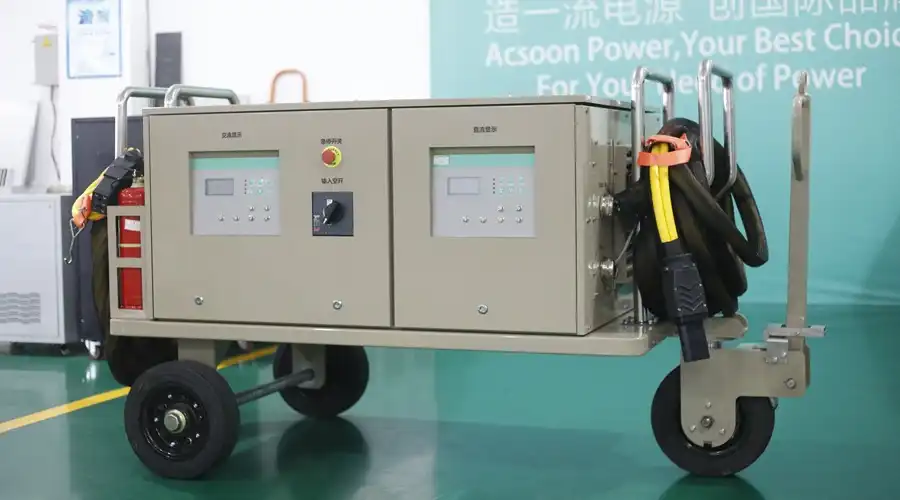
Knowing the difference between military aircraft power supplies that are in the air and those that are on the ground makes buying requirements clearer. Airborne systems try to be as light as possible and be resistant to harsh environments. To protect their circuits, they often use unusual materials and conformal shielding. These units can handle high levels of shaking, temperature stress caused by altitude, and electromagnetic pulses, but they cost more than other units, but they are worth it for flight-critical uses. Different goals are emphasized by ground power units that serve aircraft during maintenance and activities before takeoff. These priorities include portability, ease of maintenance, and adaptability to different types of aircraft. The ACSOON GPU-330180 meets these ground support needs with its ability to be placed on the floor or moved around with casters, its IP21 rating for safety in hangars, and its variable output settings that meet international voltage standards.
Evaluating Upgrade Pathways for Legacy Installations
Many military bases have teams of different types of planes, which can make it hard for power supplies to work together. When upgrading infrastructure, it's important to carefully weigh the costs of retrofitting against the costs of buying new equipment. Some important things to think about are making sure the physical footprint works with current mounting points, making sure the electrical interface is standardized so that wiring changes are kept to a minimum, and making sure the new system works with older airplane electrical systems. Solid-state frequency converters, like those in the ACSOON product line, are useful in this situation because their customizable outputs can work with both old 28V DC systems and new 270V DC designs without having to swap out any hardware. This means that fleets can gradually become more modern, which extends their useful life.

Procurement Considerations for Military Aircraft Power Supplies
Initiating Technical Inquiries and Defining Requirements
For buying to work, technical needs must be made clear from the start. Specification sheets should include information about the input power that is available at the placement site, the output voltage and frequency ranges that are needed, the load features, including the peak surge needs, and the weather conditions. A lot of buying teams don't realize how important it is to be clear about military aircraft power supplies transient response standards and harmonic distortion limits. This can cause problems during commissioning when it comes to compatibility. When you call possible suppliers, you should be clear about the type of aircraft you need help with and how it will be used, such as for regular repair, emergency field operations, or long-term installation at major operating bases. In this situation, makers can suggest the right models and figure out what changes are needed.
Lead Times, Customization Capabilities, and Delivery Logistics
Standard military aircraft power supply systems usually take 8 to 12 weeks to deliver after being ordered, but custom designs can take up to 16 to 20 weeks, based on how complicated the engineering is. When operational needs come up, manufacturers who keep a good stock of standard models have a lot of benefits. ACSOON helps with fast shipping by keeping track of supplies well and having flexible manufacturing capacity. Specialized makers are different from catalog providers because they can customize their products. For example, they can change the output voltages, add extra control circuits, or add special monitoring interfaces that work only with their products. Transportation procedures are important, especially for foreign deliveries. Reliable sellers offer military-grade packaging with shock monitoring and fast shipping choices, such as air freight for urgent needs.
Vendor Evaluation Criteria Beyond Initial Purchase Price
A lifecycle cost study shows that the purchase price only accounts for 30 to 40 percent of the total costs of owning the item over a 15-year time. After-sales expert help, such as engineering advice during installation and commissioning, should be a factor in the evaluation process. Maintenance partnership choices, like whether the maker provides on-site service, trains base staff, or sends complete spare parts kits, have a big impact on how available the system is for use. There are a lot of different types of warranties. Basic warranties cover 12 to 24 months, while top makers give coverage for up to five years and performance promises. The quality of the documentation is also important. Troubleshooting guides, detailed technical instructions, and drawn parts breakdowns all cut down on the average time it takes to fix problems.
Practical Checklist for Decision-Making
Matching Technical Specifications to Operational Requirements
Systematic evaluation models that match technical requirements with goal profiles are helpful for procurement teams. Here are some important factors that should be carefully considered during the choosing process for a military aircraft power supply:
Power Rating and Capacity Planning: Figure out the total linked load, which includes running all of the aircraft's systems that need power from the ground at the same time. Add 20 to 30 percent extra to account for future growth in capabilities and high demand during engine start processes. The GPU-330180's 180kVA rating makes it suitable for medium to large transport aircraft as well as several smaller planes that need to be serviced at the same time.
Input Flexibility and Site Integration: Make sure the unit can use the power from the building without having to pay for expensive electricity improvements. Most systems around the world accept three-phase 380V 50Hz input, but some accept 480V 60Hz, which requires different input settings. Variable input capability lowers the cost of installation and makes it easier to spread across borders.
Output Versatility Across Aircraft Types: Figure out if the system can handle your whole fleet or if you need more than one unit for each type of aircraft. Systems with 115V and 200V outputs at 400Hz and voltage sets that can be changed make the most of their use on a wide range of platforms, from helicopters to cargo planes.
Assessing Vendor Credibility and Service Infrastructure
Choosing the right provider has a huge effect on long-term happiness, even beyond technical details. Companies that have ISO 9001 certification show that they handle quality in a planned way, but certification doesn't ensure helpful customer service. Ask for customer examples from tactical settings that are similar to yours. For example, marine aviation sites have different support needs than rural air force bases. Find out how knowledgeable the maker is about engineering by asking them specific questions about failure causes, thermal management methods, and electromagnetic compatibility design practices. Shallow answers show that you rely on outside design help instead of your own knowledge. Response times during outages depend on how close a maker is to a service center. Manufacturers with regional support infrastructure keep airplanes running during power outages to a minimum.
Lifecycle Considerations and Scalability Planning
Procurement that thinks ahead predicts what will be needed in the future instead of just meeting current wants. You should think about whether new airplanes will need different electrical specs and whether possible power systems can adapt to those changes by adding new hardware or updating the software. Managing component obsolescence is important for systems that are meant to last 15 to 20 years. Manufacturers that want to provide long-term support keep an inventory of parts and plan for form-fit-function replacements when parts hit the end of their useful life. Scalability is important for sites that are growing; flexible systems that can increase capacity through parallel operation save money by not having to be replaced when the mission scope grows.
Conclusion
When picking a military aircraft power supply system, you need to carefully consider its technical performance, ability to meet regulations, vendor capabilities, and assistance throughout its lifetime. Systems must meet strict standards like MIL-STD-704 and ISO 6858 and provide stable 400Hz power in harsh environments. A good procurement process combines short-term technical needs with long-term practical ones, like the ability to customize, get upkeep help, and grow as needed. The ACSOON GPU-330180 is an example of current solid-state conversion technology. It has a 180kVA capacity, variable input/output setups, and a lot of safety features that make it perfect for military ground support uses that are very demanding. After carefully evaluating vendors based on their technical knowledge, service infrastructure, and track records of reliability in similar operational situations, mission-critical systems are chosen that will support readiness throughout their entire operational life.
FAQ
What distinguishes military-grade power supplies from commercial aviation equipment?
What makes military aircraft's power supplies different from those used in business aviation? For military purposes, you have to be able to survive in situations that would shut down business units. While commercial systems favor passenger safety by shutting down automatically during electrical problems, military aircraft power supplies must keep running during transients so that mission-critical tasks can continue even when there are problems with the electricity. They have better electromagnetic protection, can work in warmer temperatures (-55°C to +85°C vs. 0°C to +50°C for most products), and can handle heavy shaking and shock loads. Also, the ways that systems are tested are different. For example, military systems go through environmental stress screening and mean time between failure validation that are much stricter than business standards.
How often do ground power units require maintenance?
The amount of use and the working environment affect how often preventive maintenance needs to be done. Installations that are used a lot and support daily flight operations usually have checkups every three months that clean the cooling system, check the stability of the connections, and validate the electrical parameters. As part of the annual thorough maintenance, the capacitor banks are tested, the shielding resistance is measured, and the calibration is confirmed. Marine and dusty places may need more frequent maintenance on the cooling system. Because they have fewer moving parts and better thermal control, solid-state systems like the ACSOON GPU-330180 usually need less upkeep than older designs that use transformers.
Partner with JERRYSTAR for Reliable Military Aircraft Power Supply Solutions
Through our ACSOON brand, JERRYSTAR specializes in providing mission-critical power conversion tools made for testing in flight, the military, the marine industry, and factories. According to strict MIL-STD-704F and ISO 6858 standards, our GPU-330180 military aircraft power supply system has a proven 180kVA capacity and an adjustable 3-phase 115V/200V output at 400Hz. We keep a large inventory on hand so that we can quickly meet urgent operating needs. Our customization options allow us to meet the specific needs of each aircraft and building. We offer reasonable prices and full technical support from the first meeting through installation setup and ongoing maintenance training because we are both a maker and a selling business. Contact our engineering team at acpower@acsoonpower.com to talk about your specific needs with an experienced supplier dedicated to helping you get ready for operations by providing you with reliable, legal ground power solutions.
References
1. Department of Defense Interface Standard: Aircraft Electric Power Characteristics, MIL-STD-704F, Defense Standardization Program Office, 2004.
2. International Organization for Standardization, Aircraft Ground Support Electrical Supplies - General Requirements, ISO 6858:1982.
3. Harris, F.J., Military Airborne Power Systems: Design Principles and Operational Requirements, Society of Automotive Engineers International, 2018.
4. Emadi, A. and Ehsani, M., Aircraft Power Systems: Technology, State of the Art, and Future Trends, IEEE Aerospace and Electronic Systems Magazine, Vol. 15, No. 1, 2000.
5. Naval Air Systems Command, Ground Support Equipment Management Manual, NAVAIR 00-80T-109, United States Navy, 2019.
6. Rodriguez, J. and Martinez, P., Reliability Engineering in Military Aviation Ground Support Equipment, Journal of Defense Technology and Systems, Vol. 42, No. 3, 2021.