




What Makes an Avionics Power Supply Reliable in Extreme Conditions?
An avionics power supply works reliably in harsh conditions by being built with strong materials that can handle changes in temperature, high levels of vibration, electromagnetic interference, and stresses caused by high altitude. Choosing aerospace-grade parts, designing multiple circuits, using advanced heat management, and strictly following certifications like DO-160 and MIL-STD standards are all things that make something truly reliable. These power conversion systems have to keep the voltage stable and the electrical noise to a minimum while working under conditions that would damage normal equipment. This is to make sure that they keep working in mission-critical flight settings where failure is not an option.
Understanding Avionics Power Supply Reliability in Harsh Environments
The conditions in which airplanes work are hard on their electrical systems. Power sources used in flight need to be able to work perfectly, even when they face problems that equipment on the ground doesn't usually have to deal with.
Why Environmental Extremes Challenge Power Systems
The biggest danger right now is temperature changes. When flying at high altitude, the temperature inside a commercial airplane can drop to -55°C. When working in the desert, the temperature can rise to over 70°C. These temperature cycles make parts expand and contract, which could cause solder joints to fail and materials to wear out. Conditions for military planes are even worse, with sudden changes in altitude putting extra stress on sealed parts. Vibration and mechanical shock are also very difficult problems. Avionics equipment is subjected to multi-axis vibrations during takeoff, landing, and rough weather, which can damage sensitive parts and break connections. A power source on an airplane is constantly moving in ways that would kill most industrial units within a few months of use.
Critical Specifications That Define Reliability
Stable voltage is the most important thing that must be met. Electrical systems in airplanes need either 28VDC or 115VAC at 400Hz to work. If the voltage or frequency changes, it can affect the flight control, guidance, and communication systems. When the input voltage changes by 20% or more, the output voltage must stay within ±2% of the full load range for aerospace power conversion equipment. Another requirement that can't be changed is electromagnetic compatibility. A lot of radio frequency (RF) energy comes from communication systems, radar, and other avionics. Power sources must be able to block both conducted and radiated interference and not send out electrical noise that could mess up important guidance systems. DO-160 Section 16 sets up testing procedures that mimic these electromagnetic settings to make sure that power conversion units don't cause or respond to interference.
Certification Standards as Reliability Benchmarks
MIL-STD-461 and DO-160 approvals show that a product is resistant to weather damage. These standards test equipment for disease resistance, changing temperatures, high and low humidity, salt fog, and explosive atmospheres. Certification is only given to goods that pass these thorough tests. This gives procurement professionals trust in how well the products will work in the field. The testing procedures simulate decades of use stress in a controlled lab setting, finding flaws in the design before the equipment goes into service.
Key Design Principles to Ensure Reliable Performance
When you're designing an aircraft power system, you have to make choices that match different needs. The design choices made during development have a direct effect on how long equipment lasts in its working setting.
Redundancy Architecture and Fail-Safe Design
When a single point fails, redundant circuit lines protect against that. Critical power transfer systems have two power stages, and if the main circuit breaks, the secondary circuit automatically switches over in microseconds. This parallel redundancy makes sure that the system keeps running even if a part breaks. Some more complex designs have N+1 redundancy, which means that an extra backup stage doesn't do anything when the main system is running. This makes the system last longer and provides backup power in case of an emergency. Fault monitoring circuitry constantly checks working factors and takes safe steps before problems spread through the system. Features like current limiting, overvoltage clamping, and thermal shutdown keep the power source and any equipment attached to it safe from damage when things go wrong.
Thermal Management in Confined Spaces
Installations on airplanes need the most power possible in the smallest amount of room. When power sources have to get rid of hundreds of watts of heat in cases with little movement, they need to be managed thermally well. Modern designs use aluminum frames that act as heat sinks by moving heat to the mounting area, where it can be lost into the structure of the airplane. When natural airflow isn't enough, temperature-controlled fans that cool with forced air are a good way to control the temperature. These cooling systems have two sets of fans and complex control programs that change the flow of air based on the temperature and load. For some specific uses, conduction cooling is the only way to cool, so there are no moving parts that could break down during long trips.
Component Selection and Material Science
Aerospace-grade parts can handle harsh conditions that would damage regular parts. Dielectrics used in capacitors made for aviation use keep their performance stable over temperature ranges higher than 150°C. Military-specified resistors are built to be strong enough to withstand shaking and mechanical shock without breaking or drifting. In tough settings, the materials used to make circuit boards are very important. FR-4 material that is used as standard absorbs water and changes size when heated and cooled. Polyimide-based substrates are often used in avionics power supplies because they keep their mechanical and electrical qualities even when the temperature drops below freezing. These more modern materials are more expensive, but they are reliable enough that the extra cost is worth it in serious situations.
Electromagnetic Shielding and Noise Suppression
EMI can be controlled by making sure the circuits are laid out correctly and are grounded. High-frequency switching power sources make a lot of electromagnetic noise, so you have to be very careful about where you put the components and how you route the wires. Multi-layer circuit boards with separate power and ground planes offer low-impedance current return routes that lower the amount of radiation that is sent out. Faraday cages are made of metal barriers that keep electromagnetic energy inside while stopping interference from outside sources. By strategically placing filtering parts at the input and output connections, noise that is carried along power and data lines is stopped. Between kilohertz and gigahertz, common-mode chokes, differential-mode capacitors, and ferrite cores all work together to remove noise.
Comparing Avionics Power Supply Solutions for B2B Procurement
To choose the right power conversion tools, you need to know how different makers deal with stability issues and what makes their products different in real-world situations.
Industry Leaders and Their Approaches
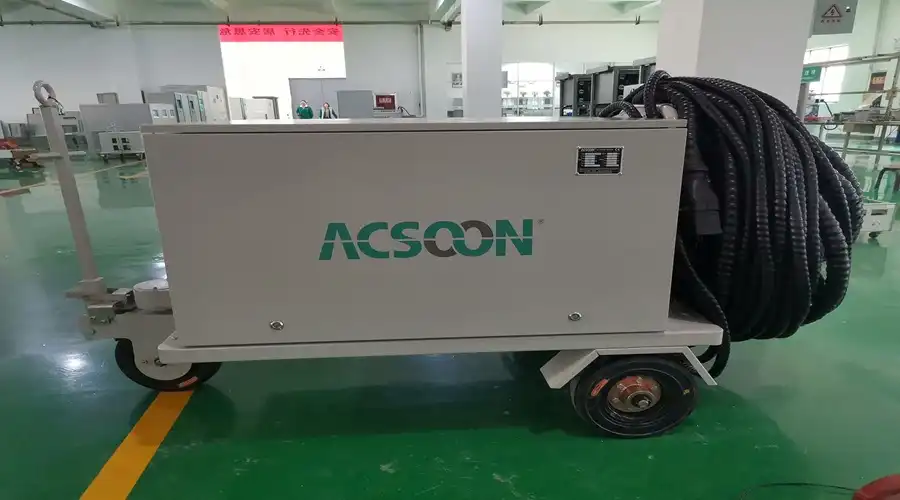
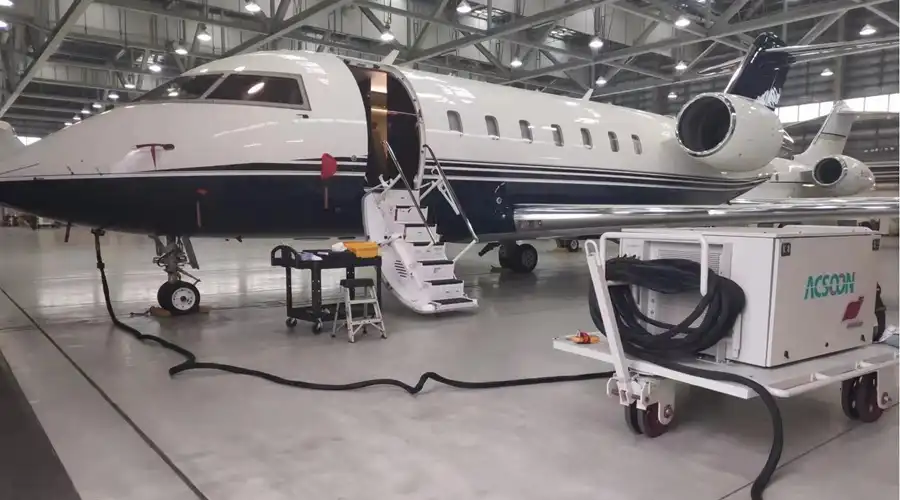
Well-known aerospace companies have built their names over many years of working in the field. Companies like TDK-Lambda put a lot of emphasis on tough building and thorough testing. Their goods have been used for millions of hours in commercial aviation. Mean Well has moved beyond industrial markets and now makes equipment to help with flight. This equipment is affordable and can be used for ground power uses. Honeywell uses vertical integration to make sure that the methods for getting parts and making them are always the same. Specialized companies like ACSOON focus on frequency conversion uses and become experts in 400Hz power systems that are used for testing and maintaining airplanes. Their AF400W-330100 type is a great example of purpose-built design because it can get 100kVA of three-phase 400Hz power from different sources. This solid-state ground power unit is protected against the elements by an IP54 rating and has an operating noise level below 65dB, so it can be used in a variety of maintenance settings.
Procurement Considerations Beyond Initial Cost
The terms of the warranty show that the maker trusts the product to work well. Standard industrial power sources usually come with a one-year warranty, but aircraft equipment usually has guarantees that last three years or longer. It's a sign of strict internal testing and quality control that the guarantee time is longer, and failures happen less often in the field. Lead times have a big effect on project plans and the readiness of operations. Standardized goods ship within days, while custom-configured units may take 12 to 16 weeks to make. When suppliers keep a lot of goods on hand, they can quickly meet replacement needs and keep airplanes from being down for long periods of time when unexpected equipment breaks down. This worry is taken care of by JERRYSTAR's stocking strategy, which keeps stock on hand so that it can be quickly sent to customers who need urgent deliveries.
After-sales support determines the total cost of ownership.
Total cost of ownership is based on service after the sale. Technical help during installation, solving tips when problems happen, and repair services that keep downtime to a minimum are all valuable benefits that go beyond the purchase price. When manufacturers have fast tech teams, they can help customers get the most out of their systems and fix any compatibility issues that come up during integration.
Lifecycle Cost Analysis and ROI Evaluation
The initial buying price is only a small part of what it costs to own the car. The energy economy has a direct effect on the costs of running tools over their lifetime. A power source that works at 90% efficiency loses 10% of the energy it receives as heat, which makes cooling more expensive and raises the cost of electricity. Over ten years of continued operation, these losses add up to large amounts that are much bigger than the differences in prices between competing goods at the start. Metrics for reliability have an effect on money. Mean time between failures (MTBF) scores tell you how often to fix or replace something. If something is used continuously for 5.7 years, it needs to be replaced every 50,000 hours, but something with a 100,000-hour MTBF lasts longer than 11 years. Avoiding replacement costs, reducing downtime, and not having to pay extra for emergency purchases make it worth spending more up front on designs that have been shown to be reliable.
Practical Guidance for Selecting the Right Avionics Power Supply
When you match the powers of the tools to the needs of the application, you avoid both over-specification, which wastes money, and under-specification, which increases the chance of operating failures.
Application Segmentation and Requirements Framework
Most avionic equipment in small airplanes needs 28VDC power, which can be anywhere from 100W to 1kW. For these uses, small size and light weight are most important, and single-output versions are reliable enough. Higher power levels are needed for commercial flight, and it often needs backup power sources that work in parallel, with automatic load sharing to keep things running smoothly. The toughest rules apply to military and aerospace uses. Wider input voltage ranges allow backup generators to work with electrical systems that aren't working well. Better EMI filtering keeps critical communication and electronic defense gear from getting hacked. Conformal covering keeps circuit boards safe from water, salt spray, and fungus growth when they are used for long periods of time in harsh conditions.
Decision Metrics and Evaluation Criteria
Ratings of efficiency show how much of the power that is put in is turned into useful output and how much is wasted as heat. Avionics power supplies that are more than 85% efficient run at lower temperatures, which lowers the need for cooling and increases the total reliability of the system. Matching the supply capacity to the typical working power improves performance because efficiency is best close to full rated load. Correcting the power factor has an effect on the electrical systems in a building by lowering the reactive current draw. Active power factor adjustment supplies keep the power factor close to unity across all load ranges, which keeps the building's electrical system from being overloaded. This is especially important for ground support equipment like the AF400W-330100, which has shared electricity services that let multiple high-power units work at the same time. Specifications for load control spell out how the output voltage changes as the demand for current changes. Tight control below 1% keeps the voltage stable for sensitive avionic devices even when the amount of power used changes. Cross-regulation is important when more than one outlet serves different parts of a system. The voltage on one output should stay the same even if the loads on other outputs change.
Manufacturer Vetting and Quality Assurance
Production center certifications show how consistent the production process is. The ISO 9001 quality control systems set up written steps for planning, making, and checking products. AS9100's standards for aerospace add tracking and configuration management, which are very important for flight uses. By visiting factories or reading audit records from a third party, you can be sure that the licenses really do match how things are done. False parts can't get into aircraft supply lines because of component traceability. Reputable makers get their parts straight from authorized distributors and keep records of every part from the time it is received until it is installed. This allows for quick action if problems with the quality of the parts show up, so that the broken units can be found and replaced before they break. Documentation for testing shows that you did your homework. Procurement pros can get objective proof of a product's abilities by reading full test results that cover environmental qualification, EMI compliance, and safety validation. If a manufacturer won't share specific test data, it could mean they don't trust their goods or haven't done enough validation.
Troubleshooting and Avoiding Common Pitfalls in Avionics Power Supplies
Regular maintenance and the right way to put things make equipment last longer and keep it from breaking down in ways that threaten safety or task success.
Identifying Failure Modes and Root Causes
Output capacitors that are failing are often to blame for voltage instability. Over time, electrolytic capacitors break down, losing their capacitance and gaining more equivalent series resistance. This wear and tear lets the voltage spread more and slows down the load's reaction to sudden changes. During routine maintenance, measuring the output voltage ripple on a regular basis helps find capacitors that are wearing out before they cause system problems. Problems with electrical noise are often caused by poor grounding or damaged insulation. Corrosion on chassis fixing points raises the ground impedance, which makes routes for noise to travel. Cable shield connections need to be bonded to the socket plates in all directions. Pigtail grounds make antenna structures that send and receive interference instead of shielding.
Installation and Maintenance Best Practices
The best cooling performance is guaranteed when the fixing is oriented correctly. Because heat sinks work with natural convection patterns, power sources that are made for certain mounting places must be put in the right place. Forced-air-cooled units need enough space around the vents, and makers usually list the minimum distances that are needed. Electrical connections demand attention to the pressure requirements and the tools you choose. When connections are over-tightened, they damage wires and create stress concentrations that cause things to break too soon. When links aren't tight enough, they create a lot of resistance, which makes heat and lets vibrations open the joint even more. Using torque tools that are measured and lock washers that are right for the job will ensure that the links stay strong for a long time. When installing environmental protection, care must be taken. Cable glands and connecting contacts are the main places where moisture can get in. The IP54 grade of the AF400W-330100 saves it from dust and water spray, but this protection is lost if the cables are not installed correctly. When you route wires with downward loops, water can't flow along the conductors and into the box.
Redundancy Implementation and Safety Protocols
Automatic transfer switching lets you switch between backup power sources without any problems. These switches check the health of the main supply and quickly move loads to backup sources if something goes wrong. The switching code has to keep incompatible sources from running in parallel and make sure that there are smooth changes that don't cause short-term power outages. Failures that aren't being used can be avoided by regularly testing backup systems. If you don't use backup equipment for months, it might not work when you need it because parts may break down or rust. Rotating between the primary and backup units regularly keeps all of the equipment working and finds any problems during planned repair windows, not in an emergency. Detailed safety rules keep people and tools safe while the repair is being done. Lockout-tagout methods keep power systems from being turned on by mistake while technicians work on them. Capacitors must have lost all of their stored energy before they come into contact with something. When dealing with high-power units like the 100kVA AF400W-330100, where saved energy and fault current levels pose major risks, these practices become even more important.
Conclusion
To be reliable in harsh conditions, engineers have to make decisions that take into account things like electromagnetic interference, environmental stressors, and the specific needs of flight uses. Avionics power supplies for airplanes have to meet strict approval standards and keep working well even when the weather, altitude, and mechanical stress are all changed, which would break most systems. Successful outcomes come from making purchasing choices that balance the original cost against the value over the product's lifetime, with the help of careful manufacturer screening and a clear understanding of the needs of the application. By installing things correctly and keeping them in good shape, you can make sure that they last longer and avoid problems that could hurt the goal or put people in danger.
FAQ
What certifications must an avionics power supply carry?
DO-160 outdoor approval shows that equipment can handle the high and low temperatures, vibrations, humidity, and electromagnetic interference that are common in airplane systems. The MIL-STD-461 standard talks about electromagnetic compatibility issues, mainly for military aircraft use. These approvals give solid proof that power sources will work properly in the conditions for which they were made. Even though ground support equipment doesn't have to fully follow DO-160, it can still benefit from similar design concepts that make it last in tough service situations.
How does redundancy enhance system reliability?
When one part fails, the other parts can still keep the system running thanks to the backup power supply. In parallel setups, the load is spread across several units. This makes each source less stressed and allows for automatic failover. This design gets rid of single points of failure, which makes the whole system much more reliable. In serious situations where losing power could lead to safety issues or costly business problems, the investment in resilience pays off.
Can avionics power supplies be customized?
Customization is used to meet voltage needs, mechanical limitations, and communication requirements that can't be met by stock goods. Manufacturers like ACSOON that offer OEM setups can change the size of the container, the type of connectors used, and the control interfaces to fit the needs of the installation. While custom units usually have longer wait times, they are the best way to solve problems in unique situations where off-the-shelf goods fail.
Partner with JERRYSTAR for Mission-Critical Power Solutions
JERRYSTAR is an expert at providing approved avionics power supply options that are designed to work in harsh conditions. Our ACSOON brand power converters are used in the military, on ships, in the lab, and in flight, where dependability is very important. The AF400W-330100 solid-state ground power unit is an example of our dedication to making strong designs. It offers 100kVA of stable 400Hz power in a small box that weighs less than 600 kg and runs at a noise level of less than 65dB. As both a maker and an experienced supplier, we keep a large inventory that lets us respond quickly to pressing needs. Our custom manufacturing skills allow us to meet unique needs that standard goods can't. Our engineering team has a lot of experience with frequency conversion technology and aircraft power systems. They help customers with everything from making the first specifications to installing the systems and providing ongoing service. JERRYSTAR has the technical know-how and production means to make sure your success, whether you need ground support equipment right away or power solutions that are specially made for your aircraft maintenance needs. Get in touch with our experts at acpower@acsoonpower.com to talk about your unique needs. We can help you choose the right product, buy in bulk for big projects, and send you sample units to test in your real-world setting.
References
1. Federal Aviation Administration. "Aircraft Electrical Power Systems: Design and Maintenance Standards." FAA Advisory Circular Series, 2021.
2. Society of Automotive Engineers. "Environmental Conditions and Test Procedures for Airborne Equipment: DO-160G Standard." SAE Aerospace Standards, 2020.
3. United States Department of Defense. "Requirements for the Control of Electromagnetic Interference Characteristics of Subsystems and Equipment: MIL-STD-461G." Department of Defense Interface Standard, 2015.
4. International Air Transport Association. "Aircraft Ground Support Equipment: Operational and Technical Guidelines." IATA Ground Operations Manual, 2022.
5. Institute of Electrical and Electronics Engineers. "Aerospace Power Systems: Reliability Engineering for Critical Applications." IEEE Aerospace and Electronic Systems Magazine, 2019.
6. Aerospace Industries Association. "Power Conversion Equipment Standards for Military and Commercial Aviation." AIA Technical Publication Series, 2020.
