




What Voltage Levels Are Used in Military Aircraft Power Supply Systems?
There are three main voltage levels that military aircraft power supply systems work on: 28V DC for avionics and transmission gear, 115V/200V AC at 400 Hz for flight control and other systems, and new 270V DC designs for next-generation platforms. These voltage standards, which are based on MIL-STD-704 and other military standards, are made to provide clean, reliable power in harsh operational situations, such as at high altitudes or during battle stress. Engineers and buying workers need to know about these voltage classes in order to choose power conversion equipment that meets mission-critical reliability standards.
Overview of Military Aircraft Power Supply Systems
Electrical systems in military aircraft need to be much more reliable than those used in business aircraft. Generators, transformers, rectifiers, and converters are all part of military aircraft power supply systems. They work together in a perfectly coordinated network to provide stable electricity to mission-critical loads. These systems have to work perfectly even when there are extreme movements, changes in altitude, or electromagnetic interference that would stop other systems from working.
Fundamental Architecture and Components
Engine-driven generators or auxiliary power units (APUs) make alternating current, which usually changes frequencies based on engine speed. They are the heart of any military platform's electrical system. Before it is sent to homes, this raw power goes through generator control units that control the output. Stepping voltage levels up or down is done by transformers, and solid-state converters change AC to DC or change frequency parameters. Bus bars carry power to different parts of the airframe. They are protected by circuit breakers and fault separation systems that stop breakdowns from spreading when the plane is damaged in battle.
Functional Requirements and Operational Demands
In contrast to business aircraft, military standards put survival over efficiency. Power systems have to keep working even when they are damaged in war, exposed to electromagnetic pulses, or in harsh weather conditions like the Arctic cold or the desert heat. Avionics kits, which include radar, electronic warfare systems, and aiming pods, need very clean power with very little voltage ripple. Propulsion controls need to respond right away to inputs from the driver, which means they need power sources that can quickly recover from short-term problems. In military electrical systems, these practical needs guide every design choice.
Military Standards and Compliance Framework
The MIL-STD-704 standard describes the electrical power properties of military aircraft power supply systems. It talks about voltage tolerances, frequency ranges, and transient behavior. RTCA DO-160 sets up rules for checking equipment in different environments to make sure it can handle vibrations, extreme temperatures, and exposure to high altitudes. These standards must be met for the purchase to be approved. Before equipment goes into service, defense companies have to show that it meets all the requirements by putting it through a lot of approval tests. These strict standards set the difference between military-grade power sources and private units, which is why they are more expensive when buying for defense.
Key Voltage Types Used in Military Aircraft Power Supply Systems
Different voltage classes are used in military aircraft, and each one is best for a certain job. Choosing between these voltage types has a big effect on the weight, economy, and capabilities of the system over the life of the platform.
Low Voltage DC Systems: 28V Standard
For decades, the 28V DC standard has been the basis for military electronics. It powers navigation systems, communication radios, and screens in the cockpit. This voltage level comes from older electrical systems and is still commonly used because it has a long history of being reliable and works with existing equipment. Modern 28V devices use complex voltage control to keep the voltage stable within ±1% even when the input voltage changes. The relatively low voltage reduces the need for shielding and the risk of arc flash, which makes the cabin safer. Higher current needs at 28V, on the other hand, make conductors heavier and cause more resistance losses than higher voltage options.
Medium Voltage AC Systems: 115V/200V at 400 Hz
Military planes usually make three-phase 115V/200V AC power at 400 Hz, which is a much higher frequency than 50/60 Hz systems used in homes and businesses. This higher frequency makes the generator and motor smaller, which directly lowers the weight of the machine. This medium-voltage AC power is used by hydraulic pumps, flight control devices, and weather control systems. The 400 Hz standard makes it possible for electrical tools to be small and light, which is important for platforms that need to be light.
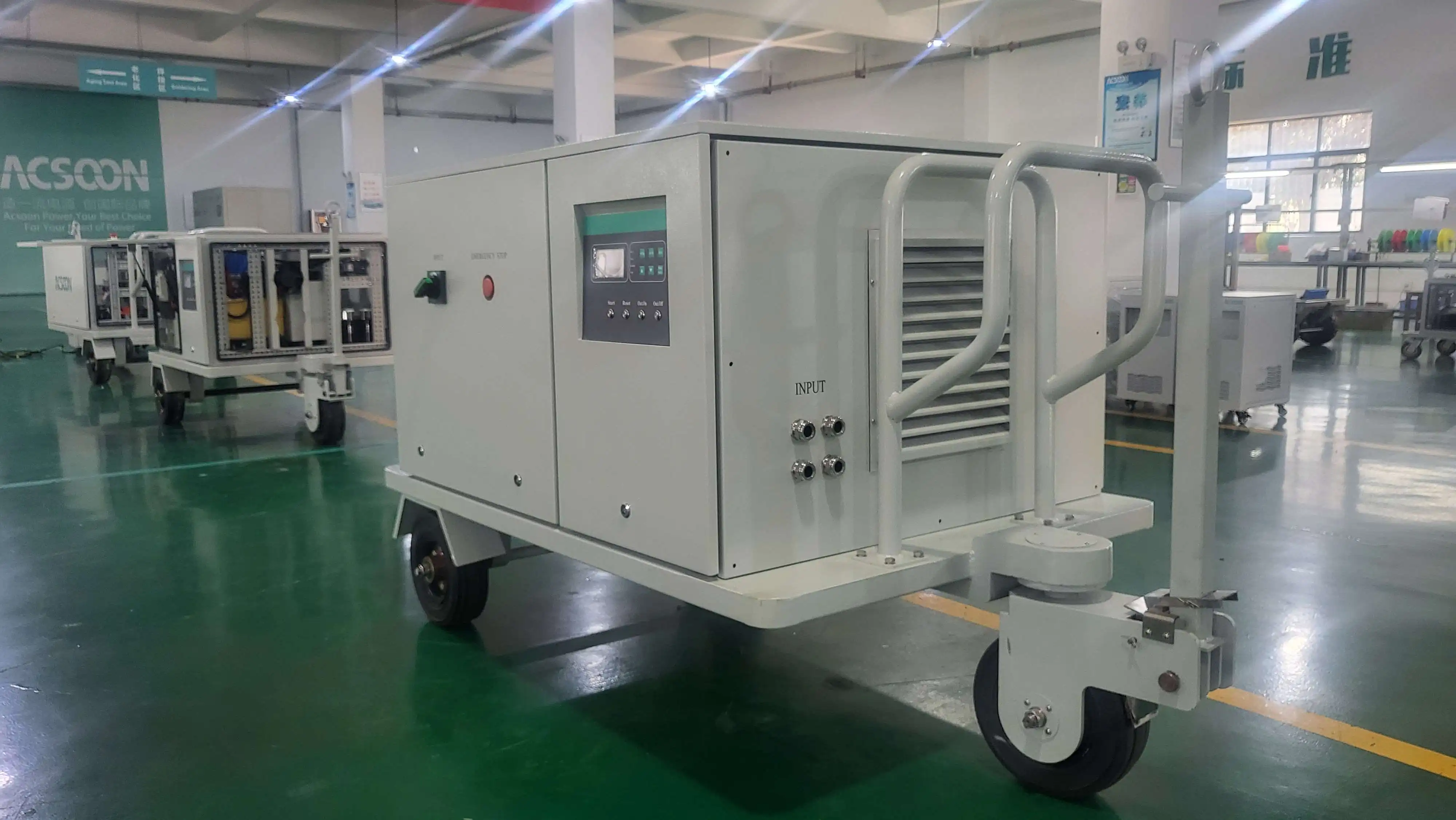
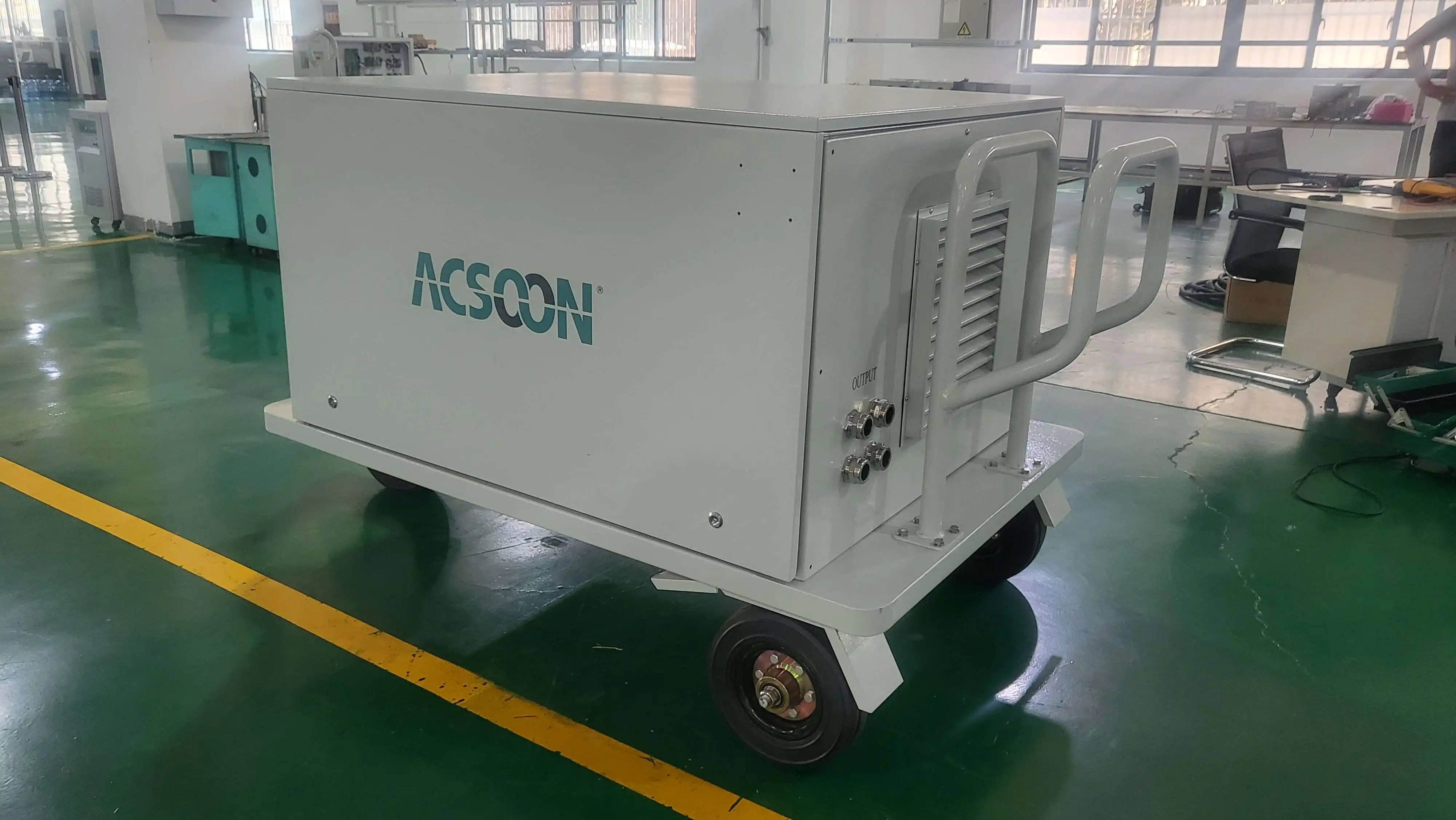
The ACSOON GPU-330180 ground power unit is a good example of this design because it can output 180kVA at 115V/200V, 400 Hz from a normal three-phase 380V, 50 Hz input. This solid-state converter is protected by IP21 and meets the requirements of MIL-STD-704F for rapid recovery. This makes it easy to integrate with the electrical systems in military airplanes. Its variable output can handle differences in voltage between countries, which supports global application situations. The unit can be used for airport ground support tasks because it can be put on the floor or moved around on wheels.
Emerging High Voltage DC: 270V Systems
Next-generation fighters and cargo planes are using 270V DC designs more and more, which greatly reduces the weight of the conductors and increases efficiency. Fifth-generation systems, like the F-35, were the first to use this amount of voltage. They did this by using advanced silicon carbide switching devices that can handle higher voltages with little heat loss. When compared to 28V systems, the 270V standard cuts distribution current by almost an order of magnitude. This lets thinner gauge wire be used throughout the body. This decrease in weight immediately leads to higher payload capacity or longer range, both of which are important performance factors for military tasks.
The switch to 270V DC makes it harder to get supplies. Most of the equipment in stock is still only working with 28V or 115V AC, so adapters are needed to connect old systems to new electrical buses. Engineers need to think carefully about whether adopting 270V across the whole platform or using a mix of designs will best meet the needs of a specific task. These design choices have a huge effect on lifetime costs and the ways that upgrades can be made.
Comparison Between Military and Commercial Aircraft Power Supplies
Military and commercial aircraft power supply systems are similar in some ways, but they are very different in how they are designed, how they handle redundancy, and how well they work.
Voltage Standards and Configuration Differences
A long time ago, commercial airplanes agreed on 115V AC at 400 Hz and 28V DC systems. This kept things stable so that parts could be used in all ships around the world. The baseline voltages used on military systems are the same, but they have tighter tolerances and better transient performance. According to defense standards, systems must be able to handle voltage spikes, frequency changes, and short breaks that would normally cause business systems to shut down for safety reasons. Military power sources have more filtering and control stages, which makes them more complicated but ensures they can keep working even when things get tough in combat.
Redundancy and Reliability Requirements
Commercial flight puts safety first by using redundant systems. For example, dual or triple power production systems protect passengers in case one point fails. Military systems need to be redundant and strong. Power systems must keep running even if they've been damaged in battle, and fault separation must be used to stop failures from spreading across electrical lines. For military purposes, equipment must be able to work with electromagnetic radiation levels that are many orders of magnitude higher than what is normally encountered in everyday life. Because the military places a lot of value on reliability, power supply designs are moving toward fault-tolerant systems with extra shielding and hardening features that aren't found in private equipment.
Auxiliary Power Units vs Dedicated Supply Systems
Commercial APUs mostly provide power to the ground and the ability to start engines. In-flight electricity loads are supplied by engine-driven generators. APUs are often the main power sources for military platforms while they are in the air, either for stealth activities or when the main engines are set to lower power levels. This way of working requires APU duty rates and dependability that are much higher than what is available on the market. Ground power units, like the ACSOON GPU-330180, are needed for pre-flight checks and repair work because they provide constant 115V/200V power even when the engines are not running. These specialized ground support systems keep expensive aircraft systems safe during long periods of repair. They also lower running costs and noise levels.
Design Considerations and Maintenance for Military Aircraft Power Supplies
A good military aircraft power supply design has to balance a lot of different factors. For example, every choice in aircraft engineering is based on reducing weight, but power needs keep going up as avionics capabilities grow.
Weight and Power Density Optimization
Military planes have strict weight limits, and each kilogram affects their speed, range, and ability to carry cargo. The goal of power supply makers is to give as many watts of power per kilogram of equipment weight as possible. Through improved thermal control and high-frequency switching methods, modern solid-state converters can reach levels above 5 kW/kg. Silicon carbide semiconductors allow for higher switching rates, which reduces the size of inactive parts and boosts efficiency. These improvements in technology have made it possible for modern power systems to handle exponentially more electronic loads without adding any extra weight. This means that new aircraft can do things that older aircraft couldn't.
Environmental Resilience and Standards Compliance
Defense power systems have to work in temperatures that range from -55°C at high altitude to +85°C on the ground in the desert. There is a lot more humidity, salt fog, fungus, and shaking than what is found in industrial settings. MIL-STD-810 lays out procedures for checking equipment's ability to survive in harsh environments. Conformal coating keeps wetness and other contaminants away from computer boards. Potting chemicals protect parts from shock and vibration. Thermal management is very important because thin air at high altitude makes convective cooling less effective, so chassis fitting to airplane cold plates is needed for conduction cooling. ACSOON power systems use advanced thermal control to make sure they work reliably in all combat environments.
Maintenance Protocols and Preventive Strategies
Maintenance on military power supplies is based on structured plans that match the inspection processes of airplanes. Visual checks for rust, checks for the stability of connectors, and thermal imaging to find hot spots before they break are all part of preventive maintenance. Built-in test equipment constantly checks the health of the power source and alerts you to any signs of degradation using advanced algorithms. This method to repair, called "condition-based," makes systems more available while reducing unplanned downtime. Voltage-related problems need to be troubleshooted by trained technicians with the right test tools who can understand complicated failure modes. Smart tests built into modern power sources, like the ones that ACSOON's R&D team creates, make it faster to find faults and shorter overall time to fix.
Procurement Insights: Sourcing Military Aircraft Power Supply Units by Voltage
To do good buying, you have to find your way through complicated supplier communities while keeping technical needs, certification compliance, and budgetary limits in mind.
Identifying Qualified Suppliers and OEMs
When the military buys military aircraft power supply systems, sellers have to show that they have a wide range of certifications. While ISO 9001 quality control systems offer basic peace of mind, defense contracts need extra AS9100 aerospace approval. Suppliers must keep strict configuration control, change management processes, and track paperwork that meets the needs of government audits. This supplier description is exemplified by Xi'an Jerrystar Instrument Co., Ltd, which makes ACSOON-branded power converters designed for use in flight, the military, and spacecraft. Their factory in Xixian New District is 5,000 to 10,000 square meters and only makes power transfer tools. They have a lot of experience with military power systems.
Voltage-Specific Procurement Parameters
A full electricity load study is the first step in matching voltage requirements to platform needs. Engineers have to write down the highest and lowest power needs during each part of the task, taking into account short-term loads that happen when the system starts up and when it moves. Voltage regulation tolerances have a direct effect on the performance of sensitive electronics. Tighter regulation standards cost more but keep equipment from breaking down. It's just as important for AC systems to keep the frequency stable; 400 Hz sources must keep the frequency within tight bands even if the input changes. The ACSOON GPU-330180's changeable frequency output works with several different international standards. This makes it easier to buy equipment for activities involving multiple countries or for allies to share equipment.
Managing Lead Times and Inventory Strategy
Military buying processes can last for months or even years, from figuring out what they need to delivering it. Long wait times for specialized parts make it hard for procurement pros to meet urgent operating needs. Strategic supplier ties with pre-qualified partners make it possible to respond quickly to new needs. Jerrystar keeps enough stock on hand to send quickly, meeting the military's need for quick help in times of trouble. Negotiating to buy in bulk can lead to big price cuts, but you have to weigh the benefits of volume deals against the costs of keeping goods and the risk of items going out of style. Smart buying strategies set up framework deals that spell out price and delivery terms. This makes it possible to place an order quickly when needs become clear.
Case Study: Ground Power Unit Deployment
A new buying program shows how to get the best military aircraft power supply systems for the military. The need listed ground power units that could handle 115V/200V, 400 Hz aircraft systems at a number of foreign airports. Using the MIL-STD-704F and ISO 6858 transient recovery standards as guides, procurement teams came up with exact specs. Companies that had delivered military power systems before, were able to make custom setups, and had global service networks, were given more weight in the supplier review.
ACSOON's GPU-330180 was chosen as the best option because it met all technical requirements and allowed OEM customization. The 180kVA rate was more than enough to handle expected loads, so it would work reliably during times of high demand. Different types of aircraft in the fleet were backed by the ability to send multiple signals.
There were no worries about damaging sensitive airplane systems because the system had full safety and met voltage transient recovery requirements. The casters on the mobile version made it possible to move around the runway as operating needs changed. After the system was delivered, Jerrystar provided technical support and maintenance training to make sure that operating teams were fully proficient. This cut down on downtime and increased system utilization.
Conclusion
The voltage levels used in military aircraft power supply systems are carefully chosen to meet specific operating needs. These levels include 28V DC, 115V/200V AC at 400 Hz, and emerging 270V DC. These voltage guidelines are the result of decades of technical progress that have tried to balance weight limits, power needs, and mission-criticalness. When you know the differences between military and private power architectures, you can make smart purchases that meet the dependability and survivability needs of the defense. During their working lives, system architectures are shaped by design factors such as how well they can handle the surroundings, how light they are, and how well they meet standards. For procurement to go well, you need to work with approved providers who can show that they follow certification rules, can make changes, and can deliver quickly. As military flight technology improves, power supply systems will also change to support more advanced features while still meeting the strict reliability requirements of defense tasks.
FAQ
What makes military aircraft's power supplies different from commercial aviation systems?
Survivability and fault tolerance are more important to military power sources than optimizing the economy. Battle damage, high electromagnetic interference, and environmental conditions that are too harsh for business exposure are all things they have to deal with. Voltage control limits are tighter, transient recovery is faster, and designs with more than one backup are more reliable. Military standards like MIL-STD-704 require performance levels that make sure missions are completed even when systems break down in ways that would stop a civilian plane.
How do I verify a power supply meets MIL-STD-704 requirements?
Suppliers must show approval test results from recognized labs that show they meet the requirements of MIL-STD-704 for voltage limits, frequency stability, and transient characteristics. Ask for proof of licensing, test results, and records of tracking. Reliable companies like ACSOON make goods that meet military standards. For example, their temporary recovery meets both ISO 6858 and MIL-704F requirements. For important uses, independent proof tests might be necessary.
Can ground power units damage aircraft electrical systems?
When properly built, ground power units that match the voltage and frequency requirements of an aircraft offer almost no risk. Units with full safety features, like overvoltage shutdown, current regulating, and transient suppression, keep things from getting damaged during connection transients or fault situations. The ACSOON GPU-330180 has full security features that make sure the aircraft interface is safe. Before connecting, always make sure that the output features of the ground power unit fit the electrical requirements of the airplane, and make sure you follow the right connection sequencing steps to reduce transient exposure.
Partner with JERRYSTAR for Reliable Military Aircraft Power Supply Solutions
When your task needs power that you can count on, JERRYSTAR has tested military aircraft power supply systems that are made for the toughest defense uses. Our ACSOON GPU-330180 ground power unit has an output of 180kVA and meets MIL-STD-704F standards. This means it can be used with fighter jets, passenger planes, helicopters, and UAVs for ground support missions. We keep enough stock on hand as a well-known military aircraft power supply manufacturer to be able to deliver quickly when urgent operating needs call for it.
Jerrystar's help goes beyond just delivering equipment. Our engineering team also offers expert advice to make sure that the power system integration works best for your platform. Our ISO 9001 approval and strict quality control measures make sure that every unit we make works the same way. Get in touch with our team at acpower@acsoonpower.com to talk about your voltage needs and find out how our flexible power conversion solutions can help you be more ready for operations and complete your task successfully.
References
1. Department of Defense Interface Standard, "Aircraft Electric Power Characteristics," MIL-STD-704F, 2016.
2. Radio Technical Commission for Aeronautics, "Environmental Conditions and Test Procedures for Airborne Equipment," RTCA DO-160G, 2010.
3. Emadi, A., Ehsani, M., and Miller, J.M., "Vehicular Electric Power Systems: Land, Sea, Air, and Space Vehicles," Marcel Dekker, Inc., 2004.
4. International Organization for Standardization, "Aircraft Ground Support Equipment - Electrical Supplies - General Requirements," ISO 6858:2017.
5. Sarlioglu, B. and Morris, C.T., "More Electric Aircraft: Review, Challenges, and Opportunities for Commercial Transport Aircraft," IEEE Transactions on Transportation Electrification, Volume 1, Issue 1, 2015.
6. Rosero, J.A., Ortega, J.A., Aldabas, E., and Romeral, L., "Moving Towards a More Electric Aircraft," IEEE Aerospace and Electronic Systems Magazine, Volume 22, Issue 3, 2007.