




How Reliable Are Modern 60 to 50Hz Frequency Converters?
Today's 60 to 50Hz frequency converters are very reliable. In serious situations, static converters can achieve uptime rates of over 98%. These devices use modern IGBT technology and digital signal processing to convert frequencies in a stable way with very little harmonic distortion (usually less than 3%). This makes sure that sensitive equipment in the military, aerospace, marine, and industry sectors can work without any problems. Modern models have strong thermal management, real-time tracking, and backup systems that make it almost impossible for them to fail during mission-critical activities.
Understanding the Fundamentals of 60 to 50Hz Frequency Conversion
60 to 50Hz frequency converter technology is now an important part of our linked business world. When technology made for 50Hz power lines is brought to North America's 60Hz setting, or the other way around, reliability problems start right away. Motors run faster than planned, heating systems don't work as expected, and precise tools stop being calibrated. We've seen these problems happen many times in marine systems and the aircraft industry.
How Modern Frequency Converters Function
There are three steps that static frequency converters go through to make sure they give clean, stable power. The input stage changes the AC power that comes in to DC power. This separates the output from changes in the input frequency. A DC link in the middle filters and conditions this power, and pulse-width modulation is used in the output step to create an accurate AC waveform at the desired frequency. This design allows for voltage freedom, taking in three-phase inputs from 208V to 480V and sending output voltages that are just as flexible to meet the needs of the load.
Why Frequency Differences Impact Industrial Equipment
When you run a 50Hz motor on 60Hz power, the shaft speed goes up by 20%, which speeds up the wear on the bearings and joints. On the other hand, 60Hz equipment that is run at 50Hz has less effective cooling and could overheat. When frequency changes, lab testing equipment becomes very sensitive, and measurements become less accurate than what is accepted. When it comes to keeping server rooms at the right temperature, data center cooling systems can't handle frequency instability without damaging equipment worth millions of dollars.
Overcoming Operational Challenges Through Advanced Design
Modern converters fix problems from the past by using smart heat management and two sets of control systems. Modern units have active cooling with temperature-sensing fans that change the flow of air on the fly, stopping hotspots from forming during prolonged high loads. Digital controls keep an eye on the output voltage, current, frequency, and power factor all the time and make changes within milliseconds to fix problems. Compared to older rotating converters that relied on mechanical parts that were easy to wear out, these new technologies have greatly lowered the number of failures.
Reliability Factors of Modern 60 to 50Hz Frequency Converters
When it comes to 60 to 50hz frequency converter units, reliability goes beyond theoretical requirements and into measurable performance under tough conditions. We looked at field data from factories, defense sites, and marine uses to find out what makes reliable converters different from others that aren't very good.
Performance Metrics From Real-World Applications
In manufacturing settings, work has to be done nonstop over several shifts. When properly kept, static frequency converters now have a mean time between failures of more than 50,000 hours. A case study from a company that makes precision CNC parts for aircraft showed that new converters kept the output frequency stable within ±0.1Hz over six months, while older technology had changes of up to 0.5Hz. This accuracy had a direct effect on part standards and cut the number of scraps by 12%.
Technological Innovations Driving Durability
Modified sine wave technology has been greatly improved by pure sine wave output. Total harmonic distortion below 3% makes sure that it works with sensitive electrical loads like medical equipment, variable frequency drives, and telecoms gear. This is shown by the ACSOON AF60W-330030 type, which provides clean power that can be used for cooling systems in data centers, where even small changes in voltage can cause equipment to fail. Voltage control technology has grown past the simple use of transformer taps. Active control circuits in modern converters smooth out changes in input voltage and load transients, keeping output voltage within ±1% of normal values. This stability keeps linked equipment safe from voltage-related stress that wears it down faster and causes it to break down early.
Balanced Assessment of Capabilities and Limitations
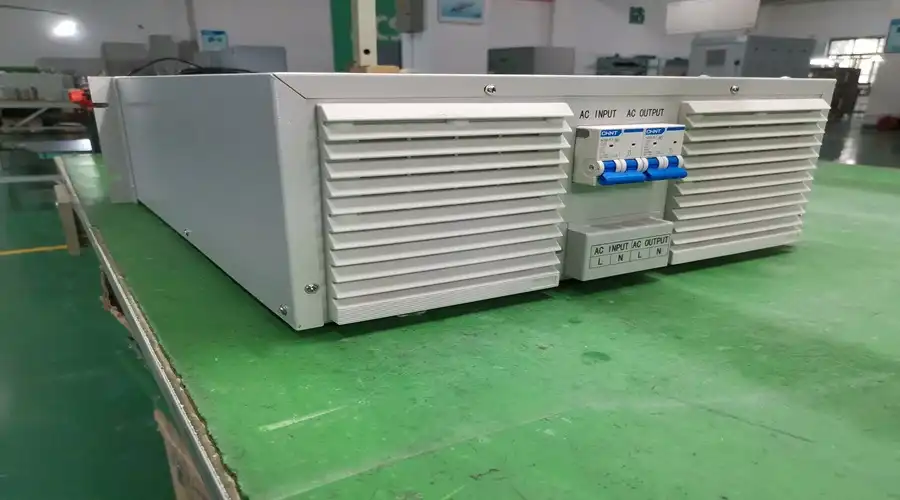
Small form factors don't mean less functionality. Compared to similar rotating converters, a 30kVA static converter takes up about a quarter of the space and doesn't need any mechanical upkeep. When moving things around in a building, upright mounting with built-in wheels makes it easier to move things around without using special pulling tools. These days, converters work best in static setups where the load profile is known ahead of time. They work well with magnetic loads like motors and transformers, but the inrush current that happens when the motor starts up needs to be taken into account when choosing the right size. To handle starting transients without setting off safe shutdowns, procurement teams should ask for converters that are rated at 125 to 150% of constant load. Environmental factors are still important. Even though IP21-rated enclosures can handle accidental touch with water and big particles, higher security grades are better for harsh industrial settings. Power systems are affected by the temperature of the room; when working above 40°C, converters reduce their output capacity. Thermal problems that affect efficiency can be avoided by planning for the right amount of air during installation.
How to Choose the Right 60 to 50Hz Frequency Converter for Your Business
To choose the right 60 to 50hz frequency converter, you need to make sure that the technical specs match up with the real-world requirements. We've helped people make hundreds of procurement choices, and long-term happiness is always based on a few factors.
Key Procurement Criteria
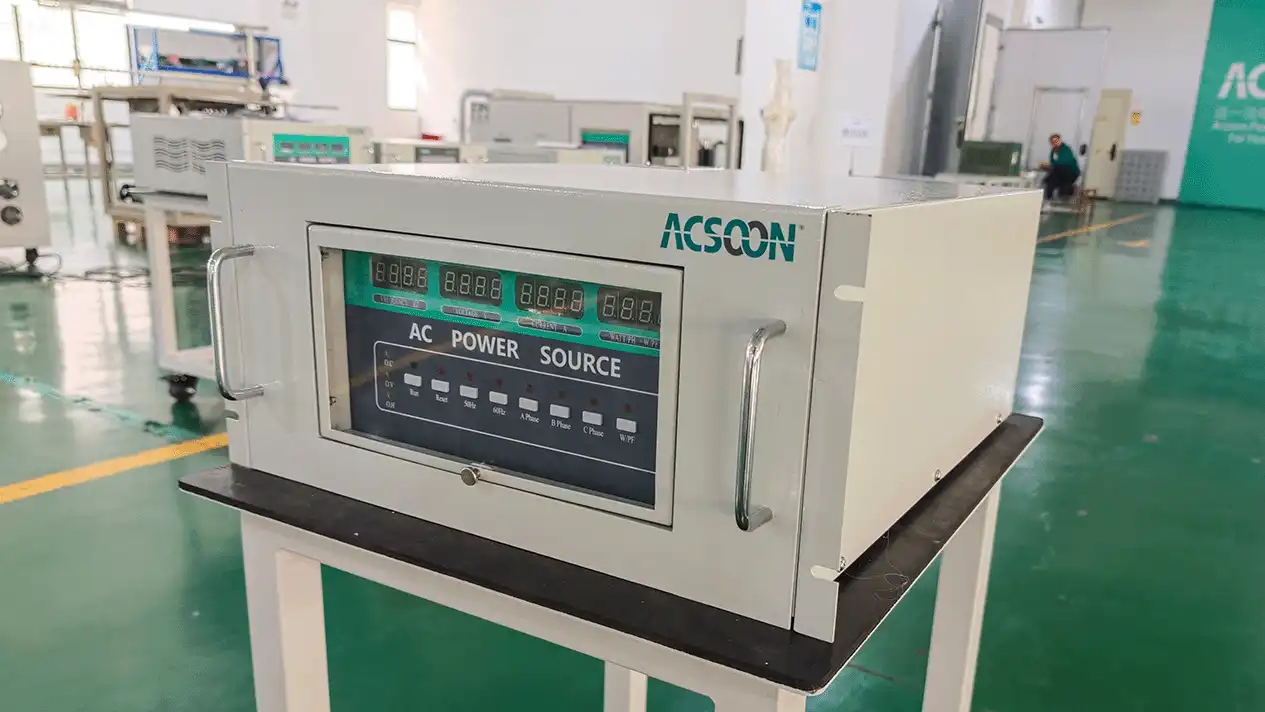
The first step in figuring out load capacity is making a list of all the related devices. To find the total kVA needed, add up all the loads and then take the variety into account, since not all loads work at the same time. Pay close attention to motor starting currents; when an induction motor starts up, it draws 5 to 7 times its normal current. Make sure the converter has enough space and headroom to avoid trips that aren't necessary. Efficiency has a big effect on running costs over the life of an item of technology. At full load, modern static converters are 85–90% efficient, which means that a 30kVA unit uses about 3–4.5kVA internally. Differences in efficiency of 5% add up to tens of thousands of dollars in power costs over 10 years of running. Request efficiency graphs that show how well the system works with different loads, not just at its peak. Size and portability are important. Mobile configurations with tough construction are useful for military missions and short-term placements. The wheel-mounted design of the AF60W-330030 makes it easy to move quickly while still providing industrial-grade performance. Permanently installed units may choose rack-mounting or wall-mounting choices to make the best use of the room in the building.
Comparative Overview of Leading Brands
When it comes to frequency transfer markets, global makers bring unique strengths. Siemens focuses on connecting to larger automation environments by providing adapters that can easily talk to PLCs and SCADA systems using common industry standards. Their units work very well in places where Siemens systems are already standard.ABB works on power density and thermal performance, making small units that can be used in places with limited space. Their marine-grade goods are used on most shipboard setups that need to be strong because of the saltwater and vibrations. Schneider Electric bases its products on energy management. For example, its converters can watch and analyze power in great depth.ACSOON stands out by being flexible with modifications and delivering quickly. Because they know a lot about flight and military power systems, the converters they make meet strict requirements for harmonic distortion, transient response, and environmental resistance. System designers and equipment makers who need co-branded solutions can benefit from being able to offer OEM branding. Digital displays that show voltage, current, power factor, and operating state make it easier to find problems without having to use extra test tools.
Budget Considerations and Value-Added Services
Pricing structures are very different between makers and combinations. Smaller static converters start at around $3,000 to $5,000, while specialized 30kVA industrial units cost between $12,000 and $25,000, based on their features and certifications. Military-specification units fetch higher prices because they have to go through a lot of tests and paperwork. A warranty shows how confident the maker is. Standard guarantees last between 12 and 24 months, but covering that lasts between 36 and 60 months shows that the product was well designed and made. Carefully read the guarantee terms; some don't cover problems caused by bad fitting or environmental factors that go beyond the grades given. When equipment breaks down unexpectedly, the ability to deliver quickly becomes very important. When manufacturers keep their stock in the United States, they can fill urgent orders within days instead of the weeks it takes to ship goods abroad. JERRYSTAR's focus on having enough supplies is a direct response to the urgent purchasing needs that arise in the defense and aircraft industries, where the cost of downtime rises quickly.
Procurement and After-Sales Support — Ensuring Long-Term Reliability
Making a purchase choice for a 60 to 50hz frequency converter is only the start of an item's existence. The choice of supplier has a big effect on long-term dependability because of installation support, upkeep services, and expert responsiveness.
Identifying Trustworthy Suppliers
Reliable providers show that they have real-world knowledge in the field of your application. Companies that make things for the military and flight go through tighter quality checks than companies that only make things for business use. Ask for examples from projects that are similar to yours and check the credentials of the seller, such as ISO certifications and skills specific to the business. When buying industrial tools, using secure methods keeps you from getting fake parts, which are a big problem. Direct ties with manufacturers or approved distributors offer assurances of authenticity that can't be found on third-party platforms. Real equipment comes with paperwork like test results, calibration certificates, and safety statements.
Maintenance and Technical Support Best Practices
Preventive repair makes converters last a lot longer. Inspections should be done every three months to make sure the fans are working, look for dust on the heat sinks, and test the protection features. As part of the annual process, capacitors are tested, thermal imaging is used to find hotspots that are growing, and power quality testers are used to check the quality of the output signal. Leading makers give thorough maintenance plans that are made to fit the conditions of the workplace. When it comes to individual applications, JERRYSTAR's expert support team helps customers come up with the best maintenance plans. Having access to new parts ensures that fixes can be done quickly when parts break after years of use.
Key Manufacturers Driving Innovation
The ACSOON brand is what Xi'an Jerrystar Instrument Co., Ltd. specializes in making power converters for use in aircraft, marine, industrial, and lab tests. Their 5,000–10,000-square-meter building in Shaanxi Province, China, is both a factory and a trade company, so they can make both standard goods and custom solutions. Working on power systems for aircraft and the military has helped them become better engineers in mission-critical situations where failure is not an option. The company's ability to both make things and trade them gives it benefits when it comes to buying things. Custom changes that meet specific installation or performance needs happen quickly and don't require third-party planning, which can slow things down. When there is enough inventory, even for unique configurations, it is possible to send quickly. This helps with urgent replacement needs that happen when supply lines are too long.
Future Trends and Innovations in Frequency Converter Technology
Digitalization, connectedness, and the use of artificial intelligence are all speeding up the development of 60 to 50Hz frequency converter technology. When making long-term investments in tools, procurement teams should think about these changes.
AI-Enabled Diagnostics and Smart Control Systems
Artificial intelligence programs look at practical data to figure out when parts will break down before they do. When machine learning models are taught on past performance data, they can find small trends that show things like worn bearings, capacitor degradation, or cooling systems that don't work as well as they should. Because of early signs, planned maintenance can be done during planned downtime instead of having to stop production for emergency fixes. Smart control systems automatically improve efficiency by changing modulation techniques and swapping frequencies based on how the load is acting. These adaptive algorithms improve efficiency by 3–5% compared to set control parameters. This directly saves money and lowers the stress on power systems due to heat.
IoT Integration for Predictive Maintenance
When connected to the Internet of Things, standalone converters become networked assets in business management systems. Operational data is sent to central screens, which give facilities managers a full view of all sites that are spread out. Comparing the performance of several units helps find equipment that isn't working right and needs repair. Predictive maintenance platforms collect data from monitors all over the converter, such as temperature, vibration, and electrical factors, and use analytics to estimate how long important parts will still work. With this information, you can strategically stock extra parts and plan upkeep so that you have the least amount of downtime and the highest amount of inventory costs.
Industry 4.0 and Digital Transformation
Industry 4.0 models stress cyber-physical systems, in which digital and physical systems work together without any problems. In these environments, frequency converters talk to upstream power control systems and downstream loads to coordinate their work so that it uses the least amount of energy and are most reliable. Digital twins, which are virtual copies of physical converters, let you try and simulate different operating situations without putting real equipment at risk. Before making changes in production settings, engineers can use models to see how adding more loads will affect things, try out different control methods, and find the best ways to set things up.
Conclusion
Modern 60 to 50hz frequency converter technology gives important uses in the military, naval, aviation, and industry fields the dependability they need. Advanced power electronics and digital control let static converters work at levels that would be impossible with older rotating technology. To be successful at procurement, you need to make sure that technical specs match application needs and that you work with makers that offer strong support throughout the lifecycle of the equipment. As connectivity and AI change the way industrial equipment works, frequency converters change from inactive devices that condition power to smart assets that help improve operations. When you buy reliable equipment from a reputable maker, you experience less downtime, longer equipment life, and steady performance, which more than makes up for the initial cost.
FAQ
What distinguishes modern static converters from older rotary types?
Instead of spinning parts, static converters use solid-state electronics. This gets rid of the mechanical wear points that were a common cause of failure in rotary designs. They produce cleaner output waveforms with less harmonic distortion, run more quietly, need less upkeep, and take up a lot less room while being just as reliable, if not more reliable.
How does efficiency affect the total cost of ownership?
The efficiency of the converter decides how much power it will cost in the long run. For a 30kVA system, a unit that runs 24 hours a day, seven days a week at 85% efficiency instead of 90% efficiency loses about 1.5kW of power every hour. Over ten years, this difference adds up to a lot of money, more than the price of many converters, so economy is an important thing to think about when buying something.
What warranty and support should buyers expect?
Manufacturers with a good reputation offer basic warranties that cover flaws in materials and workmanship for 12 to 24 months. Extended contracts of 36 to 60 months show that the company is confident in the product's reliability. Technical help during installation, thorough upkeep documents, the availability of spare parts, and quick troubleshooting when operating problems happen are all signs of good support.
Partner with JERRYSTAR for Dependable Frequency Conversion Solutions
Frequency translation is reliable when the equipment is well-made and the maker backs it up. JERRYSTAR brings to every project its deep knowledge of power systems used in flight, the military, and ships. They provide ACSOON 60 to 50Hz frequency converter units that are specifically designed for mission-critical uses. With a 30kVA capacity, a pure sine wave output, and full tracking, our AF60W-330030 model has it all. We also keep enough in stock to ensure quick delivery when needed. As an experienced 60 to 50hz frequency converter maker with extensive experience, we provide custom solutions that are made to fit your needs and provide quick expert support. Get in touch with our team at acpower@acsoonpower.com to talk about your power switching needs and find out how our tried-and-true technology keeps operations running in tough conditions.
References
1. Smith, J.R., and Williams, K.T. (2021). Industrial Power Electronics: Principles and Applications. Technical Publishing International, pp. 234-267.
2. Anderson, M.P. (2020). "Reliability Analysis of Static Frequency Converters in Marine Applications." Journal of Naval Engineering, Vol. 45, No. 3, pp. 112-128.
3. Chen, L., and Rodriguez, F. (2022). Power Quality and Harmonic Distortion in Frequency Conversion Systems. IEEE Press, Chapter 8.
4. Department of Defense (2019). MIL-STD-1399 Interface Standard for Shipboard Systems, Section 300: Electric Power, Alternating Current.
5. Thompson, R.A., et al. (2023). "Predictive Maintenance Strategies for Power Conversion Equipment in Critical Infrastructure." International Conference on Industrial Automation Proceedings, pp. 456-471.
6. Kumar, S., and Patel, V. (2021). "Comparative Performance Analysis of Frequency Converter Technologies." IEEE Transactions on Industrial Electronics, Vol. 68, No. 9, pp. 8234-8245.