




What Voltage Options Exist in 3 Phase 400Hz Frequency Converters?
Understanding the different voltage configurations is very important when buying power conversion tools for important military, aircraft, or industrial uses. While providing precise output voltages between 115V and 208V at 400Hz frequency, a 3 phase 400Hz frequency converter usually offers input voltage ranges ranging from 208V to 480V to accommodate various utility grid standards. These converters connect standard power systems to specialized equipment that needs to work at a higher frequency. This makes sure that testing labs, airplane repair facilities, and naval uses can all use the same equipment. Modern static frequency converters have voltage freedom that has a direct effect on how well they integrate into systems, how efficiently they run, and how reliable they are in the long term.
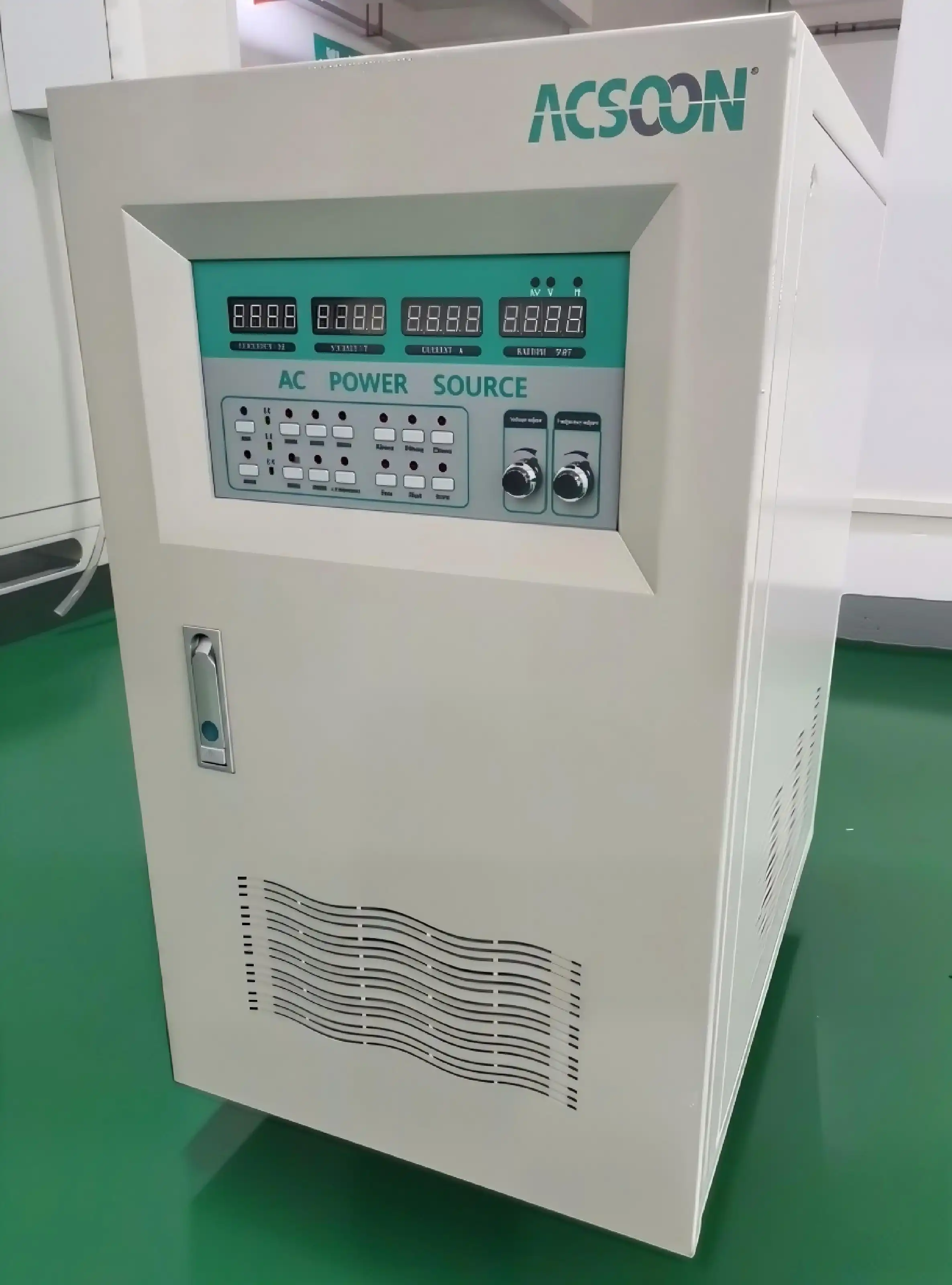
Overview of Voltage Standards in 3 Phase 400Hz Frequency Converters
Common Input Voltage Ranges and Configurations
Frequency converters made for industry and space use can handle a range of input voltages to meet local electricity standards. 208V or 480V three-phase systems are most common in North American facilities, while 400V or 230V systems are most common in European facilities. Even more variety can be found in Asian markets, where norms range from 380V to 415V based on the country. This is shown by the ACSOON AF400M-330100, which can handle input voltages between 208V and 480V at normal grid speeds of 50Hz and 60Hz. Because of this wide input tolerance, most installations don't need extra transformers. This lowers the cost of the original investment and the amount of upkeep that needs to be done over time. The converter's ability to handle voltage changes within ±10% of normal values makes it more resistant to grid instability that is typical in remote work areas.
Output Voltage Options for 400Hz Applications
To choose the right output voltage, you need to carefully think about the requirements of the end equipment. MIL-STD-704 and DO-160 are the main standards used by the military and aircraft industry. They define 115V or 200V phase-to-neutral configurations at 400Hz. Ground support equipment for commercial flight usually needs 115/200V output, which is the same as what is used in airplane electrical systems. In manufacturing test benches and labs, output voltages need to be able to be changed so that equipment from different makers can work. The AF400M-330100 gives out regulated 200-208V three-phase power at 400Hz, which is stable enough for airplane repair work to be done without having to use extra power units. This feature makes operations much cheaper while keeping the accuracy of electrical parameters within ±1% voltage control.
International Compliance and Regional Standards
Following international electricity standards makes sure that buying and installing things across borders goes smoothly. Electromagnetic compatibility is governed by the IEC 61000 set of standards, and harmonic distortion limits are covered by IEEE 519. For European markets, equipment must have a CE mark, but for installs in North America, it needs to be UL or CSA certified. The IP54 grade on advanced converter types keeps dust and water splashes from getting into the internal parts. This means that they can be used on both indoor manufacturing floors and semi-exposed repair hangars. This protection grade strikes a balance between being resistant to the elements and being easy to reach for regular upkeep. It takes into account the real-world operational conditions that procurement teams have to deal with when handling different types of facilities.
Impact on System Design and Infrastructure
Choosing the right voltage has effects on the whole design of an electrical system. For lower voltage devices to keep acceptable voltage drop percentages over long wire runs, the cross-section of the conductors needs to be bigger. For the same amount of power, a 208V system might need 50% bigger wires than a 480V system. This has a direct effect on the cost of materials and the size of the pipe. Protection cooperation changes based on the energy level as well. Systems with higher power need stronger protection and may need different types of circuit breakers. When adding a frequency converter to existing infrastructure, matching voltage levels limits the number of changes that need to be made, speeds up the installation process, and lowers the project's risk. So that expensive changes don't have to be made in the middle of a project, procurement professionals should work with engineering teams early on to map out the voltage supply that matches the converter specs.
Technical Specifications Affecting Voltage Selection in 3 Phase 400Hz Frequency Converters
Conversion Technology and Voltage Transformation
Modern static frequency converters use IGBT-based pulse width modulation to turn a normal 50/60Hz input into a clean 400Hz output. In contrast to older rotary converter technology, these solid-state devices change voltage using advanced power electronics instead of mechanical parts. To convert power, AC power is first turned into DC, and then high-speed switching is used to reverse it to the desired output frequency and voltage. The accuracy of the voltage change depends on how well the control program works and how good the parts are. No matter how much the input voltage or load changes, high-quality converters keep the output voltage stable within ±1%. When checking aircraft systems, this level of accuracy is very important because changes in voltage can hide problems with the equipment or cause false test failures. Because static converters don't have any moving parts, they don't have any voltage fluctuations that are caused by mechanical wear. This means that they work the same way for 20 years or more.
Voltage Regulation and Stability Features
Industrial-grade converters are different from basic power sources because they have voltage control systems. Closed-loop feedback systems keep an eye on the output voltage all the time, comparing real values to setpoints and changing the switching patterns every few microseconds. This quick reaction keeps the voltage stable even when the load changes quickly, like when high-current motors or lighting banks are turned on by flight systems. Digital signal processors running custom algorithms in more advanced models can predict changes in load based on pattern analysis of current. This predictive control keeps voltage drops to a minimum during load acceptance. This keeps sensitive electronics safe from short periods of low voltage that could cause faults. Because systems like the AF400M-330100 can be changed in any way, engineers can adjust the voltage response to meet the needs of a particular application. This lets them find the best balance between response speed and oscillation risks.
Comparative Analysis: 400Hz vs. 50/60Hz Systems
By running at 400Hz instead of normal power rates, downstream transformers and motors can be made much smaller and lighter. As the frequency goes up, the magnetic core needs to go down. This means that electrical systems in airplanes can handle power levels that aren't possible at 60Hz. This weight advantage goes all the way through the electrical distribution system, from making the electricity to using it. But working at a higher frequency brings its own problems with power conversion. At 400Hz, the skin effect is stronger, which raises the AC resistance of the wire and could change how voltage drop estimates are done. When capacitive reactance goes down, and inductive reactance goes up, filter design needs and methods for reducing harmonics change. When buying a 3 phase 400Hz frequency converter, procurement teams should make sure that the sellers have recorded experience dealing with these frequency-specific engineering issues. This will make sure that the systems supplied work reliably in real-world situations.
Application-Based Voltage Options and Use Case Scenarios
Aviation and Defense Voltage Requirements
Absolute voltage stability is needed in military aviation uses because electrical failures in flight-critical systems can have disastrous results. For all allied troops to be able to work together, NATO standardization deals say that power must be 115/200V three-phase 400Hz. Ground power units with these exact factors are needed by aircraft repair facilities to simulate the electrical environment in the air while troubleshooting and testing systems. The 100kVA power output of converters like the AF400M-330100 lets you do a lot of work on an airplane without using the internal backup power units. This feature cuts down on engine running hours, which lowers repair costs and gets rid of exhaust fumes in hangars that are closed off. Using corrosive salt-air conditions in naval uses adds to the problems, so protection grades of IP54 or higher are required. Shore power systems serving aircraft carriers or amphibious attack ships have to send a lot of power over long cable runs. The choice of a 3-phase 400Hz frequency converter has a direct effect on how well the system works and how feasible it is.
Industrial Manufacturing and OEM Solutions
More and more, 400Hz motor drives and heating parts are being used in industrial automation tools to make machines smaller. Clean rooms used to make semiconductors use high-frequency power for special process tools that can't use 60Hz parts because of space issues. These systems need to be able to change the voltage and frequency so that they can work with equipment from a wide range of global sources that use different electrical standards. Original equipment makers that make unique machines can benefit from converters that let them change the voltage over a wide range. During the development of a product, engineering teams can test samples with different voltages without having to keep separate power sources on hand. Because ACSOON specifications allow for customization, original equipment manufacturers (OEMs) can include frequency converters as built-in system parts. This gives users complete solutions and helps goods stand out in crowded markets.
Laboratory Testing and Research Facilities
To make sure that equipment works well across its full operating range, research institutions and certification labs must create a variety of electrical settings. In order to test aerospace components, devices must be put through voltage spikes, frequency changes, and harmonic distortion profiles that meet MIL-STD-704 requirements. Fixed-output converters don't work well with these thorough test methods. Testing facilities, especially value converters with programmable voltage profiles, let automatic test routines go through certain voltage ranges while keeping an eye on how the equipment responds. It is possible to thoroughly test equipment before putting it into service by simulating abnormal electrical conditions like steady overvoltage or brief failures. Suppliers like JERRYSTAR make sure that labs have enough product on hand so that they can quickly get new units or add more space when urgent testing needs arise.
Key Factors in Choosing Voltage Options for 3 Phase 400Hz Frequency Converters
Matching Converter Specifications to Equipment Requirements
A good way to choose the right voltage starts with writing down all of the specs of the tools you already have. Purchasing teams should collect data plates from all devices that need 400Hz power and write down both the nominal voltage values and the allowed tolerance ranges. If you have equipment that needs to work with 115V ±3% voltage variation, you need a 3 phase 400Hz frequency converter that can handle ±10% voltage variation. Over-voltage situations are especially dangerous for solid-state equipment because they can break down shielding and cause parts to fail right away. Under-voltage situations cause less obvious issues, like a motor's power output going down and the possibility of burning due to higher current draw. When choosing converters, make sure that the output voltage matches the equipment's nameplate values and isn't much higher or lower. This will increase practical safety while improving performance.
Evaluating Supplier Capabilities and Support Infrastructure
In addition to technical requirements, a supplier's review must also look at quality systems, help after delivery, and the consistency of the manufacturing process. Well-known companies like Schneider Electric, Siemens, and ABB have been converting power for decades and have service networks all over the world. Specialized providers like ACSOON have a lot of experience with aircraft and military uses, and their engineering teams know how to meet complex needs that go beyond generic product datasheets. Certification paperwork is concrete proof of the quality of production and design validation. UL listing, CE marking, and MIL-STD compliance tests all require a lot of money to be spent on strict technical and production controls. Suppliers who give full test results, calibration certificates, and tracking paperwork show that they are committed to quality that goes above and beyond what is required by law. Long-term total cost of ownership is directly affected by the infrastructure for after-sales support, such as the supply of spare parts, the placement of field service technicians, and the speed with which the technical call is answered.
Cost Considerations and Lead Time Planning
The initial buying price is only one part of the total costs over the product's lifetime. Scores for energy efficiency show how much it costs to run the converter over time. More expensive converters are more efficient, with scores of 90% or more, while cheaper types only get 80–85%. Over 15 years of use, differences in energy costs can be greater than the starting cost of the tools, especially in high-duty-cycle situations. Lead times are very different between sources and types of products. Standard models from a catalog might be shipped within a few weeks, but special voltage versions might take 12 to 16 weeks to make. These dates must be taken into account when making purchases, especially for equipment that is essential to the job. When time constraints force suppliers to cut back on their inventory of popular setups, they lower the risk of delays. The best provider is usually chosen by finding the balance between the need for customization and the need for quick delivery.
Scalability and Future Expansion Requirements
As operations grow, they finally need more power than the beginning converter can handle. Through parallel operation of multiple units, modular converter designs allow small capacity increases, protecting original investments while allowing for growth. For manufacturing sites where predicting production volumes is hard because of unpredictability, this scalability is very helpful. Standardizing voltage across all sites makes it easier to keep track of spare parts and train people in repair. Companies with more than one location might want to agree on certain voltage setups, even if the voltages at each site are different. If necessary, input transformers can be used to feed consistent voltages to standardized converter fleets. This method cuts down on complexity while taking advantage of the benefits of buying in bulk.
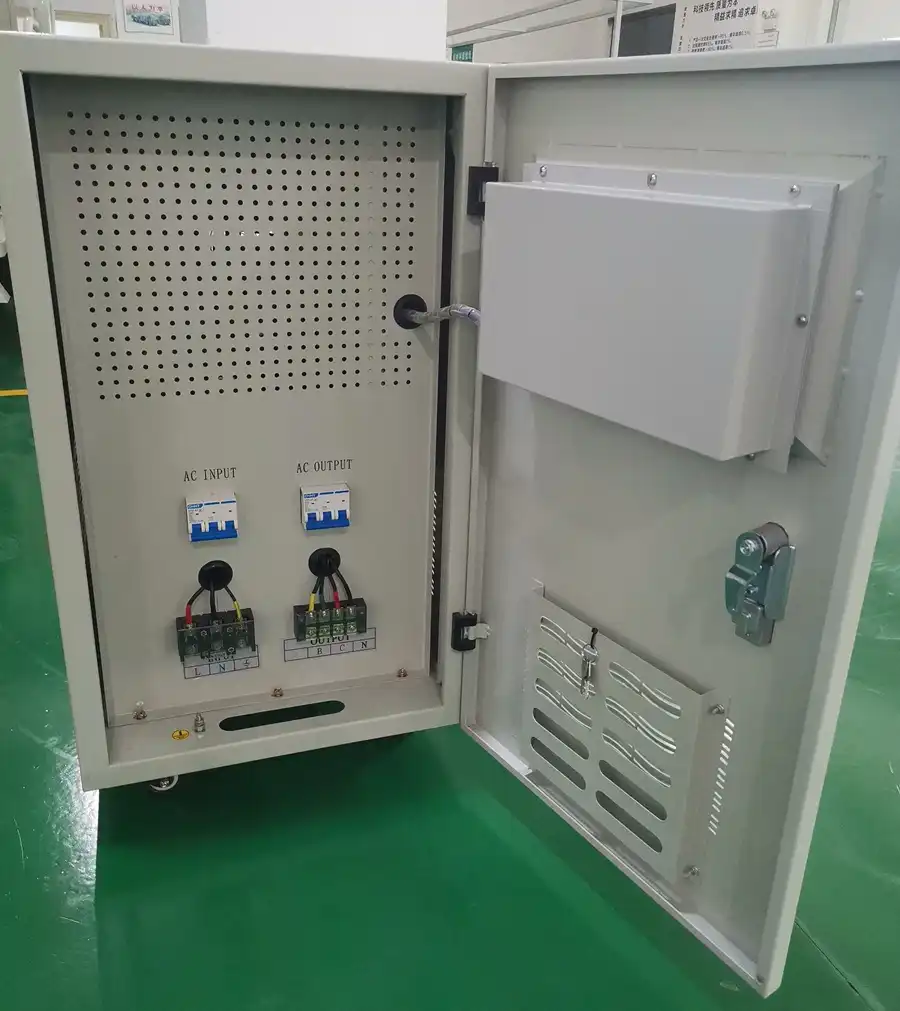
Troubleshooting and Maintenance Related to Voltage Issues in 3 Phase 400Hz Frequency Converters
Common Voltage-Related Problems and Symptoms
Voltage instability shows up in a number of different ways that repair teams need to be able to spot quickly. If the output voltage goes beyond what is allowed by regulation, it's usually because the capacitors in the filter circuits are getting old or the accuracy of the feedback sensor has dropped. When the load changes and there are sudden voltage jumps, it means that the control loop gain isn't high enough or that parts of the output stage are failing. Harmonic distortion shows up as a change in the voltage waveform and could make motors and coils attached to the converter output get too hot. Total harmonic distortion above 5% is not allowed by most aircraft equipment standards and needs to be looked into right away. If there is a mismatch in the voltage across three phases, meaning that one phase reads much higher or lower than the others, it means that either parts of the output stage have failed or the load is uneven and needs to be redistributed.
Diagnostic Tools and Testing Procedures
For accurate voltage testing, you need the right tools. True-RMS multimeters give correct voltage readings even when waveform distortion throws off average meters. Power quality monitors record transient events and harmonic spectra, which show issues that can't be seen with simple voltage readings. Oscilloscopes show detailed pulse forms that help find problems with noise and switching that doesn't work right. Systematic steps should be used in diagnostic processes to narrow down problems to specific parts. By measuring the features of the input voltage, you can tell if the problems are coming from above or from inside the converter. Regulation ability can be measured by comparing the output voltage when there is no load to when there is a full load. Measurements of phase-to-phase and phase-to-ground voltage find imbalances and possible ground problems that need quick attention.
Installation Best Practices for Optimal Voltage Performance
Voltage problems can be avoided by installing things the right way. At full load, the voltage drop stays below 2% as long as the conductors are the right size based on the real load current and wire length. Ground loop problems are less likely to happen when you use separate grounding wires instead of tubing or cable armor. Ground loops can cause noise to get into sensitive control circuits. When a 3 phase 400Hz frequency converter turns on, input line reactors or isolation transformers protect it from changes in the voltage from the power grid and keep the starting current low. Output filters cut down on high-frequency switching noise that could damage sensitive equipment or go against rules about electromagnetic compatibility. Physical mounting should keep vibrations to a minimum and make sure there is enough airflow across heat sinks to cool them down. This is important because overheated components make voltage control move faster. Following the fitting instructions provided by the maker and any applicable electrical codes sets the stage for long-term performance that is reliable.
Conclusion
To choose the right voltage for 3 phase 400Hz frequency converter, you need to carefully look at the needs of the application, the infrastructure that is already in place, and your needs for future expansion. Different utility standards can be met by the input voltage being flexible, and the output voltage being precise to ensure equipment compatibility and operating stability. Procurement experts can fairly evaluate supplier offers when they understand technical specifications, such as regulation accuracy and harmonic distortion limits. In aircraft, production, and testing settings, customization options, environmental protection, and certification standards are all given different levels of importance based on the type of application. Correct installation methods and the ability to diagnose problems help stretch the service life of converters and reduce unplanned downtime, which protects mission-critical operations.
FAQ
What input voltages do 3 phase 400Hz frequency converters typically accept?
Most 400Hz converters made for commercial use can handle input voltages between 208V and 480V three-phase at normal 50-60Hz rates. This adaptability works with standard voltages in Asia (380V, 415V), Europe (400V, 230V), and North America (208V, 240V, 480V). Wide input range makes installation easier because most sites don't need extra transformers.
How do I ensure voltage compatibility with sensitive aerospace equipment?
Check that the control of the converter's output voltage meets MIL-STD-704 standards, which usually call for ±1% steady-state accuracy. Make sure that the total harmonic distortion stays below 5% and that the transient reaction characteristics fit the tolerance limits for the equipment. Ask the maker for test reports that show how well the product works across all load levels, and for important uses, think about having acceptance testing done by someone else.
Can I order custom voltage configurations for specialized projects?
Reputable companies like ACSOON offer voltage and frequency options that can be fully customized to meet the needs of each application. Custom designs usually add 8 to 12 weeks to the lead time compared to catalog goods, but they get rid of the need for expensive changes in the field. Getting engineering teams involved early in the buying process makes sure that unique designs meet all technical and certification standards before they are committed to production.
Partner With JERRYSTAR for Your 400Hz Power Conversion Needs
The 3 phase 400Hz frequency converter products that JERRYSTAR makes are effective and are designed for hard industrial, military, and aerospace uses. Our ACSOON brand converters use tried-and-true static conversion technology and offer a wide range of customization options. This makes sure that your equipment always gets precisely regulated power, no matter the working setting or limitations of the utility infrastructure. Our production center in Xi'an keeps a large stock of standard configurations and can also do quick custom building for unique needs. We are a single-source seller because we offer power ratings from 10kVA to 500kVA and voltage configurations that meet all foreign standards. This makes buying easier. Our engineering team has a lot of experience in flight ground support, naval applications, and lab testing settings. They can offer more than just product sales; they can also provide expert advice. As a business that both makes things and sells them, we can offer low prices and quick customer service that bigger companies can't match. You can email our expert sales team at acpower@acsoonpower.com to talk about your voltage needs, get more information, or set up factory acceptance testing. JERRYSTAR is your go-to source for 3 phase 400Hz frequency converters because we offer high-quality products and full support, whether you need a single converter right away or a unique answer for a complicated project.
References
1. Institute of Electrical and Electronics Engineers. (2022). IEEE Standard 519-2022: IEEE Standard for Harmonic Control in Electric Power Systems. IEEE Standards Association.
2. International Electrotechnical Commission. (2020). IEC 61000-4-11: Electromagnetic Compatibility - Testing and Measurement Techniques - Voltage Dips, Short Interruptions and Voltage Variations Immunity Tests. IEC Publications.
3. United States Department of Defense. (2019). MIL-STD-704F: Aircraft Electric Power Characteristics. Defense Technical Information Center.
4. Society of Automotive Engineers. (2021). AS 81820: Characteristics of Aircraft Electrical Systems. SAE International.
5. RTCA, Inc. (2018). DO-160G: Environmental Conditions and Test Procedures for Airborne Equipment. Radio Technical Commission for Aeronautics.
6. National Electrical Manufacturers Association. (2020). NEMA Standards Publication PE 5: Utility Type Battery Chargers and Battery Charging Equipment. NEMA Publications.