




Frequency Converter 60Hz to 50Hz 220V Solutions from China Supplier
A Frequency Converter 60HZ To 50HZ 220V is an important tool for foreign businesses that need to ensure their electricity systems work well together. These specialised devices convert 60Hz grid power from North America or other regions into a stable 50Hz output at 220V. This lets important electronics, originally made for European or Asian power standards, operate correctly in regions with different electrical standards.. China has become one of the major manufacturing regions for power conversion equipment, supported by mature supply chains and engineering capabilities.
Understanding Frequency Converter 60Hz to 50Hz 220V: Technical Insights and Benefits
Core Technology and Operational Principles
Static frequency converters use double conversion. The 60Hz AC power is converted to DC using a regulated bridge circuit. Harmonics are reduced through filtering and PWM control techniques. Finally, Insulated Gate Bipolar Transistor (IGBT) switching and Sinusoidal Pulse Width Modulation invert it back to AC at 50 Hz. Some models include galvanic isolation to provide electrical separation between input and output circuits, protecting sensitive loads from grid disturbances.
This design works with 4kVA of power and according to different models, input voltage and phase configurations can be customized. at 60Hz input voltages, like the ACSOON type AF60W-31004. The gadget produces a stable single-phase 220V, 50Hz output with ±1% voltage and ±0.1% frequency. This accuracy is crucial for stable voltage and frequency help maintain consistent power conditions for precision heating and testing equipment.
Technical Details That Influence Procurement
When evaluating Frequency Converter 60HZ To 50HZ 220V characteristics, procurement engineers should go beyond input-output ratings. Total Harmonic Distortion (THD) should stay below 3% when linear loads are applied to prevent equipment failure and electromagnetic interference. To avoid short-term load variations disrupting critical activities. Equipment startups have an opportunity for error because overload capability depends on converter design and application requirements.
Table 1: Key Technical Parameters Comparison
| Describe | Specification in general | Performance of the ACSOON AF60W-31004 |
|---|---|---|
| Stability of Voltage | about ±2% to ±5% | ±1% full scale |
| Stability of Frequency | about 0.5% normal | ±0.1% full scale |
| LH (Linear Load) THD | Standard of 5% | ~3% promised |
| Time to Respond | 5–10 ms is normal | <2ms |
| Capacity to Overload | 120% for 60s | 150% for 60s |
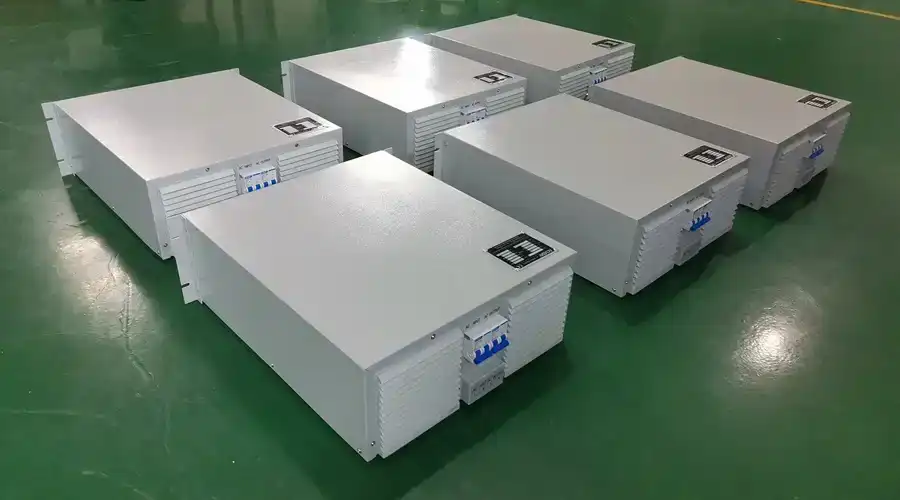
The rack-mounted design with an IP21 protection is suitable for indoor industrial environments where basic protection against dust and vertical dripping water is required. This design consideration makes installations easier to set up and takes up less space in control rooms that are already full or on ships.
Advantages Over Traditional Transformers and Alternative Solutions
Transformers just change voltage and maintain input frequency. They can't be used with frequency-sensitive equipment like induction motors or synchronous machines. A 50Hz motor operated on a 60Hz supply may run approximately 20% faster under frequency-dependent conditions, causing rotational stress, bearing wear, and heat overload. By reconstructing the power waveform to match the equipment's design standards, Frequency Converter 60HZ To 50HZ 220V eliminates this issue.
Converters also process full power and change frequencies. They can manage voltage better than transformers, stabilising the power supply during changes that could damage sensitive devices. The double-conversion design's galvanic isolation prevents ground loops and transient spikes in transformer-based systems. Modern static frequency converters typically achieve high conversion efficiency, depending on power rating and design. Waste heat is handled by forced-air cooling or heat sink arrays, depending on power.
Choosing the Right Frequency Converter for Your Business Needs
Matching Technical Requirements to Application Profiles
Choosing the correct 60HZ to 50HZ 220V frequency converter equipment starts with a load study. Procurement teams must record peak power, starting surge currents, and duty cycle for all linked equipment. Resistive heating loads are easy, but Motor loads require additional capacity consideration because of starting current and transient conditions of their base power to handle starting currents. Power factor adjustment circuits in lab test equipment may load non-linearly, requiring converters with excellent harmonic handling.
The ACSOON AF60W-31004's single-phase output is ideal for precision heating operations that require clean, reliable power. Its 4kVA rating suits tabletop warmers, tiny industrial ovens, and environmental rooms that need accurate temperature profiling. Larger installations with multiple heating zones or three-phase equipment require higher power ratings or parallel converters with synchronised outputs.
The environment influences the selection criteria. Besides IP21 protection, marine circuit boards must be conformal film-coated and rust-resistant. Some military applications may require additional environmental, EMC or security-related certifications depending on project requirements.Chinese producers are now offering more customised versions. Custom specifications may require longer lead times and minimum order quantities.
Comparison with Reverse Conversion and Direct Operation Scenarios
Here are the most important differences between the different frequency change situations that buying professionals see. When you use equipment made for European or Asian countries in North America, you need to convert it from 60Hz to 50Hz. When North American equipment is used abroad, it must be converted from 50Hz to 60Hz. The technical application stays the same, but algorithms that create output waveforms take into account the target frequency's unique harmonic content and zero-crossing gaps.
- Bidirectional capability: Some more advanced models have field-switchable output frequencies, which give companies with facilities spread out around the world or that rent out equipment more operational flexibility. The ACSOON platform can be customised by OEMs, so procurement teams can request dual-frequency capability when placing an order.
- Direct operation risks: If you try to use frequency-mismatched equipment without converting it, it will fail in ways that you can predict. Motors have changed torque curves and thermal stress; timing circuits drift, and control systems stop working when the clock references are off. When this kind of misuse happens, the warranty usually stops covering it. Such misuse leaves companies with the costs of replacing equipment and lost work time.
- Transformer limitations: transformers can change power, but they can't resolve problems with frequency. A step-down generator that lowers 240V to 220V still operates at the input frequency, so the issue of 60Hz not working with 50Hz remains. True frequency transfer is the only way to ensure that all electricity systems work together.
These differences have a direct effect on the total cost of ownership numbers, since choosing the wrong equipment can cause it to break down early, require more upkeep, and run less efficiently, all of which add up over the lifecycle of the equipment.
Pricing Structures and Value Analysis from Chinese Suppliers
China-based makers have set up tiered pricing systems that take into account promises to buy in bulk, the difficulty of customisation, and the amount of support services needed. The most affordable unit prices are for standard catalogue units like the AF60W-31004. Volume discounts start at ten units and reach their peak at fifty to one hundred units. Custom specifications that include changed enclosures, specific input voltage ranges, or better protection against the environment can add 15–35% to the base price, depending on how complicated the engineering is.
Table 2: Typical Cost Components in China-Sourced Frequency Converters
| Part of the cost | Share of the Total | Thoughts on Value |
|---|---|---|
| Making the Bases | 45–55% | Quality of parts and production scale |
| Making sure of quality | 10-15% | Rigidity of testing and approval compliance |
| Customisation and engineering | 5 to 20 percent | Specification complexity and the need for tools |
| Shipping and exporting | 8–12% | How to ship and deal with customs |
| Warranty and Help | 5–10% | Coverage length, technical ease of access |
Manufacturers with good reputations usually offer warranties that last between 18 and 36 months. Service contracts can give you longer support. The value offer goes beyond the length of the warranty and includes being able to get expert help, spare parts, and repair in the field. Xi'an Jerrystar keeps enough stock on hand to make quick deliveries, which helps them handle urgent repair situations that could otherwise stop important operations. Customers can lock in long-term prices and manage their cash flow with delayed deliveries through bulk buying agreements that often include consignment inventory arrangements.
Procurement Process and Supplier Selection: Buying Frequency Converters from China
Evaluating Manufacturing Credentials and Quality Indicators
More than price comparison is needed to acquire Frequency Converter 60HZ To 50HZ 220V from Chinese manufacturers. First, verify business registration and export licences to gain manufacturing qualifications. This legalises work. Quality management systems like ISO 9001 for general production and AS9100 for aerospace applications demonstrate systematic process control and continuous improvement.
Product-specific certifications are more useful than corporate credentials. The CE and UL marks indicate European safety and electromagnetic compatibility and North American electrical safety, respectively. Military and government contractors must have ITAR compliance papers or other export control understanding. Suppliers with government contracts are tighter about quality and paperwork.
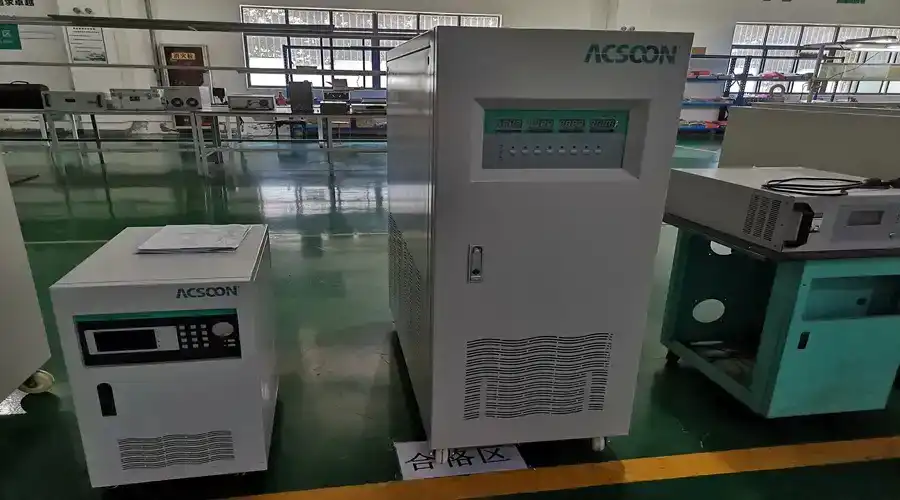
Factory audits, done in-person or by a third-party inspection agency, reveal how things work that certifications can't. Production floor organisation, part tracking, and in-process testing all demonstrate product consistency. Trading and manufacturing occur in Xi'an Jerrystar's 5,000–10,000 square metre structure. Its aviation and military power system expertise demonstrates that it can fulfil high-quality criteria.
Navigating Purchasing Channels and International Logistics
Frequency Converter 60 Hz To 50HZ 220Vs from China can be ordered in several ways, depending on the company and urgency. Directly interacting with the manufacturer gives you the greatest customisation possibilities and the best costs for large purchases, but you must create relationships first, and the minimum order quantity may be greater. Trading organisations aggregate goods from various manufacturers into single packages to minimise shipping costs for smaller consumers.
Online B2B platforms like Alibaba and Global Sources make it easy to identify suppliers and compare specs, but research is still crucial before making significant purchases. These platforms increasingly protect transactions and manage third-party quality assessments, reducing the hazards of international shopping. Net payment periods replace letters of credit for first orders as business connections and trust expand.
When planning foreign operations, consider travel time and customs clearance difficulties. Air freight delivers in 5–10 days but costs more per item; thus, it's only ideal for urgent replacements or prototypes. Ocean goods ships huge orders cheaply but takes 25–40 days to reach its destination. Choosing the proper Incoterms (FOB, CIF, DDU, or DDP) affects the landed cost estimate because it specifies who pays for shipping, insurance, and customs charges.
After-Sales Support and Technical Assistance Frameworks
Warranty coverage and technical support are more important than the original buy price for long-term supplier relationships. Warranty conditions should include part replacement, labour, and the transport of damaged products. To avoid claims disputes, carefully identify exclusions for misuse, environmental harm, and illegal changes.
Technical support extends beyond guaranteed repairs in several areas. Pre-sales application engineering defines the proper models and configurations to avoid costly gaps between equipment capabilities and needs. Installation assistance, such as precise instructions or remote video conferencing, reduces commissioning time and errors. Maintenance staff operational training helps the organisation do routine repairs and inspections without outside aid.
JERRYSTAR provides a technical support network that can handle the most critical application needs because it serves the aviation, military, marine, and lab testing industries. Writing to acpower@acsoonpower.com for technical concerns and purchase conversations helps keep track of information that can be used to solve problems and gain feedback on how to improve.
Installation, Operation, and Maintenance of Frequency Converters
Professional Installation Procedures and Safety Considerations
Proper site preparation and installation of the Frequency Converter 60HZ To 50HZ 220V provide the groundwork for long-term success. The device must be installed with enough airflow to maintain the operating temperature, usually between 0°C and 40°C. The AF60W-31004 requires 19-inch equipment racks with suitable depth for cable routing and weight capacity for the converter and attached distribution equipment.
Manufacturer and local electrical codes must be followed while connecting electrical devices. The input wire must have properly sized conductors and circuit protection to carry the maximum rated current. Torque specifications in terminal connections prevent too little contact pressure and too much tightness from damaging terminals. Grounding links need pathways to build ground systems to set the safety reference, return fault currents, and stop electromagnetic interference.
Pre-energisation checks ensure that voltage levels match equipment ratings and that output connections go to the proper loads without going through parallel routes. To ensure proper operation, the converter is normally turned on without a load when started. Next, load segments are added one at a time while output voltage, frequency, and temperature are monitored. Writing down the initial performance aspects helps with maintenance and troubleshooting.
Troubleshooting Common Operational Issues
Regular techniques can predict and fix most operational difficulties. Overloading beyond capacity, high ambient temperature, or worn filtering capacitors can cause unstable output voltage. Verifying the load current versus the nameplate numbers provides rapid clarification. Thermal imaging can detect overheating from poor connections or airflow pathways. Monitors show output voltage ripples when capacitors fail.
High-quality converters with crystal-controlled timing references rarely drift, although older devices can drift due to part age or temperature. You can distinguish drift from measurement error by testing against accurate frequency meters. Thermal protection activation can produce intermittent output gaps if there isn't enough air, the load is changing too quickly, or the component stresses that the maker should check.
Electromagnetic waves interfering with sensitive equipment usually indicate poor grounding or shielding. Shielded wires with 360-degree shield termination at both ends and ground continuity throughout installation usually solve these issues. If the problem persists, consider applying line filtering or relocating the equipment.
Preventive Maintenance Programs for Extended Service Life
Systematic preventative maintenance reduces unexpected malfunctions and extends equipment life beyond the warranty. Every three months, inspect the cooling fan, heat sinks and circuit boards for dust and discoloured or bloated capacitors, which indicate failure. Hotspots can be detected before they harm parts or induce protective shutdowns using thermal imaging while the machine is functioning.
Electrical readings every six months reveal performance patterns. Testing the output voltage and frequency against the specification limits verifies the control circuit's functionality. Under stable load circumstances, input current efficiency fluctuations may indicate component wear. Test the insulation resistance between the input, output, and ground circuits to maintain electrical separation for safety and electromagnetic compatibility.
Manufacturer-recommended repair intervals and condition-based indicators determine part replacement. Cooling fans should be replaced every 30,000–50,000 hours, depending on dust levels. As the electrolyte evaporates, filter capacitors lose power. Even if they look fine, change them every 5–7 years. Keeping suppliers of replacement parts in stock reduces unplanned repair downtime. Parts availability should be a major factor when choosing your first source.
Why Choose Our 60Hz-to-50Hz 220V Frequency Converter Solutions from China?
Advanced Engineering and Manufacturing Capabilities
ACSOON 60HZ Frequency Converter Power electronics for 50Hz 220V have been refined over the years in the military, aerospace, and naval industries, where dependability is crucial to mission accomplishment. Because of its low switching losses and excellent temperature tolerance, the AF60W-31004 model uses industrial-grade IGBT modules. Microprocessor-based control systems provide frequency stability of ±0.1% for precision heating applications through complex output waveform creation methods.
Automatic component positioning and wave soldering assure solder joint quality during manufacture. Electrical tests are performed on joints at many production stages. Before shipping, each unit undergoes many hours of full-load burn-in testing to identify potential failures before shipment. Even though the initial investment is more than consumer-grade alternatives, Xi'an Jerrystar's experience in power conversion for mission-critical applications and tight quality control lowers lifetime ownership costs.
Customisation requires tech teamwork, not just specification changes. Equipment makers can use ACSOON converters as parts in larger devices with their own labels, housings, and interface protocols with OEM support. Businesses that seek to standardise power conversion platforms across a wide range of equipment benefit from this flexibility, which reduces training and spare part complexity.
Proven Performance Through Client Applications
Real-world usage data illustrates how effectively the converter functions in conditions that lab studies can't mimic. For example, industrial heating manufacturers may use frequency converters when adapting equipment between different grid standards. The ACSOON AF60W-31004 maintained 0.5°C temperature control across long production runs. This prevented thermal gradient changes that would have reduced product quality and yield.
Global marine research ships must adapt to shifting shore power arrangements in new ports. Frequency converter systems eliminated port stay generators. It reduced fuel expenditures and noise that impacts sensitive oceanographic equipment. Galvanically isolated converters prevented ground loop currents from causing equipment failure between the ship's electrical systems and terrestrial facilities.
To avoid having separate test rooms for each region's power standard, laboratories use frequency converters to simulate a foreign power grid when testing devices for international sales. Because ACSOON converters stabilise voltage and frequency, compliance testing results reflect how well the product functions, not just how the power supply alters its performance. This level of testing precision reduces field issues after product release, saving insurance money.
Strategic Advantages for Long-Term Partnerships
Building links with Chinese manufacturers like Xi'an Jerrystar has benefits that go beyond the powers of individual products. If you keep your supplies in good shape, you can quickly fill replacement needs that would otherwise cause important activities to stop while you wait for longer lead times. The 5,000–10,000 square metre building can be used for both standard production and custom manufacturing, so it can be expanded as the needs of the business change.
A company that makes and trades goods can combine flexible production with easy export logistics. Direct access to manufacturers makes sure that technical questions get to engineering teams that know the specifics of the design. Trading infrastructure takes care of paperwork, making sure that customs rules are followed, and coordinating foreign shipping. This hybrid structure works best for medium-sized businesses that don't have their own foreign purchasing teams.
Working with the military and aircraft industries has made paperwork strict and improved traceability, which is good for all customers. Record keeping for component sources, production batch tracking, and configuration management systems creates the audit trails needed for controlled industries and speeds up root cause analysis in the event of problems in the field. Because of these skills, Xi'an Jerrystar is a manufacturer that can handle tough jobs where the dependability of power transfer is crucial to the success of operations.
Conclusion
Technology that changes frequencies makes it possible for factories to work together, labs to do research, and specialised equipment to be used in places with different electrical standards. To choose the right power conversion tools, you have to weigh the technical specs against the total cost of ownership, the vendor's help options, and the need for long-term dependability. Specialised suppliers in China, like JERRYSTAR with their ACSOON product line, offer competitive solutions that include advanced engineering, the ability to customise, and quick customer service. This guide gives expert buyers the buying strategies they need to choose the right suppliers, properly evaluate specs, and set up frequency conversion systems that protect important equipment while causing as few problems as possible with operations.
FAQ
What equipment requires Frequency Converter 60Hz to 50Hz 220V solutions?
Frequency Converter 60Hz to 50Hz 220V solutions are needed for what? When used in 60Hz electrical settings, precision heating equipment, induction motors, timing-dependent control systems, and lab instruments that were made to work with 50Hz electricity need to be frequency converted. The numbers on the equipment's nameplate show both the voltage and the frequency. If you use it at the wrong frequency, it may not work at all, or it may wear out faster, based on the load and the design inside.
How quickly can Chinese manufacturers deliver frequency converters for urgent requirements?
Suppliers who are known to keep standard models in stock usually ship within three to five business days, and air freight can get them to North American destinations in seven to ten days. Lead times can go up to 3–6 weeks if the specs are unique and require engineering changes. JERRYSTAR's inventory management specifically handles situations where parts need to be replaced right away. This lowers the risk of long periods of downtime during important equipment breakdowns.
What warranty and technical support should buyers expect from Chinese frequency converter suppliers?
Reputable manufacturers offer 18–36 month warranties that cover flaws in the manufacturing process and failures of parts under normal use. Full expert support includes application building before the sale, help with installation, and troubleshooting via email or video chat. To avoid future disagreements, buyers should make sure that extra parts are available and that warranties don't cover damage to the environment or improper use while negotiating the purchase.
Partner with JERRYSTAR for Reliable Frequency Converter Solutions
Industries that need power quality that can't be beaten can benefit from JERRYSTAR's experience in frequency conversion for lab, military, and flight uses. Our ACSOON AF60W-31004 and expanded product line provide the precise frequency and stable voltage that important equipment needs. They also come with the ability to be customised to meet specific operational needs. Teams looking for a reliable provider of Frequency Converter 60HZ To 50HZ 220V can gain a strategic edge from our large inventory that can be sent out quickly and our technical support infrastructure that knows how to handle tough applications. Email our engineering team at acpower@acsoonpower.com to talk about your unique power conversion needs and get thorough technical proposals that are made to fit your business.
References
1. Chen, W., & Liu, X. (2022). Advanced Power Electronics in Frequency Conversion Systems: Design Principles and Industrial Applications. Beijing: Machinery Industry Press.
2. International Electrotechnical Commission. (2021). IEC 61800-9-2: Adjustable Speed Electrical Power Drive Systems – Part 9-2: Ecodesign for Power Drive Systems, Motor Starters, Power Electronics and Their Driven Applications. Geneva: IEC Publications.
3. Martinez, J. A., & Mahseredjian, J. (2020). "Modelling and Analysis of Frequency Converters for Cross-Border Industrial Operations." IEEE Transactions on Industrial Electronics, 67(8), 6842-6851.
4. Patel, S. R., & Thompson, M. D. (2023). Global Procurement Strategies for Industrial Power Equipment: China Sourcing Best Practices. New York: Industrial Press Inc.
5. Zhang, H., Wang, L., & Kumar, P. (2021). "IGBT-Based Static Frequency Converters: Performance Characteristics and Reliability Assessment for Critical Applications." Journal of Power Electronics, 21(4), 1156-1167.
6. U.S. Department of Defence. (2022). MIL-STD-1399-300B: Interface Standard for Shipboard Systems – Section 300: Electric Power, Alternating Current. Washington, DC: Defence Technical Information Center.