




How Does a Large UPS Power Supply Ensure Stable AC Output for Industrial Applications?
Through an advanced double-conversion topology that constantly converts incoming AC power to DC and then back to precisely controlled AC output, a Large UPS Power Supply keeps the output stable at 115 VAC. The double-conversion UPS isolates the load from many input disturbances by regenerating a controlled AC output. When the power goes out, internal battery banks provide fast backup,
Online double-conversion UPS systems provide near-zero transfer time because the inverter continuously supplies power to the load
, they make sure that sensitive equipment always receives clean, unbroken power. The system's voltage control circuitry and advanced inverter technology ensure that the output is stable no matter the quality of the input or the load. This makes it necessary for important uses.
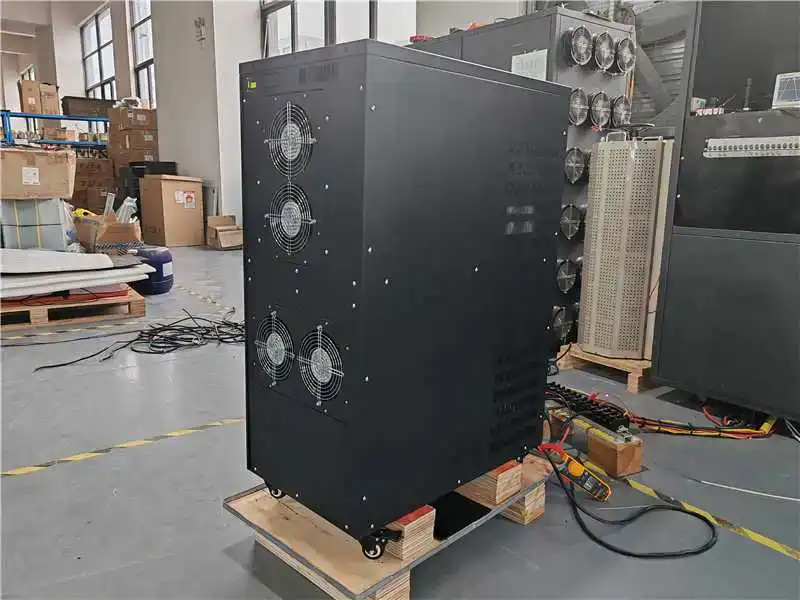
Understanding Large UPS Power Supplies and Their Role in Stabilizing 115 VAC Output
Modern industrial processes must not compromise power reliability. When there are voltage drops, surges, or total power outages in the electric grid, mission-critical equipment is immediately at risk. These weaknesses can be fixed by Large UPS Power Supplies, which have built-in safety features that go far beyond simple battery backup.
Core Components Ensuring Voltage Stability
There are many parts in these systems that all work together. The rectifier converts AC input into DC power, while filters and control systems help reduce electrical disturbances. Battery banks, which are sized based on runtime needs, store energy for emergencies. With precise voltage and frequency control, the inverter part makes clean sinusoidal waves again. Advanced microprocessor-based controllers keep an eye on every part of the process and change parameters in real time to keep output specifications within minimal ranges of error.
How Does Voltage Regulation Technology Work?
Voltage regulation depends on checking and fixing things all the time. When the input power is different from what it should be, the system immediately makes up the difference. To keep the output stable, automatic voltage control circuits change the inverter pulse-width modulation or the taps on the transformer. Active correction happens thousands of times a second; linked equipment can't see it, but it's crucial for keeping damage from under- or over-voltage situations from happening.
Power Conditioning and Harmonic Filtering
In addition to keeping the voltage stable, these systems get rid of the harmonic distortion that nonlinear loads like variable frequency drives and switching power supplies cause. Input filters stop contamination from going upstream, Harmonic filtering helps reduce distortion and improve power quality according to applicable power quality requirements. This complete conditioning keeps the building's electrical system and sensitive electronics from breaking down or wearing out too quickly.
Types of Large UPS Power Supplies and Their Impact on Output Stability
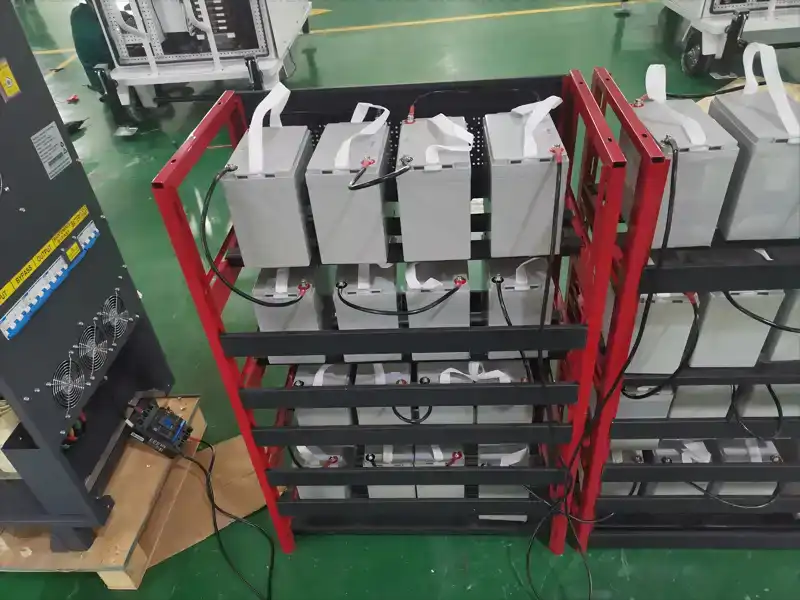
Different architectures protect and work more or less efficiently. Knowing these differences helps procurement teams select the right technology for the application’s needs.
Online Double-Conversion Systems
When it comes to power security, online structure is the best. No matter what kind of power comes in from the utility company, it always goes through the rectifier-battery-inverter line and is entirely changed. The load never links directly to the utility power, so there is no transfer time during power blackouts, and the load is completely cut off from any grid disturbances. The ACSOON APS10KL-APS100 series is a good example of this architecture. It has a 100kW capacity and three-phase 380V input and output at 50/60Hz, making it perfect for places like data centres, telecommunications hubs, and factories that need to be sure they always have power.
This continuous processing makes sure that the output specifications stay the same, with voltage regulation within ±1% and frequency stability within ±0.1Hz. When the power from the utility company goes out, the switch happens automatically because the inverter keeps running on battery power instead of the rectifier output. In contrast to other designs, these Large UPS Power Supplies do not have the power drops and surges that come with transfer switching.
Modular and Scalable Configurations
Modular designs let you add more space without having to update the whole system. Different power units work together to share the load needs. This redundancy makes the system more reliable because if one module fails, the system can still work. Technicians can repair individual units without having to shut down the whole system, which makes maintenance easier. Scalability is especially helpful for buildings that need more power because it lets them add capacity in small steps that match their business's growth instead of making initial setups too big.
Battery Backup Duration and Customization
Runtime needs for different apps are completely unique. Standard configurations offer backup times of 60, 90, or 120 minutes, but custom battery banks can extend runtime to meet the needs of a specific operation. Choosing the right battery technology affects how well it works. Valve-regulated lead-acid batteries are the most cost-effective option for most applications, while lithium-ion batteries last longer and take up less space in setups with limited room. With transfer times between 0 and 20 milliseconds, the system can switch power on and off instantly, so linked equipment doesn't have to wait while it switches to battery power.
Installation and Maintenance Best Practices to Ensure Stable 115 VAC Output
Large UPS power supplies' dependability and life are directly affected by how they are set up and maintained over time. Following established rules maximises return on investment and reduces unplanned downtime.
Site Preparation and Environmental Requirements
For best results, installation settings must meet certain requirements. The temperature outside should stay between 20°C and 25°C, and the relative humidity should stay below 95%. IP20-rated UPS systems are generally designed for controlled indoor environments, in a controlled environment that is free of conductive dust and moisture. Enough space around the unit makes it easier for cooling air to move and for repair workers to access to it. Electrical connections must follow local rules and the manufacturer's instructions, with wires that are the right size and overcurrent safety devices.
What the foundation needs depends on how heavy the system is and how it is set up. Loads are safely spread out on concrete pads or reinforced floors, especially for big battery banks. Best practices say that power and control lines should be kept separate when moving cables to reduce electromagnetic interference. Grounding systems need extra care—the right earth links stop ground loops and make sure surge safety works.
Routine Maintenance Protocols
Systematic inspection schedules help avoid unexpected failures. Visual checks are done once a month to look for weak links, strange sounds, or warning signs. Battery voltage, temperature, and ventilation system verification are all part of the quarterly assessments. Every year, full tests are done that include checking the battery's drain and making sure the setting is correct. Following the manufacturer's instructions keeps things from breaking down too soon.
Software and sensors that allow remote management make it possible to check on the status in real time without being there in person. Alert alerts let you know about problems before they get worse by letting you act before they get worse. Firmware changes sent over the network make sure that the system gets the latest maker fixes and security patches. Keeping specific service logs records the past of the system, which makes it easier to fix problems and file warranty claims when needed.
Battery Management and Replacement Strategies
Backup ability depends on how healthy the batteries are. Temperature has a big effect on battery life; using the battery at high temperatures speeds up the breakdown process. Monitoring tools keep an eye on the voltages of each cell, finding weak cells before they affect the performance of the string as a whole. Battery management systems monitor charging conditions and battery health to extend service life, which makes the battery last longer. Scheduling replacements based on what the maker says and real performance data stops runtime gaps that happen during important breakdowns.
How to Select the Right Large UPS Power Supply for Stable 115 VAC Output
To do strategic procurement, you need to evaluate things in a planned way across many areas. Because the decision to invest in a Large UPS Power Supply will affect operations for years, it is important to do a thorough analysis.
Capacity Planning and Load Assessment
A correct size starts with figuring out the load correctly. Total linked load must take into account both what is needed now and what is expected to grow in the future. Usually, safety margins add an extra 20 to 30 per cent of capacity to keep things from working too close to their highest values, which would lower efficiency and speed up component wear. Three-phase systems, like the ACSOON model, work better and more efficiently than single-phase systems in places where loads are evenly spread across all three phases.
Capacity needs are affected by the load power factor. Power factor problems mean that motors and magnetic loads need more power than their actual power use suggests. Resistive loads with a unity power factor make the best use of capacity. Knowing the characteristics of the load makes sure that the system chosen provides enough power in all situations.
| Parameter | Specification | Application Impact |
|---|---|---|
| Power Rating | 100kW | Supports heavy loads in facilities |
| Input Voltage | 3-phase, 380V, 50/60 Hz | Compatible with all grids |
| Output Voltage | 3-phase, 380V, 50/60 Hz | Keeps input voltage standards |
| Transfer Time | 0 to 20ms | Seamless switching keeps things running smoothly |
| Backup Length | 60/90/120 min (can be changed) | Runtime that is flexible for different situations |
Efficiency and Operating Cost Considerations
Over the life of a machine, operational costs often exceed the price of buying. Energy costs are directly affected by efficiency rates. For example, a system that is 95% efficient wastes 5% of its raw power as heat, so it needs more cooling capacity. The ACSOON series' ECO mode can achieve efficiency levels of up to 97% under suitable operating conditions when the grid is stable and keeping the ability to transfer power instantly when the power quality drops.
How much cooling a building needs depends on how much heat it loses. Systems with lower efficiencies make more extra heat, which makes it more difficult to cool the air. This extra effect raises the cost of energy above and beyond the direct loses in the system. When you figure out the total cost of ownership, you need to include these things along with the expected service life and servicing costs.
Brand Comparison and Feature Evaluation
Different value packages are available from well-known makers. APC stresses the wide access of its service networks. Eaton focuses on modularity that can be expanded. Schneider Electric puts building management systems together. High-density data center uses are what Vertiv is aiming for. Since 2007, Xi'an JERRYSTAR Instrument Co., Ltd. has been making the ACSOON brand of power transfer equipment for the flight, marine, industrial manufacturing, and telecommunications industries. The company is committed to quality standards, as shown by its ISO 9001 certification and CE approval.
Support equipment is very important. Long-term operational success is affected by the availability of local service, spare parts, and technical know-how. System designers and equipment manufacturers can customise their brands with OEM support capabilities. Guarantees on response times and warranty terms protect you financially against sudden failures during key operational times.
Real-World Case Studies: Large UPS Solutions Supporting Stable 115 VAC Output
Real-life examples show how Large UPS Power Supplies provide good power safety and real business value in a range of operational settings.
Data Center Infrastructure Protection
A regional phone company often had problems with the quality of the power that made servers unavailable. Changes in the voltage at the utility company knocked out server power sources, stopping user services. After installing a 100kW double-conversion system, the building was of the time for the next 18 months. Voltage-related server crashes were completely erased by the system's constant power conditioning, and operations continued during three utility outages that lasted between 45 and 90 minutes thanks to battery backup. The IT team was able to keep an eye on power parameters and battery health from the main office, which cut down on site visits and made it possible to plan maintenance ahead of time.
One of the measurable gains was getting rid of about 12 outages a year that were caused by bad power quality and each lasted an average of 2.3 hours. With lost productivity and service level agreement penalties. After installation, the system helped reduce power-related interruptions and improved equipment availability.Within the first year of use, the system paid for itself and continued to protect and give peace of mind.
Industrial Manufacturing Continuity
For CNC machines and automatic assembly systems to work, a precision machining center needed power that was stable. Power fluctuations stopped the production line, which led to parts being thrown away, time being spent recalibrating equipment, and schedule delays. Putting in place a modular uninterruptible power system with a custom 120-minute backup time made operations more reliable. The longer runtime gave enough time for controlled equipment shutdown processes to happen, which kept damage to partly finished workpieces worth thousands of dollars from happening.
In addition to protecting against power outages, the system's power conditioning got rid of the annoying trips that variable frequency drives used to make during voltage changes. As unexpected stops happened less often, production efficiency went up by 7.3%. Maintenance costs went down because equipment didn't have to deal with constant changes in voltage, so it didn't have to be fixed as often. The facility's quality reject rate went down significantly, which was partly due to more stable circumstances for running precise equipment.
Conclusion
A stable 115 VAC output depends on advanced technology that combines rectification, energy storage, and transformer renewal to work together all the time. The design, size, and features of Large UPS Power Supplies directly affect how safe they are and how long they can keep running. To make the right choice, you need to carefully look at the load requirements, economy factors, and long-term operating expenses. You achieve the best system reliability and service life when you install and maintain it correctly. Real-world operations in manufacturing, telecommunications, and data centers show real improvements in uptime, equipment protection, and operating efficiency. This proves that investing in strong power protection infrastructure is a good idea from a business perspective.
FAQ
How long can a high-capacity backup power system maintain operations during utility outages?
Runtime is based on the battery's capacity and the load that is connected. At full capacity, standard setups give you 60, 90, or 120 minutes. Custom battery banks can be made to last longer to meet particular needs. Actual runtime depends on load; when running at 50% capacity, usable time is about double what it is when working at full load. Temperature and battery age also have an effect on performance. Large UPS Power Supplies that are older and warmer have less capacity.
What kind of repair plan guarantees the best performance and the longest life?
Visual inspections once a month find problems that are easy to see. Battery levels and system logs are checked every three months. Every year, full tests are done that include checking the battery's drain and making sure the setting is correct. Following the manufacturer's instructions keeps things from breaking down too soon. Remote monitoring systems keep an eye on things all the time and let operators know about problems before they become major, so they can fix them before they happen.
Can these systems be customized for unique facility requirements?
Customisation choices include extending the battery's run time, setting up the input and output voltages, and connecting the device to building control systems. OEM branding lets equipment makers put their own labels on solutions. Environmental enclosures make standard systems work in places that are hard to reach. Communication protocol choices make it possible to work with tracking equipment that is already in place. Talking to experienced sellers like JERRYSTAR can help you find the best options for your needs and the limitations of your operations.
Partner with JERRYSTAR for Your Critical Power Protection Needs
Through our ACSOON name, Xi'an JERRYSTAR Instrument Co., Ltd offers tried-and-true power conversion options made for tough flight, military, marine, industrial, and telecommunications uses. Our APS10KL-APS100 line is the result of more than 16 years of experience making mission-critical systems that are highly reliable. As both a maker and a supplier, we keep enough goods on hand to be able to launch quickly, and we can also make configurations that are exactly what you need.
Our ISO 9001-certified factory has strict quality control measures in place from choosing the parts to putting them together to testing them for quality. Getting CE approval means that you meet international standards for safety and performance. Our technical team can help you match the powers of your tools with the tasks you need to be done, whether you need standard configurations that can be sent right away or custom-engineered solutions for unique uses. Remote management, instant transfer times, and options for longer battery backups make sure that your facility can keep running even when the power goes out. Email us at acpower@acsoonpower.com to talk about your power security needs and get full technical details for Large UPS Power Supply options that will help your important infrastructure.
References
1. IEEE Standards Association. "IEEE Recommended Practice for Emergency and Standby Power Systems for Industrial and Commercial Applications." IEEE Standard 446-1995.
2. Rasmussen, N. "The Different Types of UPS Systems." Schneider Electric White Paper Series, Data Center Science Center, 2011.
3. Benson, D.K. "Power Quality and Reliability: Practical Guide to Implementing Industrial Power Improvement Projects." McGraw-Hill Professional Engineering, 2008.
4. International Electrotechnical Commission. "Uninterruptible Power Systems (UPS) – Part 3: Method of Specifying the Performance and Test Requirements." IEC 62040-3:2011.
5.Telecommunications Industry Association. "Telecommunications Infrastructure Standard for Data Centers." TIA-942-B Standard Documentation, 2017.