




How Does Aircraft 400 Hz Power Reduce System Weight?
By using basic electromagnetic concepts, aircraft 400 Hz power sources can save a lot of weight. When you run transformers, inductors, and motors at aircraft 400 Hz power instead of the normal 50 or 60 Hz grid frequencies, they can shrink a lot—often to 15-20% of their normal size. This is because higher frequencies need less magnetic core material to move the same amount of electricity. This weight loss affects the whole electrical system, from the wire that distributes power to the parts that protect circuits. In the end, this means that both commercial and military aircraft use less fuel, have longer ranges, and can carry more cargo.
Introduction to Aircraft 400 Hz Power and System Weight Challenges
When they are designed, aviation power systems have to deal with problems that sites on the ground never have to. Every pound of equipment on an airplane has a direct effect on practical economics, as it uses more fuel over the course of the plane's life and limits its ability to carry payloads that can make money. Historically, electrical systems added a lot of weight to aircraft. For example, transformers, generators, and wire lines all added a lot of weight. In order to deal with these weight issues, the aircraft industry set 400 Hz power as the usual frequency. This special power format works with 115/200 VAC in a three-phase setup and follows the strict limits set by MIL-STD-704F and ISO 6858 standards. The electrical systems in modern airplanes have to support electronics suites, environmental control systems, and electronic flying controls that are getting smarter while also making the planes lighter.
Why Weight Matters in Aviation Electrical Design
Designers of airplanes use ounces to measure progress. On industrial lines, cutting the weight of the electrical system by just 100 pounds can save thousands of dollars a year in fuel costs. When electrical components get smaller, military planes gain tactical benefits by being able to stay on mission longer or carry more weapons. The technical task is clear: provide reliable electricity while taking up as little room as possible and adding as little weight as possible to the airframe.
Standard Specifications in Aviation Power Systems
Power systems in airplanes have to meet strict performance standards that go beyond just voltage and frequency. Total Harmonic Distortion below 3%, phase displacement accuracy within 1 degree, and frequency stability within 0.1% make sure that sensitive transmission and tracking equipment can work with the signal. These rules apply to both power systems that are in the air and ground support equipment that helps planes while they're not in flight.
The Technical Principles Behind Weight Reduction with 400 Hz Power
The science of electromagnetic induction explains why choosing the frequency has such a big effect on the size of the component. Alternating magnetic fields move electricity around in transformer cores. Because the flux density changes more quickly with higher frequency alternations, the same amount of power can be sent through smaller magnetic areas. The mathematical relationships that control transformer design show that the core cross-sectional area declines in a way that is opposite to what frequency does. This means that at aircraft 400 Hz power, compared to lower frequencies, a lot less weight is saved. To keep from getting too hot during power transfer, magnetic core materials need certain amounts of air. At 60 Hz, cores need to be bigger so they can handle the magnetic force without getting too hot. When the frequency is raised to aircraft 400 Hz power, the needed core volume drops by about 85%, and the copper wire mass drops by the same amount. This rule works the same way for inductors, motors, and other magnetic parts used in airplane electrical systems.
Comparative Analysis: 400 Hz Versus 60 Hz Components
In North America, commercial ground power runs at 60 Hz. In most other countries, it runs at 50 Hz. Large layered steel cores and lots of copper windings are used in transformers made for these frequencies. A 30 kVA transformer that works at 60 Hz usually weighs between 150 and 200 pounds. An equal aircraft 400 Hz power transformer has the same power output but weighs only 30 to 40 pounds, which is more than 75% less. Higher frequencies are also better for uses that want to save weight on wiring. Even though skin effect makes wire resistance higher at aircraft 400 Hz power compared to 60 Hz, the total weight advantage of the system is still big. Engineers use multi-strand litz wire structures to reduce skin effect losses. This lets them send power efficiently with smaller cable bundles than lower frequency systems need.
Additional Performance Benefits Beyond Weight Reduction
When the load changes quickly, the higher frequency process responds faster. When big electrical loads like weather control compressors, hydraulic pumps, or radar systems turn on, aircraft 400 Hz power sources keep the voltage stable in milliseconds. This quick recovery keeps sensitive avionics safe from voltage drops that could lead to navigation mistakes or system resets during important flight stages. Higher frequencies are better for managing electromagnetic interference because the bands are shorter and the harmonic patterns are easier to predict. The standards for shielding are still strict, but they are easier to meet when interference frequencies fall within well-defined spectral bands. Modern solid-state frequency converters keep the power quality very high, with Total Harmonic Distortion always being less than 2%. This lets digital electronics sets work reliably.
Comparison of 400 Hz Power with Other Aircraft Electrical Systems
Electrical designs in airplanes have gone through several generations, with each generation balancing efficiency needs with weight limits. Early airplanes only had DC systems, and battery banks were charged by generators powered by the engines. Even though these systems were easy to use, they had trouble delivering enough power as electrical loads grew due to better electronics.
AC Frequency Options in Aviation Applications
When power switched to AC, higher energy could be sent with lighter conductors. Before deciding on aircraft 400 Hz power as the standard, the designers looked at a number of other frequency choices. Lower frequencies, like 60 Hz, had a lot of readily available parts and well-established design methods from utility experience on the ground. Even more weight savings were promised at frequencies above aircraft 400 Hz power, but problems like electromagnetic interference, insulation stress, and corona discharge at high altitudes made things more difficult. This choice of aircraft 400 Hz power is the best solution because it reduces the weight by a lot without adding any unwanted side effects. This frequency was accepted by aircraft makers all over the world, providing a single standard that controls both generation systems in the air and infrastructure on the ground. Specifications for the military, like MIL-STD-704F, set clear performance standards that make sure all defense systems around the world can work together.
Lifecycle Considerations in System Selection
Procurement teams look at different choices for power systems that go beyond the initial cost of buying one. Total ownership costs change over decades of service life based on how often parts need to be replaced, how easy they are to get, and how flexible the operation can be. Systems that work on aircraft 400 Hz power have supply lines that are well-established, testing methods that are well-known, and a lot of field experience that proves their long-term dependability. Another important thing to think about is ground support tools. Airports buy centralized power systems or mobile frequency converters to provide aircraft with 400 Hz power to stopped planes. This gets rid of the need to run fuel-hungry backup power units. These ground power units change regular utility frequencies to flight standards while keeping the high power quality standards needed by the military and businesses.
Practical Applications and Case Studies Demonstrating Weight Reduction
The real weight benefits of aircraft 400 Hz power electrical systems are seen every day in modern business flights. Wide-body planes like the Boeing 787 and Airbus A350 use complex electrical systems that send aircraft 400 Hz power all over the frame of the plane. These systems support fly-by-wire flying controls, advanced passenger entertainment networks, and electrically-driven weather controls. They also keep the weight low enough to make the planes very fuel-efficient.
Military Aviation Weight Optimization
Fighter planes are great examples of how sensitive weight is because every pound changes how well they perform in battle. Modern fighters get their 400 Hz power from built-in starter-generator units that start the engines and make electricity while the plane is in the air. These small units provide 40–60 kVA and weigh a lot less than similar lower-frequency options. This makes them better at converting thrust to weight and increasing the battle radius. When you fly in naval flight, you face extra problems because operations from a ship need small, efficient systems that can handle the harsh salt air. Shipboard ground support equipment gives aircraft 400 Hz power while they are being maintained or getting ready for takeoff. Mobile units powered by batteries can provide power in remote parking areas without the need for utility hookups. This allows for flexible deck operations that are essential to carrier efficiency.
Ground Support Equipment Innovation
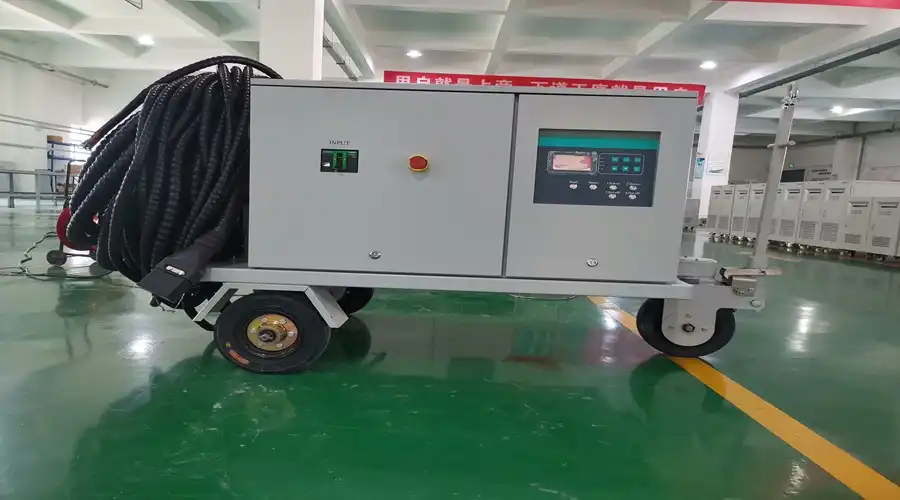
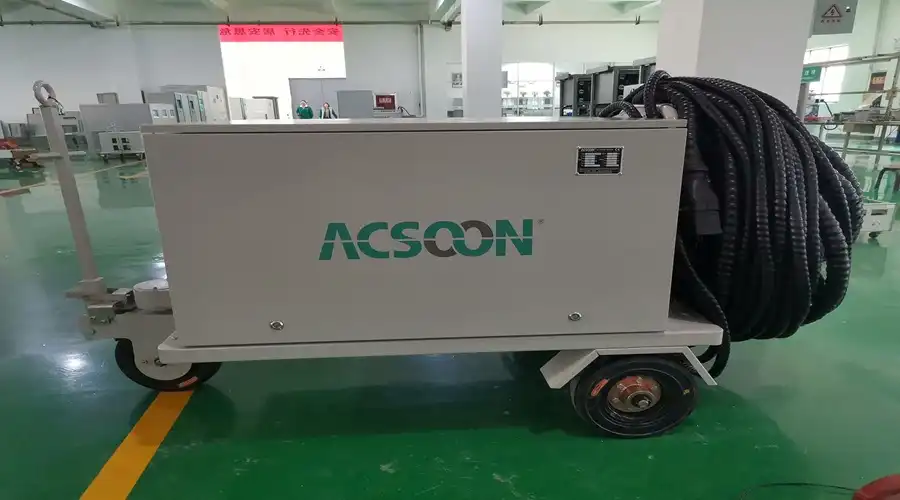
The ACSOON CH-D90 battery-powered e-GPU is an example of advanced ground support technology that meets the needs of current airport operations. This 90 kVA unit provides clean 3×200VAC, aircraft 400 Hz power from battery packs on mobile trolleys, which allows for zero-emission aircraft maintenance at faraway parking spots. Here are the main benefits this equipment brings to running an airport: Zero-Emission Operation: The CH-D90 doesn't use any diesel fuel and doesn't put out any pollution. This helps airports' efforts to be more environmentally friendly while also cutting costs. Battery power makes the operation quieter than standard engine-driven ground power units. This makes it easier for ground teams to do their jobs and lowers noise pollution in neighborhoods near airports.
Maintenance and Safety Considerations
Higher frequency running changes how repair is done and how safety is handled. Technicians who work with aircraft 400 Hz power systems go through special training that teaches them how to work with these types of electrical systems. Arc flash hazards, insulation testing methods, and troubleshooting techniques are different from standard 60 Hz industry practices. This means that workers need to know how to do these things, and trained suppliers can help them by providing technical paperwork and training materials. When built and kept correctly, aircraft 400 Hz power systems usually have parts that last as long as or longer than lower frequency options. Power electronics used in solid-state frequency converters are designed to work continuously in difficult conditions. Regular routine maintenance, such as thermal imaging, insulation resistance testing, and harmonic analysis, finds problems before they get in the way of operations. This keeps equipment available and protects large capital investments.
Procurement Insights: Selecting and Sourcing 400 Hz Power Systems for Weight Efficiency
When buying aviation power tools, it's important to look at more than just price when deciding which seller to go with. Quality standards, following certification rules, and a solid technical support system are what set apart trusted long-term partners from generic suppliers. Power system failures can stop expensive planes and mess up important mission schedules, so aerospace applications can't take any less than perfect dependability.
Evaluating Supplier Qualifications
Leading providers keep certificates that show they follow aircraft quality management systems. AS9100 certification means that the quality methods used in design, production, and testing are specific to aircraft. ISO 9001 is the basic standard for quality management, but for defense uses, you may need to get more military licenses. These certifications give clear proof that a supplier can regularly deliver goods that meet strict aviation requirements. Technical support capabilities distinguish excellent providers from average ones. Sometimes, complicated power conversion equipment needs help with application engineering, troubleshooting, or making special changes to fit the needs of a specific location. Suppliers with skilled technical teams that know about aircraft 400 Hz power electrical systems offer more than just gear. They lower the risks of integration and speed up project timelines.
Understanding Total Cost of Ownership
The buying price is only one part of the total cost over its lifetime. The energy economy has a direct effect on running costs, especially for ground support equipment that is used for long hours every day. Modern solid-state converters are more than 90% efficient, which means they can change grid power to aircraft 400 Hz power with almost no heat loss. Older rotating converter technology doesn't work as well, so it uses more electricity and makes more heat, which shortens the life of parts and makes cooling more necessary. Maintenance fees add up over the life of an item of equipment. Compared to motor-generator sets, solid-state versions don't have any rotating parts, so they don't need as much regular upkeep. When service is needed, modular design lets parts be replaced quickly, reducing downtime. Suppliers who keep enough extra parts in stock help with quick turnaround, which is especially important for owners in remote areas or who need delivery right away to fix aircraft-on-ground issues.
Conclusion
In conclusion, using aircraft 400 Hz power sources to reduce weight has measurable operational benefits across all aviation fields. The electromagnetic principles that allow for smaller transformers and electrical parts directly lead to better airplane performance by using less fuel and carrying more. The development of ground support equipment keeps improving working efficiency and meeting requirements for environmental sustainability. Modern power conversion technology supports clean and flexible airport operations without lowering the strict power quality standards needed by high-tech electronics. Examples include battery-powered systems like the ACSOON CH-D90. When companies buy things, they need to weigh the original investment against the value of the product's lifetime. This gives them a long-term competitive edge in aircraft markets that are changing quickly.
FAQ
Why Do Aircraft Use 400 Hz Instead of Standard 50/60 Hz Power?
Through electromagnetic science, higher frequency action makes it possible to dramatically reduce the size of parts. Transformer cores and motor laminations get smaller as the frequency goes up. This means that the same amount of power can be packed into packages that weigh 15-20% less than traditional designs. This is very important for flight uses that need to be light.
How Much Weight Do 400 Hz Systems Actually Save?
Typical business airplane electrical systems that use aircraft 400 Hz power components weigh 500 to 1,000 pounds less than similar systems that use 60 Hz components. Weight savings depend on the size of the plane and how much power it needs, but they always lead to better fuel economy and more cargo space over the course of the aircraft's working life.
What Procurement Factors Matter Most When Selecting Suppliers?
For important aviation uses, certification compliance, expert help, and shipping reliability are more important than price. Suppliers with AS9100 aerospace quality approval, enough inventory for quick delivery, and technical support give the most value throughout the lifetime of an item, lowering the risk of integration issues and business disruptions.
Partner With JERRYSTAR for Advanced Aircraft 400 Hz Power Solutions
Xi'an Jerrystar Instrument Co., Ltd. is an expert in ACSOON brand power transfer systems that are designed to work in harsh aircraft, military, and industrial settings. As an aircraft 400 Hz power provider, we can offer both standard catalog items and fully personalized solutions that meet the specific needs of each operation. The CH-D90 battery-driven e-GPU shows how committed we are to new ideas. It provides clean, movable aircraft 400 Hz power for modern airport operations while keeping emissions low and power quality high. Our 5,000–10,000 square meter factory in Shaanxi Province keeps a large inventory so that we can quickly meet urgent needs. Our engineering team also offers full expert help during the selection, installation, and operation of all of our equipment. Email our experts at acpower@acsoonpower.com to talk about your power conversion needs and get full technical specifications that are made to fit your unique application.
References
1. Johnson, M.R., "Electromagnetic Design Principles for High-Frequency Aircraft Power Systems," Society of Automotive Engineers Aerospace Technology Conference Proceedings, 2019.
2. United States Department of Defense, "MIL-STD-704F: Aircraft Electric Power Characteristics," Defense Standardization Program Office, 2016.
3. Thompson, P.L. and Garcia, R.S., "Weight Optimization Strategies in Modern Commercial Aircraft Electrical Architecture," Journal of Aerospace Engineering, Vol. 34, No. 2, 2021.
4. International Organization for Standardization, "ISO 6858:2017 Aircraft Ground Support Equipment - Electrical Supplies," Geneva, Switzerland, 2017.
5. Anderson, K.W., "Lifecycle Cost Analysis of Aircraft Ground Power Systems: Rotary Versus Static Frequency Conversion," International Air Transport Association Technical Report Series, 2020.
6. Li, H. and Yamamoto, T., "Harmonic Distortion Management in 400 Hz Solid-State Power Converters for Military Aviation Applications," IEEE Transactions on Aerospace and Electronic Systems, Vol. 57, No. 4, 2021.