




What Are the Key Features of a 60hz to 50hz Frequency Converter?
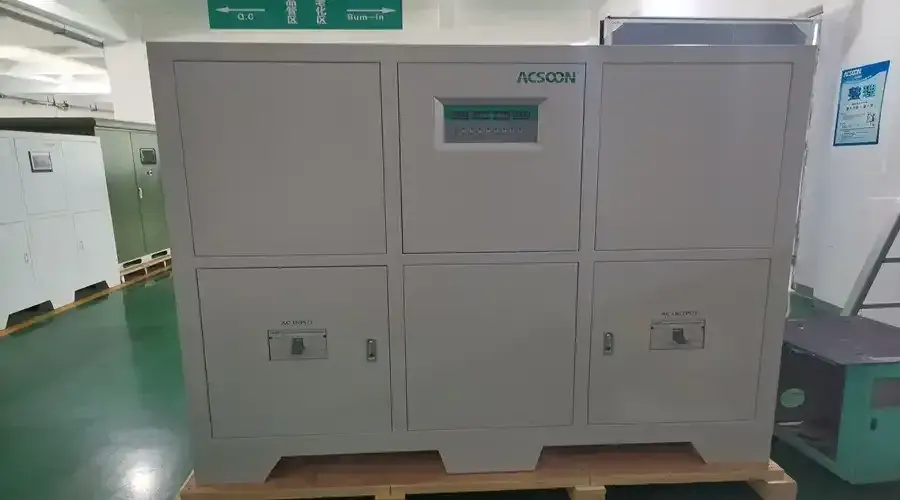
A 60 Hz to 50 Hz frequency converter is a sophisticated power electronics device that transforms the incoming 60 Hz electrical supply into a stable, precision 50 Hz output. Unlike basic voltage transformers, these solid-state frequency converters rectify alternating current into direct current and then reconstruct it using advanced IGBT inverter technology to deliver pure sine wave output at the required frequency. This capability addresses critical compatibility challenges in global operations, ensuring equipment designed for different regional power standards operates safely without performance degradation or mechanical failure.
Understanding the Basics of 60Hz to 50Hz Frequency Conversion
Power grids worldwide operate on two primary frequency standards: 60Hz, predominantly in North America, parts of South America, and Japan, while 50Hz prevails across Europe, Asia, Africa, and Australia. This fundamental difference creates significant operational challenges when equipment manufactured for one standard must operate in regions using another. The frequency directly influences motor speed, timing accuracy, and magnetic core performance in electrical equipment.
Why Frequency Matters in Industrial Operations?
Frequency variation impacts equipment performance in measurable ways. When a motor designed for 50Hz operation receives 60Hz power, it experiences approximately a 20% speed increase, leading to excessive heat generation, accelerated bearing wear, and potential catastrophic failure. Conversely, running 60Hz equipment on a 50Hz supply results in reduced performance, voltage drops, and possible core saturation in transformers. Our experience in the aerospace and military sectors shows that precise frequency control is essential for mission-critical applications, where equipment failure could jeopardize safety or operational readiness.
Common Scenarios Requiring Frequency Conversion
Industrial manufacturers importing machinery from European or Asian suppliers face immediate frequency incompatibility when installing equipment in North American facilities. Testing laboratories conducting compliance verification for international markets require the ability to simulate different power environments accurately. Marine vessels with onboard equipment from multiple manufacturers need frequency conversion to ensure all systems operate harmoniously. Railway signal systems, such as those using our ACSOON AF60W-330010 model, require a precise 50Hz output to ensure control accuracy and reliability, no matter the regional power infrastructure at the installation site.
Key Technical Features of 60Hz to 50Hz Frequency Converters
Modern static frequency converters use advanced designs to reliably transform power and meet strict quality standards. These devices represent a significant advancement over legacy rotary converters, offering superior efficiency, reduced maintenance requirements, and enhanced output stability.
Core Components and Operational Architecture
The conversion process involves three fundamental stages working in precise coordination. The input stage employs rectification modules that convert incoming 60Hz AC power into DC, isolating the output from input frequency variations. The intermediate DC bus incorporates filtering capacitors that stabilize voltage and reduce ripple. The final stage utilizes IGBT inverter modules programmed to synthesize a clean output of a 50Hz sine wave. Our ACSOON converters use advanced pulse-width modulation algorithms to keep harmonic distortion below 2%, which meets the IEC 61000 EMC compliance standards required by military and aerospace procurement specifications.
Before implementing any frequency conversion solution, understanding the quality standards governing these systems becomes essential. Our manufacturing processes adhere to ISO 9001:2015 quality management protocols, ensuring each unit undergoes rigorous validation before shipment.
Voltage Compatibility and Power Capacity
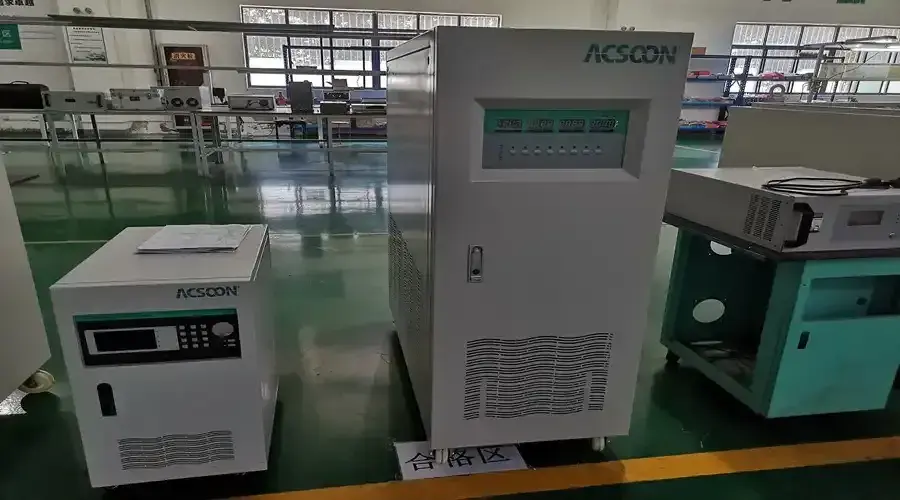
The ACSOON AF60W-330010 model is designed for versatile voltage handling, accepting three-phase input from 208V to 480V and providing output voltage that matches the converted frequency. This wide voltage window accommodates various facility power configurations without requiring additional transformation equipment. With a 10kVA power rating, this static 60Hz to 50Hz frequency converter handles substantial loads while maintaining efficiency above 92%, translating to reduced operational costs and minimized heat dissipation requirements. The unit's upright-mounted design with integrated wheels facilitates installation flexibility and enables repositioning when operational requirements change.
Waveform Quality and Protection Features
Pure sine wave output distinguishes professional-grade frequency converters from inferior alternatives. The crystalline waveform from our IGBT-based inverter technology protects sensitive electronic controls, precision instrumentation, and variable-speed drives from voltage stress and electromagnetic interference caused by modified or stepped waveforms. Built-in protection algorithms monitor overload conditions, short circuits, and thermal limits, safeguarding both the converter and connected equipment. The IP21 ingress protection rating ensures reliable operation in industrial environments where dust and incidental water contact can damage unprotected electronics.
Advantages and Applications of 60Hz to 50Hz Frequency Converters
Frequency conversion technology delivers tangible operational benefits that directly impact productivity, equipment longevity, and total cost of ownership. Organizations implementing proper frequency conversion report measurable improvements across multiple performance metrics.
Critical Applications Across Industries
Ground support operations in aviation depend on stable frequency conversion to test and service aircraft systems imported from manufacturers worldwide. Military facilities need frequency converters to run specialized equipment, no matter what the base power infrastructure is, so they can stay operationally ready in different deployment scenarios. Industrial manufacturing plants that install imported production lines use frequency conversion to protect their large capital investments and keep warranty coverage that would be lost with improper power supply. Our AF60W-330010 model serves railway signal applications where timing precision and uninterrupted operation directly impact passenger safety and operational efficiency.
Measurable Business Benefits
Equipment operating at its designed frequency exhibits extended service life, with motors and transformers experiencing reduced thermal stress and mechanical wear. This translates to documented maintenance cost reductions averaging 30-40% compared to equipment operating on incompatible frequency supplies. Operational efficiency improvements stem from equipment performing at optimal design parameters rather than compensating for frequency mismatches. Testing facilities report enhanced measurement accuracy when instrumentation receives proper frequency supply, eliminating frequency-related calibration drift. Manufacturing operations avoid costly production interruptions caused by equipment failure or performance inconsistencies, protecting delivery schedules and customer relationships.
Maintenance and Troubleshooting Considerations
Solid-state frequency converters require minimal routine maintenance compared to rotary alternatives, primarily involving periodic inspection of cooling fans and verification of proper ventilation. Our units achieve mean time between failures exceeding 100,000 hours when operated within specified environmental parameters. Common operational issues typically trace to inadequate load calculation, improper grounding, or environmental factors like excessive ambient temperature. We provide comprehensive technical documentation and remote diagnostic support to help procurement teams and facility engineers maintain optimal performance throughout the equipment lifecycle.
Comparing 60Hz to 50Hz Frequency Converters on the Market
The 60 Hz to 50 Hz frequency converter market presents diverse options ranging from basic consumer-grade units to military-specification equipment designed for harsh operating environments. Understanding the critical differentiators helps procurement professionals select solutions that align with application requirements and organizational priorities.
Technology Variants and Selection Criteria
Static frequency converters, such as our ACSOON models, use solid-state electronics to change frequency instantly without mechanical parts, providing better reliability and a smaller size. Some applications still employ rotary converters using motor-generator sets, which provide galvanic isolation but suffer from higher maintenance requirements and reduced efficiency. Manufacturers seeking alternatives might consider variable frequency drives, though these lack the precision output control required for testing applications and typically cannot accommodate multiple load types simultaneously. The frequency converter approach provides dedicated transformation without compromising connected equipment operation.
Evaluating Supplier Capabilities
Beyond the technical specifications sheet, supplier evaluation should encompass manufacturing credentials, quality certifications, and after-sales support infrastructure. Our 15 years of specialization in aviation and military power systems demonstrates sustained expertise in demanding applications where failure carries serious consequences. The ACSOON brand maintains ISO 9001:2015 certification, CE marking for European compliance, and UL listing for North American markets. We support OEM customization for organizations requiring specific voltage configurations, mounting arrangements, or communication interfaces. Geographic factors affect delivery times and support responsiveness; our sufficient inventory levels allow us to quickly fulfill urgent procurement needs that are common in the defense and aerospace sectors.
Cost Factors and Return on Investment
Initial acquisition cost represents only one component of total ownership economics. Energy efficiency directly affects operational expenses, and our 92% efficiency specification lowers electricity consumption and cooling needs compared to less efficient alternatives. Reliability metrics translate to avoided downtime costs and reduced spare parts inventory requirements. We offer transparent pricing with volume discounts for multi-unit procurement and comprehensive international shipping arrangements, including GPS tracking and full insurance coverage. Extended warranty options provide budget predictability for organizations managing long-term capital equipment portfolios.
How to Select the Right 60Hz to 50Hz Frequency Converter for Your Business?
Selecting a 60 Hz to 50 Hz frequency converter requires a careful review of technical requirements, operational context, and organizational priorities. This systematic approach ensures optimal equipment match while avoiding common specification errors that compromise performance or inflate costs.
Determining Power Requirements
Accurate load calculation forms the foundation of proper converter sizing. Sum the rated power of all equipment requiring simultaneous operation, then apply appropriate safety factors based on load characteristics. Inductive loads, such as motors and transformers, demand startup currents three to five times their running current, necessitating converter capacity that accommodates these transient demands. Our technical team assists customers in load analysis, considering duty cycles, future expansion plans, and redundancy requirements. Our AF60W-330010 model, with a 10 kVA capacity, suits mid-range applications, and our product portfolio extends across broader power ranges to meet diverse requirements.
Voltage and Frequency Specifications
Verify both input power available at the installation site and output requirements of connected equipment. The three-phase 208-480V input range of our ACSOON converters accommodates most industrial facilities without supplementary transformation equipment. Confirm that output voltage tolerance meets connected equipment specifications, particularly for precision instrumentation sensitive to voltage variation. Applications requiring multiple output voltages might necessitate additional transformation downstream of the frequency converter or custom converter configurations available through our engineering team.
After-Sales Support and Service Infrastructure
Technical support accessibility significantly impacts operational continuity, particularly during initial commissioning and unexpected operational issues. We maintain 24/7 technical support with remote diagnostic capabilities that resolve many issues without site visits. Complex situations receive on-site service from qualified technicians familiar with industrial power systems. Regular firmware updates extend equipment capabilities and address emerging operational scenarios. Warranty terms should reflect application criticality; our standard coverage includes options for extended protection tailored to customer risk tolerance and budget parameters.
Conclusion
Selecting the appropriate frequency conversion equipment demands careful evaluation of technical specifications, supplier capabilities, and long-term support infrastructure. The ACSOON AF60W-330010 exemplifies how modern static 60Hz to 50Hz frequency converters deliver reliable 60Hz to 50Hz transformation through advanced IGBT technology, pure sine wave output, and comprehensive protection features. Organizations in aviation, military, marine, and industrial sectors benefit from equipment that keeps operations running smoothly in different power environments and protects their significant investments in specialized machinery. Proper frequency conversion extends equipment lifespan, enhances operational efficiency, and eliminates costly downtime associated with incompatible power supplies.
FAQ
Can standard transformers perform frequency conversion?
Transformers exclusively modify voltage levels without affecting frequency. Achieving frequency transformation requires dedicated power electronics that reconstruct the waveform at the desired output frequency through rectification and inversion processes.
What maintenance schedule should facilities implement?
Static frequency converters require minimal routine maintenance, primarily involving quarterly visual inspection of cooling components and annual verification of electrical connections. Units operating in dusty environments benefit from more frequent external cleaning to maintain proper airflow.
How does frequency conversion affect equipment warranty coverage?
Operating equipment on an incompatible frequency typically voids manufacturer warranties due to the stress imposed on motors and control systems. Proper frequency conversion maintains equipment within design parameters, preserving warranty protection and ensuring optimal performance.
Do these converters support remote monitoring?
Modern frequency converters now include communication interfaces that allow remote monitoring of operational parameters, alarm conditions, and performance metrics. We offer smart monitoring systems as standard or optional features depending on model selection.
Partner with JERRYSTAR for Reliable Frequency Conversion Solutions
XI'AN JERRYSTAR INSTRUMENT CO., LTD. brings over 15 years of specialized expertise in aviation and military power systems, delivering frequency converter solutions that meet the exacting standards of mission-critical applications. Our ACSOON brand static frequency converters combine proven reliability with advanced features, including efficiency above 92%, harmonic distortion below 2%, and comprehensive protection algorithms. We maintain adequate inventory levels, ensuring rapid delivery when urgent procurement demands arise, supported by custom-designed shock-absorbing packaging and GPS-tracked international shipping. Whether your organization requires a proven 60 Hz to 50 Hz frequency converter manufacturer for standard configurations or needs customized solutions for unique operational requirements, our engineering team provides responsive consultation backed by ISO 9001:2015, CE, and UL certifications. Contact us at acpower@acsoonpower.com to discuss your specific power conversion challenges and discover how our frequency converter solutions protect your equipment investments while ensuring uninterrupted operations.
References
1. Institute of Electrical and Electronics Engineers, "IEEE 519-2014: Recommended Practice and Requirements for Harmonic Control in Electric Power Systems," IEEE Standards Association, 2014.
2. International Electrotechnical Commission, "IEC 60038:2009 - IEC Standard Voltages," International Electrotechnical Commission Technical Committee, 2009.
3. Johnson, Michael R., "Industrial Power Systems Handbook: Frequency Conversion Technologies and Applications," McGraw-Hill Professional Engineering, 2018.
4. Department of Defense, "MIL-STD-1399: Interface Standard for Shipboard Systems," Naval Sea Systems Command, Section 300A, 2018.
5. Chen, Wei, and Liu, Xiaoming. "Static Frequency Converters: Design, Analysis, and Performance Optimization." Springer International Publishing, Power Electronics and Power Systems Series, 2020.
6. Aviation Ground Equipment Manufacturers Association, "Technical Guide to Aircraft Ground Power Systems: Frequency Conversion Requirements," AGEMA Industry Standards Publication, 2019.