




60kVA 400Hz GPU: Aircraft Ground Power Solution for Narrow-Body Aircraft and MRO Operations
The 60kVA 400Hz GPU is more than just a piece of equipment for airports and MRO facilities, stable ground power is essential for aircraft maintenance and turnaround operations. It provides stable aircraft ground power for daily airport operations.This power range gives narrow-body jets, military carriers, and regional cargo planes exactly what they need without the extra cost or space that bigger units take up. Our company, makes ACSOON ground power units that meet the needs of aviation professionals who can't have downtime or lower power quality.
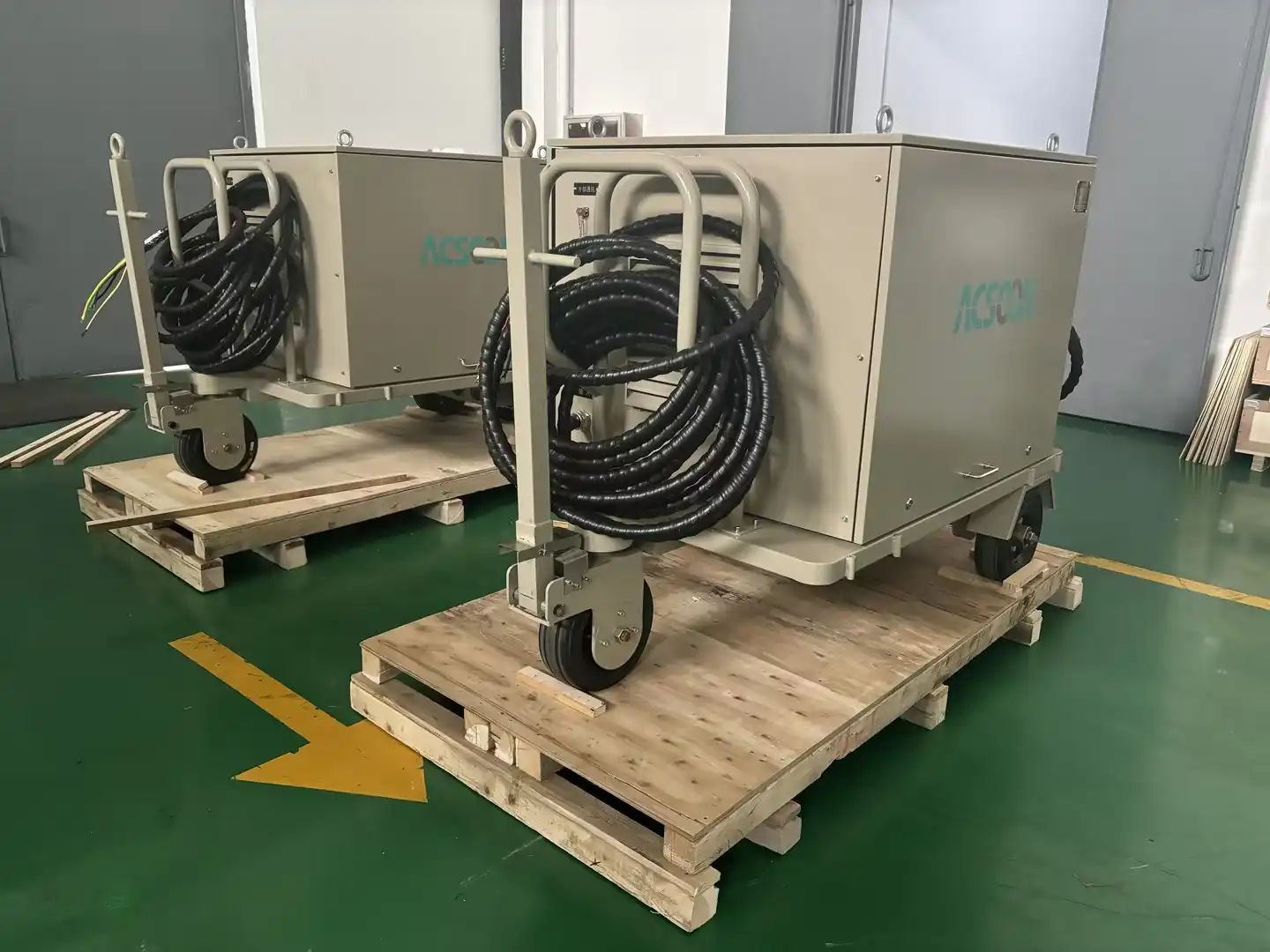
Understanding 60kVA ground power unit and Their Role in Ground Power Systems
Ground power units that provide a 400 Hz frequency are the most important part of current aircraft electrical support. Planes use 400Hz instead of 50Hz or 60Hz because the higher frequency makes generators and motors lighter, which is important in flight where every pound counts. When an aeroplane is at the gate or in a repair hangar, it needs stable, clean electricity to run its lights, electronics and environmental systems, as well as to do tests without having to start its main engines or auxiliary power units.
Technical Specifications That Define Performance
The ACSOON 60kVA ground power unit provides 115V/200V at 400Hz in a three-phase, four-wire configuration that perfectly matches the electrical needs of an aeroplane. The constant capacity is 60kVA, and the surge capacity is 150% for 60 seconds and 200% for 30 seconds. This is enough space to handle motor starts and changing loads without voltage sag. It can accept 380–480V three-phase power at 50/60Hz with a tolerance of ±15%, so it can work with a wide range of facility power conditions around the world.
In flight, compliance licenses are critical. This unit is compatible with military and commercial aeroplane power systems .The output characteristics are designed to comply with aircraft power requirements defined in standards such as MIL-STD-704F, ISO 6858, and GJB572A.Advanced power conversion technology minimizes harmonic distortion and provides clean 400Hz output power.Creating a pure sine wave output with total harmonic distortion of less than 2% at consat a constantThis is clean enough for flight control computers and sensitive electronics.
How Frequency Conversion Works in Ground Power Units?
Solid-state frequency changers convert the 50Hz or 60Hz power from the wall into the precise 400Hz required by aeroplanes. Inside the unit, a rectifier section converts the AC input to DC. Then, an inverter section rebuilds it as 400Hz AC with automatic voltage compensation that keeps the unit stable even if the input changes. When the computer is turned on, self-diagnostics check for problems in important systems and record them with timestamps so that repair teams can see exactly what happened and when.
You don't have to guess or try to resolve problems without seeing the VFD display, which shows voltage, current, frequency, and the ten most recent fault codes. The IP54 rating of the enclosure keeps rain, dust, and jet blast spray from getting into the interior parts. This is critical for ramp operations where equipment has to deal with harsh weather every day.
Practical Applications Across Aviation Sectors
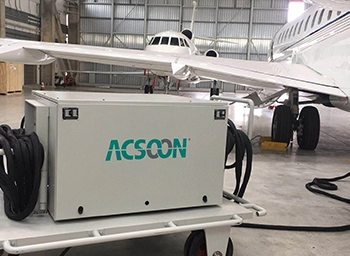
This power range mainly supports narrow-body aircraft. A 60kVA 400Hz GPU is commonly used for narrow-body aircraft ground operations, including aircraft such as Boeing 737 and Airbus A320 families, depending on operational requirements, electrical load conditions, and aircraft maintenance procedures. On hot days when environmental systems need the most current, a 45kVA unit might not be able to handle the peak electrical load. On the other hand, a 90kVA unit provides more power than needed, but it costs more to buy and run.
Military carriers like the C-130 Hercules and C-27J Spartan need reliable power on the ground to test their mission systems and start their engines. When loading and unloading, regional cargo operators who use freighter conversions need full electrical power. MRO hangars that work with various companies find that one 60kVA unit can power most narrow-body and regional aircraft, which makes training and keeping track of supplies easier.
Benefits of Choosing Customized 400Hz aircraft power supply from a Dedicated Factory
Off-the-shelf gear works for most things, but flying needs accuracy. Customised ground power units can handle certain kinds of aeroplanes, operational environments, and integration problems that standard goods can't. When you buy straight from a specialised plant like over 7,000 square metre building in Xi'an, you can talk to tech teams that know exactly what you need and have experience with both military and aviation power systems.
Superior Reliability Through Stringent Quality Controls
With factory-direct manufacturing, we can apply strict testing procedures at every stage of output. Before it is shipped, each unit is fully loaded, subjected to thermal cycling, and its electrical safety is checked. Checkpoints for quality control find problems that might not be seen in settings where a lot of things are being made. When your business counts on ground power tools always working right, factory-quality standards become very important.
The solid-state system gets rid of motors, brushes, and other moving parts that can break or wear out. When you connect the unit to utility power and turn it on, it will keep giving off 400Hz until you turn it off. Compared to rotating machinery, maintenance times are much longer, which lowers lifecycle costs and the chance of unexpected breakdowns.
Environmental and Economic Advantages
Diesel engines use a lot of fuel, make a lot of noise, and release pollution. Electric ground power units don't have any of those problems. Zero-emission ground support equipment is beneficial for airports that have to follow stricter environmental rules. Customisation choices include parts that use less energy and make the best use of it, lowering costs and meeting environmental goals.
A study of economics shows that factory-customised units have a lower total cost of ownership because they last longer, need less upkeep, and use less energy. This is true even if the initial investment is higher. When you buy in bulk, you receive a discount based on the size of your order, and there are various payment methods that align with the budget cycles commonly used in government and institutional purchasing.
Comprehensive After-Sales Support
Working with a specialised maker provides you with access to technical support teams that know how to fix problems with your unique unit setup. You don't have to go through layers of marketers and resellers to talk to experts who understand the design when you're trying to fix complicated problems. When you get a warranty from the maker, you can be sure that you'll get real replacement parts quickly.
Support is available all over the world through OEM partnerships and certified dealer networks. Whether you do business in multiple countries or just in a few regions, plant support infrastructure makes sure that your ground power equipment works with little downtime.
How to Select the Right Solid State GPU for Your Aviation Operations?
When making procurement choices, you have to balance technical needs with budget limits and practical realities. Systematic evaluation frameworks that match equipment skills with task needs are helpful for aviation purchasing managers and engineers.
Defining Operational and Technical Requirements
Start by making a list of the types of planes in your fleet and how much power they can use on the ground. Check the technical manuals for information on how much electrical load is allowed during different stages of operation, such as starting up, upkeep, and cargo activities. Consider activities that can occur simultaneously if multiple planes need ground power. Extreme temperatures, humidity, and altitude are all environmental factors that affect how well your equipment works and what parts you choose.
The frequency stability needs depend on how sensitive the plane's electronics are modern aircraft electrical systems typically require frequency stability within ±0.1% or better for modern flight management systems and digital cockpits. When loads change, voltage regulation should keep it within ±2% or better. Make sure that any potential ground power units meet or go beyond the requirements set by the aeroplane maker.
| Selection Criteria | Critical Considerations | ACSOON 60kVA Capability |
|---|---|---|
| Capacity for Power | Always-on load plus surge margin | 60kVA continuous power with a 150% surge capacity |
| Stability of Frequency | Tolerance for aircraft electronics | Frequency stability ≤0.1% |
| Controlling the voltage | Compensation for changes in load | Voltage correction on its own, control within ±2% |
| Protecting the environment | Using an outdoor ramp | The IP54 locked case |
| Standards for Compliance | Needs for the military and business | Certified by MIL-STD-704F, ISO 6858, and GJB572A |
Comparing Customized Versus Standard GPU Models
Standard models are ready to ship right away and have lower starting prices, making them a good choice when needs exactly match popular combinations. Special connectors, communication protocols, mounting configurations, and extended temperature ranges can be built into customised units to meet specific integration needs. This is necessary when standard products almost work for your application but don't quite.
Often, aviation operations require custom solutions because the planes need to be changed, their job cycles aren't normal, or they need to be integrated with systems that are already in place. Instead of making people use workarounds with standard tools, factory customisation directly addresses these situations. Lead times for customised units are usually between four and eight weeks, depending on their complexity. This is enough time for planned purchases, but you need to plan ahead for urgent repairs.
Key Procurement Considerations
The prices are different for buying directly, leasing, and renting. When you need stable tools for a long time, buying them outright is the best option. Leasing costs are spread out over time, and the budget is still flexible. Short-term rents cover surges or repair that shuts down equipment for a short time.
When you buy a lot of units at once, you can get bulk deals that have a big impact on the total cost of the programme. When planning to update the whole ground support fleet, coordinating purchases gives you the most negotiating power. Lead times rely on how much customisation is needed and how busy the plant is. Standard configurations usually ship within weeks, but it could take months for orders with a lot of customisation.
Make sure that the equipment you buy comes with all the necessary paperwork, such as operation guides, upkeep instructions, electrical diagrams, and lists of spare parts. Training help for maintenance staff makes sure that your teams can properly fix and service equipment, which cuts down on the need for service calls from outside companies.
Installation, Maintenance, and Troubleshooting of Aircraft GPU
How long and reliably a ground power unit works is directly related to how well it is installed and maintained. Systematic methods keep things from failing too soon and get the best return on investment.
Step-by-Step Installation Protocol
Before starting to prepare a site, make sure that there is enough incoming power and that the grounding systems are set up correctly. Check that the facility's electricity service meets the needs of the unit in terms of power, phase, frequency, and circuit protection. Make sure there is enough space around the unit for air flow and maintenance. Place equipment so that there aren't too many cable runs to the parking places for aeroplanes. This will cut down on voltage drop and cable wear.
| Installation Phase | Key Actions | Verification Steps |
|---|---|---|
| Setting up the site | Check the power supply and set up grounds. | Check the power coming in and the resistance to the ground. |
| Physical Placement | Place the unit and tighten the fixing | Check the clearances and make sure the stable |
| Electrical Connection | Connect the power and put in the circuit protection. | Check voltage and test phase rotation. |
| System Commissioning | Start-up sequence and load testing | Verify the output voltage and frequency and check the burst capacity. |
Electrical setup is done exactly the way the maker says to. Connect power that has circuit protection that is rated for a 60kVA 400Hz GPU load. Verify that the phases are rotated correctly—reversed phases lead to poor operation. Turn the unit on and watch the VFD screen as it goes through its own self-diagnostic process. Connect a load bank or a real aeroplane and verify the output voltage and frequency while the load changes. Write down all of your measures so you can use them later.
Maintenance Best Practices
Inspections that are planned ahead of time find problems before they become major ones. Visual checks are done every three months to look for damage, broken connections, low water levels, and poor filter conditions. Electrical checking once a year checks the accuracy of the calibration, checks the quality of the output, and works out the safety circuits. Components like cooling fans and contactors have set service lives. Instead of waiting for them to break, change them before they do.
Keep detailed maintenance logs that list inspection dates, measurements, replacement parts, and any problems you see. These logs keep track of maintenance history, which isusefull for figuring out future problems and making long-term budgets for the whole lifecycle. Keep important spare parts like fuses, contactors, and display modules on hand so that you can minimise downtime when repairs are needed.
Troubleshooting Common Issues
Changes in output voltage or frequency usually mean that there are issues with the control system or that power components are breaking. First, check the quality of the power coming in. Issues upstream often show up as unstable output. Look at the fault logs on the VFD screen to gain an understanding an idea of when and how problems happen. Thermal protection kicks in when it gets too hot, so make sure the cooling fans are working and the air screens are still clean.
The self-diagnostic system instantly finds many problems by showing fault codes that show which parts are breaking. When problems can't be fixed in-house, factory technical support can do tests remotely and send out qualified service workers if needed. Partnering with gives you access to technical help and original replacement parts, so you don't have to deal with the problems that come with fixes done by someone else using parts that weren't made.
Future Trends and Innovations in 400Hz Ground Power Units
Ground support tools for aviation are always changing because of new technologies and changing working needs. Keeping up with new trends will set up your business for long-term success.
IoT Integration and Remote Monitoring
IoT connectivity is built into next-generation ground power units, which lets operators check on operating state, performance data, and preventative maintenance alerts from afar. Fleet managers can see what's going on in multiple locations, find units that aren't working well, and plan maintenance ahead of time. Collecting data in real time creates operational intelligence that makes the best use of equipment and extends its life.
Advanced telemetry keeps track of how things are used, changes in electricity quality, and the surroundings. Machine learning systems can spot small changes that mean problems are starting to form, which starts upkeep before the problems happen. With remote diagnostics, factory support teams can figure out what's wrong without having to go to the site. This cuts down on downtime and service costs.
Energy Efficiency and Electrification
Aviation is being pushed by global environmental laws to cut down on pollution and use less energy. Ground power units help by getting rid of diesel generators and making the best use of electricity. Modern power circuits improve the efficiency of conversion, which means less wasted heat and less electricity use per kilowatt supplied. Custom factory engineering creates solutions that are aimed at specific efficiency gains that are important to your business.Electric GPUs help airports reduce fuel consumption, noise, and emissions compared with diesel-powered ground support equipment.This makes airport microgrids possible, which make the systems less reliant on the power grid and more reliable. Ground power units can act as energy storage interfaces because they can send and receive power in both directions. They can also take part in demand response programs that make money while serving airport electricity infrastructure.
Adaptive Manufacturing and Rapid Prototyping
Modern production methods, like fast prototyping and flexible design, shorten the time it takes to make unique solutions. What used to take months of engineering work only takes weeks now, so it can be quickly changed to fit new types of aircraft and changing operational needs. Custom GPU factories use these techniques to make it cheaper to support niche applications and unique integration problems.
When aircraft OEMs and manufacturers like work together, they can come up with new ideas that are in line with how the industry is changing. Joint development projects create next-generation ground power options that work best with new aeroplane electrical designs. This keeps planes compatible as they get updated. Because of these relationships, specialised makers will be able to set the standards for future aviation ground support instead of just following them.
Conclusion
Choosing ground power equipment is an investment in the long-term ability to work reliably and effectively. The 60kVA 400Hz GPU is a good compromise between size and price. It provides enough power for narrow-body and military transport planes without being too big or taking up too much space. Factory-customised solutions from specialised manufacturers like offer specific configurations, high-quality standards, and full support that you can't get with off-the-shelf options. As aviation moves toward more eco-friendly and efficient methods, working with makers that are dedicated to new ideas will help your ground support system stay strong and competitive.
FAQ
What differentiates 60kVA from 90kVA ground power units?
The main difference is the power-generating ability. A 60kVA unit provides enough steady power for most narrow-body aeroplanes and military carriers, and it can handle motor starts and sudden loads with its surge capacity. The 90kVA unit is used for wide-body aircraft and operations with multiple aircraft at the same time that need a higher sustained output. For single narrow-body processes, 60kVA is enough power without the extra cost, bigger size, and higher running costs of 90kVA equipment.
Delivery time depends on configuration and customization requirements. Standard models usually have shorter lead times, while customized systems require additional engineering time.
Customized ground power units?
Standard ACSOON configurations are sent out from the factories in Xi'an within four weeks. Depending on how complicated they are, customised units with special connections, communication methods, or integration features usually take six to eight weeks. We keeps enough common parts in stock so that they can turn around orders faster than with build-from-scratch timelines. Prioritised production scheduling can sometimes speed up delivery for rush orders. Please contact our technical team at acpower@acsoonpower.com to talk about your specific timing needs for your buying plan.
Are these ground power units compatible with both commercial and military aircraft?
Yes, the ACSOON 60kVA GPU meets both MIL-STD-704F military standards and ISO 6858 business aircraft standards. This means that it can be used in both fields. The electrical properties of the output meet the needs of the Boeing 737 series, the Airbus A320 family, the C-130 Hercules, and other planes in the same power range. Technical guides should always be used to make sure that specific aircraft are compatible. JERRYSTAR engineering support can help with compatibility analysis for aircraft setups that aren't common or have been changed.
Partner for Your Ground Power Requirements
Ground support equipment that works efficiently under pressure is needed for aviation activities. Xi'an Jerrystar Instrument Co., Ltd. is a 60kVA 400Hz GPU maker that specialises in custom power solutions. They mix engineering knowledge with manufacturing skills to provide ACSOON-brand ground power units that are made to fit your needs. Our 5,000–10,000-square-metre factory in Jinghe New Town makes frequency converters for use in laboratories, the military, aircraft, and ships. We offer full technical support for all of our products. We have enough in stock to deliver quickly, even for custom setups, and our manufacturer-direct model means that we can offer low prices without having to pay markups to distributors. You can talk to our technical experts about your ground power needs and get full specifications and quotes for equipment that is set up perfectly for your operational area by emailing acpower@acsoonpower.com.
References
1. Society of Automotive Engineers International. "Aircraft Ground Support Equipment: Electrical Power Quality Requirements." SAE Aerospace Standards, 2019.
2. Department of Defence. "Aircraft Electric Power Characteristics: MIL-STD-704F Standard". Defence Standardisation Program Office, 2016.
3. International Organization for Standardization. "Aircraft Ground Support Equipment: General Requirements." ISO 6858:2017 Standard Documentation.
4. Aviation Maintenance Magazine. "Ground Power Unit Selection and Operational Best Practices for Commercial Aviation." Aviation Technical Publications, 2021.
5. National Aerospace and Defence Contractors Accreditation Programme. "Quality Standards for Military Power Systems Manufacturing." NADCAP Certification Guidelines, 2020.
6. Journal of Airport Engineering and Operations. "Frequency Conversion Technology in Modern Aviation Ground Support Equipment." International Aviation Research Quarterly, Volume 34, Issue 2, 2022.