




How Accurate Is a 60 to 50Hz Frequency Converter Output?
A 60 to 50Hz frequency converter output usually achieves frequency stability within 0.01%, voltage control of 1% under static conditions, and Total Harmonic Distortion below 3% for linear loads when it comes to important industrial operations. Modern solid-state frequency converters use IGBT technology and Space Vector Pulse Width Modulation to produce pure sine waves that meet strict international standards like IEC 62040. This makes sure that sensitive equipment in the aerospace, marine, laboratory testing, and industrial manufacturing sectors can work with these converters.
Understanding the Basics of 60Hz to 50Hz Frequency Conversion
One of the most confusing parts of managing power in factories is frequency switching. Changing the voltage is pretty easy with regular transformers, but changing the frequency of alternating current needs a completely different method that has to deal with problems with both electrical and mechanical compatibility.
How Frequency Converters Transform Power Signals
A double-conversion structure is how a true 60 to 50Hz frequency converter works. Using modern power electronics, the 60Hz AC power that comes in is rectified into direct current through an AC-DC stage. It is then inverted back to 50Hz AC power through a DC-AC stage. This method completely separates the input grid features from the output waveform, which lets you finetune the frequency, voltage, and harmonic content. Industrial frequency converters make power that can be used for sensitive electronics, precise tools, and complicated machinery. Variable Frequency Drives, on the other hand, are only meant to change motor speed. There is more than just a number difference between 60Hz and 50Hz. When linked to a 60Hz grid, equipment made to work with 50Hz will run about 20% faster, which can damage motors, mess up time circuits, and speed up the wear and tear on mechanical parts. On the other hand, 60Hz equipment that is powered by 50Hz power has lower performance, inadequate cooling, and possibly transformer overload problems.
Real-World Applications Driving Demand
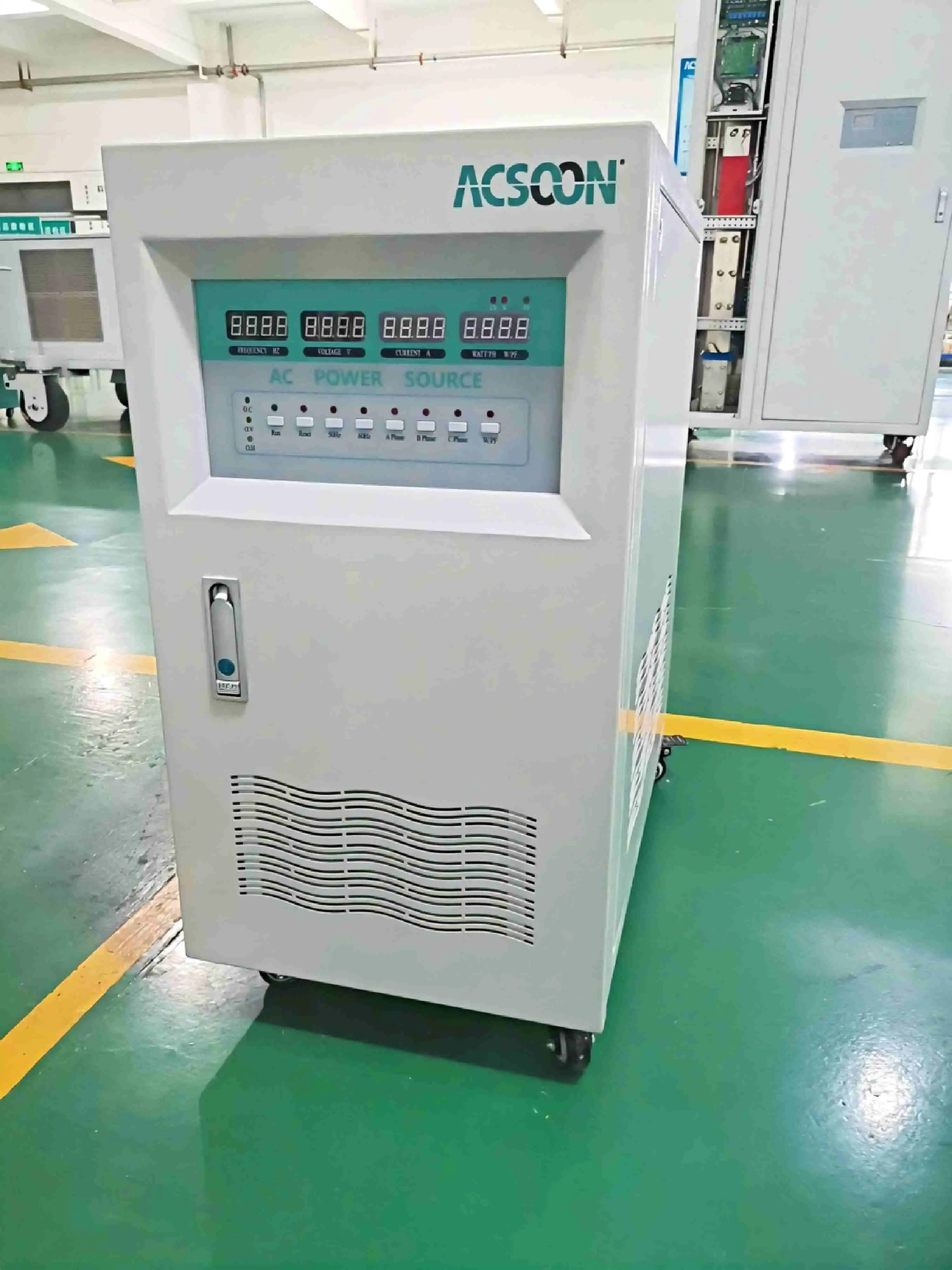
Facilities that make tools for sale in other countries have to deal with testing problems all the time. If an HVAC company in the U.S. wants to send air-moving units to Europe, it can't do so until they've tested its goods' performance under 230V/50Hz conditions. Quality assurance rules need burn-in testing that mimics the features of the target grid. This means that frequency converters are necessary for making sure that compliance is met. Another interesting use case is data centers. Modern buildings are using more and more foreign equipment that was chosen for its performance rather than its ability to meet area power standards. To keep the manufacturer's warranty and get the stated efficiency, a cooling system made to European standards needs precise 50Hz power. This need is met by the ACSOON AF60W-330030 type, which has a 30kVA rating and can input and generate three-phase 208-480V. Its upright-mounted design and wheels make it easy to set up temporarily while equipment is being set up or in case of an emergency.
When ships made to one power standard dock at foreign ports, marine applications need frequency conversion that works well. When ships link to shore power, they can turn off their backup engines, which lowers their emissions and fuel costs. But to do this, you need strong conversion equipment that can handle the different loads that come from HVAC systems, kitchen equipment, and guidance electronics all at the same time.
Accuracy Factors Affecting 60Hz to 50Hz Frequency Converter Output
Several technical factors that are directly linked to working efficiency affect how well power conversion equipment works. When procurement workers know about these factors, they can tell the difference between good options and real industrial-grade equipment.
Frequency Stability and Voltage Regulation
Modern converters use quartz crystal tuners to keep the output frequency very stable. The ACSOON brand uses timing circuits that are managed by crystals and have a frequency deviation of less than 0.01%. This means that the output is always within 0.005Hz of the goal 50Hz, no matter what the load is. This steadiness is very important for synchronous motors, industrial processes that depend on timing, and lab equipment where even small changes in frequency can cause measurement mistakes. Regulating voltage takes into account both steady and moving situations. Static regulation is the process of keeping the voltage fixed and within ±1% of the standard setpoint. Dynamic control checks how well the converter handles quick changes in load. This is one way to tell the difference between commercial-grade units and industrial equipment. After a 50% load step, good 60 to 50Hz frequency converters bring back voltage stability within 2 milliseconds. This stops voltage drops that harm sensitive electronics and mess up process control systems.
Harmonic Distortion and Waveform Purity
The difference between the real output pattern and a perfect sine wave is measured by Total Harmonic Distortion. The AF60W-330030 keeps THD below 3% when linear loads are applied. This meets the strict needs of data center cooling systems that use compressor motors and variable speed drives that don't handle harmonic content well. Lower THD directly leads to less motor warmth, longer insulator life, and better power factor for the whole building. This ability is made possible by advanced pulse width modulation methods that create a smooth linear output from high-frequency switching. A built-in output filter gets rid of switching artifacts while keeping the rapid reaction fast. When transformers and motors are subjected to harmonic-rich power, they can experience core overload and eddy current losses. This filtering is especially helpful for these types of loads.
Environmental and Operational Influences
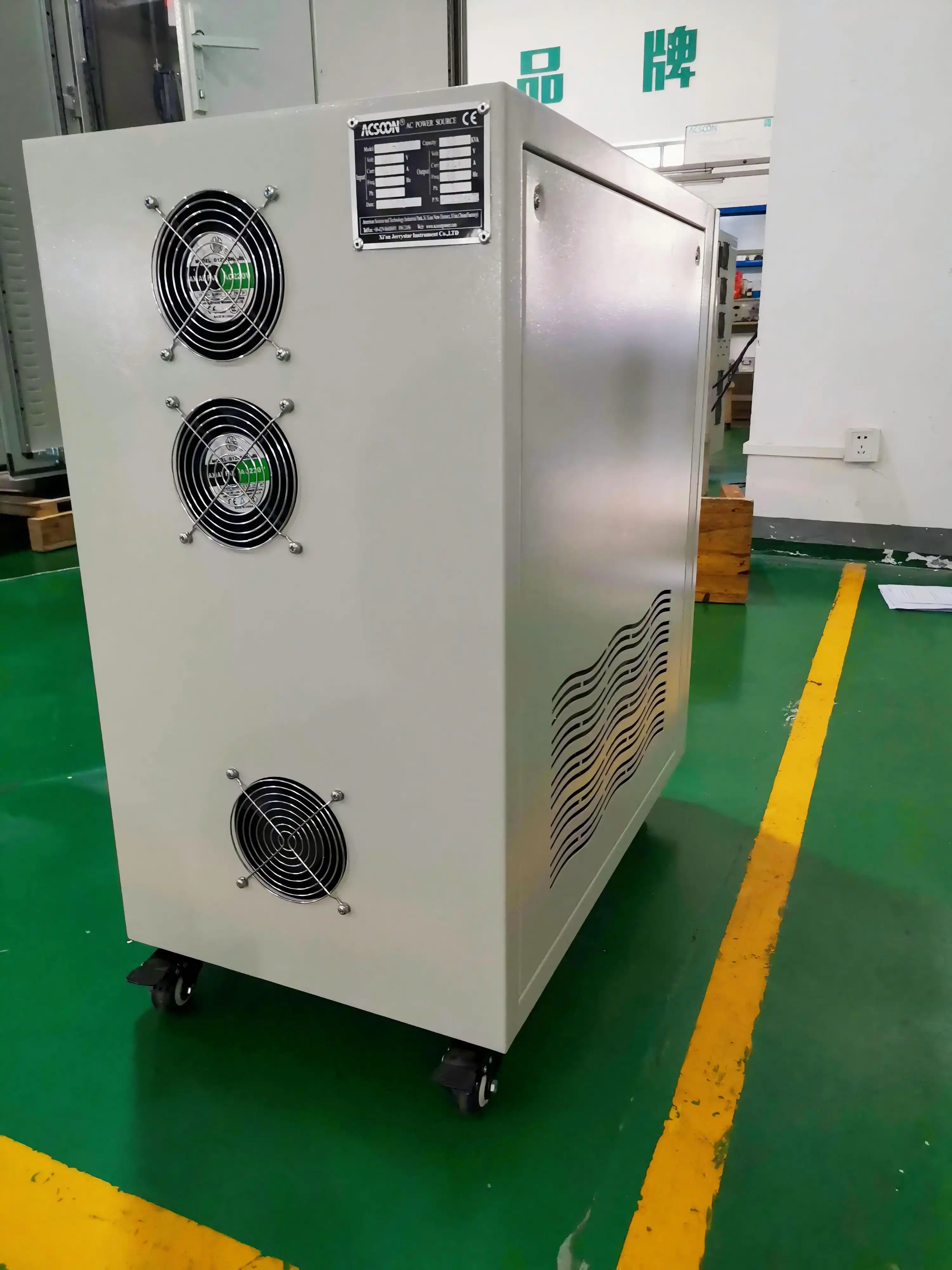
The temperature outside has a direct effect on the temperatures of the semiconductor junctions in IGBT modules. Thermal management systems with forced-air cooling and temperature-compensated control methods are built into high-quality converters. With an IP21 rating, the ACSOON unit protects its internal parts from solid items bigger than 12.5 mm and water that drips vertically. This makes it suitable for clean industrial settings, but it is also aware that harsh marine or outdoor settings may need better ingress protection. The features of the load have a big effect on the accuracy of the result. Unbalanced three-phase loads, in which one phase draws a lot more current than the others, make it hard for the converter to keep the voltage stable across all three phases at the same time. In industrial units, separate phase regulation circuits can fix up to 100% of imbalances. This makes sure that a highly loaded phase doesn't lower the voltage on other phases. This feature is very important in places where single-phase loads like lights and office equipment are used with three-phase production equipment.
Long-term accuracy is based on the strength of the parts. Over years of use, electrolytic capacitors in the DC link lose their capacitance, which changes the voltage noise and dynamic reaction. Industrial-grade converters require high-temperature capacitors that can handle 105°C and have long lifetimes. These capacitors often promise 10 years or more of constant use before they need to be serviced.
Comparison and Selection of 60Hz to 50Hz Frequency Converters for Industrial Use
When choosing the right frequency conversion equipment, you have to weigh the need for instant performance against the prices and operational flexibility over the equipment's lifetime. There are many options on the market, from small motor-generator sets to complex static converters. Each has its own benefits for certain uses.
Evaluating Technology Approaches
A motor and generator are used in rotary converters. A 60Hz motor powers a 50Hz generator. This tried-and-true technology can handle a lot of power and produces a naturally rhythmic output because of mechanical inertia. Rotating units, on the other hand, need more upkeep for their bearings and brushes, make noise that might need soundproofing, and work less efficiently (usually 75–85%) than static options. Because they don't have any moving parts, solid-state electronics in static frequency converters like the ACSOON AF60W line make them more than 90% efficient. Their small size and quiet operation make them ideal for places with limited space, like labs and cleanrooms for precision manufacturing. The digital control interfaces let you see voltage, current, power factor, and working state in real time on LED or LCD screens. This lets you do preventative maintenance and quick troubleshooting.
Performance Metrics That Matter
In addition to the big-name specs, real performance measures separate systems that don't work well from those that do. Here are the main benefits of a 60 to 50Hz frequency converter made for business use:
• Galvanic Isolation: Isolation transformers built into the circuits keep the input and output circuits electrically separate. This keeps sensitive loads safe from grid-borne transients, common-mode noise, and ground potential differences that can happen in places with lots of grounding networks. This separation is especially helpful in the lab, where accurate measurements depend on getting rid of electrical interference from outside sources.
• Overload Capacity: Converters can handle engine starting currents and transient loads because they can handle short overloads without failing. Industrial standards usually ensure 150% of the rated current for 60 seconds and 200% for 10 seconds. This accounts for the six to eight times the rated current that is pulled when the motor speeds up.
• Bypass Functionality: Automatic or human bypass circuits that connect loads straight to the input grid when the converter is being serviced can be helpful in some situations. Even though this feature isn't available everywhere, it makes systems more available in mission-critical settings where planned failure isn't accepted.
These benefits all help procurement managers with their main problems, like making sure that equipment works with other equipment in different countries, making sure that production doesn't stop because of bad power conditioning, and lowering the total cost of ownership by running things more efficiently and servicing them less often.
Cost Considerations and Total Ownership
The initial buying price is only one part of the total costs over the product's lifetime. Energy efficiency has a direct effect on working costs, especially for systems that are always on. When providing full maximum output, a 30kVA converter that is 90% efficient needs about 3.3kW more input power than one that is 95% efficient. At $0.12 per kWh and over 8,760 hours of operation per year, this difference in efficiency costs an extra $3,500 per year in power. Terms of the warranty show how confident the maker is in its reliability. Standard guarantees usually last between 12 and 24 months, but for important projects, extra coverage and service contracts can help you plan your budget. The warranty should clearly cover both broken parts and performance loss, and it should say what levels of frequency stability and voltage regulation are okay during the warranty time.
Troubleshooting and Maintaining the Accuracy of Frequency Converter Output
Even well-designed tools can have problems from time to time that need to be systematically diagnosed. Knowing the most common types of failure and what causes them cuts down on downtime and keeps small problems from getting worse and causing expensive damage to equipment.
Identifying Common Performance Issues
Frequency drift is a slow movement away from the desired 50Hz setpoint. It is usually a sign that the crystal oscillator is getting old or that the control circuit is breaking down. Modern converters have self-diagnostic features that keep an eye on the output frequency and sound a warning if it deviates too far from what is expected. Changes in voltage, especially those that happen when the load changes, can mean that the DC link capacitance isn't good enough or that the voltage control feedback circuits aren't working right. The reaction pattern helps with diagnosis; for example, slow healing means there are problems with the control loop, and fast oscillations mean that the filtering isn't working well or there is feedback instability. Thermal overload usually happens when there isn't enough airflow, the temperature inside is too high, or dust builds up on the cooling fins and fan screens. The upright design of the AF60W-330030 with wheels makes it easy to move it around to improve airflow. However, for fixed installations, the installation documentation should be followed to ensure proper clearances. Cleaning the filter on a regular basis stops the temperature from slowly rising, which makes the parts less reliable.
Preventive Maintenance Protocols
Regular checks keep things accurate over time and make tools last longer. Visual checks every three months make sure that the cooling fans are working properly, that there are no strange smells or changes in color that could mean the machine is hot, and that the numbers on the display are correct. Electrical tests should be done once a year to check the real output frequency and voltage under different load conditions. The results should then be compared to data from the initial commissioning to see if there has been any gradual decline. Monitoring the health of capacitors is especially important for converters that have been in use for close to five years straight. A lot of industrial units have lifetime counters for capacitors that measure how much heat stress builds up based on the working temperature and ripple current. By replacing capacitors before they reach the end of their useful life, you can avoid sudden breakdowns that could damage equipment further down the line.
Operating 60Hz Equipment on 50Hz Power
It needs to be carefully thought out how to power 60Hz equipment from 50Hz devices in the opposite situation. Frequency changes don't bother resistive loads like heaters. Motor loads that are meant to work at 60Hz run about 17% slower on 50Hz power, which lowers the output force and makes the cooling fan less effective. When a slower speed is okay for an application, it can still work safely, but the label values no longer apply. Electronics with switching power sources can usually handle both frequencies without any changes because they change incoming AC to DC and then make controlled voltages that are not affected by the frequency. At 50Hz, equipment with electromagnetic transformers may experience higher core losses and magnetizing current. This means that the equipment needs to be downrated or the design needs to be checked to make sure there is enough room for error. The accuracy of the 60 to 50Hz frequency converter output remains the foundation for these specialized reverse-power applications.
Procurement Tips: How to Choose and Where to Buy High-Accuracy 60Hz to 50Hz Frequency Converters
A good procurement process combines technical needs with business needs, making sure that the technology chosen meets current needs while also being flexible enough to be expanded or used in different ways in the future. The technical details of frequency converters can make it hard to see important differences between products that look very much the same.
Matching Specifications to the Needs of the Application
Characterizing the load is the first step in getting the right size. Figure out the total linked load in kVA, keeping in mind that motors use reactive power, which makes power factors usually fall between 0.7 and 0.85. To keep the converter from overloading, a 25kVA motor load with a 0.8 power factor needs 31.25kVA of capability. For this use, the AF60W-330030's 30kVA grade has more than enough flexibility. Environmental factors affect the choice of housing and the level of safety it offers. Indoor systems that are clean can use IP21 protection, but places where water spray or dust can build up need IP54 or higher. For outdoor setups, temperature rates should take into account both the weather and the sun's heat. The allowed working range for harsh conditions grows when heaters and cooling systems are available.
Evaluating Suppliers and Manufacturers
International buying brings up issues that aren't present in local purchases. Custom setups can have lead times of 8 to 12 weeks, which means that project plans need to be planned ahead of time. Xi'an Jerrystar Instrument Co., Ltd. keeps a good supply of standard models, such as the AF60W series, on hand so that they can quickly meet the pressing needs of flight, military, and marine uses. Customization options depend on how well a 60 to 50Hz frequency converter can be made. Facilities that can wind transformers, make things out of sheet metal, and put together electronics are more flexible than straight wholesalers when it comes to meeting unique needs. Jerrystar's 5,000–10,000-square-meter plant in Shaanxi Province can both make and sell things, and it gives engineers direct access to resources for developing specifications.
Quality Assurance and Certification
Certifications from the industry show that safety and efficiency standards are being met. The CE mark shows that the product meets the safety standards set by the European Union for electromagnetic compatibility and low power. UL listing or recognition is an independent check of the quality of the building and safety standards needed for installs in North America. Manufacturing quality control systems that are certified to ISO 9001 standards make sure that production methods are always the same and that products can be tracked. For reliability and environmental tests, military and aircraft uses may need AS9100 approval or to follow MIL-STD guidelines.
Conclusion
The accuracy of the frequency converter output relies on complex control methods, choosing high-quality parts, and using the right application engineering. Modern static converters can keep the frequency stable within 0.01%, the voltage stable within ±1%, and the harmonic distortion below 3%. They can handle the tough conditions found in aircraft, marine, industrial production, and lab tests. When making a purchase choice, you should look at more than just the main specs. You should also look at how customizable the product is, how much technical help it has, and how quickly it can be delivered. The ACSOON AF60W-330030 has industrial-grade performance in a portable, easy-to-reach package that's perfect for cooling important data centers.
FAQ
What causes frequency converters to lose accuracy over time?
Aging parts, especially electrolytic capacitors in the DC link, slowly lower performance. Even though crystal oscillator drift isn't very bad in high-quality units, it can add up over many years. Long-term accuracy is maintained by regularly checking the settings and doing preventative maintenance.
Can a single converter serve multiple loads with different voltage requirements?
Standard converters have a set output voltage, but types with tap-changing transformers or an adjustable output can handle small changes. Facilities that need very different power levels usually use separate converters or add transformers further downstream.
How quickly can emergency replacements be sourced?
Availability relies on the power level and how hard it is to set up. Standard examples from companies that keep stock can be sent out within days. Custom models might take a few weeks. Emergency purchase delays are kept to a minimum by building relationships with responsive 60 to 50Hz frequency converter providers like Jerrystar.
Partner with JERRYSTAR for Precision Frequency Conversion Solutions
Xi'an Jerrystar Instrument Co., Ltd. is an expert in making ACSOON brand frequency converters that are designed for mission-critical uses in the lab, military, flight, and marine sectors. Our factory makes special solutions that meet particular voltage needs, control interface requirements, and environmental requirements. They also keep a good stock of standard models, like the AF60W series, for quick deployment. Our engineering team has a lot of experience with 400Hz ground power systems and variable frequency uses. They can help with everything from writing specifications to starting up the system. Contact our team at acpower@acsoonpower.com to talk about your power conversion needs with a 60 to 50Hz frequency converter manufacturer with a track record of delivering high-quality equipment, quick service, and great value for procurement professionals who need to be sure of the product's dependability.
References
1. Institute of Electrical and Electronics Engineers. "IEEE Standard for Interconnection and Interoperability of Distributed Energy Resources with Associated Electric Power Systems Interfaces." IEEE Std 1547-2018, 2018.
2. International Electrotechnical Commission. "Uninterruptible Power Systems (UPS) - Part 3: Method of Specifying the Performance and Test Requirements." IEC 62040-3:2021, 2021.
3. Mohan, Ned, Undeland, Tore M., and Robbins, William P. "Power Electronics: Converters, Applications, and Design." 3rd Edition, John Wiley & Sons, 2003.
4. Bollen, Math H.J. and Das, Jovica. "Understanding Power Quality Problems: Voltage Sags and Interruptions." IEEE Press Series on Power Engineering, 2000.
5. National Electrical Manufacturers Association. "Application Guide for AC Adjustable Speed Drive Systems." NEMA Standards Publication ICS 7.1-2016, 2016.
Rashid, Muhammad H. "Power Electronics Handbook: Devices, Circuits, and Applications." 4th Edition, Butterworth-Heinemann, 2017.