




What Is the Real Difference Between 60Hz vs 50Hz Power?
When we discuss 60Hz vs 50Hz power, we are referring to the two main Alternating Current (AC) frequency standards that determine how energy flows through power lines all over the world. The real difference isn't just the numbers—60 cycles per second vs. 50 cycles per second—but also in the basic electrical properties that affect how well equipment works, how it's designed, and how safe it is to use. 60Hz systems are used in North America, parts of South America, and Japan. 50Hz systems are used in Europe, Asia, Africa, and most other places. This difference affects the magnetic flux intensity, the speed at which the motor rotates, the size of the transformer, and how well energy is transmitted. Understanding these differences keeps expensive equipment from breaking down, improves performance in important applications, and makes sure that activities across borders run smoothly together.
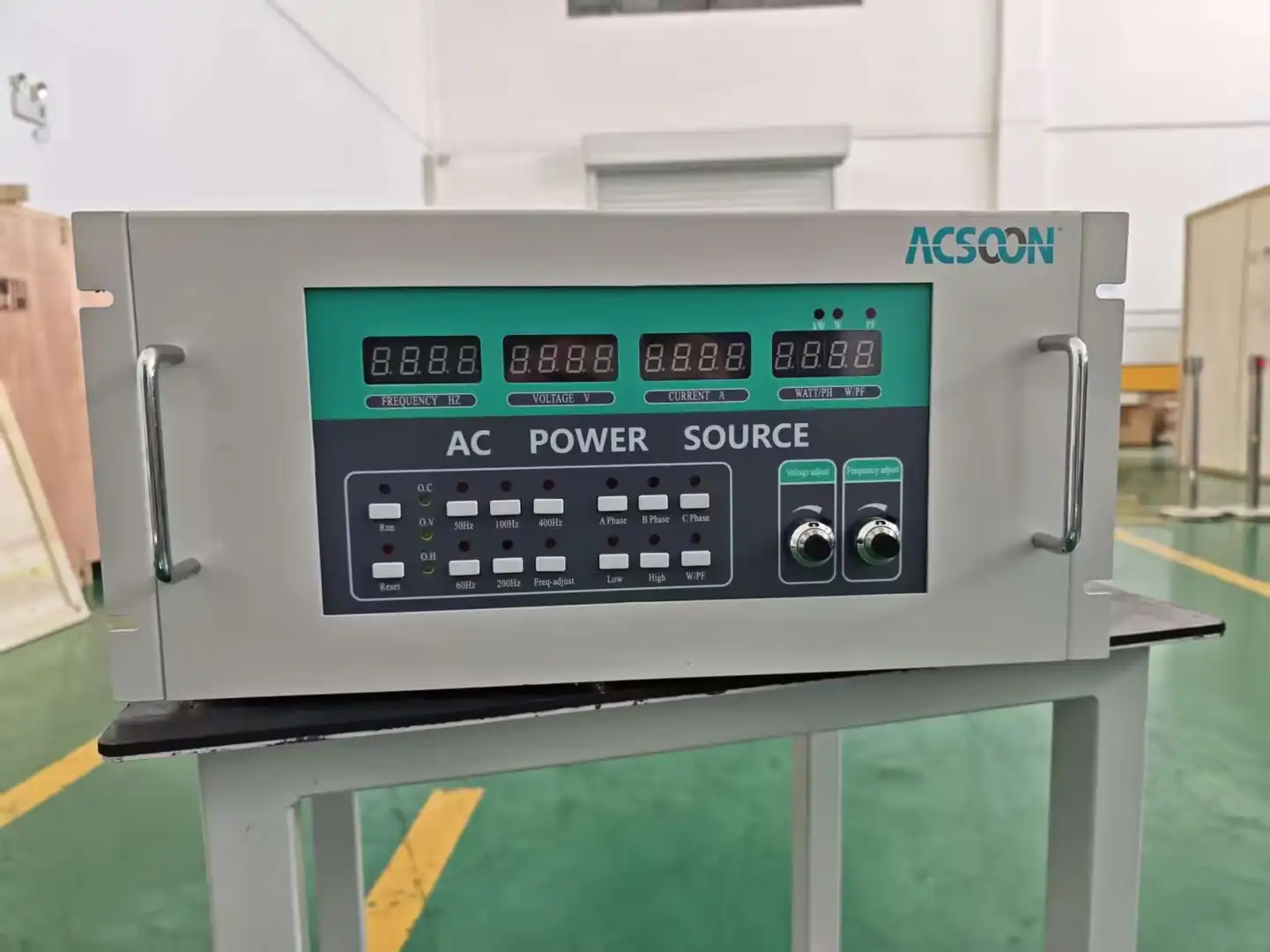
Understanding the Basics of 50Hz and 60Hz Power Frequencies
In Hertz, power frequency is the rate at which AC electricity goes through a full cycle. This seemingly simple requirement came about because of choices made more than a hundred years ago about electricity. It has huge effects on the current infrastructure of the industry.
Global Distribution of Frequency Standards
The different frequency standards in different parts of the world are due to technological decisions and attempts to standardize industries in the early 20th century. The United States mostly accepted 60Hz because of the work of early power pioneers like Westinghouse and General Electric, who found that this frequency was the best mix between making incandescent lighting less flickering and making equipment more efficient. As different European countries built their own power grids, they agreed on a standard frequency of 50Hz based on estimates that worked well with metric units and different engineering goals. These days, this split makes clear operating zones. When working with foreign planes, aviation ground power systems need to be able to handle both standards. Military bases that work all over the world need tools that can work with any frequency or have strong switching capabilities. Marine boats that go through international areas have to deal with frequent changes all the time when they connect to shore power at different places.
Technical Foundations of Frequency Selection
In electromagnetic design, some trade-offs come up when you choose between these bands. Transformers and motors can be smaller when the frequency is higher (60Hz), since magnetic cores can move the same amount of power with less iron. How fast magnetic fields change direction in electromagnetic devices is affected by the difference in cycle time (16.67 milliseconds for 60Hz vs. 20 milliseconds for 50Hz). Skin effect losses are lower in long-distance transmission lines for lower frequency systems. This could make 50Hz more efficient for power grids that cover big areas. Grid workers have to keep frequency stability within very small ranges, usually ±0.5Hz, so that interconnected power plants don't have trouble staying in sync and so that frequency-sensitive industrial processes don't get damaged.
Infrastructure Design Implications
Power frequency has a big impact on how infrastructure is built. Generating plants, transportation networks, and distribution systems are all built to work with a certain cadence. 60Hz vs 50Hz power affects the speed at which synchronous generators spin. For example, a two-pole generator on a 60Hz system spins at 3,600 revolutions per minute (RPM), while the same setup on a 50Hz grid spins at 3,000 RPM. This precision in infrastructure makes things harder for global sourcing and manufacturing teams. When used in places with different standards, lab testing equipment that was made for one frequency may need expensive changes or separate systems for switching. Knowing these basic differences helps engineers and procurement managers plan for compatibility needs and set the right budget for foreign projects.
Technical Differences Between 50Hz and 60Hz Power
In addition to simple meanings, the technical differences between these frequencies have real effects on how well, efficiently, and reliably equipment works in harsh industrial settings.
Motor Performance and Rotational Speed
The frequency effects on induction motors are the clearest to see. A normal two-pole motor works about 20% faster on 60Hz power than on 50Hz power, or 3,600 RPM vs. 3,000 RPM when there is no load. This difference in speeds has a direct effect on the output, production rates, and wear patterns of machines. A motor designed for 60Hz has a lot of problems when it runs on 50Hz power without the voltage being changed. The lower frequency slows down the motor but raises the magnetic flux density in the core. This could lead to saturation, too much heat production, and shielding breaking down too soon. Running a 50Hz motor on 60Hz power, on the other hand, raises the spinning speed and might lower the torque capacity, which could cause mechanical failure in connected equipment not made for higher speeds.
Transformer and Core Characteristics
Frequency is a basic measure that is used in transformer design calculations. The magnetic flux density in the core laminations is set by the voltage-to-frequency ratio (V/f). A transformer made to work at 50Hz has a bigger core cross-section so it can handle lower frequencies without getting too hot. If you run this transformer at 60Hz with the same voltage, it usually works fine because the higher frequency lowers the flux density, which keeps the core within safe working limits. There are big risks in the opposite situation. When a 60Hz transformer is hooked up to 50Hz power at its rated voltage, the flux density goes up, which can push the core to saturation. This situation causes too much magnetizing current, harmonic distortion, warming, and a possible catastrophic failure. Core losses change with frequency, which impacts the total efficiency and needs for thermal control in power systems used in industry.
Energy Efficiency Considerations
Frequency changes how well communication works in several ways. Skin effect, which is when AC tends to gather near the sides of conductors, gets worse as frequency goes up. This makes resistance losses in conductors worse. Because of this, 50Hz systems are slightly better at sending power over long distances, though current wire designs mostly cancel out this benefit. When the frequency changes, capacitive and inductive reactance behave in different ways. When the frequency goes up, the capacitive reactance goes down, and the inductive reactance goes up. These connections affect how to fix the power factor, how much harmonic filtering is needed, and how the voltage is controlled in factories. When purchasing power cooling tools, teams must take these frequency-dependent features into account to make sure the system works at its best.
Practical Implications for B2B Procurement and Industrial Applications
Translating technical differences into operational facts helps procurement managers make smart choices that protect the investments they've made in tools and keep production running smoothly.
Equipment Longevity and Maintenance Cycles
Mismatching frequencies speeds up the breakdown of technology in several ways. 60Hz vs 50Hz power affects how motors behave: when motors are running on the wrong frequency, their heat profiles change, which affects how much oil they need and how fast their bearings wear out. Transformers that are exposed to the wrong frequency age faster because changes in temperature and harmonic content put stress on the shielding. When equipment is used in a place where the frequency isn't matched to its original frequency, maintenance plans that were made for that frequency may not work. If frequency conversion is going on, predictive maintenance systems that use vibration analysis, thermal imaging, and insulator resistance testing need to change what they think will happen at the start. When you figure out the total cost of ownership, you should include these faster wear factors and possibly shorter service times.
Global Supply Chain Challenges
International businesses have more problems with consistency. If a production line is moved from a North American facility to a European facility, the power system may need to be completely re-engineered. Aside from motors and transformers, other things that need to be carefully checked during foreign equipment moves are control systems, programmable logic controllers, and timing circuits that are based on line frequency. There are special problems that come up when trying things in a lab. R&D centers that are making sure that goods are safe for sale around the world need to be able to test them under both frequency guidelines. Because of this need, specialized test bays with the right frequency conversion tools are often needed. This increases the cost of infrastructure and makes quality assurance processes more difficult. Manufacturers of aviation ground support equipment have to meet similar needs because their goods need to be able to consistently work with planes from different parts of the world that use different electrical standards.
Case Study: Aerospace Testing Facility Integration
A defense contractor that was building a new center to test aircraft systems ran into big problems with frequencies. Their test procedures needed to make sure that the tools worked properly with both 60Hz market power and 400Hz aircraft power. To fix the problem, static frequency converters were put in place. These converters could make a stable 400Hz output from the local 50Hz power source while still meeting the strict military standards for voltage and frequency. This implementation brought up many important issues related to buying. The company that made the frequency converter needed paperwork that met strict aerospace quality standards, technical help that could be reached quickly for problems with integration, and proof that the converter would work in serious situations. The building also needed to have enough supplies on hand to avoid project delays, which is a common problem when looking for specialized power conversion equipment. This project showed that good frequency management is more than just technical specs. It also depends on how well the provider can customize, deliver, and provide extra support.
Solutions for Frequency Conversion and Equipment Compatibility
There are technological ways to close frequency gaps, but each one has its own performance, cost, and complexity trade-offs.
Static Frequency Converters
These days, solid-state frequency changers are the most flexible way to change frequencies. These gadgets change entering AC power to DC and then use inverter technology to make an AC output at the right frequency while giving exact control over voltage, waveform quality, and phase relationships. When you need clean, stable power with little harmonic distortion, static converters are the best choice. This technology is often used in industrial testing facilities, naval port connection systems, and aviation ground power units. Since there is no spinning machinery, there is no need to worry about mechanical wear, and the system needs less upkeep than older rotary conversion systems.
Variable Frequency Drives as Conversion Tools
There are times when variable frequency drives (VFDs), which are usually used to control motor speed, can also be used as frequency changers. A VFD takes in power with a set frequency and sends out power with an adjustable frequency that is best for the motor load that is linked. This method works well when the main need for frequency change is for motors. When a VFD is designed to keep the right V/f ratios and provide the right speed control, a 60Hz-rated motor can work well on 50Hz municipal power. The drive evens out differences in frequency and offers extra benefits such as soft-starting, energy savings at partial load, and inclusion of process control.
Evaluating Conversion Equipment ROI
When deciding to buy frequency conversion tools, you need to do a full cost-benefit study. The initial cost of the equipment needs to be weighed against other options, such as replacing old equipment with types that work with the available frequency or building facilities around that frequency. When you look at running costs over the span of an item, you can make better decisions. Depending on the technology and load conditions, conversion equipment usually loses 3 to 8 percent of its performance. Energy costs keep going up because of these losses over the years of running. The total cost of ownership includes things like the cost of repairs, the amount of room needed, the need for cooling, and how reliable the product is.
Making the Right Procurement Decisions for Your Business
For buying frequency tools to go smoothly, you need to carefully consider technical needs, supplier skills, and long-term support.
Technical Specification Development
First, make a full list of all the electrical features of the equipment that need frequency-specific power. 60Hz vs 50Hz power requires more than just the voltage and frequency values. You should also find out the tolerance ranges, the harmonic sensitivity, and the power quality standards. For example, aviation test tools might say that frequency stability must be within ±0.5Hz and voltage regulation must be within ±1%. This is because airplane electrical systems have to meet very strict standards. Think about the surroundings of the area where the tools will be used. Extreme temperatures, humidity, pressure, shaking, and electromagnetic interference can all affect how well and how reliably power conversion equipment works. For military and naval uses, ruggedized designs that meet MIL-STD or similar standards are needed to make sure they work well in rough circumstances.
Supplier Evaluation Criteria
To choose the right manufacturer or seller, you have to look at more than just the product specs. Manufacturing quality control systems, such as ISO 9001, AS9100 for aircraft, or industry-specific standards, show that the process is mature and that the quality is consistent. When putting together complex power conversion tools, having the right technical help is very important. Check to see if the providers offer application engineering help during the development of specifications, commissioning support during installation, and quick troubleshooting when operating problems happen. Suppliers who keep help networks that cover many areas and time zones are good for global operations.
Critical Procurement Questions
When evaluating a seller and negotiating a contract, ask specific questions that show what the supplier can do and how committed they are. Ask for examples from customers who work in related fields and have had similar technical problems. If normal goods don't exactly meet your needs, ask if they can be customized. Being able to change designs for specific uses shows that the company has a lot of engineering knowledge and cares about its customers. Know the terms of the guarantee, how long the parts are supposed to last, and where to get replacements. Clear component failure management plans should make sure that parts are available throughout the service time for equipment that is meant to last 20 years. Make it clear how long it takes for technical help to respond and what to do in case of critical failures that need instant attention.
Conclusion
The difference between 50Hz and 60Hz power is not just a matter of frequency numbers. It also involves basic electromagnetic concepts that affect how technology is built, how well it works, and how long it lasts. Procurement professionals in the military, maritime, industrial, and airline sectors have to deal with these complicated technical issues while managing global supply chains, making sure they work with each other, and keeping operations running smoothly. Frequency conversion technologies are useful when equipment and utility standards don't match up, but they need to be carefully implemented by choosing a seller that focuses on technical ability, quality standards, and quick support. Making smart choices about what to buy saves expensive investments in equipment, stops breakdowns that cost a lot of money, and lets foreign operations run smoothly in a variety of electricity settings.
FAQ
Can 60Hz equipment operate safely on 50Hz power supplies?
When using equipment designed for 60Hz on 50Hz power, you need to carefully look at the types of equipment you are using. Motors usually run 20% slower and may get too hot because of the higher magnetic flux density if the voltage isn't lowered by the same amount. Transformers and electrical power sources can usually handle the frequency difference better, but it's still important to check their performance. Before cross-frequency work, you should always check the manufacturer's instructions.
How does frequency affect precision laboratory instruments?
When used on the wrong frequency, laboratory equipment that uses line frequency for time standards stops working correctly. Digital clocks and time systems that were made to work with 60Hz power will run slowly on 50Hz power, making mistakes of about 10 minutes per hour. For precise tools that need a stable frequency, you should use crystal-controlled oscillators or frequency converters that keep the output frequency accurate even if the input frequency changes.
What are cost-effective solutions for frequency compatibility?
The most cost-effective method relies on how much equipment is needed and how important it is. With the right frequency change, variable frequency drives often work well with individual motors. Centralized static frequency converters provide the right frequency to all work areas in buildings with many devices. Electronic devices don't need to be converted when they use universal input power supplies made to work with frequencies between 47Hz and 63Hz, but mechanical devices still need power sources that fit the frequency.
Do transformers work interchangeably between frequencies?
Transformer frequency matching works in only one way. Because higher frequency lowers magnetic flux density, a 50Hz transformer can usually work with 60Hz power at the same voltage. But when a 60Hz transformer is connected to 50Hz power, the core becomes too saturated, too much current is drawn, the transformer overheats, and it probably breaks. Transformers should never be used below their original frequency without first talking to a professional and lowering the power.
Partner With JERRYSTAR for Reliable Frequency Conversion Solutions
Through our ACSOON brand, Xi'an Jerrystar Instrument Co., Ltd. specializes in precision power conversion equipment that meets the strictest frequency requirements for use in flight, the military, the marine industry, and laboratories. 60Hz vs 50Hz power is one of the key comparisons we address with our 400Hz static frequency converter systems and variable frequency converters, which are designed to work in harsh settings where dependability is essential. We have production facilities that are between 5,000 and 10,000 square meters and a lot of experience with aviation and military power systems. We also keep enough inventory on hand to be able to deliver quickly when important project deadlines can't wait for longer lead times.
Our expert team offers full application support, from developing the initial specifications to testing and long-term operation. This makes sure that your frequency conversion solution exactly meets the needs of the operation. JERRYSTAR offers high-quality frequency converter options and quick service, whether you need regular catalog items or custom-engineered systems to solve specific compatibility problems. Get in touch with our engineering team at acpower@acsoonpower.com to talk about your unique power frequency needs and get detailed technical advice along with reasonable quotes from a reliable frequency conversion equipment supplier that cares about your business's success.
References
1. International Electrotechnical Commission. (2009). IEC 60038: Standard Voltages. Geneva: International Electrotechnical Commission.
2. Institute of Electrical and Electronics Engineers. (2014). IEEE Standard 519: Recommended Practice and Requirements for Harmonic Control in Electric Power Systems. New York: IEEE.
3. Grainger, J.J., & Stevenson, W.D. (1994). Power System Analysis. New York: McGraw-Hill Education.
4. Boldea, I., & Nasar, S.A. (2010). The Induction Machines Design Handbook, Second Edition. Boca Raton: CRC Press.
5. McLyman, C.W.T. (2004). Transformer and Inductor Design Handbook, Third Edition. New York: Marcel Dekker.
6. Mohan, N., Undeland, T.M., & Robbins, W.P. (2003). Power Electronics: Converters, Applications, and Design, Third Edition. Hoboken: John Wiley & Sons.