



How to Select a Trailer Type Aircraft GPU for Remote Aircraft Service
Not every aircraft parking position has a fixed 400Hz ground power installation. Remote stands, overflow parking areas, military test fields, and smaller regional airports often lack the infrastructure to provide gate-based ground power. In these situations, a trailer type aircraft GPU — a mobile, towable 400Hz ground power unit — becomes the essential link that keeps aircraft systems running during ground operations. Selecting the right unit requires balancing power capacity, mobility, environmental protection, and operational flexibility in a way that fixed installations never have to address.
This guide walks through the key decisions involved in choosing a trailer-mounted aircraft GPU, from matching power output to aircraft type, through environmental protection and cable management, to the practical considerations of towing, deployment, and maintenance. Whether you are equipping a regional airport, a military airbase, or an MRO facility with remote maintenance positions, the factors discussed here will help you specify a unit that meets your operational needs.

What Is a Trailer Type Aircraft GPU?
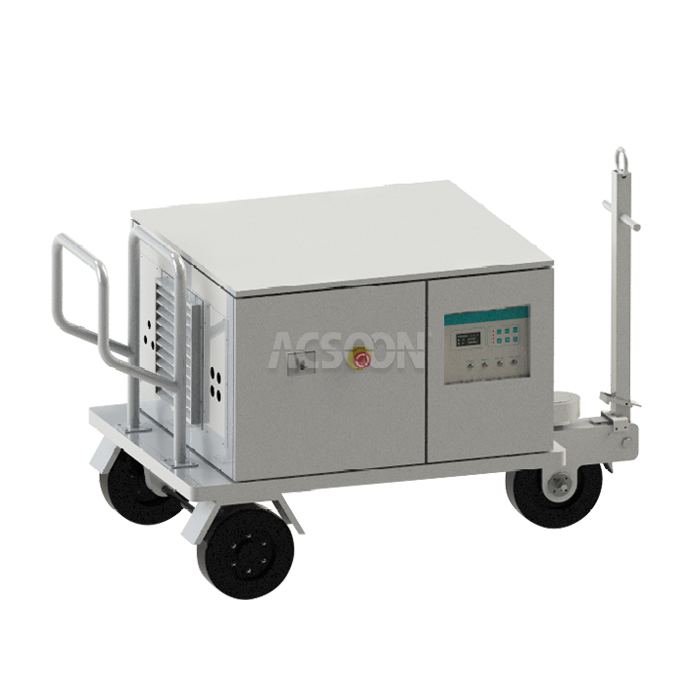
A trailer type aircraft GPU is a self-contained 400Hz ground power unit mounted on a wheeled chassis that can be towed by a tug or service vehicle. Unlike a fixed gate-mounted GPU that is permanently installed at a parking position, a trailer unit can be moved to wherever aircraft power is needed. This mobility makes it the preferred solution for airports with remote stands, temporary parking areas, or mixed operations where not every gate has 400Hz power.
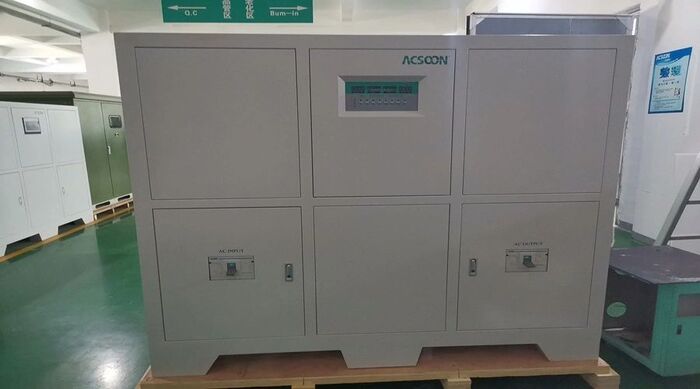
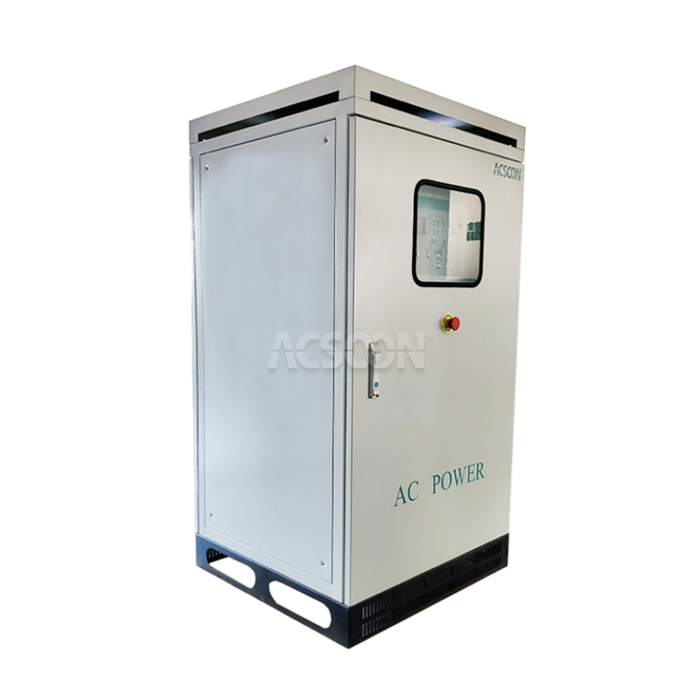
The core of the unit is a solid-state frequency converter that takes utility power (or, in some models, an onboard diesel generator) and converts it to the 115V AC, 400Hz output required by most commercial and military aircraft. The ACSOON Trailer Type GPU400 Series and its variants, including the GPU400 Towable, are examples of this category, combining SPWM-IGBT solid-state conversion technology with a road-towable chassis.
Modern trailer GPUs have largely replaced the older diesel-powered rotary converters that were once common at airports. The solid-state approach offers several advantages: cleaner output power with lower harmonic distortion, quieter operation, zero direct emissions at the point of use (when powered from the grid), and significantly reduced maintenance requirements since there are no rotating mechanical components in the power conversion path.
Need a Trailer Type GPU400 Series mobile GPU? View Product Details → or contact us at acpower@acsoonpower.com for a quotation.
Matching Power Capacity to Aircraft Type
The first specification to determine is the power capacity, which must match the electrical load of the aircraft you intend to service. Different aircraft types have very different ground power requirements:
| Aircraft Category | Typical Ground Power Load | Recommended GPU Capacity |
|---|---|---|
| Narrow-body (B737, A320) | 30–60 kVA | 60–90 kVA |
| Wide-body (B777, A330, A350) | 60–120 kVA | 90–180 kVA |
| Regional jets (CRJ, E-Jet) | 15–30 kVA | 30–45 kVA |
| Business jets | 10–20 kVA | 30 kVA |
| Military transport (C-130, C-17) | 60–180 kVA | 90–180 kVA |
It is standard practice to select a GPU with a capacity at least 20% higher than the aircraft's typical ground load. This headroom ensures stable operation under peak conditions — such as when air conditioning packs, galley equipment, and avionics are all running simultaneously — and extends the life of the equipment by avoiding continuous operation at maximum rating.
For operations that service multiple aircraft types, a 90 kVA unit is often considered the versatile middle ground, capable of handling most narrow-body aircraft while also serving wide-body types at reduced load. Facilities that regularly service wide-body aircraft should consider 120 or 180 kVA units.

Environmental Protection for Outdoor Operations
Unlike fixed installations that sit in climate-controlled equipment rooms, trailer GPUs operate outdoors in all weather conditions. The ingress protection (IP) rating of the enclosure is therefore one of the most critical specifications. For airport apron use, where the unit is exposed to rain, dust, jet blast, and de-icing fluids, IP54 is generally considered the minimum acceptable rating. IP54 provides protection against dust ingress and water splashing from any direction.
For more demanding environments — such as desert airbases with fine sand and dust, or tropical airports with heavy rainfall — higher ratings like IP55 may be appropriate. The cooling system design must also account for the operating environment. Units destined for high-ambient-temperature regions need oversized cooling fans or even air-conditioned enclosures to maintain safe operating temperatures for the power electronics inside.
Corrosion protection is another consideration for coastal or marine-adjacent airports where salt spray is a factor. Stainless steel or powder-coated enclosures, conformal-coated circuit boards, and sealed connectors all contribute to long-term reliability in corrosive environments. Discuss your specific environmental conditions with the manufacturer to ensure the unit is appropriately specified.
Need a 90kVA 400Hz ground power unit? View Product Details → or contact us at acpower@acsoonpower.com for a quotation.
Cable Management and Aircraft Connection
The output cable is the physical link between the GPU and the aircraft, and its design significantly affects operational efficiency. A trailer GPU typically carries a 400Hz cable of 6 to 15 meters in length, wound on a spring-loaded cable coil or manual reel. The cable terminates in a standard aircraft power plug — the most common being the 3-pin or 6-pin 400Hz connector defined in ISO 6858 or MIL-C-26554.
Cable length should be sufficient to reach from the GPU's parking position to the aircraft's ground power receptacle, which is typically located on the lower fuselage. For narrow-body aircraft, 6–8 meters is usually adequate. For wide-body aircraft, where the receptacle may be farther from the parking position, 10–15 meters may be necessary. Longer cables increase resistance and voltage drop, so the cable cross-section must be sized appropriately to maintain voltage within acceptable limits at the aircraft end.
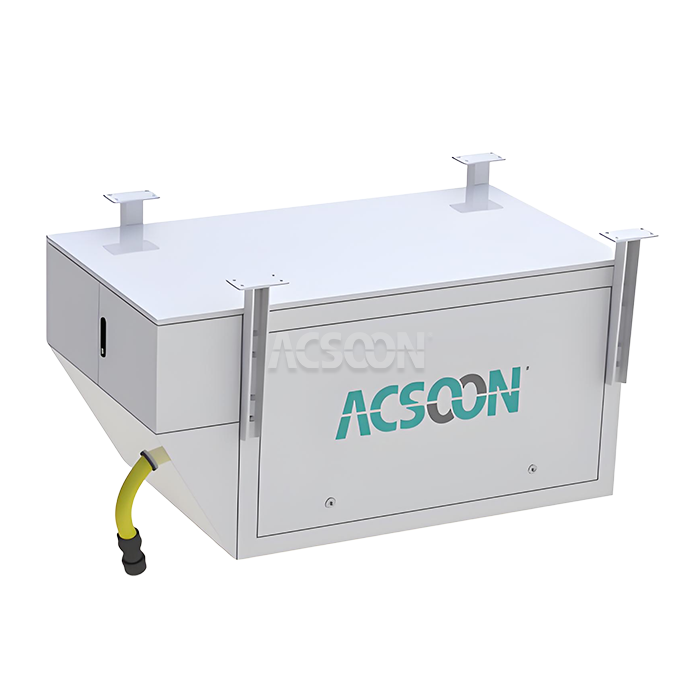
Some trailer GPU designs incorporate a cable coil power unit that combines the frequency converter with an integrated cable management system, allowing the cable to be extended and retracted smoothly. This reduces manual handling by ground crew and helps prevent cable damage from dragging on the apron surface.
Mobility and Chassis Design
The trailer chassis must be road-towable and stable when parked. Key considerations include:
- Towing mechanism: A standard tow hitch or eye-type coupling compatible with airport tugs. Some designs use a fifth-wheel arrangement for larger units.
- Wheel configuration: Typically two or four wheels depending on the unit size. Wheels must be rated for the loaded weight and capable of sustained towing at airport service vehicle speeds (typically 25–30 km/h).
- Parking brakes: A mechanical parking brake that engages automatically when the unit is uncoupled from the tow vehicle, preventing the GPU from rolling on inclined surfaces.
- Stabilizer jacks: Deployable jacks that level and stabilize the unit when parked, preventing rocking during operation and ensuring the output cable is at a comfortable height for the ground crew.
- Transport dimensions: The overall width, height, and length must comply with road transport regulations if the unit needs to be moved between sites by road.
For military and remote field operations, the chassis may need to meet additional requirements for air transportability (so the GPU can be flown to forward operating bases) and rough-terrain mobility (larger tires, higher ground clearance, and suspension designed for unpaved surfaces). The airfield GPU cart configuration is designed for exactly these demanding field conditions.
Power Source: Grid-Connected vs. Self-Powered
Trailer GPUs fall into two broad categories based on their power source. Grid-connected units draw input power from a 380V or 480V utility connection, typically via a shore power cable that plugs into a ground power pedestal near the parking position. These units produce no local emissions, operate quietly, and have lower operating costs, but they require electrical infrastructure at the parking position — which may defeat the purpose of choosing a mobile unit in the first place.
Self-powered units incorporate an onboard diesel generator that provides the input power, making the GPU truly self-contained and deployable anywhere. The trade-offs are higher operating costs, noise, emissions, and more complex maintenance. The diesel mobile power unit is an example of this self-powered approach. Some facilities use a hybrid strategy: a self-powered unit for truly remote positions, supplemented by grid-connected trailer units that can be moved between positions with shore power access.
Monitoring and Communication Features
Modern trailer GPUs include digital control panels that display real-time output parameters — voltage, current, frequency, power factor, and kVA — allowing ground crew to verify that the aircraft is receiving proper power. More advanced units offer RS485 Modbus communication, enabling remote monitoring and data logging through the airport's ground support equipment management system. This allows facility managers to track utilization, schedule preventive maintenance, and receive alerts when operating parameters deviate from normal ranges.
For larger fleets of mobile GPUs, remote monitoring can significantly reduce maintenance costs by shifting from calendar-based to condition-based maintenance. Instead of servicing every unit on a fixed schedule, maintenance teams can focus on units that show early signs of degradation, maximizing fleet availability and reducing unnecessary service interruptions.
Need a mobile aircraft GPU trailer? View Product Details → or contact us at acpower@acsoonpower.com for a quotation.
FAQ
How long does it take to deploy a trailer GPU and connect it to an aircraft?
With a trained two-person ground crew, a trailer GPU can typically be towed into position, stabilized, and connected to the aircraft in 5 to 10 minutes. Single-person operation is possible with well-designed units that have powered cable reels and ergonomic connector positioning, but may take slightly longer.
Can one trailer GPU service all aircraft types?
A 90 kVA unit can service most narrow-body and many wide-body aircraft, but not all. Very large wide-body aircraft like the A380 or B747 under full ground load may require 180 kVA or more. If your operation handles a mix of aircraft types, select a capacity that covers at least 80% of your traffic, and have a plan (such as a higher-capacity unit or load shedding) for the remainder.
What maintenance does a solid-state trailer GPU require?
Solid-state GPUs require significantly less maintenance than diesel-rotary units. Typical maintenance includes periodic inspection of cables and connectors, cleaning or replacement of air filters, inspection of the cooling fan system, and verification of output calibration. Unlike rotary units, there are no bearings to lubricate or brushes to replace in the power conversion path. If the unit is self-powered with a diesel generator, that generator requires its own standard engine maintenance.
Can a trailer GPU be used indoors or in a hangar?
Yes, grid-connected solid-state trailer GPUs can be used in hangars since they produce no exhaust emissions. Self-powered diesel units should not be used indoors without proper exhaust ventilation. When using a trailer unit in a hangar, ensure the cable length is sufficient to reach the aircraft's power receptacle from the available parking position.
What is the typical lifespan of a solid-state trailer GPU?
With proper maintenance, a solid-state trailer GPU can provide 10 to 15 years of reliable service. The power electronics have no moving parts and are not subject to the mechanical wear that limits rotary converter life. The most common life-limiting components are the cooling fans, electrolytic capacitors in the DC bus, and the output cable, all of which can be replaced as wear items.
Conclusion
Selecting a trailer type aircraft GPU requires a systematic evaluation of power capacity, environmental protection, cable management, mobility, and monitoring features. The right unit balances the power needs of your aircraft fleet against the practical realities of outdoor, mobile operations. Solid-state technology has made these units cleaner, quieter, and more reliable than the diesel-rotary converters they have replaced, while digital monitoring capabilities enable smarter fleet management. By matching specifications to your operational environment — from the aircraft types you service to the weather conditions you face — you can ensure that your mobile ground power solution delivers reliable service for years to come. For more information about ACSOON trailer-mounted GPU solutions, visit acsoonpower.com or contact the JERRYSTAR team at acpower@acsoonpower.com.